
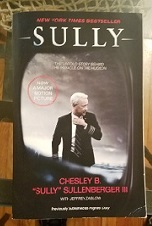
 On January 15, 2009, US Airways Flight 1549, commanded by Captain Chesley B. “Sully” Sullenberger and first officer Jeffrey B. Skiles, made an emergency landing in New York City’s Hudson River. The successful landing and evacuation of all passengers and crew became known as the miracle on the Hudson. Sullenberger is now retired from US Airways but remains involved in the aviation industry. His efforts that day in conjunction with those of Skiles remain a classic example of the necessity of extensive training and extraordinary ability to focus on the issues at hand. Sullenberger has said that he does not consider himself a hero. In his mind, he was doing what a well-trained pilot was supposed to do; fly the plane and try to land it while preserving the lives of everyone on board. And on that day, that is exactly what happened. Prior to the incident, his name was largely unknown outside of US Airways. His face just another pilot that thousands of passengers walk past each day as they leave their flights. The men and women who travel the skies are rarely acknowledged for a job that requires tremendous sacrifice, patience and dedication. But just who is Chesley Sullenberger? And why is his story so amazing?
In this autobiography and memoir about the flight, Sullenberger opens up about his life that began in a small town called Denison, Texas. He realizes at an early age that flying is his passion and makes it his life’s mission. As we know now, he accomplished that goal and will be remembered as one of the greatest pilots we’ve come to know. But behind the skilled aviator is a simple man who leads a simple life who has been dedicated to aviation for nearly his whole life. And that is the true beauty of the book. Sullenberger makes it easy to relate to him and does go out of his way to bring undue praise to himself. His comments about the life of a pilot and bits of information about the airline industry are interesting and highlight the tremendous sacrifice pilots often have to make both personally and professionally.
After reading the book, I felt as if I knew Sullenberger personally. And if I met him person, I would probably be tempted to call him simply “Sully”. To the passengers of flight 1549, he will always be the best pilot they have ever flown with. And while nearly none of them will probably ever see him again in person, they are forever bonded by the events of that day. What I truly loved about his story is that he remains a humble person in spite of the fame and notoriety. And when he is not in the cockpit, he is a father and husband who struggles as he continues to learn how to be both. His story is one that nearly all pilots can relate to and in telling his story, he is telling their story as well.
His mind is truly one of a seasoned aviator and his ability to analyze all components of a flight and the dynamics required to a successful flight are a testament to his career and accomplishments. And because of this story, I have a deeper appreciation for all of the work that is required for a commercial aircraft to make it from one airport to the next. I will be sure to say thank you as I pass the cockpit before exiting my flight. Each time I sit down before taking off, I will think back to his story and remind myself that the pilots at the controls have put their lives on hold so that I may enjoy mine.
ISBN-10: 0062564323
ISBN-13: 978-0062564320
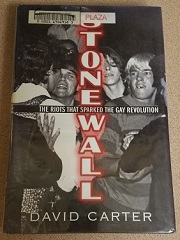 On the nights of June 27 and June 28, 1969, riots occurred that changed the history of New York City and gave strength to the movement for equality and legal rights for gay men, lesbian women, transgender and transsexual people. The incidents became known as the Stonewall riots, and took place in and outside of the Stonewall bar in Manhattan’s West Village neighborhood. The bar is no longer there, but on those hot summer nights in 1969, the LGBT community made a stand that shocked not only the New York City P0lice Department but an entire city. The episode stands out as one of the movement’s most powerful moments that has never been forgotten. David Carter presents to us an investigative report of what really happened during the Stonewall riots and allows us to understand why and how they came to be.
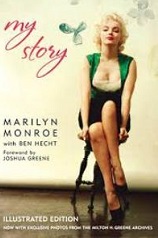 Marilyn Monroe remains to this day one of Hollywood’s biggest sex symbols. Her image continues to be promoted today through articles about her life, books, posters and even documentaries. When she died suddenly on August 5, 1962, she left behind millions of fans, a career and a film industry in which she was at the top of its list of stars. Her marriages and love affairs have been documented relentlessly and her sex appealed is desired by young men looking to be the next great sex symbol in Hollywood. But just who was the real Marilyn Monroe? When she died she was only thirty-six years of age, far too young to have written a complete autobiography or to have experienced all that life has to offer. However, prior to her death, she had begun to tell her life story to friend and business associate Milton Green. Green kept the manuscript along with thousands of photos he took of the late actress. His son Joshua, has preserved the images digitally restoring them in the process. When he found the manuscript he had it published into this short but revealing book about the early life of Norma Jean Mortenson.
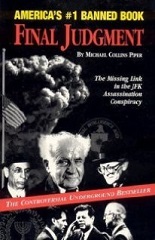 The murder of John F. Kennedy remains one of America’s darkest moments. His assassination in Dealey Plaza and the murder of his alleged assassin two days later shocked the world and marked a turning point in American history. The Warren Commission’s report is still the government’s official position on the murder. It concluded that there was no conspiracy to murder John F. Kennedy and that Lee Harvey Oswald acted alone. In 1966, Mark Lane’s Rush to Judgment was released and became the first major book to challenge the Commission’s conclusions. Lane became a pioneer in the process with his book being followed by more than 200 hundred others regarding the events of that day. Each has its strengths and weaknesses but all provide a window into what some have called the crime of the century. There are literally dozens of theories as to how and why Kennedy was killed. It is up to the reader to cross-reference the facts and reach a conclusion. However, in the majority of the books regarding the murder, all tend to focus on the complicity of the U.S. Government and organized crime. The Italian-American mafia has long been suspected in the assassination. But like everything else regarding the murder, things are not always as they may seem.
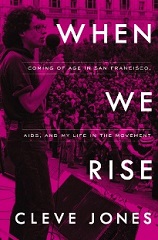 This past November marked thirty-eight years since City Supervisor Harvey Milk and George Moscone were shot and killed by Dan White. Their murders and the sentencing of Dan White to just five years in prison, led to the White Night Riots and filled the LGBT community of San Franciscans with shame and disgust. After serving several years in prison, Dan White committed suicide in 1981. Milk’s life was adapted for the silver screen in the Gus Van Sant directed biopic Milk. Sean Penn assumed the role of Milk in what became on his greatest performances. Josh Brolin took on the role of the film’s antagonist, Dan White and turned in an equally great performance. They were joined in the cast by James Franco, Alison Pill, Diego Luna and Emile Hirsch who plays the role of activist Cleve Jones. Jones is the most energetic character in the film and serves as Milk’s second in command as they take of Anita Bryant, John Briggs and Proposition 6.
 America still struggles to understand the Middle East and a large number of Americans have suspicion and fear of the religion of Islam. Acts of terrorism and reports of the extremes of Sharia law have caused many Americans to dismiss Islam as an archaic system of faith maintained by fear, intimidation and capital punishment. Furthermore we are rarely exposed to the positive aspects of life in an Islamic state and are only shown the most extreme acts of aggression that occur. It has been planted in our minds that Muslims around the world would like nothing more than to see the United States collapse. Near the top of this list are the people of the Islamic Republic of Iran, a nation which shares a long and troubled history with the United States of America.
 For twelve years Evelyn Lincoln served as John F. Kennedy’s devoted secretary. Following Kennedy’s murder she penned a memoir of her time as his assistant under the title “My Twelve Years with John F. Kennedy”. As his secretary she was a first hand witness to his daily routine and the decision making process behind some of the biggest moments in American history. The relationship between Kennedy and Vice-President Lyndon Johnson has been documented in scores of books. But Lincoln’s account is a welcomed look into the unusual relationship between two polar opposite individuals.
 In 1955, Dorothy Dandridge was nominated for Best Leading Actress in a Leading Role for her performance in “Carmen Jones”. Her nomination marked the first time an African-American woman had been considered for the prized recognition. Ten years later she was gone, having died of an accidental overdose of prescription pills on September 8, 1965. She was forty-two years old. Her rise and fall in Hollywood is one of the most tragic stories of the era and she joins the ranks of other fallen female greats such as Billie Holiday and Marilyn Monroe. She left behind a legacy that is undeniable and she broke down barriers that other African-American female stars faced prior to her rise to stardom. But for all of her success on the silver screen, Dandridge’s personal life as shown here in this definitive biography by Donald Bogle, shows a woman who struggled throughout her life with her childhood, motherhood, fame, success and love. Her story is largely forgotten but at one point in America history she was one of Hollywood’s biggest actresses.

You must be logged in to post a comment.