
 On October 3, 1995, I was in my sophomore year at Bishop Loughlin Memorial High School in Brooklyn, New York. Not long after the lunch periods had ended, our classes were interrupted as the teachers informed us that the verdict in the O.J. Simpson murder trial was scheduled to be read. We stopped class and turned on the television to witness what we all knew was a historic event. When the verdict was read and Simpson was found not guilty, the school erupted in cheers and howls. None of us wanted to see Simpson convicted of murder and to many African-Americans, he was proof that you could in fact make it to be someone in America if you were a person of color. After the acquittal of the police officers involved in the beating of motorist Rodney King, racial tensions had peaked across the nation and the Simpson trial would showcase the issue of race to the fullest. The images of Marcia Clark, Robert Shapiro, Christopher Darden, Johnnie Cochran and Det. Mark Fuhrman have permanently been burned into the memory of nearly every American who watched the gripping trial from start to finish.
Today, the trial is long forgotten and Simpson sits in jail having been convicted of armed robbery on October 3, 2008. Marcia Clark and Christopher Darden are no longer at their old posts. Robert Shapiro still practices law today at 73 years of age. Tragically, Johnnie Cochran died on March 29, 2005 after a long fight with a brain tumor. Lance Ito is still in the legal system trying cases but no longer as a judge. And Det. Mark Fuhrman is now retired from the force. The trial captivated the world and caused a deep divide between Americans of all colors. Like every major trial, the Simpson case was full of interesting characters, questionable rulings and ended in a most shocking manner. Marcia Clark, the former lead prosecutor, has penned her thoughts and recollections on the case in this phenomenal account of the effort to win a murder conviction against Simpson. Partly an autobiography, Clark takes us back in time to her early life and her path to becoming a litigator. And by chance, she lands the prosecution of O.J. Simpson, the case that changed her life and career. The evidence is revisited, the statements analyzed and the games played by the litigants explored leaving no stone is left untouched with Clark even revealing some of her own private secrets that serve to put her passion and energy into a new light to be absorbed by the reader. I’m quite sure that even today, most of the American public is probably still completely unaware of many of these things. Her approach is no-nonsense and straight to the heart of the case infused with her reasons for why she believed Simpson was guilty without a doubt. And contrary to what many believed at the time, there was never an ax to grind, but only her job as lead prosecutor to see justice done regardless of the defendant’s status in society.
After reading this book, I was forced to ask myself many questions, some of which have an unfavorable answer. Clark, as she recalls the trial of the century, forces us to examine how easy it is to be blinded by race and perceptions of both injustice and equality. In Simpson, millions of African-Americans saw a man they considered to be one of their own as someone who “made it”. But as we follow Clark through the case, we have to ask, is that really the case? Or was Simpson completely detached from the African-American community? Nicole Brown Simpson and Ronald Goldman are long gone, remembered by their loved ones of their short tenures on earth. The murders, gory and brutal, showed the worst of what human beings are capable to doing to each other. The beauty in this memoir is that we are able to see how and why bias can exist in a court of law and the unfortunate results that arise as a result. And even today, as murder trials are conducted across the country, each defendant is forced to wonder if they too will get a jury of their peers. And if they don’t, just how much will race be a factor? And if jurors are intent of serving with racial bias in their hearts, then what does that say for democracy and the concept that justice is blind?
The Marcia Clark of today is a woman wise beyond her years, a veteran of the American judicial system. Hindsight is her best ally as it allows her to take us back and re-examine the entire case from start to finish. Some of us will read this book and think that O.J. is still innocent while others, will be read the book and have their belief in his guilt reconfirmed. No matter which side of the fence you find yourself on, this book stands as an invaluable look into the trial of the century. She originally finished the book in 1997 but added a new foreword in the wake of the deadly police shootings that have taken place over the past couple of years. Her comments about the state of America, race relations and criminal procedure serve to educate the reader about what really happens inside of the courtroom and behind the scenes.
ISBN-13: 9781631680687
 On April 14, 1865, John Wilkes Booth changed the course of United History. The murder of Abraham Lincoln marked the first time a sitting U.S. President had been slain by an assassin. Tragically, Lincoln would not be the last to be assassinated. John F. Kennedy would meet his tragic fate on the streets of Dallas, Texas on November 22, 1963. Lincoln’s murder has become fodder for conspiracy theorist intent on proving that a web of deceit surrounded Lincoln paving the way for the tyrannical Booth to execute his plan. But just how much of a conspiracy was there? And did it involve members of the Confederacy? Was Edward Stanton complicit in pulling back Lincoln’s security detail? And was Mary Surratt rightfully convicted? Edward Steers, through painstaking research answers those questions and more in what is the definitive examination of the assassination of Abraham Lincoln.
 On January 30, 1957 the United States Senate Select Committee on Improper Activities in Labor and Management was created to investigate corruption in American labor unions. Designated with the role of Chief Counsel was a young attorney who later went on to become attorney general and 1968 democratic presidential hopeful, Robert F. Kennedy. In this memoir of his time on the committee, Kennedy recounts the exhaustive investigative efforts of those who served on the committee in an effort to shed light on the nefarious dealings of union and labor officials and effect reform throughout the United States. At the center of the committee’s target lay James R. Hoffa and his International Brotherhood of Teamsters. Starting with Dave Beck, Kennedy carefully reconstructs the deeply seated mismanagement of union funds resulting in the most opulent lifestyles for top officials. Facing a culture in place for many years, Kennedy and his staff are met with opposition and resistance to efforts to probe into the dark side of American labor unions. It’s no secret that Kennedy and Hoffa had a strong distaste for each other and on more than one occasion, Hoffa threatened the future attorney general with physical violence. Kennedy would respond with his “get Hoffa squad” in an attempt to bring down the man who Kennedy believed was a menace to the American way of life.
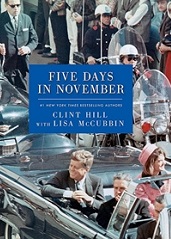 Abraham Zapruder captured a defining and tragic moment in history when his camera recorded the assassination of President John F. Kennedy. The film was originally locked away by Time Life but was finally released to the public years later as a result of the investigation of Jim Garrison into Kennedy’s murder. The film leaves the view speechless and speaks more than a thousand words. Next to the gruesome murder of the President, there’s an iconic sequence that occurs that also remains cemented in the memory of the witnesses in Dealey Plaza that day and the millions others who have repeated watched the film. As the motorcade speeds toward the triple underpass, a Secret Service agent is seen jumping on to the back of the car as it speeds up to transport the mortally wounded Kennedy to Parkland Hospital. The agent is Clint Hill, a veteran of the Secret Service who served several presidents during his multi-decade career. Now 84, he’s become an author over the years, having written a few books, one of which is this account of the fateful trip to Dallas, Texas and the tragedy that ensued.
 In volume I of her three-volume biography of the late Anna Eleanor Roosevelt (1884-1962), Blanche Wiesen Cook explored the early life of the pioneering First Lady of the United States. We learned about her family history, both intriguing and tragic, upbringing by close relatives, her marriage to Franklin and his election of the presidency of the country. The book closes as the family assumes their role as the new occupants of the White House. In this second volume, their story continues with the new President finding himself embattled on several fronts as the depression rages, Adolf Hitler threatens world peace and domestic social tensions threaten to tear the nation apart. The First Lady also finds herself fully immersed in ongoing current events that cause concern for citizens across the country. And it is during this time period, 1933-1938 that she defines herself as she finds her calling as a champion of women’s rights and advocate of equality and well-being for Americans of all ethnic backgrounds.
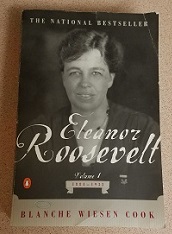 The President of the United States has what many consider to be the toughest job in the nation. Tasked with the impossible feat of making everyone happy at all times while often performing highly unpopular actions, the President often goes through a transformation while in office that results in deep reflection later in life. Standing next to each President in modern times, is the first lady who in her own right, has evolved into a major presence with a voice of her own. This November will mark the end of the Obama administration and as they prepare to leave the White House, I firmly believe the first lady can look back without regret as having served the nation as one of the finest America has seen. She follows a long line of pioneering first women to have occupied the White House, adding a touch of grace and class to what used to be a strictly supplementary role. But many years before Michelle Obama, there was another first lady, who stands out as one of American’s greatest historical figures and whose legacy continues today, Anna Eleanor Roosevelt (1884-1962).
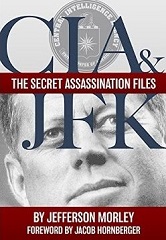 October, 2017, will mark a turning point in American history. Pursuant to the JFK Records Act of 1992, all remaining classified files relating to the assassination of President John Kennedy are slated to be released to the American public. If no opposition is received from the FBI, CIA or any government agency with a vested interest in the files, more than 3,000 pages of once classified documents will be disclosed more than 50 years after Kennedy’s tragic death on the streets of Dallas, Texas.
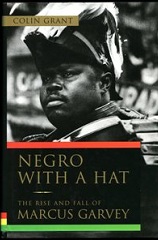 In the Bedford-Stuyvesant section of Brooklyn lies Marcus Garvey Blvd, a street named after the late iconic figure in the African-American struggle for civil rights in the United States and abroad. The native son of Jamaica and former resident of London, England, made his name famous on the streets of Harlem, New York through the formation and activities of the Universal Negro Improvement Association (UNIA). The organization’s purpose to build up the moral, economical and social status of Black Americans, combined with his “back to Africa” movement, remain defining movements in the African-American experience. At the time of his death on June 10, 1940, Garvey was a shadow of his former self after several severe strokes had taken their toll on his aging body. His death dealt a sever blow to the strengthening movement for equality. And 76 years after his death, his writings, speeches and life, are still remembered, quoted and analyzed for they remind us of the importance of standing up for what we believe in. Garvey remains one of most magnetic figures of the 20th century.

You must be logged in to post a comment.