The Rise and Fall of Jim Crow – Richard Wormser

crowIn 1954 the United States Supreme Court issued a historic ruling in the matter of Brown v. Board of Education which declared that segregation in public schools was unconstitutional. The groundbreaking decision widened the doors for the growing  Civil Rights Movement which was gaining traction across America. However, in the South, the system of Jim Crow was refusing to die, and found support from staunch segregationists determined to resist the Government’s involvement in matters they viewed as being within their state’s authority. In hindsight we can see today that the resistance was futile and compliance with the Supreme Court would be enforced. Jim Crow did fall, but it did not happen overnight. Further, in understanding its demise, we must also focus on its rise, and how, and why it was allowed to happen. Author Richard Wormser provides a recap of the rise and fall of Jim Crow in America, and why these important lessons are still relevant. 

On April 9, 1865, Confederate General Robert E. Lee (1807-1870) and his troops surrendered to Union General and future President Ulysses S. Grant (1822-1885) in Appomattox Court House, Virginia, signaling the final stage of the American Civil War. For Black Americans, the Confederacy’s defeat was welcome news, along with the realization that slavery was gone for good. The former slaves had freedom, but a new challenge emerged for them and lawmakers. How would the former slaves be incorporated into mainstream society? In the South, former slaveowners were left without their source of manual labor as new freed slaves left their former places of bondage for good. In Congress, Republicans wasted no time in reshaping the United States with the goal of healing a nation that tore itself apart. However, the South was far from finished and sought to rise again. As the story here opens, we revisit the time after the war, when Americans treated their wounds, physically, emotionally, and psychologically. 

It would be impossible to discuss the reconstruction period after the war without mentioning U.S. President Andrew Johnson (1808-1875) who gave the South the lifeline it needed to recover and re-enforce its platform of racial segregation. However, the book is not a biography of Johnson and the attempt to impeach him in 1968 is discussed but briefly. What is given focus are his actions to thwart attempts by Republicans to ensure that the states part of the Confederacy paid fully for their war against the North and the facture of the Union. Johnson was so effective that less than fifteen years after the war, the South had removed itself from the destitution that was widespread during the conflict. And as Wormser points out: 

“By 1876, Democrats had regained control of every Southern state except Louisiana and North and South Carolina.”

Once the Democrats regained control of the South, Jim Crow found its footing and would make life unbearable for millions of Black Americans across the region. The system was designed with a focus on brutality and retribution for past events. I warn readers that the descriptions of the violent acts committed against minorities will be difficult to read. Readers sensitive to this subject matter should use discretion. But for those who are willing and able to understand America’s dark past, these sections are crucial because they also helped set the stage for Jim Crow’s downfall. Admittedly, it is hard not to recoil in disgust at what we learn about life under Jim Crow. Today it would be unimaginable for a city in America to operate in such a manner. But prior to the decision in Brown v. Board of Education and legislation by Congress, it was the reality for millions of people viewed as being less than human. 

Jim Crow’s brutality was no secret, but what was happening in Washington as it flourished? The author discusses the White House and the inaction by presidents who sat idling while Jim Crow held the South in its grip. Some were reluctant to act and even supported keeping Blacks contained to the lowest levels of society such as President Woodrow Wilson (1856-1924) whose administration was a Godsend to Jim Crow. That dark period is covered in the book and will leave readers speechless. Local authorities were just as dark and even worse depending on the territory. But in 1914, events in Europe would ignite the spark behind the Civil Rights Movement. On June 28, 1914, Gavrilo Princip, a Bosnian Serb, assassinated Archduke Franz Ferdinand (1863-1914) setting off World War I. For Black Americans, service in the military was seen as a path for recognition that would continue the lengthy line of enlistment by blacks since the American Civil War. But this time, the meaning was more profound as troops returned home with a purpose after serving in Europe where they witnessed society standing stark contrast to America. The genie was out of the bottle and accelerated ‘The Great Migration‘ (1910-1970). 

As blacks continued to gain ground, an organization which had been created in 1909, continued to advocate for Black Americans: the National Association for the Advancement of  Colored People (“NAACP”). This section of the book was interesting and I appreciated the discussion about Walter White (1893-1955) and the risks he took to expose the horrors of Jim Crow and lynching. It is surreal how close he came to death while he investigated the American nightmare. The times were dangerous but there was no turning back, and Black Americans were determined to change America. And in time, another war would see them rise to the occasion. But this time, Jim Crow would not survive. In fact, its demise is due in part to President Harry S. Truman (1884-1972) who was outraged at the treatment returning Black soldiers faced in America where their service meant nothing under Jim Crow. The bold actions by Truman revisited in the story, changed the military, and also pushed him towards reelection in 1948. But more importantly, it was a severe blow to Jim Crow itself which was under attack from all angles. 

Anyone with clear foresight could see that Jim Crow was destined to the trash heap of history. It was only a matter of when. Well, following the 1954 Brown v. Board of Education decision, a new generation of activists rose to the occasion, and they would not rest until minorities in America were afforded equality under the law. We all know their names but those are stories for another time. When I finished the book, I sat for a moment and thought of how much America has changed. There are dark moments in the story, and I found myself enraged while I read certain sections. But it also made me appreciate the United States even more. This book is an incredible discussion of how American split in half, reunited, gave way to a new reign of terror before correcting course. The movement never ends, but the times we live in now are far better than what we read about in books like this. And the most important lesson, we learn from the author’s exhaustive efforts is that Jim Crow should never happen again. 

ASIN:‎ B00IHCNOLK
Publisher : St. Martin’s Press (April 8, 2014)

The New Deal: A Modern History – Michael A. Hiltzik

hiltzigOn March 4, 1933, a new era in American politics was ushered into Washington as Franklin D. Roosevelt (1822-1945) (“FDR”) became the 32nd President of the United States, and succeeded Republican President Herbert Hoover (1874-1964). In doing so, he inherited a nation in financial turmoil and economic uncertainty in the wake of the Great Depression. The new president was determined to fix the country’s financial woes and embarked on a radical plan which became known as the “New Deal”. This collection of legislation, government agencies and fiscal policy became Roosevelt’s signature accomplishment, but he did not live to see its success due to his sudden death on April 12, 1945. We know the results of his policies but what took place behind the scenes as Roosevelt battled congressional opposition, logistical issues, and dysfunction within his administration as he sought to get America back on track? Author Michael Hiltzik answers those questions and others in this book which is crucial in understanding America’s transformation following the economic crash of 1929.

Before proceeding, it should be noted that this story is not about World War II or Roosevelt’s successor Harry S. Truman (1884-1972). In fact, the discussion prior to the war and the book concludes before German’s march into Poland on September 1, 1939. As the story unfolds, Hiltzig focuses on the transition from Hoover’s Republican administration to Roosevelt’s Democrat administration, and the grievous issues waiting for FDR. The transition is far from smooth and the disconnect between the outgoing leader and incoming leader is vividly clear. But once Roosevelt is in office, the story changes gears and picks up in pace as he commences his plan to reshape the United States.

In the weeks leading up to the inauguration, we are introduced to the men and women who played pivotal roles in Roosevelt’s success such as U.S. Secretary of Labor Francis Perkins (1880-1965), U.S. Secretary of the Interior Harold L. Ickes (1874-1952), Presidential Advisor Harry L. Hopkins (1890-1946) and advisor Louis Howe (1871-1936). Roosevelt’s team faced a daunting challenged in changing America’s future, but as we learn in the story, they were instrumental and invaluable in guiding Roosevelt and executing orders when needed. And without them, the New Deal may not have been. What I found interesting is most of his cabinet members remained with him until his death and played crucial roles in assisting FDR on his mission for change. However, Howe’s death was heartbreaking, and he receives a fitting acknowledgment in the story for his influence as a presidential advisor. Although FDR had his supporters, he also had his opponents which included members of the Democratic Party. One unsettling event is the pushback from New York Governor Al Smith (1873-1944) whose fall from grace and exodus from politics is re-told here, and decades later it still comes across as surreal.

The Great Depression had left America reeling financially, and FDR realized that drastic plans were needed to change course. However, that would not be easy with Republican opposition and pushback from the Southern Democrats in the Senate, who were cautious of the new president and staunch defenders of the southern way of life, supported by segregation and Jim Crow. In 1933, he went on the offensive when Congress passed the National Industrial Recovery Act of 1933, which gave way to the creation of the National Recovery Administration (“NRA”) under the leadership of Hugh S. Johnson (1882-1942). The controversial director was a staunch of FDR’s plan, but his own personal demons, explained the book, cast a dark cloud over the administration’s purpose. Johnson’s story is surreal yet tragic, and we can only wonder what his capabilities would have been had it not been for his dark side. However, the bright side of the legislation was the creation of the Public Works Administration, followed in 1934 by the Works Progress Administration, the latter of which had a significant impact on the nation. As the author points out:

“The output of one agency alone, the Works Progress Administration (renamed the Works Projects Administration in 1939), represents a magnificent bequest to later generations. The WPA produced, among many other projects, 1,000 miles of new and rebuilt airport runways, 651,000 miles of highway, 124,000 bridges, 8,000 parks, and 18,000 playgrounds and athletic fields; some 84,000 miles of drainage pipes, 69,000 highway light standards, and 125,000 public buildings built, rebuilt, or expanded. Among the latter were 41,300 schools.”

As he eyed the nation’s recovery, Roosevelt began to envision a financial security system for Americans as they aged. The concept was visionary but faced opposition. Would it be left to the government or the states? It was an important question that is scrutinized in the story by the important figures, including an appearance in the story by Louisiana Senator Huey P. Long (1893-1935) whose statements have become part of legend. The maneuvers behind the scenes are fascinating and allow us to see how life-changing policy is imagined, drafted, and subsequently signed into law. In this situation, that law became the Social Security Act of 1935. Long did not live to see its impact due to his assassination on September 19, 1935, in Baton Rouge, Louisiana. However, millions of Americans can vouch for the foresight by Roosevelt, as Social Security has become a crucial source of income for older, retired Americans.

There are many high moments in the book but dark parts as well, in particular the sobering reality that the New Deal was good policy but for Black Americans, their struggle did not improve as expected. In fact, the gap between White and Black Americans widened in some ways as the government rolled out new policies to push America forward. Jim Crow was alive as well, and the Southern Democrats in the Senate would not entertain any civil rights bills. Roosevelt knew he could not afford to lose their support but faced constant pressure to take a stronger stance on racial injustice in America. Politically it makes sense, but morally it is up for debate. The author tackles the subject head on and pulls back the layers of the New Deal’s real effect on Black Americans. But, regardless of Roosevelt’s decision and actions, race continued to grow as a hotbed issue in America and the coming war with Germany, Italy, and Japan, would force it upon millions of people around the world.

The story begins to wind down as we approach 1938. The NRA had come and gone, and in Europe, tensions were brewing as the German Chancellor Adolf Hitler (1889-1945) set his sights on carving up the continent for the Third Reich’s expansion. In America, the threat becomes increasingly real, and the New Deal would be forced to take a back seat to the war effort. But before the battles and occupation of foreign territory by Axis powers, America was rebuilding itself in monumental ways through Roosevelt’s ideas. And although he did not change the Supreme Court in the ways he intended, he understood how important their decisions are to the lives of every American. The story of his showdown with the Supreme Court is also told here, and it is a tale we have seen play itself out in recent times as the 45th President, Donald J. Trump, made his choices for the highest court in the land. The past is always prologue. If you want to know more about the New Deal and the goals of Franklin Roosevelt’s administration, this is a must read.

ASIN ‏:‎ B004INH9UO
Publisher ‏:‎ Free Press (September 13, 2011)

Radiant: The Life and Line of Keith Haring – Brad Gooch

HaringThroughout the years, I have been asked what life was like in New York City during the 1980s. I explain that the city was dangerous, the subway was as bad as it looked in pictures, and the skyline looked vastly different from what we see today. And people were doing their best to survive in the concrete jungle. Despite the rough conditions, there was no time like it and there has not been a time like it since. The 1980s remains a decade like no other. In 1978, a young transplant from Kutztown, Pennsylvania named Keith Haring (1958-1990), made his way east and found a home in the “City That Never Sleeps”. No one knew it at first, but over time, Haring would become a prominent figure in New York City’s artist circles and left a legacy as his creativity came to life. This is his story by author Brad Gooch, who takes us back in time to an era when life moved fast, people partied hard, and a new virus became a ruthless killer.

Prior to reading the book, I did have knowledge of Keith Haring and some parts of his life. Further, he appears in the Netflix docuseries ‘The Andy Warhol Diaries‘ (2022) in archival material. However, that series is about Warhol (1928-1987) himself and a good look into his personal side. There is some debate regarding the diaries which were edited by his close friend Pat Hackett who also appears in the series to give interviews. I noticed that both Haring and Warhol were natives of Pennsylvania. A coincidence for sure, but that might partly explain Haring’s adulation for Warhol as he navigated the art scene. But before we reach Keith’s arrival in New York to study at the School of Visual Arts, we first learn about the family’s life in Kutztown during the late 1950s when Senator Richard Nixon (1913-1994) was gaining popularity as a presidential candidate, and the Republican Harings were all for his election to the presidency. However, Keith shows early signs that he will be the child that is different, and it is not long in the story before he charts his own path, to the consternation of his mother Joan and father Allen. Pennsylvania is a beautiful state, but Keith wanted more in life, and New York City finds itself in the crosshairs. And it is there that his life and New York City history changes.

As Keith settles into his new surroundings in New York City, we follow him as he begins to make friends and explore his artistic side. The pace of the book is steady without feeling rushed at times or slow moving. But as life picks up the pace, so does the story. Haring’s sexuality was no secret to those who knew him or followed him, but the story of how he discovered it and the relationships he had during his lifetime are crucial in understanding his life and the art he created. I once heard someone comment that artists view the world through a different lens. That applies here as Haring struggled with his sexual orientation before embracing his attraction to men. The stories of his partners are also told here, adding a deeply personal side to the story. Juan Dubose (d. 1989) and Juan Rivera (1957-2011) are the love interests who find themselves walking in Haring’s shadow as he travels the globe riding the wave of fame. Both were committed to Haring who comes off at times oblivious to the emotional harm he causes to others. But, at times Haring was at war with himself as he partied into the morning hours and indulged in a steady supply of narcotics. However, it was the 1980s, so no one should be surprised that cocaine was a drug of choice in many circles. By no means was Haring a drug addict, but his creativity sometimes had help.

Following his initial entry into the art scene, his rise moves quickly, and the names we have come to know appear in the book. Besides Warhol, Haring becomes friends with Jean-Michel Basquiat (1960-1988), Tseng Kwong Chi (1950-1990) who captures Keith’s adventures in photos and a young singer going by the stage name of Madonna. Basquiat appears in the story on a handful of occasions, and I did learn something about his apartment that I did not know previously. Warhol’s appearances in the story are in social settings, typically at a night spot and some journal entries he makes about Keith are provided. I have made a mental note to myself to read Warhol’s diaries as I have had the book for several weeks. During the day, the artists created and brainstormed but at night was when the parties began, and as Haring’s life moves forward, we re-live New York City’s after-dark scene as Manhattan’s gritty and unpredictable landscape becomes a playground for the rich, famous and anyone looking for a fun time. In one place, Keith and his crew party regularly to music mixed by legendary NYC D.J. Larry Levan(1954-1992), whose mix of the Nick Straker Band’s ‘A Little Bit of Jazz‘ will make anyone move their feet. Admittedly, I was surprised to see Levan’s name in the story. To be sure, he is known among the older generation of clubgoers and party animals who once turned Manhattan upside down but to today’s generation, he is unknown. Gooch left no stone unturned. Keith was soaring high, but we know there is a dark side to the rush of fame and NYC underworld. Eventually, his friends become sick, with each showing similar symptoms with sudden physical decline. A storm was brewing, and Keith knew life for all of them would never be the same again.

While New York City’s gay nightlife continued to thrive, three thousand miles away in San Francisco, events would soon unfold that shattered any illusions that America could ignore a new silent killer. Originally called the “gay cancer“, HIV and AIDS changed our way of life. Haring, his lovers and friends are all at elevated risk and as the news from California spreads across the country, it becomes apparent that the virus is far more serious than believed at first. In the Golden City, reporter Randy Shilts (1951-1994) was capturing history which he later turned into the best-selling book ‘And The Band Played On.  I must warn readers that the story takes an emotional turn as Haring’s friends succumb to the disease. Keith is aware of his own mortality and eventually learns that he too has contracted Kaposi’s Sarcoma, an indicator of HIV infection which is later confirmed. At this point it becomes a race against the clock. But before leaving, Haring makes sure to accomplish as much as possible, resulting in a trove of work, murals that have stood the test of time, and trips abroad to experience all that life has to offer. But even he could not outrun fate and his decline towards the end is heart wrenching. And although we know it is coming, it is a life gone too soon as AIDS continued to tear across America. The author did a good job of telling Keith’s story while also addressing the growing AIDS crises.

In his short life, Keith Haring lived a lifetime and left his mark on New York City through his art which can still be viewed today. He found his place in a city contending with financial peril, an understaffed police department, real life scenes from the ‘Death Wish’ films, subway vigilantes, the Italian American Mafia, crack cocaine, and a murder rate through the roof. But that same city was also a hotbed of creativity and inspiration, and a place where “getting lost” could open doors to social networks once unimaginable. If you lived in New York City during Haring’s time or are curious about that unbelievable decade, you must read this book which brings the past to life in vivid detail.

ASIN :‎ B0C3J5T7VT

© Harper Publishing, 2024

The Diary of a Young Girl: The Definitive Edition – Anne Frank, Otto Frank , Mirjam Pressler and Susan Massotty

AnnA couple of weeks ago I was in search of a new book to read, however, an old favorite popped up in my list of recommendations. I had previously read and reviewed ‘The Diary of a Young Girl’ by Annelies Marie “Anne” Frank (1929-1945) but I noticed this 75th anniversary edition which drew me in further, and I decided to read it again.  I have always found it fascinating that Frank had no idea her private diary would one day become a best-selling book. Her mind was pre-occupied with things one would expect from a teenage girl. However, it was also occupied with war raging across Europe as the Allied forces collided with the Axis powers during World War II.
The prior review I wrote in 2015 was brief, but it touched on important aspects of the story and times. After reading her diary again, I have a deeper understanding of Anne and what happened leading up to their last days in hiding. The diary begins shortly before the family relocates to the annex, and Anne provides a succinct description of how unbearable life has become for Jews in Amsterdam. This part should come as no surprise to anyone who is familiar with her story and that of World War II.  The diary contains nothing about life in Germany, but Nazi ideology had spread extensively, and the Netherlands had already fallen into German hands. The Franks and their fellow Jewish neighbors were living in an occupied zone. The family soon arrives at the attic where they are joined by several others, whose names are slightly altered by Anne in the diary in which she writes to the fictional reader “Kitty”,  in memory of the cat she left behind, Moortje. Her housemates, the Van Pels, become the Van Daans, and Fritz Pfeffer (1889-1944) becomes Mr. Dussel.  Additionally, there are several others who are not Jewish and live outside of the annex and do their best to help when possible. Daily life inside the attic takes center stage with all the drama one would expect. And having visited the attic myself in person, I remain astounded that all of them found refuge in such tight quarters. However, their lives were on the line as the Third Reich tightened its grip over Europe and commenced the “Final Solution“.

As I read the diary, I was struck by Anne’s maturity at such a youthful age. Of course, there are times where she comes off as obnoxious and defiant, and other occasions when she is not the nicest to her mother Edith (1900-1945). In fact, there are several journal entries in which Anne explains a confrontation which had occurred earlier in the day resulting in the two not speaking. However, she does love her mother, but their bond stands in stark contrast to the overwhelming love she had for her father Otto. He was by far, the person she was closest to and cherished the most. He also had the unfortunate role of mediator as his wife and daughter clashed. Otto returned the favor to his daughter after surviving the war by publishing her diary which has become the gift that continues to give. But I do not want to forget Anne’s older sister Margo (1926-1945), who appears on occasion throughout the diary but rarely in favorable light. While Anne did not dislike her old sister, there was a sibling rivalry. Added to the issues within the Frank family are the interactions with the fellow residents in the attic. To say that things were tense would be an understatement. There are fights over food, territory, opinions on the war, and child raising with jealousy providing a source of ignition for conflict. However, Anne is not oblivious to what drives the dysfunction, and I agree with her assessment. The situation in the attic was far from normal, and they lived under tremendous strain and fear, side by side daily until the end, on August 1, 1944, her last journal entry. But, the question remains, were they betrayed?

To the best of my knowledge, there is no conclusive evidence of anyone informing the local authorities, but Anne provides a clue that might explain the chain of events that led up to the discovery. In her journal, she writes about three burglaries that took place while the family was in hiding. The third and final break-in she details was the most serious as the men in the attic were seen from the outside as they responded to the after-hours incident. Although they were spotted, the police did not arrive that night. However, there were other things taking place at the warehouse underneath the attic that the family may not have been aware of. The break-ins and the suspicious activity in the warehouse may have caught the attention of the Dutch police. It is known that it took about an hour before they discovered the secret annex, but it is unclear if that was the sole reason for their visit. Of course, it is possible that they were betrayed but the answer may be lost to history.

Anne was a gifted writer and fiercely determined for her age. She was also incredibly young, and still had much to learn about the world. There are times she comes across as spoiled in the book, but other times keenly observant. I did remind myself that she was only fifteen when the annex was discovered. All the things you might expect from a teenage girl are here, but that makes her story even more relatable. She was not a celebrity and understood the danger they faced due to being Jewish. And in one of the notations made in this edition, we learn that she intentionally kept some sections under guard for personal reasons. In another diary entry, she makes a remark about her journal being read ten years later and its reception. If only she could see how important her diary became. It remains one of the most important books of World War II. Anne was not afforded the chance to mature into adulthood and learn the error of her ways. Had she lived, I believe she would have come to understand and cherish her mother and older sister Margot. I cannot say whether Peter Van Pels (1926-1945) would have become her beau, but the signs were certainly there.

If you have the chance to visit Amsterdam, please be sure to visit the annex museum if you have not done so already. It is a moving experience that I cannot put into words. But if you cannot make it there in person just yet, Anne’s diary provides a wealth of information about their lives during one of the darkest periods in world history. Highly recommended.

I get frightened myself when I think of close friends who are now at the mercy of the cruelest monsters ever to stalk the earth. And all because they’re Jews.” – Anne Frank

ASIN‏ :‎ B0041OT9W6

© Anchor Publishing, 2010

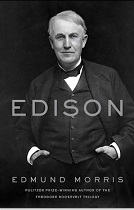
Edison – Edmund Morris

EdisonEach morning, men and women make their way to  the NJ Transit rail station located at 12 Read Street in Edison, New Jersey. The township consistently ranks among the best in the Garden State and is a desired suburb of the New York City area. Its Menlo Park section was once home to the brilliant inventor Thomas Alva Edison (1847-1931), whom the area is named after. Of course, the Edison Township we know today is vastly different from the open land the inventor called home in the 1800s. And it was here that some of his greatest successes were had as he helped propel America forward with the aid of innovative technology. This biography by author Edmund Morris, provides a solid glimpse into his unorthodox life. 

Readers should be aware that the book does not follow the standard biography format. In fact, it begins near the end of Edison’s life. The author then moves backwards in time, closing the story when reaching his childhood. The change in approach may deter some readers but there remains a relevant story to read. Almost immediately, we learn of Edison’s dietary habits and health issues, due to his erratic lifestyle and maniacal focus on his work. It has been said that there is a fine line between genius and insanity. Edison may have straddled it throughout his entire life. However, there is more to the book which is a trove of information. But I did feel that the technical explanations regarding the earth shatteing inventions may be too detailed for readers without a background in mechanical or electrical engineering, which may result in eager studens of history strugglin in understanding Edison’s inventions and the problems that arose. I was able to follow along in general but admittedly, some of the concepts require a solid understanding of the various components at play. Morris does a masterful job of simplifying the issues as much as possible, but the reality is that there are concepts which cannot be translated into layman’s terms. This is why Edison, and his contemporaries were in a league of their own.

I mentioned before that the book technically reads “backwards”. In fact, the author tells the story of his second marriage to wife Mina Miller Edison (1865-1947) before we learn of the full story behind his first marriage to Mary Stillwell Edison (1855-1874). Edison’s relationships with both were quite strange as he was rarely around. Further, their ages at the time of the weddings would certainly raise eyebrows today. His marriage to Mary would have invited public scrutiny and prosecution in modern times. However, in the 1800s times were different and Edison’s courtship of both paid off. Despite his time away from home as he patented one invention to the next, he also had to contend with his growing children and the blended family which resulted after Mary’s demies. This is undoubtedly the darkest part of the book. Did Edison love his children? Yes, but their bonds were often stormy and his son Thomas Alva Edison, Jr. (1876-1935) stands out as the most tragic of the brood. Frankly, the stories are unreal. Edison could control the inventions, but his family was another story. 

There is also the issue of Mary’s death which by all indications remains a mystery. I felt a chill in my body as I read the small passage about her death and the unanswered questions never addressed. I may do further reading to learn what really happened to her. Here, we are left with more questions than answers but the author is as surprised as we are, and there is the chance that the truth is lost to history. Of course, there is a plausible explanation but it is in need of firm evidence for a final conclusion.

Although the story is presented in an unusual format, I did enjoy reading it, in particular the section regarding the success of Edison and his team in creating the first power stations to provide light in Europe before turning their attention to lower Manhattan. It was an incredible feat in 1882 when Wall Street came alive with lights, and it helped set the stage for the power grids we have today. I also enjoyed reading about the phonograph and the capture of the human voice which could then be preserved forever. Edison was a marvel for sure, but privately, he still struggled with basic aspects of his life, most notably his constant health problems and endless drive to work without proper rest or nutrition. Both affect him more than once in the book, and I was surprised that he lived as long as he did. And while he dealt with both issues, there was also the business side to inventing which invited intelligent minds, backstabbers and grifters. All three factor into the story, and we see times in which Edison should have been more focused on finances. However, he was an inventor at heart and never stopped creating. 

There is a wealth of valuable information about Edison in the book, but it did feel as if his childhood did not get enough coverage. The author does discuss family life but briefly as the book’s conclusion approaches. I feel that the book would have benefited from a more extensive discussion of the young Edison. To be fair, we do learn some things about his childhood but there is much to be desired. And of course, it was America during the 1800s which invites questions about the nation’s struggle with race. Surprisingly, the Civil War barely receives a mention in the book and there are a couple of passing remarks in regard to racial issues that are never fully explained. It is known that Edison benefited from the help of African-American inventor Lewis Latimer (1848-1928) but that working relationship does not receive its due diligence. Further, the famed inventor was a staunch Republican but his views on society’s issues are not explored in the book. I would have liked to have known more about Edison’s views, if any, on the world in which he lived outside of the newest invention. Yet despite these shortcomings, the book is a good place to start if you want to learn more about the man who changed history. 

If Thomas Edison were alive today, he would be shocked and pleased to see how far technology has advanced. The electric cars we have today are far more advanced than the vehicle he conceived more than one hundred years ago. And his storage batter has stood the test of time. There is much we owe to Edison’s dreams and the creations which resulted from those visions. He was ahead of his time but also deeply flawed. As an inventor, he was able to bring ideas to life but as a father and husband, his absences left their mark repeatedly. And even those who knew him best often found him mystifying. But he remains one of history’s greatest minds and the next time you flick on a light switch, Thomas Edison is one of the people you can thank. 

ASIN ‏ : ‎ B07NCMDWZD

Patrick Henry: Champion of Liberty – Jon Kukla

Henry

On July 4, 2024, America will once celebrate its independence from Great Britain and creation of the United States. The year 1776 was a turning point for North America, a continent destined for radical change, bloodshed, transformation, and redemption. The colonists living under British rule understood that independence would be costly. However, overreach from England and the passage of legislation intended to enrich its coffers, proved to be too much. What started as small conversations, soon emerged as a revolution that produced some of the most prominent figures in American history. Among them was the late Patrick Henry (1736-1799), one of America’s founding fathers and the first Governore of the State of Virginia. History classes and pop culture have referred to his famous line “give me liberty, or give me death!”, but Henry was far more interesting. This biography by Jon Kukla takes a look at Henry’s life and the founding of a nation.

As I began to read, it dawned on me that Henry had never served in the Federal Government. At first, I thought to myself that it was odd but having read the biography, I understand his decision to remain in Virginia. And despite his reluctance to serve in a presidential cabinet, he became one of the strongest voices for independence. But first, we learn about his early life in Studley, Virginia when the thought of a United States had not yet been conceived. As I read the book from the comfort of my modern-day home, I imagined life in the 1700s and the hardships people endured. Life was not easy but there were colonists who had no issue with British rule and thought independence was far-fetched. However, life changed with the passage of legislation from England that placed the colonists in a financial chokehold. On March 22, 1765, the British Parliament passed the Stamp Act, and this piece of legislation provided the final spark needed to ignite the American Revolution. But where was Henry throughout all of this? Well, he was not off to the side keeping his thoughts to himself. In fact, next to Samuel Adams (1722-1803), Henry emerges as a leading figure in the quest to end British tyranny and live freely in a new nation. The author does an incredible job of re-creating the past as we follow Henry’s path as the suspense heightens. Familiar names enter the story as the small group of conspirators evolves into a movement.

Britain was aware of the colonists’ growing frustrations and plans to revolt. Its attempts to quash rebellion but it soone becomes clear that the movement for independence cannot be stopped and a battle was brewing. What ensues is a cat and mouse game between the colonists secretly meeting and corresponding, and the British seeking to break apart the “troublemakers” causing dissention in the colonies. And before long, the war is on. However, Henry does not find himself on the front lines with troops but instead with other visionaries who began to shape what would become the United States Government. And for good reason. Readers with a strong interest in America’s creation will love this part of the book. While reading, I could feel the excitement as vision became reality and colonies became the Union. Of course, there were bumps along the way with disagreements over policy and the war effort itself. In one case, Henry makes a crucial decision that cemented a lifelong friendship with America’s first leader, George Washington(1732-1799). And the elephant in the room is the issue of slavery which became increasingly abhorred as cries for freedom echoed across the colonies. Henry was no stranger to slavery, having inherited slaves like other leading figures of his time. But to his credit, he was vocal about its ills and the need for its removal. However, the dilemma he faced was the same issue the first Republican President, Abraham Lincoln (1809-1865) would face decades later when American became embroiled in a civil war. But, while serving in Virginia’s government, Henry does make strides to abolish slavery. Today it sounds unreal that a discussion was needed but in the late 1700s, humand bondage was a way of life in many parts of the world.

Following the British defeat, the founding fathers realized there was work to be done. And this is where the story takes an interesting turn. The creation of a new country was no small feat, but Henry and his fellow patriots had a vision they believed in. Of course, there were hiccups along the way as we see in the book. Henry was unwavering in his beliefs, and his steadfast nature earned him the respect of his peers, even when they disagreed. There were those who learned this the hard way as we see in the interactions with future U.S. President Thomas Jefferson (1743-1826) and New York State’s first Chief Justice, John Jay (1745-1829). The rift between Henry and Jay is interesting, and I learned of it for the first time in this book. Jefferson’s fallout with Henry is also intriguing, but for reasons different from the situation involving Jay. But what is perfectly clear is that Henry would never budge from the things he passionately believed in and fought for. And this brings us to his position on states’ rights. Of all the founding figures I have read about, Henry is by far the most vocal when it comes to states’ rights and limited federal government, arguments that occur to this day. And interesting, what sets off the chain of events is a suggested policy by the Government about the debt from the war which sets off the alarm bells in Henry’s mind.

Following his retreat from government, Henry’s life becomes quiet as the book reaches its conclusion. And the final moment we know is coming arrives and marks the end of an extraordinary life. Today he is best known for a slogan, but in his time, Patrick Henry was both feared and respected. And without him, American history might be vastly different. He was flawed as we all are, but no one could question his commitment to a nation free of British rule and joined together as the United States. Highly recommended.

ASIN : B01MQ3LVJP

Samuel Adams: Father of the American Revolution – Mark Pu

adamsOn March 22, 1765, the British Parliament passed the Stamp Act, assessed a tax on  various forms of papers, documents, and playing cards, which was to be paid by the people living within its colonies on North American soil. The legislation provoked outrage and was abolished a year later. However, for the colonists it was a sign that independence from Britain might be the best course of action. One advocate for independence whose voice became dominant was Samuel Adams (1722-1803), a member of the Massachusetts House of Representatives and future Governor. Today he is known was the father of the American Revolution, but his life has become an afterthought. I found this biography by author Mark Puls and decided to learn the life story of a revolutionary who changed history. Having finished the book, I now have a new understanding of American history.

Friends of mine who live abroad have teased about America being a “young” nation in comparison to countries around the world. I cannot argue that point but also note that in its “short” existence, America has accomplished remarkable feats and played crucial roles in world events. And the key to understanding the American spirit lies in its creation in the late 1700s when colonists decided that British rule had to end. However, not all of them were anti-British, and some wanted to remain loyal to the crown. But for Adams, freedom was the only option. His story begins in Boston, where he was born in 1722, a time in which the British Parliament was in full control of its colonies. But that does not prevent the young Adams from coming of age, and we follow him as he matures into a young man blessed with a bright future. Love also enters the story when he meets Elizabeth Checkley (1725-1757). The couple take their vows but later experience unbelievable grief as we see in the story. I found Adam’s ability to continue after so much loss to be a testament to his character which was needed as the movement for independence grew. But not all was lost, and he later weds Elizabeth Wells (1735-1808) who remained with him until his death.

The passing of the Stamp Act is when the story picks up the pace. However, the British Parliament also passed the Declaratory Act which set off alarm bells throughout the colonies. England had started to seal its own fate. For Adams and like-minded individuals, the crown had gone too far and thus, the revolution was born. Before we reach the War of Independence, the movement needed members and this is where the suspense heightens in the book as familiar names enter the story such as future President Thomas Jefferson (1743-1826), and Declaration of Independence signatories John Hancock (1737-1793) and Benjamin Franklin (1706-1790). Britain was not oblivious to the rumblings in the colonies and as explained by the author, it took steps to quash the growing discontent. However, the movement was carefully guarded, with subversion as a useful tactic. In fact, Franklin becomes aware of the colonists’ plans while stationed in London. And his importance cannot be overstated. All were aware that England was watching yet they were determined to see independence. The story becomes a cat and mouse game as the revolutionaries move under the radar while Britain becomes focused on the trouble across the Atlantic. Both sides knew a breaking point was coming. And everyting did come to a head in one event that changed the course of history: the Boston Tea Party.

If you have visited Boston, I am sure you’ve seen the Boston Tea Party Museum. For those who have not, I highly recommend visiting the museum and seeing the preserved ship for yourself. It is step back in time when colonists began to see a country ruled by Americans. On December 16, 1773, Griffin’s Wharf became ground zero as colonists dumped tea chests into the water in protest of the Tea Act. The response from England was expected and severe but did not serve its purpose of deterring future rebellion. The fuse had been lit. And leading the way was Adams whose goal was complete liberation. War eventually comes and forces the colonists to prove their determination. Behind the scenes, Adams, Hancock, and others were hard at work laying the foundation for the United States of America. However, that also proved to be a challenge. In fact, as shown in the story, there were colonists who supported more freedom but also saw value in British rule. But for Adams and Hancock, whose friendship goes through its own roller coaster ride before finding solid footing before the latter’s death, a new nation was worth the bloodshed.

The author provides reports from the war as Adams’ story moves forward, including an appearance by America’s first President George Washington (1732-1799). As a history buff, I could not stop reading as the images of America’s founding were created in my mind. I do caution that the book is not about the war itself. This is Adams’s story and his actions which paved the way for the country I call home. I enjoyed reading about Adams, regrettably turned into a pop culture through a brand of beer. However, there was far more to this man than you might imagine, and to the men who turned a vision into reality. While reading, I could visualize the drafting of the Declaration of Independence and the early version of what became Congress. The founding fathers were brilliant at organization, and this can serve as a case study on how governments were conceptualized. Of course, not all was perfect, and amendments were needed. But the foundation had been laid and it continues to serve us today.

Following the birth of the United States, Adams finds a place in local government, right in his home state of Massachusetts. He came governor following Hancock’s death and remained at the helm until 1797 when he retired from public life for good. On October 2, 1803, he passed away peacefully at home. And when the end was near, I am sure he was able to look back with pride on all that he had one to create the newly independent United States and make his transition from this world to the next.

ASIN: ‎ B00Z65S44I

Golda – Elinor Burkett

Golda

On May 14, 1948, David Ben-Gurion (1886-1973) beamed triumphantly as the State of Israel was formally created.  The nation’s first prime minister delivered the declaration of independence in Tel Aviv as the world watched. The establishment of a Jewish nation in the wake of World War II became a pivotal moment in world history. One of the signatories to the declaration was Golda Meir (1898-1978), who later became the first female prime minister of the country. The occasion was monumental but the alarm bells soon started to ring as tensions with the Arab world intensified.  In public, Meir  presented a stern face and immovable character as she championed Israel’s future. But in private, her life was vastly different and rife with personal struggle. It is a stunning contradiction of the woman who carried the torch as she led Israel. This is her story as told by author Elinor Burkett.

I recognize that due to current events, matters regarding Israel, the Palestinian people and the Gaza Strip are disheartening and controversial. If you are a staunch supporter of the Palestinian people, this book may not be for you. However, I can say after finishing the book that Meir was not oblivious to the plight of Palestinians and had foresight that could have prevented future bloodshed. But hindsight is always perfect vision and there is more to her story than the events on the world stage. Her story begins in Ukraine as the Meyerson family is forced to leave due to persecution of Jews. They emigrate to American settling down in in Milwaukee and soon learn the ways of the Midwest. But Golda is not one to stay put and in her late teens, leaves for Denver, Colorado to live with her sister Sheyna (1889-1972). And it is apparent early in the book that she is unlike any of her peers or her family members. Golda’s stubborn independence would carry her throughout her life as she rose through the ranks in the Israeli government. But first shefound a significant other.

In 1917, Golda married her husband Morris (1893-1951), who agreed to relocate to Palestine in order to have her hand in marriage. However, that did not help their relationship, and this is one of the saddest aspects of her story. It also made me question her extreme commitment to Israel’s cause. Surely, the creation of the Jewish state was important but was it worth the personal sacrifices she made? Morris comes and goes in the story, constantly trying to reconnect with his wife. His efforts are futile but after his death, Golda never remarried nor did she ever forget him. The couple bring two children into world, Menahem (1924-2014) and Sarah (1926-2010). And like their father, they too would not have the relationship they desired with their mother who was always away working for the Israeli cause. Golda was not ignorant of the fact that her children felt neglected and on occasion in the story, she tries to mend fences. There is no doubt she cared for them, but the lack of quality time and guidance is vividly apparent. She even seeks affection outside the home, and those relationships proved to be just as problematic.

While away from home, Golda is hard at work as we see in the book and seems to never run out of steam as she campaigns for the cause. However, she was suffering in private, and health issues arise. They are  compounded by a poor diet and a steady stream of cigarettes. But Golda never slows downs, even in the face of sexism which became an issue as she became the favorite for the prime minister role. And in 1956, anyone who doubted her was forever silenced when she became the first female prime minister. Her work was far from done, and this is where the story changes gears as the threats from Arab nations increase. War eventually breaks out placing Israel in a fight for its existence. Domestically, the issues of territory and displacement of Palestinians also arise and Golda’s views on both are likely to surprise some readers. She was keenly aware of what was happening to the Middle East but hardliners within her own government proved to be quite a challenge. But those domestic issues were forced to take a backseat when the Yom Kippur War ignited in 1973. The author provides a good recap of actions behind the scenes highlighting what was at stake. Further, Israel’s relationship with the United States factors into play as Golda does her best to influence America’s president Richard M. Nixon (1913-1994).

Israel survived the war, but Golda’s career did not fare as well. We follow her in private as she contemplates her decisions, the broken relationships in her life and mortality. The “Iron Lady” had proven to be a capable leader but the role took a heavy toll on her life. And it is this side of the story which is the most heartbreaking as her physical decline becomes apparent. Yet she never asks for pity and keeps going when possible. She accomplished what was thought to be unthinkable for a woman but that came with a steep price. Her passion, drive and willingness to make tough decisions are all on display. Quotes by Golda herself provide further insight to her character and her personal issues which she was unable to conquer.

On December 8, 1978, Golda lost a twelve-year battle with lymphoma and was laid to rest in Mount Herzel, leaving behind a complicated yet history changing legacy that is relevant to this day. If you are looking for a biography of Golda Meir that shows both sides of the public figure, this is a good place to start.

No matter how anyone else, now or then, measured her life, Golda had an unwavering standard for herself: “I can honestly say that I was never affected by the question of the success of an undertaking. If I felt it was the right thing to do, I was for it regardless of the possible outcome.”  

ASIN : B0017ZMZ0U

The Devil’s Diary: Alfred Rosenberg and the Stolen Secrets of the Third Reich – Robert K. Wittman and David Kinney

RosenbergOn October 16, 1946, former Nazi theorist and ideologue Alfred Rosenberg (1893-1946) met his demise following his conviction at the Nuremberg trials in the wake of World War II. His ideologies and actions had contributed to the Third Reich’s quest for world domination, spearheaded by Reich Chancellor Adolf Hitler (1889-1945). Several decades after Rosenberg’s death, researchers discovered the remaining pages of his diary which had been kept hidden by former Nuremberg prosecutor Robert Kempner (1899-1993), who had fled Germany when the Nazis came to power. The discovery raised important questions. Why did Kempner keep the unmarked pages of the diary and what was Rosenberg’s role as the Nazis took over Germany? The answer to the first question is lost to history as Kempner is no longer with us. The answer to the second question is dark and disturbing.

Authors Robert K. Wittman and David Kinney explore the incredible story of Rosenberg’s diary in this book that is a fascinating account of the dysfunction within the Third Reich, its deadly effect on the world, and the events that sealed its fate. However, the story is also about Kempner, whose own life was filled with unbelievable twists and turns. Admittedly, I did not know about him prior to reading this book. I was familiar with lead prosecutor Robert H. Jackson (1892-1954), and have become aware of other officials who fulfilled their duties in bringing the remaining members of the Third Reich’s government to justice. But before the authors go into the war and the fallout from the Allied victory, we first learn about Robert Kempner’s life and the how the diary was discovered.

Today it would be unthinkable that an item of importance such as Rosenberg’s diary could disappear from official archives. After Rosenberg’s death, the diary became moot in prosecuting his crimes but from a historical perspective, its value could not have been overlooked. And had it not been for its discovery in Kempner’s Philadelphia home, it may have been lost forever. The story of how it came to light is interesting but by no means simple.  is quite unorthodox. Further, Kempner’s personal life has its own secrets which the authors do not shy away from. What we learn about him does create a contradiction that is hard not to notice. But it is imperative to remember that Kempner had been forced to flee Germany himself, and his migration to the United States had its own complexities as seen in the story. What is clear is that the Nazis had created an enemy who would come back to haunt them following Germany’s defeat.

Following the discovery of the diary, the story shifts gears and focus is redirected on Hitler’s cabinet and the war. Rosenberg comes off as an odd figure, highly unlikeable and seen as a quack by others. His book ‘The Myth of the Twentieth Century‘ is discussed, and is privately ridiculed. Even Hitler himself takes shots as Rosenberg’s ideology. Publicly the book sold well, but one could argue that not supporting the Nazi party mantra would not have gone over well. Despite his quirks, Hitler kept him close as he continued to plan an all-out assault on Europe. Back in London, officials were keeping an eye on the growing Austrian menace and on September 1, 1939, all doubts were removed when Germany invaded Poland. But why did the Nazis invade? They knew that Britain could come to Poland’s defense. But while reading the book and learning more about Rosenberg, I came to see that the Nazi party was full of deceit and people who had little experience to the world outside of Germany. In fact, Hitler himself had never crossed the Atlantic Ocean. The plots and shaky alliances are on full display here as dirty laundry comes to the surface and scores are settled against those seen as “subversive”. The most chilling example in the book is the “Night of the Long Knives” in June 1934. Rosenberg was power hungry just like Reich Minister of Propaganda Joseph Goebbels (1897-1945) and Reichsführer of the Schutzstaffel Heinrich Himmler (1900-1945). Further, he played a crucial role in the tragic “Final Solution“. And through their own words, it is evident that they had little respect for each other and no one thought highly of their co-conspirators. We also learn secrets of the Reich, including the artwork and valuables stashed away in Nazi hideouts to avoid detection. 

On June 22, 1941, Germany invaded the Soviet Union in what could only described as insanity. Early victories provided Hitler with a premature sense of security but by 1943, reality began to set in as the Russians pushed back and Allied troops continued their march across Europe. The collapse of the Reich plays out here, and the writing is soon on the wall. Rosenberg makes his escape but is eventually captured by Allied forces. And this is the beginning of the end for the fanatical ideologue. Robert Kempner had earned a place working for the U.S. Government, and as seen in the story, he had made overtures to none other than former Federal Bureau of Investigation Director J. Edgar Hoover (1895-1972). He never joined the bureau but found himself in an interesting position when he is asked to return to Germany and assist in Nuremberg. His personal life was still complicated as the authors show, and even when he arrives in Germany, his son Lucian is still going through tribulations of his own. His son’s ordeal is also surreal but highlights the danger that existed for potential “enemies” of the Reich. In Nuremberg, Kempner came face to face with those who had forced him to leave the country of his birth. And through parts of the transcript provided here by the authors, we see him spar verbally with Rosenberg in what can only be described as mind bending.

While reading the snippets from Rosenberg’s trial, I could not help but sit in disbelief at the answers he gave. It was either lunacy or extreme arrogance, but regardless, neither was going to save him from the gallows. But what I found the most disturbing is the disconnect he shows towards his role in the deaths of millions of Jews. This part of the story gave me chills. But it also shows how deeply he believed his own crackpot ideology. Frankly, I can see why Hitler kept him close: he was far more dangerous outside the party than inside of it. After the saga of Rosenberg’s futile attempts at avoiding guilt, the final act plays out. There is no fanfare or celebration at his ending. He is removed from the picture and becomes a footnote to history. However, his diary continues to exist and stands as a window into the madness of the Third Reich. If you are fascinated by World War II and looking for material to expand your knowledge, this should be on your list.

“There is no record in history,” one academic wrote, “of any more pronounced or more uncompromising anti-Jewish polemicist than Alfred Rosenberg.”

ASIN :‎ B00PQRH7VC

Black in Latin America – Henry Louis Gates, Jr.

Gates

In March 2018 I visited the South American nation of Uruguay, located to the east of my beloved Buenos Aires, Argentina. The visit was my first and as I walked down the streets of Montevideo, I found myself a witness to an impromptu dance celebration in which Afro-Latino culture was on full display. The performance was brilliant, and following that surprise, I visited a museum dedicated to the garments worn during carnival. I also learned about Rubén Rada, a multi-talented Uruguayan performer. I felt a sense of pride at seeing people who would pass as Black Americans displaying their cultural heritage. But I also asked myself, why was I so surprised? It is no secret that Black people can be found all across Latin America. Further, I can trace my own family’s roots on my father’s side back to Central America. And my father has told me more than once that Spanish was spoken by the older generation when he was a kid growing up in Brooklyn, New York. When I saw this book by Professor Henry Louis Gates, Jr., I decided to pick it up and see what was inside. What I found is a valuable tool in understanding world history and the complexities countries struggle with to this day.

The book is presented in a different format than might be expected. We follow the author as he travels around Latin America, meeting scholars and historians who do their best to answer his questions about the concept of race in countries where official labels have been removed. The past is always prologue, and to understand things today, Gates through the help of those being interviewed, takes us back in time when the Spanish Empire perfected the process of colonization. We make stops in Brazil, the Dominican Republic, Haiti, and even Mexico, learning how colonization shaped the culture and policies. Revolutions broke the shackles of Spanish rule but sadly, the matter of color did not go away as we learn through the speakers in the book. And if there is one thing that is constant, it was that in every country, Afro-Latinos continue the struggle for recognition and advancement. But not all is dark in the book. In fact, there are bright moments all throughout the story as the feats and accomplishments of historical figures come back to life, highlighting diversity and resilience across Latin America.

No travel memoir would be complete without food and that applies here. Gates makes sure to let us know about the cultural delights across Latin America as he becomes a guest to individuals whose intellect and actions which make exploration a necessary tool in broadening the mind. The history we learn is incredible and will change the way you view Latin America. But there is an iron that I could not ignore while reading the story. Latin American nations, in an effort to “confront” racism, embraced the elimination of ethnic labels. However, as we see in the book, that decision had an effect they did not anticipate which continues to this day. On the positive side, the acknowledgment of Afro-Latino heritage continues to grow, and as I have seen with my own eyes, Latino is not a monolith. I have shared meals, drinks and sleeping quarters across Latin America with people of all shapes, sizes, and skin colors. And in those moments, they were my brothers and sisters or as they would say “nosotros somos hermanos”. In this story, Gates is the brother of another mother who learns things about Latin America that leave him both shocked and with more questions.

As I read, I found myself enthralled with the people the author meets who are all beautiful people. Their knowledge is surreal and through Gates, we learn history either hidden or omitted. Brazil is a special stop as the country contains the largest Afro-Latino population of any Latin American nation but the countries which caught my attention the most were Haiti and the Dominican Republic. The latter I have visited multiple times but have never traveled to its western neighbor. As I write this blog post, Haiti remains locked in the vice grip of gangs who seized control of the country while acting Prime Minister Ariel Henry was on a trip to Kenya. He has agreed to step down as a “transitional council” is completed to restore order in Haiti. Gangs have warned that any movement without their consent will result in further anarchy in Haiti. I hope that peace prevails, and Haiti can find a path forward. The Dominican Republic has secured its borders and air space and drawn criticism for sending Haitians back across the border to their country. But underneath the surface, these two countries have a long history and Gates dives into it, providing a crash course on the history of Hispaniola.

Gates does a respectable job of asking tough questions, and also gets multiple opinions, sometimes from taxi drivers and bystanders on the streets. The answers vary, and show that within Latin America, things are far from black and white. In fact, there are many shades of grey.  And a full discussion on the history of Hispaniola would require a book several times longer than this one. But what Gates provides is enough information, paying close attention to the dates and iconic figures who changed Latin American history. Seasoned travelers,  historians, and readers from the countries he visits will know many of the things, if not all, that he writes about. But for readers who have never traveled to Latin America, this book is a primer on cultural aspects that are both insightful and sometimes uncomfortable. But issues can only be resolved if they are confronted.

Currently, change is spreading across Latin America as people have reached their limits with poverty, corruption, ineptitude and political instability. Chile continues its mission to full replace its constitution. Argentina elected a new president who is sending shockwaves across the country. In Peru, the government continues to face mounting dissention. And in Brazil, a former president is facing accusations of falsifying Covid-19 data and having plotted to subvert an election. This is only a sample of the list of places currently in the midst of unrest. Change is coming, but any improvements that occur should include all Latin Americans regardless of what they look like. Progress is slowly being made but there is still work to be done. And despite the long-lasting effects of Spanish colonialization, understanding and acceptance of ancestry will continue to grow as technology advances and history is revealed.

In the summer of 2017 while on a trip to Miami, Florida, a fellow traveler visiting from Puerto Rico struck up a conversation with our group and told me “you and I are brothers, we share the same bloodlines”. Others in the group were surprised because the two of us had quite different appearances. But what I understood is that he was acknowledging the island’s African and Taino legacies, which remain crucial parts of Puerto Rican culture. I thoroughly enjoyed reading this book in which the story never loses its pace. Once Gates hits the ground, he is off to the races, exploring Latin America and all that it has to offer. The title is  eye-catching, but I can assure you that the book is not a “rage against the machine” or an attempt to paint Latin America as a dark and unforgiving place. In fact, whether you are Black, White, Hispanic or other demographic, you can find something of value in this book. History is not always pleasant, but it does teach. And here we are the students who must learn history that can help plan the future. Highly recommended.

ASIN ‏ : ‎ B005C9GNTQ