
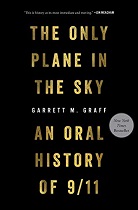
 This past Sunday marked the twenty-first anniversary of the September 11th attacks which claimed the lives of 2,996 people. The mood in New York City was somber, with rain and dark clouds all day. However, that did not stop anyone from remembering the tragedies on September 11, 2001, a day that changed America. Friends are always surprised to learn that I have never visited the 9/11 Memorial and Museum. As a New Yorker who was in Manhattan on the day of the attacks, and watched the events unfold from an office window, I will always have my memories of that sad day. But my reluctance to visit the museum has never prevented me from reading and hearing stories from people who were at the World Trade Center and survived. Undoubtedly, there are survivors who have never told their stories, choosing not to re-live the events of that day. Thousands of others did go on the record and their words have been preserved so that the history of 9/11 can continue to be told to future generations. Author Garrett M. Graff has compiled hundreds of statements from survivors, Bush Administration officials, NYC officials, military personnel and first responders, and has turned them into this oral history of the attacks.
Because the book is an oral history, there is no standard narration. The author does provide relevant information when needed but otherwise, the speakers tell us what happened as the day progressed. They range from former President George W. Bush to office workers at the World Trade Center complex. To be clear, Bush does not give an interview but what is included are snippets from the speeches he gave to the country on the evening of the attacks. Readers may feel that the approach is disjointed at first because the statements provided by the speakers are short but also long enough to give you relevant information. And the format works beautifully because it allows them to add small pieces to the bigger picture. And what emerges are unbelievable stories of luck, courage, heartbreak, and fate. You will experience a range of emotions and in the epilogue, the author discloses that even he became emotional while authoring the book. But he pressed forward, and the result is a masterpiece that belongs in the vast archive of materials about the 9/11 attacks.
Readers will notice that there are four stories in the book, one for each phase of the attacks that morning. They began in New York when the North Tower was struck at 8:46 a.m. At first, it was thought that a horrible accident had taken place but when a plane struck the South Tower, it was clear that America was under attack. Surprisingly, the response to the threats did not move at the speed at which one would hope. In fact, the confusion and chaos within America’s air defense network is clear in the book. Fighter pilots were forced to take flight in time spans they would never see under normal conditions. And what the pilots reveal about how prepared they were, and the reality of confronting Flight 93 will give you chills.
There are no smoking guns in the stories and the alleged hijackers are rarely mentioned but there is a wealth of information in the book about what took place behind the scenes within the World Trade Center, the Pentagon, the hijacked airliners and Air Force One which found itself the only plane in the sky as officials shut down America’s air space. As I read the book, I noted that the sobering reality of that day is that no one imagined that type of scenario. Former New York Fire Department Commissioner Thomas Van Essen, who watched the deaths of hundreds of firefighters, first responders and civilians has stated that “nothing could have ever really prepared us for what happened—or how fast the events would unfold“. All hell broke loose in Manhattan and the horrors of the battle to survive at the World Trade Center as told by the survivors is haunting. I felt chills reading of the last moments from trapped workers on floor about the crash location and the breakdown in communication that could have saved lives. At the helm was Mayor Rudolph Giuliani and his statements also show how chaotic the day had become. 9/11 was a day that no one thought could ever happen but there were warnings that something was brewing and that an Islamic fundamentalist had America in his crosshairs.
Prior to the attacks of 9/11, the name Osama Bin Laden (1957-2011) was unknown to the public. But there were officials in Washington who knew of him and his plan to destroy America. The author does not explore whether Bin Laden was guilty and how planning was executed or any connections between the alleged suspects. He leaves that to the speakers who do state that they believed Bin Laden was behind the attacks. Aboard Air Force One, President Bush was briefed throughout the day and the former administration officials who appear in the book clarify any theories about his alleged “strange behavior” that day. The main concern was always Bush’s safety due to the belief that the president himself was a target. Action was swift and the Secret Service was taking any chances. The cabinet’s departure from Florida and decision to land at Barksdale Air Force Base are revisited in vivid detail and the suspense unfolds like Hollywood but this is what happened, and there was no script that day. People had jobs to be done and they went into action to the best of their abilities. The number of heroes in the book is staggering and chance encounters proved to be a matter of life or death.
The day after 9/11 I remember the feeling in New York City that what had transpired the day before could not have been real. It felt as if we were trapped in a horrible nightmare that would not end. We wanted to go back to Monday September 10 and keep that day going instead. But as weeks turned into months and crews continued with the cleanup of debris and identification of remains, the dark and unsettling truth that America was not immune to attack became clear. The country had changed, and the threat of terror became the number one priority. Children coming of age today will only know the attacks through multimedia but for older generations, 9/11 remains vividly clear. And we have authors such as Garrett M. Graff to thank for the books that preserve the history of the attacks that impacted the United States and the world. This oral history of that day is a treasure and a literary work that is a gift that keeps on giving.
ASIN: B07P5H18W6
 The more I learn about history, the more I realize how much of it is not taught in schools. I recall learning about the Civil War but in limited discussions. And I fondly remember the 1989 film
  America has always loved gangster stories. Tales from the lives of larger-than-life characters both feared and respected have captivated film audiences and true crime readers. In my hometown of New York City, the Italian American mafia holds a firm place in the annals of the city’s crime history. Of all the mafia bosses, none was as flamboyant and media savvy as the late Gambino Family boss John J. Gotti (1940-2002). The media nicknamed him the “Teflon Don” due to the acquittals his lawyers obtained of a multitude of charges that could have put the mafia boss in prison for life. On March 13, 1987, Gotti and his co-defendants were acquitted of federal racketeering charges and the verdict left prosecutors in the Eastern District of New York licking their wounds. Gotti and his fellow mobsters were elated the Federal Government was far from finished. However, prosecutors knew that to convict Gotti, they needed irrefutable evidence of his crimes and witnesses willing to testify. As fate would have it, in time prosecutors would obtain all that they needed through a chain of events that began with wiretaps in the home of mobster Angelo Ruggiero, Sr. (1940-1989) known as “Quack Quack”. And leading the mission for the Government was lead prosecutor John Gleeson, also a former judge in the Eastern District. This is the story of how the United States Attorney’s Office in Brooklyn secured a conviction against America’s most notorious mobster.
 New York City is famously known as the “Melting Pot” due to the diversity among the residents that call it home. As a lifelong New Yorker, I can attest that the city attracts people from every part of the world. However, what is often neglected is that diversity and assimilation are two very different concepts. That is not to say that the entire city is divided. In fact, my neighbors hail from places both domestic and abroad. My father has told me stories of his childhood in Brooklyn and his neighbors who had emigrated from Eastern Europe. He has fond memories of the Italian woman who cooked breakfast for him and my uncles and the Jewish neighbor who made fresh breads and other dishes they loved. But that all changed when my grandmother moved the family to a different part of Brooklyn and the Government began to de-segregate public schools. The pushback from the middle class was swift and in May 1968, tensions came to a head at P.S. 271 in Ocean Hill-Brownsville, Brooklyn, when teachers engaged in the first of several strikes that changed New York. This is the story of those strikes and the people whose actions changed New York City politics.
 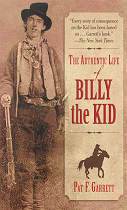 Billy the Kid remains one of the most mythical figures of the American Old West. There are parts of his life that remain a mystery, but “the Kid” did shoot and killed several men before his own death at the hands of Deputy U.S. Marshall Pat F. Garrett (1850-1908), on July 14, 1881. Following the Kid’s death, Garrett authored this book regarding his former acquaintance. For decades it stood as the best account of the Kid’s life but has been surpassed and challenged. Further, the book is Garrett’s account and not subject to cross-reference within. While it is true that Garrett did know the Kid, questions remain about the outlaw’s life.
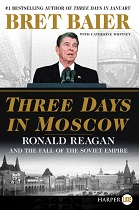 Readers old enough to remember the Soviet Union will recall the shock and disbelief that came with the Union of Soviet Socialist Republics (U.S.S.R.) flag being lowered for the last time on December 25, 1991. The “Cold War” had come to an end, but a long road lay ahead between the United States and Russia in coming to terms with each other’s way of life. On May 29, 1988, United States President Ronald Reagan (1911-2004) and First Lady Nancy Reagan (1921-2016) arrived in Moscow for a three-day summit with Soviet General Secretary Mikhail Gorbachev and his wife Raisa (1932-1999). It has been held as a triumph in American foreign policy and as an example of strong leadership. In less than three years, the Soviet Union dissolved, and Reagan was vindicated in his predictions of its demise. During the summit, Reagan spoke to the people of the Soviet Union at Moscow University and to this day it stands as a breathtaking moment in world history. But as always, there is more than meets the eye. Fox News host Bret Baier revisits the summit in this book about three days that impacted world history.
 In 2019 the Urban Institute conducted an analysis of the welfare system in the United States. It found that at least fifty-nine million Americans were on some form of public assistance mostly obtained through six major welfare programs in the country. The people in need of assistance will vary but the image that was once presented to the public stands in stark contrast to reality. In his first run for office of the president, California Governor Ronald Reagan (1911-2004) (R-CA) used the welfare system as part of his program to appeal to conservative voters. Unbeknownst to voters, Reagan had set his focus on a woman in Chicago who would later be called the “Welfare Queen”. The truth is not as glamorous and far more bizarre but that did not deter Reagan from using the case of Linda Taylor (1926-2002) who represented all that was wrong with the system in his eyes. His first campaign for president failed but he mounted a second campaign that culminated with the defeat of sitting President James E. “Jimmy” Carter in 1980. By then Taylor was an afterthought but her life was far from over. In fact, as Josh Levin shows in this biography, her life was full of mystery, tragedy, and dark moments.
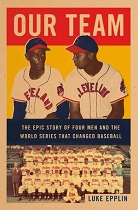 In 2012 Warner Bros. Pictures released the film ’42’ which tells the story of how Jack Roosevelt “Jackie” Robinson (1919-1972) broke the color barrier in Major League Baseball (“MLB”). The late film star Chadwick Boseman (1976-2020) starred as Robinson in the biopic and delivered a phenomenal performance. Robinson did break the color barrier, but he was not the only player to do so at that time. In Cleveland, Ohio, Indians owner William Louis “Bill” Veeck (1914-1986) was determined on further integrating baseball and set his eyes on the Negro Leagues as a pool for untapped talent. Soon enough, he had purchased the rights to Lawrence Eugene “Larry” Doby (1923-2003). The Indians subsequently signed Negro League pitcher Leroy Robert “Satchel” Paige (1906-1982) who joined the ranks and became another teammate of the team’s ace, Robert William Andrew “Bob” Feller (1918-2010).
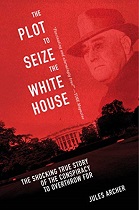 The first time I read Charles W. Bailey, II (1929-2012) and Fletcher Knebel’s (1911-1993) ‘
 On January 15, 1953, President Harry S. Truman (1884-1972) gave his farewell address after serving as the Thirty-Third President of the United States. He had taken office on April 12, 1945, after the death of President Franklin D. Roosevelt (1882-1945). At the time of Roosevelt’s death, allied forces were pushing further into German territory to bring the Third Reich to its knees. In the Pacific, the war against Japan continued to rage but in less than six months, it too surrendered after the devastation left by two atomic bombs. In the first four months that Truman was in office, the entire world changed in ways no one could have imagined. Had Roosevelt lived, the war might have ended differently, and domestically, America might have moved forward at a different pace. He did not live to see his post-war plans come to light and for Truman, the title of president was thrust into his lap. He had never wanted the presidency but due to circumstance, he had become what author A.J. Baime calls the accidental president.
 FREETHINKING BIBLIOPHILE
You must be logged in to post a comment.