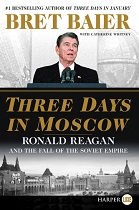
Three Days in Moscow: Ronald Reagan and the Fall of the Soviet Empire – Bret Baier

BaierReaders old enough to remember the Soviet Union will recall the shock and disbelief that came with the Union of Soviet Socialist Republics (U.S.S.R.) flag being lowered for the last time on December 25, 1991. The “Cold War” had come to an end, but a long road lay ahead between the United States and Russia in coming to terms with each other’s way of life. On May 29, 1988, United States President Ronald Reagan (1911-2004) and First Lady Nancy Reagan (1921-2016) arrived in Moscow for a three-day summit with  Soviet General  Secretary Mikhail Gorbachev and his wife Raisa (1932-1999). It has been held as a triumph in American foreign policy and as an example of strong leadership. In less than three years, the Soviet Union dissolved, and Reagan was vindicated in his predictions of its demise. During the summit, Reagan spoke to the people of the Soviet Union at Moscow University and to this day it stands as a breathtaking moment in world history. But as always, there is more than meets the eye. Fox News host Bret Baier revisits the summit in this book about three days that impacted world history.

Before I continue, I do have to acknowledge that the book may be viewed with skepticism depending on the reader’s political beliefs. Further, it is no secret that Reagan has long been the icon for conservatives. Ironically, he was once a liberal Democrat and as Baier explains, Regan’s parents had no tolerance for ignorance or bigotry. Exactly how Reagan became a conservative is not the point of the book and a full biography of him will better suit readers searching for that information. Baier does provide a short biography of Reagan tracing his roots in Tampico, Illinois, and the path he took to become Governor of California and the Republican candidate who unseated President James “Jimmy” Carter. The story picks up in pace once Reagan is sworn into office and moves into the White House. The chill in the air between the Carters and Reagans is evident in the book but a small part of the bigger picture. To anyone paying close attention, it was evident that all was not well within the Soviet Union. In fact, Baier correctly points out that:

“By the time of the Moscow summit, that fact was evident to everyone, including the Soviets themselves. Yes, they remained a world power. Yes, their arsenal of weapons was still great. But beneath the surface, the economy was in free fall, its citizenry was restless; the architect of perestroika was breaking down the remaining barriers. Reagan’s prediction was coming true, as he, if not others, had always known it would.” 

Reagan did believe that the Soviet Union would fall but it should be noted that problems within the U.S.S.R. had been mounting for years, even before Reagan took office. Further, the fall of the Soviet empire is far more extensive and complicated than presented on the surface here. I vividly recall Reagan’s statement telling Gorbachev to “tear down this wall”. The Berlin Wall did fall, and it was a significant turning point in both German and world history. But even that goodwill gesture caused in part by weakening Soviet influence was not enough to stave off the inevitable. Gorbachev knew that trouble was brewing but also faced opposition within his own ranks. However, he had developed a strong relationship with Reagan and that is the crux of the book.

The visit by the Reagans had a profound effect on the Soviet Union and it was an extraordinary act by a U.S. President. Baier takes us deep behind the scenes as the two leaders seek to come to an understanding of key issues. As I read the book, I could see their relationship developing slowly but surely. It is a prime example of how people from diverse backgrounds can find common ground. That is not to say that all went well. In fact, in the book, we see more than one situation where the two leaders remain on opposite ends of a rope with each refusing to give ground. And the first ladies did not have a warm or jovial relationship themselves. Reagan and Gorbachev were leaders of the two most powerful governments on earth and needless to say the stakes were high. Before the book’s conclusion, Reagan leaves office and is succeeded by George H.W. Bush (1924-2018) who developed his own relationship and different relationship with Gorbachev. When Reagan leaves the White House for the last time, the sadness in Washington and in Moscow can be felt through the author’s words. Reagan emerges as a leader that is hard not to like. Of course, the Soviet story was far from over and Gorbachev had to defend himself from party members determined to see his downfall. Baier discusses how close the Soviet General Secretary came to being removed from office and the roles of Boris Yeltsin (1931-2007) and a young intelligence officer named Vladimir Putin who currently has the world watching his every move.

Undoubtedly, Reagan comes across beautifully in the book and I did notice that the darker moments of his president are discussed briefly. The Iran Contra scandal and Sandinista affair in Nicaragua are mentioned but Baier touches only the surface of those matters. The seriousness of each is not felt in the story at hand but I do implore readers to further research those topics to get a full understanding of Reagan’s presidency. To be fair, no administration is perfect, but the people of Central America will surely give you an interesting opinion of the Reagan era. His policies had a profound impact on Latin America that continues to be felt to this day. In the United States, the legacy of the jovial actor turned politician is permanently embedded in the Republican party’s core and he remains an icon of conservative values. If her were alive today, I am not sure if he would recognize what the GOP has become and I believe he would be both shocked and dismayed at world events. The world is a far different place today but the importance of this time in world history captured by Baier cannot be understated. In three days, Ronald Reagan accomplished what decades of U.S. foreign policy failed to do, he captured the attention and minds of the Soviet people. Readers with a thirst for historical information on U.S. and Russian relations will appreciate this book.

ASIN: B072LL4ZN2

The Queen: The Forgotten Life Behind an American Myth – Josh Levin

LevinIn 2019 the Urban Institute conducted an analysis of the welfare system in the United States. It found that at least fifty-nine million Americans were on some form of public assistance mostly obtained through six major welfare programs in the country. The people in need of assistance will vary but the image that was once presented to the public stands in stark contrast to reality. In his first run for office of the president, California Governor Ronald Reagan (1911-2004) (R-CA) used the welfare system as part of his program to appeal to conservative voters. Unbeknownst to voters, Reagan had set his focus on a woman in Chicago who would later be called the “Welfare Queen”. The truth is not as glamorous and far more bizarre but that did not deter Reagan from using the case of Linda Taylor (1926-2002) who represented all that was wrong with the system in his eyes. His first campaign for president failed but he mounted a second campaign that culminated with the defeat of sitting President James E. “Jimmy” Carter in 1980. By then Taylor was an afterthought but her life was far from over. In fact, as Josh Levin shows in this biography, her life was full of mystery, tragedy, and dark moments.
The book begins with the demise of a woman named Patricia Parks on the night of June 15, 1975. The cause of death is unfortunate but common. But what raised suspicion is the woman who was last seen with her, Linda Taylor. And through Levin’s re-telling of Taylor’s life story, this was one of multiple instances in which she had proximity to a person before their unexpected death. To be fair, Taylor was never charged with any murder. She was placed under investigation more than once, and those charges related directly to her abuse of the welfare system. The unbelievable story is told here in a book that refutes stereotypes, discusses the issue of race, and exposes the faults in the public assistance system. 

Prior to reading the book, I was not aware of Taylor’s personal life. I had placed the book on my wish list and realized recently that I had yet to explore it. It is not a standard biography in the sense that there’s a straightforward chronological history. The reason, as Levin shows, is that parts of her life are unknown with little records available to piece together her past. However, do does an incredible job of tracing her family history that takes us to the Deep South where the town of Cullman, Alabama, a placed once called “Sundown Town” for reasons explained in the story. Readers familiar with the South will know what it implies. Taylor was born Martha Louise White and from the beginning, Jim Crow and racial discrimination became daily realities. Martha’s arrival proves to be a complicated issue and as we see later in the book in court testimony, the family found itself immersed in a scandal. The facts are revealed by her uncle Hubert Mooney, whose frank talk will make readers recoil. Today such talk would never be permitted in a courtroom, but 1964 was quite a different time in America. Admittedly, keeping track of the family members and Linda’s movements as a child is challenging but through no fault of the author. The family itself is far from intact and adept at keeping secrets. The instability at home and treatment by relatives does provide insight into how Taylor later came to view herself and the world she was navigating. 

As I read the book, I did feel compassion for her and cannot imagine the humiliation she had to endure. However, I could not ignore her dark side that drew the inquiry of state investigators and law enforcement. Further, her exploitation of the welfare system which allowed her a life of luxury, and her relentless attempts at taking advantage of others’ misfortune, showed that Taylor had learned to master deceit as she used fake names, addresses and misled state agencies. The story within is simply spellbinding and it seemed as if no one could completely unravel the mystery of Linda Taylor. The sad stories of her former husbands and children she claimed are examples of the emotional and mental damage she caused as she continued her life of deception. The story of one son, Paul, will surely catch the attention of readers. And when the situation came, Taylor also used those closest to her to become conspirators in her plans. As Levin shows, Taylor once went this far in her scheme: 

“Taylor had used the alias Sandra Brownlee—her daughter’s name—to steal public aid money. A month after Judge Mark Jones gave the older woman three to seven years, Sandra herself would plead guilty to receiving illegal welfare payments from the State of Illinois.” 

Investigators eventually do catch up with her but like a thief in the night, Taylor skipped out of town more than once, becoming a fugitive. And while on the run, more victims turned up as Linda continued to find ways to exploit unsuspecting people who took in the newcomer with kindness. The story of James and Mildred Markham left me speechless. And I had to remind myself that this is not fiction. Taylor had no remorse and resorted to extreme measures to continue her lifestyle. However, time was running out and in 1994, the U.S. District Court for the Middle District of Florida finally put an end to her reign of terror. Though she did not serve prison time, she had become a shell of her former self, and the rest of the book follows her decline. We can only guess as to how disabled Taylor truly was but those who took care of her in her final years confirmed that she was indeed declining rapidly. Levin explored the concept she was faking her disability and went as far as questioning staff members at the mental hospital who were willing to speak. The end came for Taylor on April 18, 2002, at the age of seventy-six. By the time Taylor had passed, she was forgotten and the concept of welfare queen a talking point of the bygone Reagan era. But as Levin shows, her life story is one that serves as a textbook case of the importance of a stable home, guidance from those with our best interests at heart, and a legal system that enforces checks and balances. There is more to Taylor’s life that we will never learn of, but Josh Levin has captured her life for an eternity in this book that is full of suspense from start to finish. Highly recommended. 

If you like this book, Levin also authored an article for Slate Magazine titled “The Welfare Queen“, which was published on December 19, 2013. It is full of information and photos match names with faces, and even includes a statement from Reagan in October 1976. It is the perfect complement to this solid account of Taylor’s life and exploits. 

ASIN:‎ B07H2BJYBH

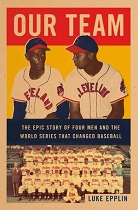
Our Team: The Epic Story of Four Men and the World Series That Changed Baseball – Luke Epplin

epplinIn 2012 Warner Bros. Pictures released the film ’42’ which tells the story of how Jack Roosevelt “Jackie” Robinson (1919-1972) broke the color barrier in Major League Baseball (“MLB”). The late film star Chadwick Boseman (1976-2020) starred as Robinson in the biopic and delivered a phenomenal performance. Robinson did break the color barrier, but he was not the only player to do so at that time. In Cleveland, Ohio, Indians owner William Louis “Bill” Veeck (1914-1986) was determined on further integrating baseball and set his eyes on the Negro Leagues as a pool for untapped talent. Soon enough, he had purchased the rights to Lawrence Eugene “Larry” Doby (1923-2003). The Indians subsequently signed Negro League pitcher Leroy Robert “Satchel” Paige (1906-1982) who joined the ranks and became another teammate of the team’s ace, Robert William Andrew “Bob” Feller (1918-2010).
The integration of America’s past-time was a ground-breaking event but not without its difficulty. Racial discrimination affected every aspect of life in America. Like Robinson, Doby and Paige were forced to endure unrelenting racial abuse and indignations. In the years before the Civil Rights Act of 1964, Jim Crow legislation and unwritten segregation rules permeated throughout America and as we see in this story, fame and success did not offer any recourse to routine humiliation. Further, the on-field triumphs and adulation from fans, stood in contrast to life outside of the stadium. Across the ocean in Europe, America had fought a war against the Axis Powers in the name of democracy and freedom. But for Doby, Paige and millions of Black Americans, those concepts were nowhere to be found back in the United States.

Anyone who believes in human rights, liberty, and the laws of this nation, will be enraged at times while reading this book. I personally found myself incensed at what they players had to endure simply to exist. However, the book does have brighter moments and it is a moving account of how change was made and an inside look into the lives of those who made it happen. The beauty of Epplin’s work is that the reader does not need to possess prior knowledge of MLB history. In fact, it is written in such a way that the reader can quickly learn about the players who will change history. I did know of Doby, Paige, and of course Robinson, but was not as aware of Bob Feller’s role in the story. Feller was not in a management position but was a prodigy himself at times in competition with Saige. There did exist a mutual respect between the two and the battles in proving who’s the better pitcher give the story the suspense that helps make it an enjoyable read. The most interesting figure in the book is undoubtedly Veeck, whose personal life also suffered through this period as readers will learn as the book progresses. Integration was his primary goal, and he knew it would not be pretty. Epplin captures his determination perfectly here:

“Undoubtedly there would be blowback, but Veeck was prepared to weather it. “The only thing blocking [integration] was no law, it was just a gentlemen’s agreement,” he later said. “And I was no gentleman.”

Adjusting to life in the big league was not an easy feat and the athletes still had to combat racism even within their own team. The author touches that subject too, showing the difficulties for owners who realized the talent to be found among other ethnic groups. Despite the backlash, Veeck was successful, and the Indians were aided by their new acquisitions who began to develop a fan base. In the film ’42’, there is a scene where Robinson is talking to Wesley Branch Rickey (1881-1965) and ready to quit. Rickey refuses to let him walk and explains that outside the stadium there are white children mimicking Robinson’s routine before stepping to the plate. Doby and Paige soon became fan favorites. It is true that America still had a long way to go in dismantling the racial codes in effect, but as star athletes, these brave souls were doing their part to help make that reality.

Doby is quoted throughout the book but as Epplin explains he had a reserved and humble personality. In comparison, Paige had no issue making his opinions known and reveled in being able to catch people off-guard. Interestingly, the two stars were not as close as one might expect, and Doby makes a statement that reveals the differences in opinions towards the realities they were facing. I cannot say which man was right but do recognize that the enormous pressure they were under, combined with hostile environments, required coping mechanisms. Thankfully, there is no substance abuse in the book, but I cannot imagine that they did not have moments in which they questioned why they were on that team and not back in the Negro Leagues where they had acceptance. Younger readers will learn a great deal about the difficulties faced by Black Americans when traveling across the United States. Lack of accommodations, quality meals and the threat of violence never abated. A road trip could have easily become a matter of life and death.

There are no episodes of violence directly towards the players in the book and each of them lived well beyond 1947. But despite their roles in a history making year, MLB continued to drag its feet in diversifying the league. As Epplin points out:

“The Yankees fielded all-white lineups until 1955, the Detroit Tigers until 1958. The Red Sox held out until the bitter end, refusing to promote a Black player until 1959, Doby’s last year in the league.”

Eventually the players retired but they left their legacies intact. 1947 might seem like ancient history today but we must remember that it was less than eighty years ago but since that time, America has changed significantly and today MLB is home to players of all backgrounds. Athletes now earn unbelievable salaries and enjoy fame on levels once unheard of. This would not be possible without the sacrifices made by Doby, Paige and other minority athletes who risked their lives by breaking the color lines. If you are fan of MLB history or even American history, there is a wealth of information in this book. Should you read it, be prepared to have feelings of anger, suspense, and pride. This book is not just the story of baseball but that of the United States. Highly recommended.

ASIN: B07WCJL4HB

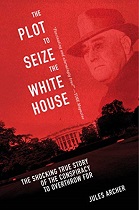
The Plot to Seize the White House: The Shocking True Story of the Conspiracy to Overthrow F.D.R. – Jules Archer & Anne Cipriano Venzon

White houseThe first time I read Charles W. Bailey, II (1929-2012) and Fletcher Knebel’s (1911-1993) ‘Seven Days in May‘, I understood why it was so important and why it was one of President John F. Kennedy’s (1917-1963) favorite books. The plot of the story is simple: a conspiracy is hatched to overthrow the sitting president of the United States. In 1964, Paramount Pictures released the film of the same name starring Burt Lancaster (1913-1994) and Kirk Douglas (1916-2020) with director John Frankenheimer (1930-2002) at the helm. The book and film were works of fiction but thirty years prior to the film’s release, there was a plot to remove the sitting president of seize control of the government. Jules Archer and Anne Cipriano Venzon researched the unbelievable and chilling story in this book that sheds light on a little-known part of American history. And at the center of the story is legendary United States Marine Corps General Smedley D. Butler (1881-1940).

In 1933, German Chancellor Adolf Hitler (1889-1945) tightened his grip over Germany and began to plot its course for world domination. Across the Atlantic few believed that he would ignite a war that remains the deadliest conflict in the history of mankind. As the Third Reich made its presence felt, it soon became clear that the Nazi menace was nothing to ignore. Despite the outbreak of war, the United States held firm on its isolationist stance and the Neutrality Acts passed by Congress limited the president’s ability to send aid to European allies. For President Franklin D. Roosevelt (1882-1945), the Great Depression and European war proved to be the biggest challenges to his time in office. And failing health provided the ammunition needed by his detractors who believed that Roosevelt would not live to finish his time in government. Sadly, they were proven right on April 12, 1945.

The first question I had for myself when I started reading the book was why Butler? I knew he had become anti-war in later years and had even published a book called ‘War is a Racket‘ in which he exposes the monetary interests behind armed conflict. As the book progresses, it becomes clear why Butler was their choice and the biography included by the authors provides a fair amount of information about his life and rise in the military ranks. Further, the respect he earned from current and former soldiers made him the ideal choice. And to understand why Butler was so respected, one only needs to read of his accomplishments which are discussed here. I found myself both in awe and speechless learning of his commitment to the Marines and belief in morale. To be clear, Butler harbored no ill-will towards Roosevelt and was a pacifist by nature. That, however, did not stop him from suiting up when the Marines were needed.

Following his retirement from the Marines, Butler became a sought-after speaker across the country and beloved by the Veterans of Foreign Wars organization. In the story, we soon learn the names of Gerald C. McGuire and Bob Doyle of the American Legion, who approached Butler with incentives to join their plot in taking over the government, but the seasoned marine was suspicious from the start. Having worked for a time in the Department of Public Safety in Philadelphia, Pennsylvania, Butler was no stranger to criminal activity. Still, without evidence he knew he could not go public with allegations of a plot to attack to the United States Government. Further he knew the people who approached him had powerful backers and could not be trusted. But after a meeting with Philadelphia Record writer Paul Comly French (1890-1956), Butler decided that the plot needed to be exposed and went before the Special Committee on Un-American Activities to tell what he knew. Portions of his testimony (both public and sealed) are included here and reveal how serious the threat was to the democracy of the United States. And though no one was ever prosecuted because of what the committee learned, it did raise awareness of the importance of preserving our democratic institutions.

The list of conspirators revealed as part of the plot is surreal and may have been a case of sensationalism by McGuire. However, the amount of money behind the plot, as Butler learns, could only have come from wealthy figures. Readers will be surprised to learn of the connection between former New York State Governor Alfred E. “Al” Smith (1873-1944), and ring-wing figures, who were opposed to Roosevelt and his New Deal policies. In time America would see the rise of other organizations such as the John Birch Society and the Minutemen, and the contributors to these various ring-wing parties revealed dark truths about power in America. Regarding one group, the authors explain:

“Heavy contributors to the American Liberty League included the Pitcairn family (Pittsburgh Plate Glass), Andrew W. Mellon Associates, Rockefeller Associates, E. F. Hutton Associates, William S. Knudsen (General Motors), and the Pew family (Sun Oil Associates). J. Howard Pew, longtime friend and supporter of Robert Welch, who later founded the John Birch Society, was a generous patron, along with other members of the Pew family, of extremist right-wing causes. Other directors of the league included Al Smith and John J. Raskob.” 

Butler’s refusal to go along with the plot surely led to its demise but had they approached another figure, things may have turned out differently. At the 1930s moved forward, the signs that war would break out became vividly clear and on September 1, 1939, all doubts were removed with the Nazi invasion of Poland. Butler held firm on non-intervention and at the time of his death, the United States had no legal grounds to enter the war. That all changed on December 7, 1941, when the Japanese military attacked Pearl Harbor. Butler did not live to see that attack but if he had, I have no doubt that he would have supported America defending itself from Japanese aggression. His years of service and experiences in combat had left him with dark memories of the horrible injuries sustained by soldiers on the battlefield. He had become anti-war but was never anti-American, and any threat to the democracy of the United States was an attack on the principles he believed in. His courage in exposing what could have been an earth-shattering event, should not be lost to history. In closing out the book, the authors have this to say about Butler:

“If we remember Major General Smedley Darlington Butler for nothing else, we owe him an eternal debt of gratitude for spurning the chance to become dictator of the United States—and for making damned sure no one else did either.”

History is full of untold stories and that is one reason I enjoy it as much as I do. This story may not be well-known nor remembered but it should never be forgotten. Highly recommended.

ASIN:‎ B00VKI49X0

The Accidental President: Harry S. Truman and the Four Months that Changed the World – A.J. Baime

TrumanOn January 15, 1953, President Harry S. Truman (1884-1972) gave his farewell address after serving as the Thirty-Third President of the United States. He had taken office on April 12, 1945, after the death of President Franklin D. Roosevelt (1882-1945). At the time of Roosevelt’s death, allied forces were pushing further into German territory to bring the Third Reich to its knees. In the Pacific, the war against Japan continued to rage but in less than six months, it too surrendered after the devastation left by two atomic bombs. In the first four months that Truman was in office, the entire world changed in ways no one could have imagined. Had Roosevelt lived, the war might have ended differently, and domestically, America might have moved forward at a different pace. He did not live to see his post-war plans come to light and for Truman, the title of president was thrust into his lap. He had never wanted the presidency but due to circumstance, he had become what author A.J. Baime calls the accidental president.
In contrast to a standard biography, the focus of the book is on the four months between Truman taking office and the surrender of Japan. The story begins with Roosevelt’s last day alive. Following his death, all eyes become fixed on Truman who is largely unknown to the American people. Washington insiders knew of his background but even within those circles, he was somewhat of a mystery. His unassuming look and plain-spoken Midwest nature made him appear as just another person in the room. But little did anyone know that the next president would usher in a new era in warfare and set the course for future domestic programs and U.S. foreign policy.

Before entering the lengthy discussion of the war and Truman’s role in it, Baime provides a short biography about his early life in Independence, Missouri, and his entry into politics that culminates with his arrival in Washington. One aspect that stood out is Truman’s military service in World War I which is often not discussed. I believe his experiences in combat surely helped his ability to make decisions during World War II. After we learn of Truman’s unusual entry into politics and nomination for vice-president, the author shifts gears and takes us right into the war with a heavy focus on Japan where the U.S. Air Force is conducting firebombing raids under the legendary and controversial General Curtis E. LeMay (1906-1990). Despite the fierce allied attacks, Japan would not surrender but in Europe, the Third Reich was on life support. Adolf Hitler’s (1889-1945) dream of a master Aryan nation spread across continents had collapsed and the tyrant himself was hiding in his bunker. The Red Army was closing in and the German people knew that retribution from the Soviets was not something any of them wanted to experience. On April 30, 1945, Hitler met his demise and escaped punishment at Nuremberg. Washington breathed a sigh of relief at the German defeat but knew that Soviet leader Joseph Stalin (1878-1953) could not be fully trusted. The seeds of the Cold War had been firmly planted as World War II reached its shocking and brutal conclusion. With Germany no longer a threat, the story moves to the war in the Pacific where allied forces are determined to crush the Japanese military.

As the book progresses, it really splits into two stories; the race to finish the bomb and the negotiations at the Potsdam, Cecilienhof conference between Truman, Stalin, and British leader Winston Churchill (1874-1965). The debate over whether Truman should have used the bomb will continue but the author does a good job of showing what was being discussed behind the scenes. Truman knew the decision he had to make was unlike anything a president had faced before. He also knew that he would be judged throughout history for it. Baime summarizes Truman’s historical recognition with this accurate statement:

“Truman is remembered first and foremost for his decision to employ atomic weapons—Little Boy and Fat Man, the only two nuclear bombs ever used against human targets. More than seventy years later, this decision remains almost certainly the most controversial that any president has ever made.” 

However, the war with Japan needed a conclusion, and allied forces had already begun to plan the full-scale invasion of the island on November 1, 1945. The bomb was the ace up Truman’s sleeve, but until a test was conducted, questions surrounding its efficacy remained. All of that changed on July 16, 1945, in Los Alamos, New Mexico when the first successful test was conducted and the outcome of World War II began to take shape.

Remarkably, throughout the reports of carnage, the tension surrounding the bomb program, and interactions with the Soviets, Truman always comes across as incredibly calm. And what we see is that for a man who was the accidental president, he rose to the occasion and showed no hesitation when action was required. The power of the bomb was not lost on Truman or others with knowledge of its existence. Lead scientist J. Robert Oppenheimer (1904-1967) also makes an appearance in the story as the full gravity of the bomb’s creation comes down on all of them. No one knows for certain exactly when Truman decided to use the bomb and as Baime explains, there is no written record of it. Eventually, the moment in the book we know is coming arrives on August 6 when the city of Hiroshima receives the first atomic bomb. Three days later, Nagasaki suffered similar devastation which finally convinced the Japanese Emperor Shōwa (Hirohito) (1901-1989) that to continue the war would mean Japan’s ultimate destruction.

Finally, the war was over but the destruction and death that ensued were permanently seared into the memories of all who witnesses man’s savagery. Truman personally observed Berlin for himself and the experience is revisited in the book. Survivors of the nuclear bombs provide additional feedback regarding the immediate impact of the detonation. Their words provided a chilling effect to the introduction of atomic weapons. Back in America, Truman’s popularity soared and the little-known senator from Missouri became an American hero. This stands in stark contrast to his wife Bess (1885-1982) whose disdain and avoidance of the public spotlight are also part of the story. The book concludes after the formal surrender of Japan but Baime provides an epilogue that takes a closer look at Truman’s time in office following the war. He never again reached the level of popularity that he enjoyed during the war era but he remains one of the most important leaders in world history. Few knew who he was when took control of Washington on April 12, 1945, but in just fourth months, he cemented his legacy and showed that even an accident president can be just what the country needs.

 “No President could ever hope to lead our country, or to sustain the burdens of this office, save as the people helped with their support. I have had that help–you have given me that support–on all our great essential undertakings to build the free world’s strength and keep the peace. Those are the big things. Those are the things we have done together. For that I shall be grateful, always.” – Harry S. Truman, January 15, 1953

ASIN: B01MQVT9TG

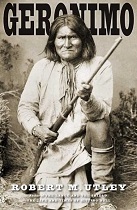
Geronimo – Robert M. Utley

geronimoOn September 4, 1886, Apache warrior Geronimo (1829-1909) surrendered for the last time to United States military personnel. The famous warrior had eluded capture for years as the American Indian Wars took place across North America. In the years following his death, Geronimo has become a pop-culture icon whose name holds a permanent place in the American lexicon. The irony is that this famous warrior was never a chief in his time and was not driven by fame. In fact, his personal story is darker and more tragic than any Hollywood production. Voltaire (1694-1778) once said that “to the living we owe respect but to the dead we owe only the truth”. Author Robert M. Utley is a former chief historian for the National Park Service and researched Geronimo’s life to dispel rumors and bring to life unknown facts. The result is this biography that is crucial to understanding the creation of the United States of America and the Native American experience.

The story revolves around the Chiricahua tribe of the Apache Indians. I previously reviewed S.C. Gwynne’s “Empire of the Summer Moon: Quanah Parker and the Rise and Fall of the Comanches, the Most Powerful Indian Tribe in American History”, a book I strongly recommend. It is book is not easy to read at times due to the graphic descriptions of Comanche raids and the battles with American troops and frankly, it is not for the faint at heart. Utley’s book is far tamer but does explore the battles but focuses heavily on Geronimo’s story and his ability to elude capture before finally surrendering in 1886.  But make no mistake, this story is full of surprising information, battle descriptions and policy decisions in Washington as administrations struggled to resolve the “Indian” issue.

Surprisingly, Geronimo does not come across as a hero nor a villain. The author explains that he was simply an Apache warrior who was admired, feared, loathed and not without his own faults. To prove this point, Utley conducted an extensive amount of research that is woven beautifully together as Geronimo’s life comes into focus. And the key to understanding his position as an Apache enforcer is the section in the book that focuses on the Mexican raids against Apache settlements. The tragedy that befell Geronimo sets the stage for the warrior who emerges as a significant threat to American expansion and eternal enemy of the Mexican nation.

Expectedly, Geronimo is not the only famous figure in the book. In fact, the author provides a thorough discussion on another Apache warrior who holds a claim to fame: Cochise (1805-1874). He is joined in the book by Mangas Coloradas (1793-1863) and Juh (1825-1883). Both chiefs and Geronimo’s cousin Juh had an enormous impact on Geronimo and their roles in the story cannot be understated. Cochise is significant in another way which may surprise readers. Throughout his early life, Geronimo remained obscure but as the American Indian War heated up, he could no longer hide in the shadows. However, the battles had devastating consequences for the Apache. As Utley explains:

“During Geronimo’s heyday, the entire Chiricahua tribe numbered about three thousand people, so in the relatively small local groups most people tended to know one another. By 1886, when Geronimo surrendered, the tribe had declined by about 80 percent, mainly the result of warfare.” 

Additionally, the introduction of alcohol had unforeseen circumstances in store for the Apache and other Native American tribes. The battle with substance abuse sadly continues to this day on reservations. The episodes explained by the author leave no doubt that addiction of any kind can result in severe personal and societal damage. In this case, the community structure itself was under attack and it is one part of Geronimo’s life that will capture readers’ attention. Despite warfare and substance abuse, the warriors in the book did believe in the family structure, Geronimo included. He followed this creed wholeheartedly and I honestly lost track of the number of his wives. Today such practices would be viewed with disdain in America but for Native American tribes during those times, it was commonplace.

After Geronimo surrenders, the book takes another turn due to the inhumane conditions in Indigenous camps. The removal of Native tribes is well-documented, and the “Trail of Tears” stands out as a commonly referenced example. There is forced removal in this story and the reality of American camps becomes horrifically clear in the book. Conditions became so decrepit that officials in the government began to sound the alarm. And this is the other tragedy in the story. Far removed from the land they knew, without the foods they ate, the community structure that kept them safe and the looming threat of execution, Indian tribes soon found themselves in danger of extinction. As for Geronimo, the last twenty years of his life paled in comparison to his youth on the open plains of North America. And though he never saw himself as an iconic figure, his life and name are permanently fixed in the annals of American history.

If you are interested in Apache history and the story of Geronimo, this book is must-read. I cannot predict how you will view him, but it is safe to say that his story and that of the Apache are lessons that should never be forgotten. This is American history and truths about what really happened as our nation evolved.

“For Geronimo, my book rejects both extremes—thug and hero—and reveals that, within the constraints of Apache culture, he was a human being with many strengths and many flaws.”

ASIN: B009T3C88Q

The Haldeman Diaries: Inside the Nixon White House – H.R. Haldeman

HaldermanOn August 8, 1974, President Richard M. Nixon (1913-1994) resigned from his position as the thirty-seventh Commander-In-Chief. In the months preceding his announcement, the Watergate scandal investigation had gained significant traction and Nixon faced the possibility of impeachment. The nation watched in shock and silence as Nixon gave his speech. It marked the first and only time in history that a United States President had resigned from office. In the decades that followed, scores of books, articles, and documentaries have been published regarding the Watergate affair. I strongly recommend Fred Emery’s “Watergate: The Corruption of American Politics and the Fall of Richard Nixon“. It is a fascinating account of the scandal and the fallout that ensued. Within Nixon’s inner circle was his Chief of Staff Harry Robbins “Bob” Haldeman (1926-1993), known simply as H.R. Haldeman. The former insider served eighteen months at the Lompoc, California Federal minimum-security facility after being convicted on one count of obstruction of justice and three counts of lying under oath. During his time in Washington, Haldeman kept a meticulous daily diary that he intended to publish following his release from prison. However, he passed suddenly on November 12, 1993, at his home in Santa Barbara, California. But all hope was not lost. His widow Joanne continued her husband’s goal and worked extensively to have them published. They are presented here in this book that deserves a rightful place in the annals of historical non-fiction.
Haldeman’s ability to keep a daily diary in addition to his tasks during the day is astonishing. Anyone who has worked in Washington will tell that every day is a roller coaster ride of appointments, statements, problems, and success. As Chief of Staff, Haldeman faced the brunt of these problems and was one of the few people that Nixon trusted the most. However, Joanna points out early in the book that the two were not close friends. In fact, throughout the book, it is clear that no one in the administration really knew the real Richard Nixon. But that did not deter his cabinet from doing their best to serve the White House in whichever way necessary. The daily diary entries are primarily short snippets of the day’s events. Readers will notice the change in the length of the notes after Haldeman switches to a dictation machine. The notes become extensive but if we follow closely, we are provided a rare look into Nixon’s White House.

This book is not an examination of Nixon himself or an attempt to discern why he took certain actions. In fact, Nixon changed his mind on things daily. Haldeman made notes of what he saw, heard, and did with his own observations added. The hotbed issues of the time are sprinkled throughout the story. Vietnam and Civil Rights are the biggest concerns with the latter being the issue that Nixon never fully understood. Interestingly, Nixon does not oppose civil rights but his ideas on how to achieve it come off as misguided. And his obsession with the Kennedy family reveals the lingering insecurities he could never move past. I also took note of the discord within his administration, mostly centered around National Security Advisor Henry Kissinger and Secretary of State William P. Rogers (1913-2001). The Vice-President Spiro T. Agnew (1918-1996) is not mentioned as much as I would have thought but Haldeman does refer to the scandal that led to his resignation.

As I read the book, there were times where I was not exactly sure what to make of Nixon. Undoubtedly, he was not a liberal and appealed to more conversative voters. But he was not far right either and makes multiple statements about both political parties that will surprise readers. And had he succeeded with his own vision for the future of American politics, the political landscape as we know it today would be quite different. Nixon was a shrewd politician, seasoned by his years in the Senate and in the White House. He understood the political spectrum and how to exploit openings. But his paranoia and failure to grasp changes in society helped contribute to his downfall.

Nothing in the diaries comes off as explosive until June 17-18, 1972, when the White House learns of the break-in at the Democratic National Committee headquarters in the Watergate Office Building in Washington, D.C. As one would expect, the book picks up in pace with the Nixon Administration taking action to contain the story and limit its exposure, even if that meant obstruction of justice. Haldeman writes himself that obstruction might be necessary. It is not clear from the diaries if he knew of the operation beforehand, but he did support and take part in covering up evidence of Nixon’s complicity. His nickname “Iron Chancellor” did not come about without reason. As I read his notes, I understood Haldeman’s position. His job was to protect the president at all costs. Nixon was aware of his devotion and initially resisted pressure to make Haldeman resign. However, the Watergate scandal was becoming a major threat and far from the small issue that it was originally thought to be by Nixon and former President Lyndon B. Johnson (1908-1973) whom Nixon consulted on various issues. This too may surprise readers.

I believe we may never know who the real Richard Nixon was. There is no simple explanation to describe him. His administration did pull the country to the right, but he also had ideas that would be embraced by the left today. He has been called a bigot, but he also supported integration and equality. He wanted to end the war in Vietnam, but approved bombing raids in Cambodia. He campaigned on law and order but strongly believed in female judges. He never fully trusted the State Department though it is critical to an administration. He is a conservative icon, yet he signed into law the act that created the Environment Protection Agency. The mystery may be what Nixon wanted to leave behind. Haldeman’s job was not to figure him out but to do the best job possible as chief of staff. In this area he succeeded, and Joanna includes this statement by the late president about his assistant whom people called an “S.O.B.”:

“I have known Bob Haldeman to be a man of rare intelligence, strength, integrity, and courage … He played an indispensable role in turbulent times as our Administration undertook a broad range of initiatives at home and abroad.” – Richard M. Nixon

If you are curious about the administration or Richard Nixon and the actions behind the scenes, this book which contains the personal diary of H.R. Haldeman is must-read. Highly recommended.

ASIN: B01NCYX17R

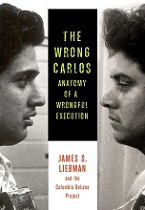
The Wrong Carlos: Anatomy of a Wrongful Execution – James S. Liebman and the Columbia Deluna Project

carlosOn the evening of February 4, 1983, twenty-four-year-old Wanda Lopez arrived at the Sigmor Shamrock gas station in Corpus Christi, Texas, to begin her shift as a gas station attendant. She never finished that shift. After noticing a suspicious male brandishing a knife, Lopez called police not once but twice before she was savagely attacked and fatally wounded. In less than one hour, police arrested twenty-year-old Carlos Deluna and charged him with the murder. Deluna entered a plea of not guilty and chose to stand trial where he was convicted and later sentenced to death. On December 7, 1989, he was executed at the Texas State Penitentiary at Huntsville. Prosecutors had secured a conviction and put forth the notion that justice had been served in the State of Texas. However, Deluna maintained his innocence from the start and stated more than once that he knew who did kill Lopez. The name “Carlos Hernandez” became an area of interest, yet officials claimed that no such person existed, nor had he been incarcerated in Texas. But were they telling the truth? And was justice served in Deluna’s execution? James S. Liebman and the Columbia Deluna Project examined the Lopez murder and the fate of Carlos Deluna to uncover what really happened and find the truth behind a dark story that will send chills down the spine of readers.

Before reading this book, I was not familiar with Carlos Deluna or the murder of Wanda Lopez. But that quickly changed as I began to read this unsettling and thought-provoking account of the justice system failing to deliver due process. The book focuses on the Lopez murder early on as expected. From the start, the crime itself makes no sense and we learn early that a couple of the witnesses whom the police questioned remained haunted by that night. And their admissions regarding what they saw or thought they saw that night, set the stage for the saga to come, and presents the basis for doubt of Deluna’s guilt. After presenting the subsequent statements of witnesses to the crime, the authors take us back to that night in February 1983 when Wanda Lopez lived her last moments. Readers sensitive to graphic descriptions of violence and crime scenes may find this part of the book difficult. However, the scene and actions of forensic investigators will have enormous consequences later in the story, when the authors review the collection of vital evidence.

Deluna was assigned legal counsel and the job of defending him fell on Hector De Peña and James Lawrence. De Peña had no experience in defending a capital murder defendant, but Lawrence was an experienced trial lawyer. To their credit, De Peña and Lawrence do their best to mount a defense but come across naive to the determination of prosecutors to see their client convicted and sentenced to death. Despite the State’s imposing presence, De Peña and Lawrence also made mistakes in defending their client. Deluna insisted all along that he was innocent and was adamant that Carlos Hernandez was the man responsible for Lopez’s death, yet it seemed as if no one took him seriously. But just who was Carlos Hernandez and was he as dangerous as Deluna stated?

I have read accounts of countless murder suspects, but few come across as deadly and cold-blooded as Carlos Hernandez. Frankly, the man was pure evil and his propensity for violence towards women is chilling and on full display in the book. He is undoubtedly the darkest figure in the story but incredibly, he was well-known to law enforcement and had committed offenses before and after Lopez’s murder. And as readers will learn, prosecutors were aware of his existence but made no attempt to present him in Deluna’s trial. Deluna’s counsel failed to follow leads that might have taken them to Hernandez. As someone who works in the legal field, I found myself staring in disbelief at the legal practice conducted by the prosecution and defense. And I kept asking myself why a man like Carlos Hernandez was allowed back on the streets of Texas when authorities knew how dangerous he was? And why did Deluna’s lawyers fail to call witnesses who could have provided the jurors with vital information about Deluna’s personal issues and Hernandez’s existence?

I warn readers that Hernandez is a dark figure, but the mini biography provided by the authors does provide explanations as to why he became a monster. To say that his family was dysfunctional would be an understatement. As for Deluna, the authors also provide a biographical sketch of him, and his back story explains his own path in life. Surprisingly, the two men both named Carlos were not strangers to each other and it is this part of the story that seemed to be lost on all counsel. As I read, I kept scratching my head at the missed opportunities to locate Carlos Hernandez and put an end to the mystery. And considering the multitude of crimes that Hernandez committed and his own admissions, it does make one wonder how he evaded punishment so many times. There was more to his story than the State wanted defense counsel to discover. The authors provide another crucial piece of evidence in their assessment that directly addresses the eyewitness testimony: side-by-side photos of both men. When I saw the photo of both men side-by-side, I could not tell them apart and would have picked “the wrong Carlos” myself. Without the aid of DNA technology, eyewitness testimony and forensic evidence were the tools of the trade, and the police made a mess of both.

Earlier I mentioned that the crime scene and actions of investigators had an enormous impact on the trial. The way it impacted the trial is explained by the authors who pay close attention to the handling of evidence and the failure to preserve clues that could have proven conclusively the guilt or innocence of the correct person. If you have watched any modern-day crime show such as “The First 48”, then you know the collection of evidence is the primary concern of investigators. Readers will find themselves aghast as the actions of crime scene investigators. I could not believe what I was reading. If new detectives need a case study on what not to do, it can be found here. Though they did not know it at the time, the actions of investigators helped seal the fate of Carlos Deluna.

It becomes clear in the book that Deluna is headed for conviction. The deck is stacked against him. Following the guilty conviction, the next phase of determining whether he should die was a foregone conclusion. However, he and his family never gave up and exhausted the appeals process to secure his freedom. Yet again, Deluna had legal counsel who neither prepared the case appropriately nor sought to find the mysterious Carlos Hernandez who was hiding in plain sight. The book is both spellbinding and overwhelming. And to think that his happened in America where we are entitled to due process is upsetting. If Carlos Deluna was not a poor man of Mexican heritage but a rich man of another background, he might be alive today. And Carlos Hernandez would have found himself on death row.

Admittedly, Carlos Deluna was no angel and had been in trouble with the law himself before Lopez’s murder. However, his cognitive and emotional issues were neglected throughout his life and resulted in him finding companionship with people who only knew violence and dysfunction. Today Deluna would have at his disposal programs and counseling to help with his issues but in 1983 in a poor part of Texas, help was almost non-existent and slow cognitive development was stigmatized. I never met Carlos Deluna, but I now know his story. Despite everything he went through, he left his family with these words that show a man resigned to his fate and adamant about his innocence:

“I want to say I hold no grudges. I hate no one. I love my family. Tell everyone on death row to keep the faith and don’t give up. —Last words of Carlos DeLuna, December 7, 1989, as recorded by the Texas Department of Criminal Justice.” – Carlos Deluna

This is the story of Carlos Deluna, Carlos Hernandez, and a murder in Corpus Christi, Texas that shows how society and the criminal justice system failed those they were designed to protect.

ASIN:‎ B00KV1KP9O