
 On September 4, 1886, Apache warrior Geronimo (1829-1909) surrendered for the last time to United States military personnel. The famous warrior had eluded capture for years as the American Indian Wars took place across North America. In the years following his death, Geronimo has become a pop-culture icon whose name holds a permanent place in the American lexicon. The irony is that this famous warrior was never a chief in his time and was not driven by fame. In fact, his personal story is darker and more tragic than any Hollywood production. Voltaire (1694-1778) once said that “to the living we owe respect but to the dead we owe only the truth”. Author Robert M. Utley is a former chief historian for the National Park Service and researched Geronimo’s life to dispel rumors and bring to life unknown facts. The result is this biography that is crucial to understanding the creation of the United States of America and the Native American experience.
The story revolves around the Chiricahua tribe of the Apache Indians. I previously reviewed S.C. Gwynne’s “Empire of the Summer Moon: Quanah Parker and the Rise and Fall of the Comanches, the Most Powerful Indian Tribe in American History”, a book I strongly recommend. It is book is not easy to read at times due to the graphic descriptions of Comanche raids and the battles with American troops and frankly, it is not for the faint at heart. Utley’s book is far tamer but does explore the battles but focuses heavily on Geronimo’s story and his ability to elude capture before finally surrendering in 1886. But make no mistake, this story is full of surprising information, battle descriptions and policy decisions in Washington as administrations struggled to resolve the “Indian” issue.
Surprisingly, Geronimo does not come across as a hero nor a villain. The author explains that he was simply an Apache warrior who was admired, feared, loathed and not without his own faults. To prove this point, Utley conducted an extensive amount of research that is woven beautifully together as Geronimo’s life comes into focus. And the key to understanding his position as an Apache enforcer is the section in the book that focuses on the Mexican raids against Apache settlements. The tragedy that befell Geronimo sets the stage for the warrior who emerges as a significant threat to American expansion and eternal enemy of the Mexican nation.
Expectedly, Geronimo is not the only famous figure in the book. In fact, the author provides a thorough discussion on another Apache warrior who holds a claim to fame: Cochise (1805-1874). He is joined in the book by Mangas Coloradas (1793-1863) and Juh (1825-1883). Both chiefs and Geronimo’s cousin Juh had an enormous impact on Geronimo and their roles in the story cannot be understated. Cochise is significant in another way which may surprise readers. Throughout his early life, Geronimo remained obscure but as the American Indian War heated up, he could no longer hide in the shadows. However, the battles had devastating consequences for the Apache. As Utley explains:
“During Geronimo’s heyday, the entire Chiricahua tribe numbered about three thousand people, so in the relatively small local groups most people tended to know one another. By 1886, when Geronimo surrendered, the tribe had declined by about 80 percent, mainly the result of warfare.”
Additionally, the introduction of alcohol had unforeseen circumstances in store for the Apache and other Native American tribes. The battle with substance abuse sadly continues to this day on reservations. The episodes explained by the author leave no doubt that addiction of any kind can result in severe personal and societal damage. In this case, the community structure itself was under attack and it is one part of Geronimo’s life that will capture readers’ attention. Despite warfare and substance abuse, the warriors in the book did believe in the family structure, Geronimo included. He followed this creed wholeheartedly and I honestly lost track of the number of his wives. Today such practices would be viewed with disdain in America but for Native American tribes during those times, it was commonplace.
After Geronimo surrenders, the book takes another turn due to the inhumane conditions in Indigenous camps. The removal of Native tribes is well-documented, and the “Trail of Tears” stands out as a commonly referenced example. There is forced removal in this story and the reality of American camps becomes horrifically clear in the book. Conditions became so decrepit that officials in the government began to sound the alarm. And this is the other tragedy in the story. Far removed from the land they knew, without the foods they ate, the community structure that kept them safe and the looming threat of execution, Indian tribes soon found themselves in danger of extinction. As for Geronimo, the last twenty years of his life paled in comparison to his youth on the open plains of North America. And though he never saw himself as an iconic figure, his life and name are permanently fixed in the annals of American history.
If you are interested in Apache history and the story of Geronimo, this book is must-read. I cannot predict how you will view him, but it is safe to say that his story and that of the Apache are lessons that should never be forgotten. This is American history and truths about what really happened as our nation evolved.
“For Geronimo, my book rejects both extremes—thug and hero—and reveals that, within the constraints of Apache culture, he was a human being with many strengths and many flaws.”
ASIN: B009T3C88Q
 On August 8, 1974, President Richard M. Nixon (1913-1994) resigned from his position as the thirty-seventh Commander-In-Chief. In the months preceding his announcement, the Watergate scandal investigation had gained significant traction and Nixon faced the possibility of impeachment. The nation watched in shock and silence as Nixon gave his speech. It marked the first and only time in history that a United States President had resigned from office. In the decades that followed, scores of books, articles, and documentaries have been published regarding the Watergate affair. I strongly recommend Fred Emery’s “
 On the evening of February 4, 1983, twenty-four-year-old Wanda Lopez arrived at the Sigmor Shamrock gas station in Corpus Christi, Texas, to begin her shift as a gas station attendant. She never finished that shift. After noticing a suspicious male brandishing a knife, Lopez called police not once but twice before she was savagely attacked and fatally wounded. In less than one hour, police arrested twenty-year-old Carlos Deluna and charged him with the murder. Deluna entered a plea of not guilty and chose to stand trial where he was convicted and later sentenced to death. On December 7, 1989, he was executed at the Texas State Penitentiary at Huntsville. Prosecutors had secured a conviction and put forth the notion that justice had been served in the State of Texas. However, Deluna maintained his innocence from the start and stated more than once that he knew who did kill Lopez. The name “Carlos Hernandez” became an area of interest, yet officials claimed that no such person existed, nor had he been incarcerated in Texas. But were they telling the truth? And was justice served in Deluna’s execution? James S. Liebman and the Columbia Deluna Project examined the Lopez murder and the fate of Carlos Deluna to uncover what really happened and find the truth behind a dark story that will send chills down the spine of readers.
 If you have had the chance to view a map of North American Indian tribes prior to the formation of the United States, you may have been just as surprised as I was to see how many were in existence. The story of North America’s early inhabitants known simply as Native Americans, is deeply complex and ultimately tragic. In 2016, 20th Century Fox released Alejandro González Iñárritu’s
 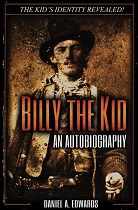 I vividly recall the first time I saw the 1988 Hollywood film
 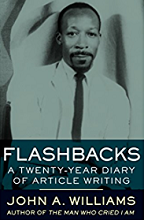 When I saw this book on sale, I felt a small sense of embarrassment because I did not know who John A. Williams (1925-2015) was. While it is true that he would be considered “before my time”, voices from the past are often as important as those of today. And any person that spends twenty years writing articles must have a significant number of experiences to reflect on. I gave in to my curiosity and decided to make the purchase. I can honestly say that I received more than I bargained for and have a newfound appreciation the late journalist. To be clear, the book is not an autobiography but more of a recollection of his most vivid memories about his early life, breaking into journalism and the numerous larger than life figures he had the chance to interview and, in some cases, form friendships with. Writers can tell you that composing an article is not always a simple as it seems and financially, it is not a way to get rich quick. In fact, the author removes all illusions of grandeur when he says:
 When we think of political dynasties in America, perhaps no other name has had as big of an impact as the Kennedys. They are both admired and loathed but their importance to the American experience cannot be understated. The patriarch, Joseph (“Joe”) P. Kennedy, Sr. (1888-1969) was once one of the wealthiest men in America. Yet for all of his financial success, controversy followed him and his family for years after his death. The family’s success undoubtedly reached its highest peak with second son John F. (“Jack”) Kennedy (1917-1963) was elected in 1960 as the next President of the United States. For Joe, it was a dream come true and reaffirmed his mantra that “Kennedys don’t lose”. To most of the public, the Kennedys seemed like figures out of a story book and the media’s creation of the term “Camelot” that was given to the Kennedy White House, further enhanced the family’s mythical status. The image presented to the public gave the impression of a fairytale marriage that any single person would envy. Today, we know through the benefit of hindsight that the truth is far less glamarous and behind the scenes, there were dark storm clouds gathering as infidelity, old man Joe’s influence and one foreign crisis after another made life as the first family strenuous to say the least. Rumors have persisted over the years that Joe Kennedy provided the money for all of his sons’ political campaigns and that the money he provided was used in several places to swing the election to his son Jack. And while there has never been documented evidence of such, statements have been made by many individuals that action were taken to give Kennedy the election. All knowledge of what really did happen went with Joe Kennedy to the grave and I doubt that even his sons knew the whole story. He was a master at compartmentalization and for years, remained chameleon like figure. Ronald Kessler decided to take another at Kennedy’s life and what he found has been compiled into this book that peels back the layers that have shrouded the Kennedy family is mystique for several decades.
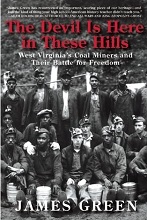 The United States is considered by many historians to be “young nation” due to it being in existence since 1776. While it is true that my nation’s history is not as extensive as Ancient Greece or Egypt, in the time since its creation, America has been the source of some of the most groundbreaking events in world history. Incredibly, there are dozens of smaller events that have taken place which many Americans have forgotten about or are not aware of. When President Donald Trump ran for office in 2016, he made it clear he wanted to bring jobs back to the Appalachian region known simply as “coal country”. It was profound promise to make and some might go as far as to say it was deception on the part of the candidate. Four years later the situation in Appalachia has not changed much and coal is widely considered to be an older energy source to be exported rather than used domestically. Natural gas and nuclear power have substituted coal as America continues to employ cleaner sources of energy. West Virginia is seen as the heart of Appalachia and has made headlines in recent years due to the surge in opioid addiction. I watched the 2013 documentary Oxyana and it provides a glimpse into the lives of some West Virginians but surely, it does serve as the example for the entire state. But what we do see in the film continues to exist and is cause for concern. One question I have always had is what exactly happened during the time in which coal was so widely desired? I had read Henry Caudill’s
  FREETHINKING BIBLIOPHILE
You must be logged in to post a comment.