
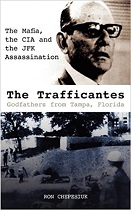
The official story put forth by the Warren Commission is that President John F. Kennedy (1917-1963) was shot and killed by Lee Harvey Oswald (1939-1963) who fired three shots from the Texas School Book Depository in Dallas, Texas on November 22, 1963. However, Oswald’s guilt has long been in doubt and in 1976, the House Select Committee on Assassinations found a “probable conspiracy” in Kennedy’s murder. Some believe that the conspirators included members of the Italian American Mafia, notably mob bosses Santo Trafficante, Jr. (1914-1987) of Florida and Carlos Marcello (1910-1993) of New Orleans, Louisiana. We know for certain that Oswald was at the Book Depository as the assassination happened. However, events that played out following the shooting in Dealey Plaza indicated a darker and more sinister climate of danger that awaited Kennedy as he stepped off Air Force One at Love Field that morning. It is no secret that mobsters were not fans of Kennedy or his brother, Attorney General Robert F. Kennedy (1929-1968). But did the mob have the power to kill the president? Author Ron Chepesiuk explores this question and more in this short book about the Trafficante family and the role the mob may have played in Kennedy’s death.
Believers of the lone gunman theory will not entertain any theories about the mob, CIA, or others. And for good reason. If we do believe the mob was involved, then a conspiracy exists. However, the mob did have motive, and that aspect is addressed in the book. But before we get to the Kennedy assassination, the author primes us with background information on Trafficante and his father Santo Trafficante, Sr. (1886-1954) who were the undisputed rulers of the Tampa underworld. The book is not an extensive biography of the father or son but provides basic information to understand who they were. But what is of more interest are the connections between them and other underworld figures, and this is where the plot thickens.
Because the book is short, there is a lot of information that is highly condensed. Readers may benefit from other material on the Kennedy assassination, and I always recommend the late Jim Maars’ (1943-2017) ‘Crossfire: The Plot That Killed Kennedy‘ which provides a thorough analysis of the shooting in Dealey Plaza, the death of Dallas Police Officer J.D. Tippit (1924-1963) and numerous other components of the crime that will send chills down your spine. Chepesiuk’s story is solely on the Mafia, but he does mention other players when necessary. However, the story here remains centered around the Trafficantes, Marcello and the nexus of underworld crime figures who welded power in America. There are no “smoking guns”, but I did notice that anyone expected to appear before the House Select Committee on Assassinations seemed to meet a sudden death. Appearances are made in the story by Chicago mobster Salvatore “Sam” Giacana (1908-1975) and mobster Johnny Roselli (1905-1976). Their stories are surreal, especially Giancana’s direct link to Kennedy.
It is impossible to discuss the mob’s anger at Kennedy without acknowledging the impact of former Cuban President Fidel Castro (1926-2016). Prior to the Cuban Revolution, the Mafia had turned Cuba into a cash machine and playground for Americans looking for a quick getaway to have fun. Former Cuban President Fulgencio Batista (1901-1973) had allowed the mob open reign but on January 1, 1959, that all changed as Castro marched triumphantly down the streets of Havana. Mobsters who had the means to do so, left as soon as they could. But Trafficante Jr. had an interesting experience in Cuba which I had forgotten about. It is telling of what Castro through of the mob and sets the stage for the future alliance between the CIA, Mafia, and disgruntled Cuban exiles. Castro was serious and the only way the mob could enjoy Cuba was if the bearded leader were gone. This is the beginning of a dark rabbit hole which we cannot go into here. But the author gives us an idea of the sinister partnerships that existed for “mutual benefit”.
There is one more section of the book I want to address, as no discussion of Kennedy’s murder can be held without addressing the dark presence of Jack Ruby (1911-1967), whose actions that weekend following the assassination were strange to say the least. The Warren Commission insisted that Oswald and Ruby did not know each other. But is that the truth? As seen in the book there is compelling evidence that they did know each other, and I recommend readers watch the documentary ‘Rush to Judgment‘ by the late Mark Lane (1924-2016) who published the book of the same name. Ruby’s mob connections cannot be ignored, and the author weaves them into the story at hand showing that powerful figures were watching Oswald.
The truth about Kennedy’s murder may never be known. And if it is, maybe not in my lifetime as author Anthony Summers says in his book regarding the murder. Thousands of pages of records are still classified, and as time passes, those with knowledge of what did happen will pass on taking what they know with them to the grave. But I do believe that we have enough information to know that Oswald was only a small piece in a larger puzzle. The mob certainly wanted Kennedy gone and benefited from his death. It had the money and power, but to a certain extent. Removing a president from office is a concerted effort dependent on compartmentalization, a concept the Mafia knew well. The list of Kennedy’s enemies was long, and his death was nothing short of regime change. The mob was only one enemy, and its role is still up for debate. But what Chepesiuk shows is that the mob had a personal stake in seeing Kennedy eliminated. For a good understanding of the powerful crime figures who had turned sour on Kennedy, this is an informative read.
ASIN: B003BIGGQA

 Anyone who uses a mobile cellular device has undoubtedly experienced the issue of a dropped call. Upon resumption of the call, one party will typically ask the other who their service provider is. The choices of mobile service providers today are plenty but prior to 1982, the American Telephone and Telegraph Company controlled phone service across America (“AT&T”). But all that changed when a small communications company challenged AT&T’s rule and set int motion a chain of events that resulted in the breakup of the communications giant, paving the way for the diversity in service providers we have today. Author Steve Coll tells the unbelievable story here in a book that beautifully captures a crucial event in American history.
 The Bronx, New York is known as the birthplace of hip-hop music and the home of the New York Yankees. It is also a melting pot and home to immigrants from all parts of the world. And the history of the Bronx is as storied as the people who call him home. During the 1970s, New York City had ventured into its darkest days with the threat of bankruptcy and crime rate nothing short of astronomical. In the Bronx, an epidemic of fires emerged but not solely due to arson. In fact, arson played a minor role in the plague of fires that struck the Bronx. Regardless of how and why the fires started, the tragedies altered the Bronx landscape and left its people wondering where things went wrong. However, life in the Bronx was not always as perilous. Authors Mark Naison and Bob Gumbs conducted interviews with former residents of the Bronx to learn what life was like before the fires and drugs devastated communities.
 In the 1989 film ‘
 On January 28, 1986, Americans watched in horror as the Space Shuttle Challenger suffered a catastrophic rupture in its rocket booster shortly after liftoff. Among the seven crew members who perished was Ronald McNair (1950-1986) and African American astronaut who had joined a diverse crew of individuals who were making history. As a student, I remember being in awe of McNair and the mission he was on. Naturally, my fellow students and I also had an affinity for Christa McAuliffe (1948-1986) a schoolteacher whose hometown was watching that day as well. To millions of young black children, McNair was a remarkable sight, but he was not the first to break NASA’s color barrier. In fact, NASA had begun to integrate the space program decades before, during the administration of President John F. Kennedy (1917-1963), whose initiative to travel to the moon led to NASA changing itself and playing a significant role in the Civil Rights Movement.
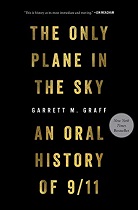 This past Sunday marked the twenty-first anniversary of the September 11th attacks which claimed the lives of 2,996 people. The mood in New York City was somber, with rain and dark clouds all day. However, that did not stop anyone from remembering the tragedies on September 11, 2001, a day that changed America. Friends are always surprised to learn that I have never visited the 9/11 Memorial and Museum. As a New Yorker who was in Manhattan on the day of the attacks, and watched the events unfold from an office window, I will always have my memories of that sad day. But my reluctance to visit the museum has never prevented me from reading and hearing stories from people who were at the World Trade Center and survived. Undoubtedly, there are survivors who have never told their stories, choosing not to re-live the events of that day. Thousands of others did go on the record and their words have been preserved so that the history of 9/11 can continue to be told to future generations. Author Garrett M. Graff has compiled hundreds of statements from survivors, Bush Administration officials, NYC officials, military personnel and first responders, and has turned them into this oral history of the attacks.
 The more I learn about history, the more I realize how much of it is not taught in schools. I recall learning about the Civil War but in limited discussions. And I fondly remember the 1989 film
 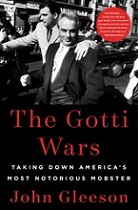 America has always loved gangster stories. Tales from the lives of larger-than-life characters both feared and respected have captivated film audiences and true crime readers. In my hometown of New York City, the Italian American mafia holds a firm place in the annals of the city’s crime history. Of all the mafia bosses, none was as flamboyant and media savvy as the late Gambino Family boss John J. Gotti (1940-2002). The media nicknamed him the “Teflon Don” due to the acquittals his lawyers obtained of a multitude of charges that could have put the mafia boss in prison for life. On March 13, 1987, Gotti and his co-defendants were acquitted of federal racketeering charges and the verdict left prosecutors in the Eastern District of New York licking their wounds. Gotti and his fellow mobsters were elated the Federal Government was far from finished. However, prosecutors knew that to convict Gotti, they needed irrefutable evidence of his crimes and witnesses willing to testify. As fate would have it, in time prosecutors would obtain all that they needed through a chain of events that began with wiretaps in the home of mobster Angelo Ruggiero, Sr. (1940-1989) known as “Quack Quack”. And leading the mission for the Government was lead prosecutor John Gleeson, also a former judge in the Eastern District. This is the story of how the United States Attorney’s Office in Brooklyn secured a conviction against America’s most notorious mobster.

You must be logged in to post a comment.