All the Young Men: A Memoir of Love, AIDS & Chosen Family in the American South – Ruth Coker Burks with Kevin Carr O’Leary

I was browsing recommendations when I saw this book which received a near five-star rating on Amazon. Knowing that obtaining a rating that high was not easy, I decided to take a further look, and in the process, I discovered a gem of a book which I could not stop reading. The location for the story is in Arkansas, in the heart of the American South, or the “Bible Belt”. Ruth Coker Burks starts off the story with a visit to the past where a young man named Jimmy is declining to the effects of acquired immunodeficiency syndrome (“AIDS”) and is treated like a leper by the nursing staff. Coker refuses to sit idling while Jimmy enters the final stage of life and performs actions unheard of at the time. And this begins a long journey into the AIDS epidemic and the struggle to treat and bury the young gay men diagnosed with the killer disease during the height of the crisis.

Readers old enough to remember the emergence of the human immunodeficiency virus (“HIV”) and AIDS, will recall the fear and paranoia which gripped the United States. What was originally seen as a “gay cancer” in San Francisco, became a nationwide threat when doctors learned that the disease did not discriminate based on sexual orientation or ethnic background. AIDS was equally destructive to every section of society it reached. I must warn readers that this book will trigger a range of emotions, including anger, joy, shock, and grief. And if you lost someone close to the virus, it will be like a step back into time to a dark period when answers were short in supply. Coker goes through each, and learns that in the Deep South, religion trumps all else.

In addition to her occupation as a nurse, Coker is also a single mother to daughter Allison who becomes not only a dependable assistant, but also a source of wise words when her mother is feeling conflicted. But the friends they make provided them with a second family who treat them with the love and kindness close relatives fail to deliver. However, her family drama takes a back seat to the lives of the gay men who have been disowned by their families, ostracized by society, and even refused the dignity of a formal sendoff when they die. Coker refused to accept this and morphs into a guardian angel whose devotion and relentless pursuit of assistance for the men is nothing short of incredible. But that does not mean the journey was easy. In fact, there are moments in the book which are beyond infuriating and will leave readers shaking their heads. And of course, there are secrets in Arkansas, some of which reminded me of James Baldwin’s novel ‘Giovanni’s Room‘. However, the bright moments arrive in the men we meet whose larger-than-life personalities are momentary reprieve from the looming grim reaper. And as I read, I found myself becoming acquainted with them as well as they told their stories and accepted their fates which they knew would end in death.

Life for gay men diagnosed with AIDS was incredibly difficult but there are other people in the book who provided help to Coker when needed. They are in the shadows, but the influence is undeniable, and Coker was not afraid to lean on them when needed. Their actions are not the focus of the book, but they helped in ways which were crucial at a time when being seen publicly with an AIDS patient was taboo. The story of Ryan White (1971-1990), included in the narrative, is just one example of long reach of HIV and how a virus reshaped an entire decade and changed world history. And sadly, in Coker’s account, we see health professionals refusing to even set foot in a room with a patient afflicted by the virus. Today it seems unthinkable that a doctor would refuse to treat an AIDS patient, but in the time period when but in the time when current information was scant, this was the reality. I felt Coker’s rage as I read of her encounters with hospital staff who wanted no part of any AIDS patients. But those encounters only fueled her resolve to help even more, and she pulls off successful projects and even earns an invitation to the inaugural ball of fellow Arkansas native and friend, President William J. Clinton.

To say that Coker suffered personal setbacks due to her goal would be an understatement. There is immense personal sacrifice, and another person may have broken under the strain. However, she continues to move forward determined to ensure as many people as possible are protected from HIV and cared for after a positive diagnosis. And in the process, she left a legacy of compassion and humanity which is on display here in one of the best books I have ever read about the AIDS epidemic. Highly recommended.

ASIN ‏ : ‎ B085MMH732
Publisher ‏ : ‎ Grove Press, February 22, 2023

Lady Death: The Memoirs of Stalin’s Sniper – Lyudmila Pavlichenko

When I saw this title in my recommendation list, I paused for a moment while focusing intently on the cover. As a history lover, World War II (1939-1945) always fascinates me, but I also realized that the material I tend to read typically comes from the American point of view or from those who survived the horrors of the Third Reich. This book was a change of pace and allowed me to read about the war from the view of a soldier in the Soviet Union‘s Red Army by the name of Lyudmila Mikhailovna Pavlichenko (1916-1974). This is her story of how she joined the war effort and became one of the Soviet Union’s deadliest snipers.

The story begins in her native Ukraine in 1916 during World War I, and her childhood post-war is ordinary. But when she is introduced to a rifle, shooting becomes an addictive hobby. However, her life a sniper is still years away and she explains the changes in her personal life including her first husband Alexei and son Rostislav Alekseevich Pavlichenko (1932-2007). But everything changes for all of them when Nazi Germany invaded the Soviet Union on June 22, 1941 in “Operation Barbarossa“. Lyudmila answers the call and joins the military as a sniper determined to defeat the German menace. At this point in the story, the book changes gears as the ugliness of warfare takes center stage. Readers may find her candid discussions of the kill shots she takes to be shocking but it is crucial to remember that the war had affected and shaped her, and Germany atrocities against Soviet men and women had conditioned them to believe that Nazi deaths were the only options. In between her kill shots, she also suffers battlefield wounds, and one incident nearly claims her life. She revisits each one highlighting the danger snipers faced when out on their missions. Frankly, death was everywhere and I felt chills as she recalls the missions.

In between military missions, briefings and keeping her skills sharp, she also finds love in second husband Alexei Kitsenko. The relationship blossoms despite the chaos around them and their roles as snipers, but a series of events shatter everything between them, and as I read I could feel the grief in her words. The section about Alexei is both shocking and heartbreaking, and it also reinforces the words that war is hell. However, a war was still brewing, and Lyudmila’s job was far from finished. She was determined to leave her mark, and it is apparent from the awards she received and her record that she accomplished that goal. In the Soviet Union she becomes a star and is chosen to lead a delegation to visit the United States. Prior to reading this book, I had heard of Pavlichenko’s name, but her story was not familiar with me, and the section about her trip abroad was a surprise. But this is why I love reading as much as I do because there is always something to learn. And when visited America, it was the United States that something to learn.

Upon arriving in America she meets the first couple, President Franklin D. Roosevelt (1882-1945) and wife Eleanor (1884-1962). I enjoyed this part of the book, and learning about her experiences in Washington was fascinating. In the years before the Cold War, the Soviet delegation receives star treatment in America where they are seen as “ambassadors” of good will approved by Soviet Premier Joseph Stalin (1878-1953) himself. There are humorous moments during the visit and some moments which are bewildering, but it is her friendship with the first lady that stands out. It also continued after the war as readers will learn. Following the visit to America, it was off to England where Prime Minister Winston Churchill (1874-1965) and wife Clementine (1885-1977) were waiting for their Soviet guests. The British visit is equally as interesting, and as I read, I thought of the differences in culture and how we as people find common ground. The west was genuinely curious about these Soviet troops and in particular a female sniper which was unheard of in American and British military circles. Pavlichenko was a rarity, but she was appreciated back home, and when the delegation returns to the Soviet Union, she is summoned by Stalin himself who wants to know all about her trip. However, the meeting results in changes she did not expect but nothing negative.

After her service in the field, Pavlichenko is assigned other functions to assist the war effort until the Nazi defeat on April 30, 1945. We follow her after the war when she returns to civilian life and begins to reclaim the parts of her past the war had prevented her from embracing. And although she survived the war, she did not escape unscathed and carried both mental and physical scars with her. But throughout everything she remains humble and tells her story of a young woman from Kyiv (Kiev) who went on to became one of the deadliest snipers in Russian history. And I enjoyed reading her autobiography. Sadly, on October 10, 1974, Lyudmila Pavlichenko died at the age of fifty-eight following a stroke and is buried in Novodevichy Cemetery in Moscow. Post-Traumatic Stress Disorder, alcohol, and physical wounds combined to take their toll later in her life. Pavlichenko died prematurely but during her life, she served her nation as it fought for its survival in the deadliest war in history.

To become a sniper, it is not only important to be able to shoot accurately. One other thing is important – a cold hatred for the enemy, so emotions are subordinated to calculation. Here the iron will of the soldier plays a role. Snipers did not take their eyes of the enemy by day or night, and information in reconnaissance log-books would often be verified through snipers’ operations. A sniper had to know by heart every bump in the ground, every bush in front of his or her position. ” – Lyudmila Pavlichenko

ASIN ‏ : ‎ B07B7MGZ4B
Publisher ‏ : ‎ Greenhill Books,  January 24, 2020

Just as I Am – Cicely Tyson with Michelle Burford

At the age of ninety-six, actress Cicely Tyson (1924-2021) was able to look back on a journey which no one could have predicted. And when she passed on January 28, 2021, it was another reminder of the mortality which confronts us all. However, there is much to celebrate about her life which she recalls in this autobiography presented to us with the help of author Michelle Burford. The cover caught my attention and once I began, I could not put it down. 

Following a recap of the family’s origins in the small Caribbean nation of Nevis, the story moves to New York City where her parents William (1897-1961) and Fredricka Theodosia Tyson (1897-1974) raise three children in a section of Manhattan Island known as Harlem. Their story is an immigrant tale, and young Cicely soon learns the cruelty of racial discrimination and witnesses the turmoil brewing between her parents. Unbeknownst to her at the time, the actions of her father would come back to play a role in her own life many years later. Cicely, sister Emily (1926-1999), and brother Melrose (1922-1991) each find ways to cope with the strains of family life. The maturing Cicely proves to be the one with the most to learn, and meeting with a pastor’s son named Kenneth throws a curve ball into the story that I did not see coming. And it forces Cicely to evolve from a teenage schoolgirl to an adult very quickly. 

Life becomes complicated for Cicely but eventually stabilizes for her and daughter Joan whom she adores. There are the typical worries about finances, security, and long-term goals. But an unexpected opportunity arises when she decides to answer a call for potential models. One thing leads to the next, and she catches the eye of someone who has connections in the film industry. However, Cicely is skeptical and does not see herself as a Hollywood talent. But she soon comes to terms with it and this quote from her stayed with me long after finishing the book: 

“My mother understood what I didn’t yet at the time, that there’s a path in this life with your name on it. What God means for you to have, no one can take away from you. It’s already yours. Our mission, as God’s children, is to surrender to what he has ordained—and to freely let all else just pass us by.”

As her Hollywood career takes off and the accolades come in, the story changes gears again with the entry of jazz musician Miles Dewey Davis, III (1926-1991). Readers familiar with Davis’s story will know it was beyond wild, but Tyson provides an interesting firsthand account of his battles with substance abuse which Miles himself discussed in his autobiography written with Quincy Troupe. Their story is an unusual account, and their romance did not develop instantly. In fact, Davis was with someone else when they first met. But fate had its own plans, and they would reconnect, find true love with each other, and walk down the aisle to exchange wedding vows. But behind the public image of the sharply dressed power couple, there were dark times due to Davis’s destructive lifestyle. The incidents which occur are surreal but highlight the seriousness of Davis’s condition. Their marriage was a roller coaster ride, and even after separating they remained closed. Tyson comments on an attempt by Miles to reconcile later in life as he continued to deteriorate caught my attention because his proposal instantly puts her on guard and signals that he was dealing with something just as dangerous as drug addiction. 

While Davis comes in and out of the story, Tyson continues to rise as a Hollywood star, and she explains the stories behind her iconic roles and friendships with stars of the past who are no longer with us. It is a fascinating look at the motion picture industry and the challenges faced by black women who find themselves in tinsel town. She waged a constant battle against the stereotypical portrayals of black women and that is part of her enduring legacy. Despite the sexual predators, offensive scripts, and rigors of the entertainment industry, she kept rising as a star and mastering her craft. And in her advanced years, she continued to appear in front of the camera to keep moving forward in life. This is one of the best autobiographies I have read. I only wish it were longer. I thoroughly enjoyed reading about Tyson’s life and the people who were part of it. Recently, I was eager for another biography to read, and this book was just what I needed. 

“To examine, to question, to discover and evolve—that is what it means to be alive. The day we cease to explore is the day we begin to wilt. I share my testimony in these pages not because I have reached any lasting conclusions, but because I have so much to understand. I am as inquisitive about life now as I was as a child. My story will never be finished, nor should it be. For as long as God grants me breath, I will be living—and writing—my next chapter.” – Cicely Tyson 

ASIN ‏ : ‎ B08425MPGS
Publisher ‏ : ‎ HarperCollins Publishers, 2021 

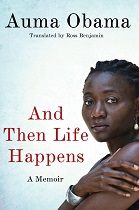
And Then Life Happens: A Memoir – Auma Obama

Imagine receiving a call that your brother in United States has just been elected to serve as the nation’s president. That is exactly what happened to Auma Obama when her brother Barack H. Obama became the Forty-Fourth President of the United States, serving two terms from 2008 to 2016. His story is well-known to Americans but the life of Auma back in Kenya is a footnote to his presidential success. This is her story and an inside look in the Obama family whose name is world-famous due to their distant relative from Hawaii who took America by surprise in an election campaign that was both riveting and inspiring. When I saw this autobiography appear in my list of recommendations, I decided to make the purchase and learn more about our former president’s Kenyan heritage.

The story begins in the Rachuonyo District of Kenya, where the Obama family resides. They are part of the Luo, a Nilotic ethnic group found in several sections of the African continent. Auma explains the family’s history, Luo customs and views on life, and the story of Barack Obama, Sr. (1934-1982) whose actions affect several families in diverse ways. As I read, I instantly noted that Auma was not the average Luo woman and fiercely determined to pave her own path in life. In the Luo culture, it is easier said than done for women to be independent, but she does not let her gender stop her. Of course, there are trials and tribulations along the way, including the unpredictable actions of her father Barack, Sr. I was aware that Barack, Jr., did not have a relationship with his father. However, I was not aware of the other families the father created across several time zones. This part of the book was a curve ball and would later come back to play a role in family relations long after Barack, Sr.’s death. But before we reach that tragedy, Auma is on the move and finds herself in route to Germany where she begins a new life in a nation completely different from Kenya.

Her anecdotes about finding her footing in Germany are humorous and relatable, and thankfully she was able to persevere. But there are hiccups on her journey, and a bad romance darkens her mood at one time in the book. However, life must go on and it did with Auma making a home in Europe which included a change of scenery from Germany to the United Kingdom where she finds love again and motherhood. In between moving from country to country, she remains in contact with her half-brother from Hawaii. She knows his name is Barack like their father but had never met sibling in America. Everything changes when they meet, and I love this part of the book. There are no cameras, press conferences or statements, just two siblings bonded by their father whose actions are not always understood. The affection between the two siblings and discussions about their upbringings is heartwarming. But there is one statement by the future president about his father’s absence that gave me a chill. And it drives home of the importance of a father in a child’s life.

In November 1982, Auma receives a call from relatives in Kenya that her father Barack, Sr., had died in an automobile accident and was taken to a local hospital by unknown persons. This part of the story is strange because there are unanswered questions about the end of his life. Auma pieces together the chain of events as best as possible but I could not help but feel chills thinking about his sudden death. However, it is clear from the story that towards of his life, he no longer held the same level of prestige as he did in his youth and had become an outcast to the Kenyan government. There are no conspiracy theories, and his death was never ruled a homicide, but there is mystery behind his demise. The family is left grieving, and Auma goes through a series of emotions as she confronts the reality that her father is gone, and her marital issues. But again, hope arrives in the form of her brother who has met his wife-to-be Michelle and decided that politics is his calling.

I do not want to spoil anything but the remainder of the book following her brother’s entry into politics is delightful and fascinating. Auma soon found herself in the media as Obama’s sister in Africa, but the reality is that they had formed a strong family bond years before Barack, Jr., knew he would run for public office. She manages the sudden fame as best as possible but has her moments when it is overwhelming, as we see in one situation where she is out with her daughter and second husband. Despite her reservations, her brother had catapulted her into the public light, but the story of the Obama family runs much deeper than the presidency. It is a story of tribal customs, emigration, a generation gap, tragedy, and success. If you want to know more about former President Obama, Auma Obama and the family name which holds a place in world history, this book is for you.

ASIN ‏ : ‎ B007FU7X6C
Publisher ‏ : ‎ St. Martin’s Press; First edition (April 24, 2012)

The Autobiography of Malcolm X as Told to Alex Haley – Malcolm X and Alex Haley

malcolm

During my sophomore year of high school, my English teacher Ms. Cregan, had asked each of us to pick a book for the Christmas and New Year holiday recess, and later author a report on it. I chose the ‘Autobiography of Malcolm X As Told to Alex Haley‘. After finishing the book, I drafted the required report and earned an A+ for it. However, the passage of thirty years left me with faded memories of its contents. Malcolm’s story has been told by others and there are documentaries which discuss the Nation of Islam. However, I wanted to read Malcolm’s words again as told to Alex Haley. My most recent blog post was a review of Robert J. Norrell’s biography of Haley which examined the late author’s life and the books he authored, which had a significant impact on American culture. Sadly, Malcolm never saw the publication of this book which ends in January 1965, a month before his murder at the Audobon Ballroom on February 21, 1965. But that does not diminish the book’s power, importance, and relevance.

In 1992, Warner Bros. released ‘Malcolm X‘ starring Hollywood legend Denzel Washington in the lead role. The film was a hit, and Washington nailed the portrayal of the late civil rights icon. However, the film does have its flaws, notably in the absence of Malcolm’s siblings as the story is told. His widow Dr. Betty Shabazz (1934-1997) was a consultant on the film, but the lack of input from Malcolm’s half-sister Ella Little-Collins (1914-1996) is regrettable. In spite of this, the film is a masterpiece and Spike Lee remains a critical voice in bringing the experiences of Black Americans to the silver screen. If you have seen the film, you will see the portrayal of Malcolm story which line up with what is told here. Hollywood did take some liberties in production, but the movie is fairly accurate.

Malcolm kicks off the story by revisiting his childhood in Lansing, Michigan during the 1920s. What he explains is what one would expect of life for Black Americans in a time where Jim Crow was a real and deadly threat. But for the young Malcolm, there are also issues inside the house where his father Earl (1890-1931) and mother Louise (1894 or 1897 – 1989) do their best to provide for eight children (Earl had previously fathered children before Louise and that union had produced Malcolm’s sister Ella). The family had moved from Omaha, Nebraska but could not escape the poverty Black Americans found themselves in. Malcolm’s descriptions of hunger and tensions between his parents are sobering, and Earl’s untimely demise is a significant blow to Louise who is left to raise eight children as a single-mother. It is not long before the State of Michigan becomes involved leading to separation at home and Louise dealing with life-long psychiatric issues. And though Malcolm found refuge in the home of a couple determined to provide a loving environment, his biological family had been fractured, and it was something he never forgot.

As he grows into a young man, his ethnicity becomes more of an issue, and he discusses race and the views held by those close to him including the family that had taken him in. And an incident with a teacher who gave him advice as to what he should aspire to be as a Black American, was a turning point in his life. Teachers reading this book will be mortified at the instructor’s comments. However, everything changes when Malcolm moves to Boston to live with Ella. As you can imagine, a country boy arriving in the big city has a lot to learn. And Malcolm takes us on that journey as he learns the street life. Added to this are his “zoo suits” and “conked” hair which were common on the street in those times. Speaking frankly about his past self, Malcolm dissects the foolishness of his earlier ways. His stint as a porter on the railroad is also revisited and how his employment opened his eyes to another world: New York City. He could not have known then that New York would be his final resting place.

The story changes gear and the streets become Malcolm’s home. He lived the hustler’s life and readers will take note of his full immersion in a life of destruction. It was a miracle that he was not killed on the streets of Boston or New York. He was flying high and introduced us to the characters we see in the film. There is the sad descent of Laura into a life off debauchery, the romance with Sophia and the fallout with West Indian Archie. As I read the story, I could see his downfall coming, and after a botched robbery, he and his friend “Shorty” find themselves arrested, convicted, and sent to prison. Of course, there is more to the robbery story, and race does play a factor in the ir fates. Reading it today feels surreal, but this was America at that time and the idea of interracial relationships or marriage was illegal in many states. However, for Malcolm, prison would be his savior.

Malcolm’s prison experience, as he tells it, is different from what we see in the film. In fact, the character “Brother Baines” is fictional. The true story of his conversion to Islam is more intricate, and involved several of his siblings who had previously joined the Nation of Islam (“NOI”). His brothers Reginald Little (1927-2001) and Philbert Little (1923-1994) each played a role with the latter having a larger impact to his close relationship with Malcolm. However, their actions after his death left me speechless. The details are in the epilogue by Haley. I was fascinated by Malcolm’s transformation which was nothing short of incredible. His methods to improve himself and ability to digest information are signs of the future iconic figure we know today. But that was still to come and before we reach the streets of Harlem, he goes through his conversion to Islam which involves pledging allegiance to the NOI and its leader Elijah Muhammad (1897-1975). The remainder of the book focuses on the NOI and Malcolm’s fallout and later defection which had deadly consequences.

A full discussion of the NOI and Malcolm’s relationship would be enough to fill several volumes of books. Malcolm condenses the story and touches on the most critical issues. He explains his rise and how Islam began to reach Black Americans. But he could not ignore trouble rumors which turned into factual revelations that Muhammad had fathered children out of wedlock. The crack in the relationship between Malcolm and the NOI had been formed. Curiously, Malcolm does not mention that Muhammad had been having an affair with a woman who he once had been involved with. That information is contained in ‘Malcolm X: A Life of Reinvention‘ by the late Manning Marable (1950-2011). Marable died before his book was published but had spent ten years researching and drafting his book which is strongly recommended for readers interested in Malcolm’s life. He discusses the topics which did not make the cut in this book. Malcolm had started to become disillusioned with the NOI but remained loyal. However, that all changed in the wake of the murder of President John F. Kennedy (1917-1963). Malcolm had been asked to comment on the assassination. Elijah Muhammad had given specific orders for no statements to be made by the NOI. While answering the question, Malcolm made the “chicken coming home to roost” statement which went viral in the press and led to a ninety-day suspension. But as we learn from him, the stage was being set for his removal from the NOI.

The gap between Malcolm and the NOI continues to widen as the story progresses. And while he explains the things he learned and noticed about the increasing animosity towards him, we also see that he becomes more fatalistic regarding his own mortality. His eyes had been opened but there is one more crucial event that opens the door for his reinvention: the pilgrimage to Mecca. It should be noted that his trip would not have been possible with his sister Ella who played a monumental role in Malcolm’s life. Her role in helping Malcolm throughout his life cannot be overstated. Moving forward, the trip to Mecca was not without its mishaps but the experience was life changing for him. He revisits the pilgrimage, and it is evident by his words that it changed his life. He was away from America but when he returned, the troubles with the NOI were far from gone. And upon arrival back in New York, the tensions escalated. Malcolm knew he was a marked man, but he makes a couple of statements that caught my attention. The first implies that the order to kill him was no secret and the second implies that forces outside the NOI may have been involved. Regardless, the clock was ticking, and he knew death was waiting. The final weeks of his life were chaotic and the attempts on his life resembled a Hollywood production. But this was no film and killers were after him. And on February 21, 1965, the end came in a hail of bullets.

Haley tells the aftermath of the shooting, but it is a not a full discussion of everything that happened. I do not believe Haley intended it to be either. It is more of a recap before the book concludes. Haley’s epilogue is an added bonus which does discuss events post-assassination. Again, it is not a full discussion of the trials of the three men convicted in Malcolm’s death (two have been exonerated) but a discussion of how the death impacted the NOI and Malcolm’s supporters, including the late actor Ossie Davis (1917-2005), whose eulogy of Malcolm still gives me chills. After I finished the book, I saw quietly for several minutes and thought about Malcolm’s life and its tragic end. I asked myself if any of us fully understood him. Today in 2024, wisdom can be found in his words. We will not agree with everything he said, and Malcolm himself stated that what he learned in the NOI was not the true Islam. Following his pilgrimage to Mecca, he had come to see what Islam should mean and wanted the gift of love and peace to confront the racism plaguing America. However, the forces against him were determined to prevail and America was not ready for the change he envisioned. There will never be another Malcolm X, and these words by him are a summation of all the things he experienced and did in his short life:

“Yes, I have cherished my “demagogue” role. I know that societies often have killed the people who have helped to change those societies. And if I can die having brought any light, having exposed any meaningful truth that will help to destroy the racist cancer that is malignant in the body of America—then, all of the credit is due to Allah. Only the mistakes have been mine.” – Malcolm X 

This book is a gift that keeps on giving. Highly recommended.

ASIN :‎ B013ZNNX5C
Publisher :‎ Ballantine Books; Reprint edition (August 25, 2015)

An American Requiem: God, My Father, and the War that Came Between Us – James Carroll

RequiemOn August 1, 1961, United States Secretary of Defense Robert S. McNamara (1916-2009) established the Defense Intelligence Agency (“DIA”) which became operational on October 1, 1961. The new agency was assigned the task of acting as a central hub for the coordination and monitoring of the United States intelligence apparatus. In the wake of the Bay of Pigs Invasion in April 1961 and its disastrous aftermath, President John F. Kennedy (1917-1963) sought to regain control over America’s intelligence operations. McNamara tapped Lt. Gen. Joseph Carroll (1910-1991), a former special agent for the Federal Bureau of Investigation (“FBI”), to lead the DIA in its assigned mission to place power of the intelligence community in the hands of the president. Carroll and and his wife Mary had five sons, one of whom is the author of this book, James Carroll.  This is his story of how he found his way in the Church, his differences of opinion with his father on society’s issues, and how events during the 1960s altered the relationship between them.

Carroll, his siblings, and parents are the typical American family of the 1960s on appearance. For James, his middle-class upbringing progresses without fanfare. However, for his father Joseph, things were far more serious as the Cold War and Vietnam heated up. Domestically, the Civil Rights Movement was pressing full steam ahead and became a hotbed issue across America. Ideologically, father and son found themselves on opposite ends of the spectrum as the younger Carroll found a calling in religion. And as he moves priesthood to the delight of Francis Cardinal Spellman (1889-1967), he finds himself developing a negative view of the war, dedicated support for civil rights, and irritation at the claim of a “missile gap” with the Soviet Union.  The seeds had been planted and in 1969, Carroll was ordained into the priesthood to the delight of his parents who are proud of their priest son.

The Vietnam War remains controversial and has been called America’s “least popular” conflict. My uncle who served in Vietnam, recalled that when flying home after his tour, senior officers told troops to change into civilian clothes before leaving the aircraft and going home due to the hostile protestors waiting for returning soldiers. He went on to describe the names they were called, and soldiers being spat on by anti-war demonstrators. As the war rages, James becomes more disillusioned with the war, but he also knows that the relationship with his dad will become strained should his anti-war position become officially known, due to the father’s high rank in military circles. It becomes a cat and mouse game as the author explains the efforts, he employed to prevent his father from seeing his anti-war efforts at a time when Washington was committed to victory.  His analysis of the conflict and decisions by senior officials provokes thought, and highlights the miscalculations made by Washington in supporting the regime of South Vietnamese President Ngo Dinh Diem (1901-1963), whose assassination casted a dark omen over the conflict and preceded Kennedy’s assassination in Dallas, Texas in November 1963. Eventually, the war did end, but the two Carrolls still had a rough road ahead.

In 1974, Carroll left the priesthood and shocked his parents. His decisions and feelings about it are explained, as well as the fallout at home as his staunchly Catholic parents learn that their son is leaving the clergy. It is a tough section in the book, and I can only imagine the pressure Carroll was under as he came to realize that he wanted a different path in life, which included a wife and kids who also are discussed in the story. In fact, there is one section regarding a road trip where his wife confronts him regarding the senior Carroll’s actions behind the wheel.  But what we also see is the first stage of decline for Joseph as he falls victim to a condition many of us have witnessed in our families. The author takes us step by step as the family does its best to support the aging patriarch, all the way to the end until he passes away surrounded by family.

When I finished the book, I was thoroughly satisfied with the purchase. Carroll writes beautifully, and the story is as American as you can get. The difference in opinions from one generation to the next, compounded by faith and issues of morality are what make the story relatable. Regardless of where we come from, every family has its struggles, and for the Carrolls, those challenges had long lasting effects. But the author never stopped loving his father and that should not be lost to the reader. Surely, there are tough moments in the book, and when the two do have difficult discussions, the elder Carroll’s softer side does come out. But he was also a man of code, and his profession required a level of discipline at a time when the world was on the brink of nuclear war and social upheaval had gripped the planet. And despite their challenges, both father and son are what make the story as compelling as it is.  Highly recommended.

First, that no human being has the right to sit in absolute judgment of another. Second, the essential note of our relationship to God, and to each other, must be forgiveness.” – James Carroll

ASIN :‎ B0062EAWVU
Publisher :‎ Mariner Books; Reprint edition (April 1, 1997)

We Don’t Know Ourselves: A Personal History of Modern Ireland – Fintan O’Toole

fintanIn February 2016, I visited Dublin, Ireland for the first time so that I could see for myself why this small country was so popular. In my hometown of New York City, Irish culture can easily be found. The police and fire departments have long history of Irish men and women who served as first responders in the “city that never sleeps.” And if you are in search of a drink and meal, a good Irish pub is hard to beat. As for my personal experience abroad, I fell in love with Dublin but I regret not having a better understanding of Irish history at that time. In the years that followed, I began to consume books on Ireland and the conflict known as “The Troubles”, being careful to read material from both sides of the matter. Regardless of how much I have read, I can see that there are stories still untold or in some cases, unknown to those on my side of the Atlantic Ocean. Fintan O’Toole is a native son of Ireland and this biography was included in my list of weekly recommendations. The book caught my attention and I knew I had to read it. It suffices to say that I received more than I could have asked for, and this book is a treasure.
O’Toole’s story begins in 1958 but the author discusses momentous events in world history that shaped his childhood in Ireland. World War II had ended thirteen years prior, and the Korean War had entered a ceasefire only five years earlier. And as we can see in the book, Ireland was still years away from catching up with the rest of the world. In fact, what O’Toole says about basic household needs in the wake of World War II is revealing. Even more telling are the restrictions in place regarding women’s rights, reproduction, and “exposure” to the rest of the world. Frankly, Ireland was in its own protected bubble. But slowly, we see things change as O’Toole takes us through the years in which Ireland evolved. But before we reach the point where conservative Ireland becomes liberal, the author takes us into the dark parts of Ireland’s history as the nation struggled with its own identity.

I would like to point out that this book is not about the Troubles. Of course, O’Toole discusses the conflict, but he did not live in Ulster Province nor was he involved with the Irish Republican Army (“IRA”) or any Ulster volunteer forces. However, his father makes a statement in the book about the Troubles that showed keen foresight. And when the Troubles do start, the violence that ensues is heartbreaking, but only a fraction of the chaos which took place during those years. There are books available which do go into the IRA and Ulster battle more deeply. Two that I recommend are Patrick Radden Keefe’s ‘Say Nothing: A Story of Murder and Memory in Northern Ireland‘, and ‘UVF: The Endgame’ by Jim Cusack and Henry McDonald. And if you are in search of a biography of someone that was there, I recommend ‘Nothing But an Unfinished Song: The Life and Times of Bobby Sands’ by Dennis O’Hearn.

Readers should beware that there are dark parts of the story which do not relate to O’Toole himself but to the nation in general. It is impossible to discuss Ireland without acknowledging the role of the Catholic Church. Its role in the development of Ireland cannot be overlooked. O’Toole is aware of this and discusses its stance against contraception and abortion, and the priests who became sexual predators and used their status to exploit minors. Although there are no graphic descriptions of anything, but the actions of priests and the protection they received will be upsetting. The influence of the Church resulted in a country where  birth control was outlawed, abortion was never an option, and basic women’s rights were an uphill struggle. And even more shocking is that this was less than seventy years ago. Today it would be unthinkable to read of these conditions in the United Kingdom, but this was life for Irish women at that time. And there is more to the country’s history as we learn in the book.

It is no secret that America has strong ties to Ireland. The amount of Irish people who left their homes to settle in America is astounding. The author explains the reasons for Irish expats and how society helped create the issue. But was America the answer to everything? Depends on who you ask but it was a step up from the living conditions thousands of families faced in a nation that needed change and to evolve. In June 1963, President John F. Kennedy (1917-1963) made a four-day visit to Ireland, and that historic visit will not be lost on readers. That trip and the excitement it generated is re-told here and is one of the book’s highest moments. But despite the president’s visit, Ireland still had a long way to go. It did eventually change, and  in ways no one could have predicted.

Before reaching the climactic moment in which Ireland turns the corner, we also learn more of O’Toole’s life. There is nothing shocking in his own story, but he too grows as Ireland does. However, there is a surreal moment in the book where he is mistaken for a killer. His family life was stable but not without its own challenges parents go through in raising children. As a student, he was familiar with the priests who were later exposed as pedophiles and tells a few stories that sent chills down my spine. Even more disturbing are the parents of the child victims whose reactions I did not expect. Here in America, we had our own experience with it during the priest scandal which erupted in the Northeast, and became the basis for the movie ‘Spotlight‘ starring Michael Keaton and Mark Ruffalo.  It is a good film but not easy to watch.

One of the book’s strongest points is the author’s discussions about the corruption within Ireland and how politicians and scandals were exposed. The culture of deceipt created a weird contradiction in which women were expected to be pristine  while being exploited by those in power who found themselves embroiled in sex scandals that made my eyes roll in disbelief. The hypocrisy is astounding. However, Ireland was changing and through the author’s eyes we see hope. The Northern Ireland Good Friday Agreement in May 1998  was a significant step in establishing peace but the back story is very interesting, and O’Tool provides commentary on the peace process and the role of United States President William J. “Bill” Clinton. Following the agreement, more is in store for the reader and the book culminates with significant strides made on the issues of abortion and the LGBT community which remained an open yet guarded secret in a county over ninety percent Catholic. The events are historic but what O’Toole explains about the voter demographics regarding abortion proves that people can change. And for Ireland, the only way to move was forward.

O’Toole’s biography is not only his story but a thoughtful and fascinating account of how a country went from being ultra conservative to one of the most liberal places in Europe. Of course, the men and women Ireland have not forgotten its past and that is why they continue focus on its future. If you have visited Ireland and wanted to know more about the country, this is a powerful addition to any library. And if you are Irish, you may learn of things never discussed at the dinner table. Highly recommended.

ASIN :‎ B08X96MBQ8

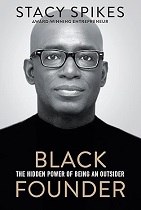
Black Founder: The Hidden Power of Being an Outsider – Stacy Spikes

Sikes America always has a soft spot for success stories in which the odds are against the protagonist. The story of the underdog faced with adversity is inspiring and reminds us that failure is not always the end. I saw this autobiography and asked myself if I had heard of Stacey Spikes. The title is eye catching, and I did anticipate a discussion of race in the book. However, that is not the case here. Although the issue does come up on occasion, the story told within is about drive, passion and finding your vision through the American way of life.

If you do not know who Stacy Spikes is, that is fine and does not take away from the reader’s experience. In fact, no prior knowledge of him is  necessary. However, his story is incredible and the hidden gem in the book is his ability to keep going in life when all seemed lost. But it is important to recall that Spikes is a Black American who navigated the music and film industry as an outsider. Of course, that position has its benefits and drawbacks, but Spikes made the best of it. From his early days in the music business to the creation of Urbanworld and work with Mirimax films, he learns through baptism by fire, and each position adds more experience to his resume and wisdom to his outlook on life.

There are some dark moments in the book, starting with his early battle with addiction. Undeterred, he cleans himself up and embarks on a journey that no one could have predicted. And as the story progresses, we are given an inside look into the entertainment industry and all of its characters from film-star/musician Eddie Murphy, the ‘Black Godfather’ Clarence Avant (1921-2023) to the former Mirimax co-partner Harvey Weinstein. The section about Mirimax films is a bit shocking but echoes what director M. Night Shyamalan has discussed regarding his experience while collaborating with their team. And though there are no disclosures about Weinstein’s sexual activity, we can see how vicious he was when it came to business.

Following his stint with Mirimax, Spikes sets his sights on new goals, one of which shows his ability to see past current trends. After discussing the early days of Netflix, Spikes introduces us to MoviePass, his project that became a major player in the movie-going experience. The story of its rise, his fallout with partners and re-acclimation of the company are all covered within, and sure to leave the reader speechless. There is more to the story as well, including marriage, fatherhood, and friendship. A happy conclusion can be found here but the story is not without its setbacks. For anyone interested in what life is really like as an entrepreneur this book is a blessing. And for the rest, it is an effective way to learn about the industries that produce the films and music we consume.

ASIN :‎ B0B3G4RCJK

I Stooged to Conquer: The Autobiography of the Leader of the Three Stooges – Moe Howard

MoeIn 1925, actor, comedian, and vaudeville performer Ted Healy (1896-1937) put the final additions on his latest act which included three young men eager to make it big in the entertainment business.  The act was formally known as Ted Healy and His Three Southern Gentlemen. Public exposure through partnership with Healy provided Moses Harry “Moe” Horowitz (Moe Howard) (1897-1975), Samuel “Shemp” Horowitz (Shemp Howard) (1895-1955), Jerome Lester “Curly” Horowitz (Curly Howard) (1903-1952) and Larry Fine (Louis Feinberg) (1902-1975), a taste of show business, and helped kick start their careers. However, nine years after joining Healey, they parted ways with him and began performing in 1934 as “The Three Stooges”.  The leader of the group, Moe, was the last to pass away, and his death on May 4, 1975, marked the last chapter in the Stooges’ story. But have you ever wondered how the Stooges came to be? If so, this autobiography by Howard explains the key parts of their journey together from the beginning to the end. 

Decades after their deaths, I still watch the Stooges on occasion, and they always deliver the goods. But off screens, their lives were not all fun and games, but full of highs and lows. The story begins in my hometown of Brooklyn, New York, where the Horowitz family is raising Moe and his siblings. His anecdotes about his family’s trials and tribulations are interesting and reminders of the modern-day conveniences we take for granted. In time Moe and Shemp realize that they have a talent for the stage but before they make it big, they take on jobs to make ends meet, including a stint on a showboat traveling the Mississippi River. But all that changes upon meeting Healy in 1922. Moe is a gifted storyteller and the escapades by the brothers are hilarious. But the story also has its dark moments through heartache and exposure to America outside of Bensonhurst, Brooklyn.

In one instance, Moe recalls a trip to the Deep South and coming face to face with Jim Crow. Today the story is not surprising, but in the era before faxes, emails, television and social media, news did not travel as quickly or freely. And the story highlights the insulation that came with the lack of modern technology. Life on the road is tough, and compounded by Healey’s personal demons from which he could not escape. This part of the story is disheartening and when Moe learns of Healey’s death, I could feel his pain as I read. But as they say in the industry, the show must go one and the Stooges kept performing. Moe takes us behind the camera, explaining the mishaps on set and the creativity that went into creating the classics we love. He also details the injuries they suffered as they filmed their projects and the impact the industry had on their personal lives. What he explains is unbelievable but also the truth about the physical exhaustion that came with performing one’s own stunts.

There is no gossip in the book but simply Moe talking about his brothers and family friend Larry.  As we move through each year, the Stooges get older, and life begins to play out in ways none of them expected. Moe discusses with a heavy heart the passings of Curly, Shemp and Larry.  I knew the story of Curly’s final days and the health issues that plagued him. But Shemp’s passing was the one that surprised me as I didn’t know the full details. And from what Moe says, everyone was caught off guard. Larry’s ending was also familiar and there are videos on YouTube about the stars and their final days. However, reading Moe’s account of how he received and reacted to the news is emotional and shows the love that existed between the stars off the set. 

As I read, I noticed a couple of things that are rarely discussed regarding the stooges. The first is the contract they had with Columbia Pictures. Moe explains the issue but if you are familiar with the current strike in Hollywood, you will see that the issue a not new. The second thing is the relevance of former President Ronald Reagan (1911-2004). You might be wondering where Reagan fits into the story. Well, years before entering politics, the former movie star was once president (1959-1960) of the Screen Actors Guild and set into motion a chain of events that have had long lasting effects on the earnings stars can make when they are not on camera. Admittedly, I did not expect this part of the story, but it was revealing. Today, when I watch a Stooges’ short film, I will understand and appreciate the sacrifices they made. 

Eventually father time comes for Moe too, and several months after Larry’s passing, he too makes his final departure. His daughter, Joan Howard Maurer (1927-2021), provided the foreword but let her father speak for himself here and tell his story of how he, his brothers and a good friend became legends in the film industry. If you are a fan of the Three Stooges, this is for you. 

ASIN :‎ B00D5FL4ZC

The John Carlos Story: The Sports Moment That Changed the World – John Carlos with Dave Zirin and Cornel West

carlosOn October 16, 1968, U.S. track and field runner John Carlos ascended the podium to accept his bronze medal following the 200m race. His teammate and gold medal winner Tommie Smith joined him on the podium and as the United States anthem played in the stadium, the pair raised their fists in solidarity with the growing movement for civil rights in America. Silver medal winner and Australian native Peter Norman (1942-2006) showed his support for the American duo by wearing an Olympic Project for Human Rights badge. The image of them standing with their fists raised remains one of the most powerful pictures of the Civil Rights Movement. However, behind the scenes, the fallout from their gesture was immense and even Norman, who was not American, suffered tremendously. This is the story of John Carlos in his words, which explains the events leading up to the pivotal moment in world history and his life which has been anything but ordinary. 

Huey P. Newtown (1942-1989) famously remarked that “the first lesson a revolutionary must learn is that he is a doomed man“. The statement is dark but accurate. For John Carlos, the moment he decided to raise his fist was also the moment that he invited the turmoil that comes with taking a public stand. But prior to that earth shattering moment, he had been an advocate for equality and the stage for Mexico had been set years prior in my hometown of New York City. I did not know Carlos was a New Yorker so one can expect that I was pleasantly surprised. As I read his account of his early life and the struggles his family faced in their housing complex, I found myself gaining more respect for him, as a person not afraid to tackle problems head on. To be fair, there are sections in the book where Carlos himself admits that he was wrong and should have put more thought into his actions. And his father, to whom he was remarkably close, provided a source of guidance that was needed at times. Carlos was also close to his mother, whom he deeply loved and still holds in high regard. I enjoyed reading about his family life and felt that I understood him and why he became a voice for change.

Carlos dabbles in athletics until he finds his calling in running, which incredibly, was not his first choice. That might shock readers, I know it surprised me. But once he starts running, he never stopped, and that path took him from New York City, to Texas, and all the way to Mexico City, where the story picks up in pace for obvious reasons. However, Carlos reveals critical information about the Olympic Project for Human Rights and its original plan for the games. Also, the story takes another turn when famed Olympian Jesse Owens (1913-1980) enters the story. I had no prior knowledge of these events before reading the book and was shocked to learn of the friction backstage. But Owens is not the villain, and his own story is one of triumph and tragedy. And even Carlos realizes that Owens could not escape the ideology that he helped shatter in Berlin as Adolf Hitler (1889-1945) watched in disbelief. 

After the Olympic medal ceremony, Carlos knew that he would have to return to the United States but had no idea of how bad the repercussions would be for exposing America on the world stage. Any illusions of returning to America as champion of equality were quickly shattered as he and Tommie Smith became public enemies. Peter Norman also had to face his fate upon returning to Australia. His story is equally heartbreaking but on a positive note, Norman was vindicated in recent years and today he is seen as a hero and in 2012, Australia’s governing body posthumously apologized to him for not being sent to the 1972 Munich Olympics, despite qualifying. The hardships these athletes endured were surreal and it should come as no surprise that Norman’s final years were filled with dark days. Smith and Carlos had their own trials and tribulations. As the book progresses, Carlos reveals his personal struggles with employment, marriage, injury, fatherhood, and the social pressures that came because of being a recognized activist. But there are bright moments and though he was down on occasion he was never out. Thankfully, Carlos is alive today and has overcome challenging times that could have caused another man to lose the plot. 

Whether we believe that athletes should make political statements, his story is important and an example of what happens when you take a stand for something you believe in. Carlos himself is aware of the criticism that athletes face when taking on politics but never wavered in his goal to make change. The argument over when and where to make political statements will never end but there are times where they need to be made regardless of who the speaker is. In 1968, John Carlos knew he and Tommie Smith were the ones to make their statement, but they could have never imagined that their actions before a sellout crowd in Mexico City would change the course of history. 

ASIN: B005MJDRL8