
 Twenty-two years have passed since the African nation of Rwanda found itself caught in a civil war between the Hutu and Tutsi tribes. Tensions between the two had been simmering beneath the surface for many years and when things finally came to a head in April, 1994, the conflict escalated into a full-scale genocide. Rwandan society had been shaped on ethnic grounds under the colonial governments imposed by German and Belgian settlers resulting in jealousy, mistrust and unfortunately, ethnic cleansing. The tragedy ranks high among the worst cases of large-scale genocide in history. One of the survivors, Immaculee Ilibagiza, decided to record her memories following the war and they have been turned into this chilling account of the horrors of the holocaust and the incredible effort by her and others to stay alive in the midst of what could only be described as hell. The book became a New York Times bestseller upon its release and remains a testament to the tragedy of Rwanda more than two decades later.
On April 6, 1994, a plane carrying Rwandan President Juvenal Habyarimana and the President of Burundi, Cyprien Ntaryamira, was shot down killing everyone on board. The Tutsis were blamed and the tensions helped sparked the Rwandan Genocide. Ilibagiza and her family are of the Tutsi tribe, which had been a minority in Rwandan society but also held a large amount of political power. Ethnic tensions simmered beneath the surface as Hutus began to eye their opposing tribe with suspicion and disgust. For 100 days in 1994, nearly one million people were murdered in one of the worst acts of genocides known to man. For Immaculee, the civil war changed her life and the lives of her family members permanently. She lost several siblings and many others she knew intimately. Death would have certainly come for her as well if not for a chance encounter which would encourage her to discover God and have a new-found faith in religion.
The fact that she is alive today is nothing short of a miracle. Help sometimes comes from the most unlikeliest of places but goes a long way in changing the lives of others. Now married and a mother herself, she has come a long way since the tragedy in Rwanda, but her words convey to the reader the reality of the atrocities that took place. Some parts of the book may be upsetting to some and I forewarn the reader that they are not for the faint of heart as graphic details of the deaths of her family members are recorded, in particular those of her two brothers Damascene and Vianney. The atrocities were beyond repulsive and disheartening but these are her words of the nightmare she escaped from and to which no one would ever want to go back.
Today Rwanda is far different but the people have not forgotten the genocide which has been detailed through the organization known as Never Again Rwanda. Their goal is to preserve the memory of the genocide while at the same time, making sure that it is never repeated again, against any group of people of any ethnic background.
ASIN: B00HTJT7AE
 Have you ever wondered what it would be like to grow up as the child of one of the most wanted terrorist in the world? Or how do you reconcile the actions of your parents as infamous as they may be? Jean Sasson, the celebrated author who brought to us the story of ‘
 “The first lesson a revolutionary must learn is that he is a doomed man” -Huey P. Newton.
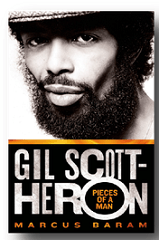 On May 27, 2011, Gil Scott-Heron died of congestive heart failure at the age of
  On July 17, 1959, a shock wave was felt through the jazz industry and a somber mood filled the corridors of the New York Metropolitan Hospital. Eleanora Fagan, known by her stage name Billie Holiday, died tat the age forty-four from the effects of cirrhosis of the liver and the failure of several additional vital organs. In death the final chapter of her short and tragic life reached its foreseeable conclusion. Holiday had struggled with drug addiction and had found herself embroiled in dysfunctional and abusive personal relationships. On stage, she captivated audiences and left her mark as she became Lady Day. Her life story has been revived on Broadway as Lady Day at Emerson’s Grill starring Audrey McDonald. The play became a New York Times’
 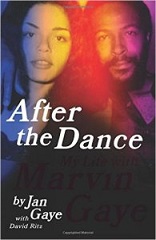 In 1977, sixteen year old Janis Hunter married soul singer Marvin Gaye becoming his second wife following Gaye’s earlier marriage to Anna Gordy, the younger sister of Motown founder Berry Gordy. Their marriage produced two children before the couple divorced several years later. Now in her later years, Janis tells her story of what her life was like being married to the legendary recording artist. As a starstruck teenage girl, she easily falls head over heels for the soul singer whose seductive charming personality, good looks and fast track lifestyle captured her heart and interest. Following the wedding bells, reality set in and a host of demons that plagued Gaye throughout his life rise to the surface transforming the fairy tale marriage into a relationship destined to implode. Marvin’s life was an enigma in itself and it can be said that he never did find peace on earth. His ability to self-destruct and engage in life threatening behavior became staples of his career and were factors in his death after a violent confrontation with his father on April 1, 1984. Depression, a dysfunctional relationship with his father and narcotics formed a deadly triumvirate from which Gaye was never able to escape. Janis became first hand witnesses to this and as a result of her close proximity to him, she also faced her own demons that threatened to consume her own life. This is the true story of what really did happen when she married the man that was once Motown’s prince.
 On May 24, 1963, Attorney General Robert F. Kennedy met with a group composed of authors and civil rights icons at his Central Park South apartment. Among those in attendance were Lorraine Hansberry and her friend and fellow author, James Baldwin (1924-1987). The meeting quickly became volatile as the activists accused the Kennedy administration of dragging its feet on civil rights legislation. Their frustrations at the rampant discrimination in the United States and the inability of the government to take action, boiled over and Kennedy found himself in a hornet’s nest of raw emotion. The meeting left a permanent mark in his memory but in time he would become a vocal advocate for equal rights for all American regardless of race, creed or gender. His resurgence as the candidate of the poor and the downtrodden became the basis for his 1968 president campaign that ended tragically with his assassination in Los Angeles on June 5 ,1968. Baldwin outlived Kennedy by nineteen years and today both are remember for their efforts to transform the American conscious and way of thinking. In recent years, his work has been rediscovered and studied for its messages that were accurate then and are accurate now. Baldwin’s public stance of many topics was blunt and non-confusing. He did not mince his words and his delivery was direct and always mean to stir thought. But for all of his public actions, his private life is a story on its own that shows the author in a completely different light. His friend for many years, David Leeming, wrote this biography of his late friend to show the world who the real James Baldwin was. And what he has composed is a definitive account of the life of the late author.
 When Rodman Edward “Rod” Serling, died on June 28, 1975, he left behind a legion of fans who fondly remembered and loved his hit show ‘The Twilight Zone’. The show is an American classic and every year on New Year’s Day, the Sci-Fi channel runs a full marathon. The show aired from 1959 to 1964, and in those fives years, a legacy was created that shows no signs of slowing down. The popularity of the show has resulted in fan sites, Instagram and Facebook pages, that pay homage to what many be the greatest science fiction show in television history. Classic episodes such as Nightmare at 20,000 Feet starring William Shatner of Star Trek fame and Nothing in The Dark with a young Robert Redford are some of the author’s favorites among a vast collection of outstanding creative genius. But who was the smooth talking man who appeared in a suit at the end of the episode with a cigarette in hand? His daughter Anne answers these questions in this intimate portrait of the man she called her dad.


You must be logged in to post a comment.