
 On November 27, 1978, San Francisco Mayor George Moscone and City Supervisor Harvey Milk were shot and killed by former Supervisor Dan White. The New York born Milk had relocated to San Francisco, taking up residence in the Castro section. He and lover Scott Smith opened Castro Camera before Milk set his eyes on politics. After several tries, he was finally elected as a City Supervisor and in the process became the first openly gay man to serve in public office in San Francisco. His efforts at City Hall and community activism earned him the nickname “The Mayor of Castro Street“. In recent years, there has been a revival of interest in Milk and in 2008, director Gus Van Sant took the reigns in the biopic about Milk starring Hollywood veteran Sean Penn in the leading role. It was an incredible performance and one of Penn’s best. However, there was much more to Harvey Milk than we saw on the silver screen. Randy Shilts, author of And the Band Played On, looks back on Milk’s life in this definitive biography of the late activist.
It is critical to remember that Milk died at only forty-eight years of age. In less than five decades, he went from a former sailor working for the Great American Insurance Company to the face of the gay rights movement in San Francisco. The native of Woodmere, New York had done something that was unheard of at a time in which the LGBT community was in a fierce struggle to protect their very lives. The Stonewall riots in 1969 and Proposition 6 by then Senator John Briggs, became defining moments in the movement for equality. As homosexuality became more scrutinized and in some cases accepted, thousands of young men flocked to San Francisco where they were able to live openly without fear of persecution. But even there, the fight continued against a brutal police department and the political establishment that had no use of time for what many called “the others”. In Milk, the movement found its voice but as he said himself he was not the candidate, the movement was the candidate. But he did have the vision, determination and skill to inspire the invaluable feeling of hope. Shilts did a masterful job of telling Milk’s story and it is evidently clear how and why he became the “Mayor of Castro Street”. But the story is not all happiness and even the darkest moments in his life are re-told as they were showing the disarray and tragedy that composed Milk’s private life. And from the moment he became a political figure, the threat of death was never far away. But through it all, Harvey continued to push forward until he finally achieve the goal that had eluded him several times. And at the time of his death, he had come to assert substantial influence in San Francisco politics.
Dan White was convicted and sentenced to five years in prison. The light sentence triggered the ” White Night Riots”, after a jury apparently believed White’s “Twinkie” defense. In 1984, after serving the five years, White committed suicide at the age of thirty-nine. The trial, conviction and the riots are covered by Shilts and at times caused me to shake my head in disbelief. I do believe that had Mayor Moscone been the only one killed, White would have received a much harsher sentence. He lives on in infamy as the murderer of two politicians who had the promise and skill to change the course of history for the City of San Francisco. Shilts provides an inside view of the political climate that existed at the time and the uphill battle Harvey faced as he broken into politics.
In the film Milk, we come to learn about two of Harvey’s lovers, Scott Smith and Jack Lira. What the film did not show, were Harvey’s other love interests which were an integral part of his life story. I do not hold anything against Gus Van Sant for 90 minutes is not nearly enough to cover any person’s life in full detail. And such is the beauty of a good book. Shilts was always one to present a complete picture and he does not disappoint here. The book picks up speed from the beginning and never slows down. I think it is to be expected that the worst moment is Moscone and Milk’s murders. By the time I reached the trial of Dan White, I fully came to understand the legacy of Harvey Milk. For those who want to know his complete life story, this is the book for you. And I also recommend that you watch Rob Epstein’s incredible documentary ‘The Times of Harvey Milk’.
ISBN-10: 0312560850
ISBN-13: 978-0312560850
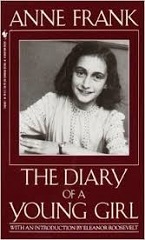 The stories of those who survived the Holocaust have been read by millions and their words a reminder of one of history’s darkest times. Their will to live and courage in reliving their experiences have given the world invaluable treasures in books that have stood and will continue to stand the test of time. Among them is the story Annelies Marine “Anne” Frank (1929-1945), whose diary kept while hiding from the Third Reich, became one of the most popular books in the world. In June, 2013 while visiting The Netherlands, I paid a visit to the Anne Frank Museum. As I entered the museum and made my way up to the attic, I was overcome by chills at just how small it really is. Pictures and words do not suffice, it is something to be seen in person. And it continues to boggle my mind that several people lived in such a compact space. But their will to survive kept them focused on their surroundings and remaining in the attack for as long as possible. Their hiding place was eventually discovered and for many years it was believed that the family was betrayed. However, historians have never found conclusive proof that the family’s location was given to the Sicherheitsdienst (SD) in the form of an anonymous phone call as is widely believed. The truth may remain lost to history. Frank was sent to the Bergen-Belsen camp where she died of Typhus in February, 1945, several days after her sister Margot and would have been simply another victim of the Final Solution if not for her father Otto, who survived the war and returned to Amsterdam where he found her diary. Believing his daughter’s words to be important to future generations, he found a publisher willing to put the words in print. And the result is a literary masterpiece that is read each year by growing numbers of young students across the world.
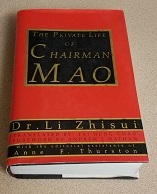 On September 9, 1976, Mao Zedong (1893-1976) died in Beijing, China at the age of eighty-two. The late Chairman served as ruler of the People’s Republic of China following the defeat of Chiang Kai-Shek’s Kuomintang (KMT) party in 1949. The People’s Liberation Army, under the guidance of Mao, pushed the KMT to complete physical exhaustion before claiming victory. To some, Mao represented the face of a new frontier for the people of China. To others, his regime was viewed as an expansion of Soviet influence as Communism became embraced in Europe and Asia. His failed policy of the Great Leap Forward resulted in mass starvation and is viewed as an epic failure in planning at the highest levels. Over time, many became disillusioned with the “Cultural Revolution” as the reality of a Communist government drearily set in. Mao, seemingly impervious to the deadly effects of his actions, continued to live the opulent lifestyle he had created for himself as the new leader of China. And the “Closed Door” policy afforded him with a shield to protect his empire from the prying eyes of the western hemisphere. But Mao’s meeting with President Richard M. Nixon in 1972 offered a glimmer of hope that the two world powers could form a bond that would in turn bring the two countries together through mutual understanding. Today relations between China and the United States remain tense and show no signs of changing in the foreseeable future. China continues to go through social change but the nation remains haunted by the legacy of Mao Zedong.
 FREETHINKING BIBLIOPHILE
You must be logged in to post a comment.