
John Quincy Adams – Harlow Giles Unger

quincy

Every time I visit New England, I am amazed at the amount of history one can discover. My trips to Vermont, New Hampshire, Rhode Island, Maine, and Massachusetts have all left a mark as I learned more about the country in which I was born. However, there is still American history I have to learn, and when I saw this biography of former President John Quincy Adams (1767-1848), my curiosity piqued and I knew I had to read it. And what I found is a story every American should know, and we have author Harlow Giles Unger to thank for this remarkable biography of a president who is underrated.

Before starting the book, I was aware of Quincy’s time in office but my knowledge of his personal life and contributions to America’s development was in insufficient. I felt as if I was reading about him for the first time, which deepened my interest and enhanced my shock as I learned of his incredible life. The story begins in Braintree, Massachusetts in July 1767, when Quincy as he is known, is born to John Adams (1735-1826) and wife Abigail (1744-1818). His father served as the nation’s second president and was instrumental in his son’s personal life and political career. I noticed early in the story that Quincy had a strong bond with his parents which proved to be the foundation he needed throughout his journey. But the family was fiercely committed to education and self-improvement, themes which remained with Quincy for life.

Unger’s writing style kept me glued to the pages from beginning to end, and the narrative has an exceptionally smooth flow which maintains a steady pace as Quincy’s life moves forward. Within the first ten years of life, resistance against Britain intensified and culminated with the American Revolution for independence. The conflict, discussed in the book and witnessed by Quincy, had a profound impact on him. Although he was too young to fight the British, he witnessed the importance of independence and sacrifices by patriots resisting British rule. As he ages, the story shifts gears when he attempts to gain admission to Harvard. The saga surrounding his admission is interesting and resembles modern-day anxiety and struggles by students seeking entry into ivy-league institutions. In hindsight, we know he eventually did gain admission, and went on to complete law school. However, the legal field was not all it was thought to be but everything in the book changes when he is selected for government service by President George Washington (1732-1799).

Washington’s offer to Quincy to become America’s Minister to Holland, comes as a surprise but with the urging of his father, he accepts and embarks on a European journey that changes his life permanently. And while America had gained its independence, Europe was still embroiled in revolution and chaos. The unrest across the continent takes center stage, in particular France during the reign of King Louis XVI (1754-1793), who was overthrown and beheaded in 1793. Several years later, another ruler ascends to the throne and forces the world to recognize the name of Napoleon Bonaparte (1769-1821). He also appears later in the story as the United States expands to the south and west across North America. But there is another component to France’s story in the form of its raging war against England. I could not stop reading as the crisis plays out and challenges America’s foreign policy. What transpires is an eerie premonition of future events in which France requested United States involvement. There is also the issue of the British who have not forgotten the loss if England’s thirteen colonies. Their acts of aggression and the American response show how close we came to war with Britain for a second time.

During the period of 1974 to 1817, Adams traveled around Europe through government positions, and the details of each are too extensive to discuss here. The details are in the book and the stories are fascinating. He developed a lifetime of experience at a very young age but also found time for love which resulted in his marriage to Louisa Catherine Johnson (1775-1852) on July 26, 1797.  Their story is wholesome but the personal tragedies within the Adams family are heartbreaking. It seems for every success there was an equal tragedy which Quincy and Louisa are forced to confront. There are also issues within her family as well, emanating from her father Joshua who causes grief and chaos through his own financial failures. But destiny was waiting for Quincy and his return home in 1817 proved to be the change he needed.

In 1817, President James Monroe (1758-1831) chose Quincy to be his Secretary of State. This decision had monumental ramifications for Adams personally and the political landscape of America. His effectiveness  did not go unnoticed, and history buffs will instantly think of the Monroe Doctrine, which is discussed by the author. Quincy’s star continues to rise and rumors about a presidential campaign soon begin. Curiously, Louisa is not at all thrilled by Washington, and the description of the city by Unger leaves much to be desired. The physical state of Washington seems unthinkable today, but in the 1800s, it was the reality. In 1825, fate intervened, placing Adams in the White House for a single term. And instantly, opponents and opportunists move behind the scenes to secure their own political ambitions. It becomes clear that politics was never for the faint of the heart. The actions of Henry Clay (1777-1852) and John C. Calhoun (1782-1850) are questionable to say the least.

dams’ tenure in the White House is uneventful but opposing forces soon begin to form, throwing their weight behind Andrew Jackson (1767-1845). And it is here that we see the groundwork for the two political parties which dominate American politics today. Jackson is a controversial figure, and Adams was no fan. In fact, his comments about Jackson are similar to others who could not envision the “rascal” or “illiterate” in the White House. But that is exactly what happened. Quincy took his loss in stride but was far from finished with politics. And as a member of the House of Representatives he made his voice loud and clear as he argued for causes which lacked popular support.  I found this part of his story incredibly interesting and as it continues, Adams becomes more outspoken about his convictions which provoke censorship. His anti-slavery stance drew the wrath of pro-slavery congressmen and highlights the hotly contested matter of human bondage.

The outspoken congressman was forcing America to examine its moral fabric, and this won him more support than opposition. And as a gift from above, he finds himself involved in a legal case involving the Portuguese vessel Amistad, manned by slave hunters who had kidnapped Africans from Sierra Leone for transport to Cuba. Mutiny occurred and when it was over, the captain and crew lay dead. The slaves were arrested and sent ashore to the United States where they were tried in court. Adams takes up their defense and his legal training kicks into a high gear as he puts on a master class in what is known as oral argument in the legal field. Today it may absurd that a legal argument over kidnapped human beings was needed, but in 1839, slavery was both legal and encourage in parts of the world. The case and its conclusion cemented his legacy as a champion of human rights.

Behind the scenes, Quincy and Louisa go through their trials and tribulations with brief periods of distance. But she knew she could not keep him down. By January 1848, his health had significantly declined, but staying home was not an option. On February 23, he made his way to the Capitol as usual, but this day would not end like the others. In fact, what happened during the afternoon session left me speechless. But after reading the book, I could not see Adams departing any other way. He lived and died for the success and progression of the United States of America. Today he would be called “liberal” and “progressive” but in his time he was an advocate for the things we still debate today.  The amount of research required for this book could only have been staggering. The author’s beautifully compiled narrative is seductive from start to finish, and at no point in the book did I lose interest. I could not put it down and found myself eager to read more regardless of the time or location. If you are in search of a delightful book about an outstanding leader in America’s past, this is strongly recommended.

“It is of no use to discover our own faults and infirmities unless the discovery prompts up to amendment.”-  John Quincy Adams

ASIN ‏ : ‎ B008EMEH5A
Publisher ‏ : ‎ Da Capo Press (September 4, 2012)

The Assassination of Maurice Bishop – Godfrey P. Smith

Maurice

The 1980s was a decade unlike any other, both positive and negative. Hollywood had reached its pinnacle with movies that became eternal classics, the Soviet Union began its decline, NASA experienced a tragedy that haunts us today, and change was rapidly occurring around the world. The Caribbean island of Grenada had a population of less than 100,000 people in the month of October 1983. It is seen as a small island. But on October 19, 1983, that island made news around the world when the leader of the ruling New Jewel Movement (“NJM”), Maurice Rupert Bishop (1944-1984) was assassinated along with several others in a violent coup which plunged the country in chaos and resulted in the deployment of United States Marines by United States President Ronald Reagan (1911-2004). The involvement of American troops has overshadowed the events leading up to the events on October 19. But in order to understand Bishop’s downfall and its aftermath, a discussion regarding the events leading up to the tragedy is necessary. Godfrey Smith, a Belizean journalist, revisits the death of Bishop and the political climate in Grenada, in this book which is both informative and chilling.

Godfrey’s book is less than two hundred pages, but its contents tell a story that gave me a new perspective on the events in Grenada during that time. From the beginning, there is a dark omen over the story due to a meeting of the Central Committee which would have extensive ramifications. However, the subject of the meeting does not appear at first to be something that should have resulted in the death of Bishop and others. But a sad reality is that power is seductive and it corrupts. In the meeting of the Central Committee it is suggested that Bishop shares the duties of leader with Bernard Coard, second in command. The meeting expands into criticism of Bishop’s ruling style, but the matter is put on hold as Bishop wants to think about the party’s future and obtain Coard’s input. Coard was not present, and the talking is done by others. But this meeting would set into motion a chain of events that brought Grenada to the brink of anarchy.

Before we reach the fallout in October 1983, Godfrey provides a short biography of Bishop’s life and his rise in politics. It is a fascinating story, and easy to see why Bishop became the people’s favorite. However, he had his demons like other leaders. We learn of Bishop’s nonchalant manner in handling party issues, and his philandering which became an issue as his personal life became more complicated. His weaknesses provided the pretext needed for subordinates to usurp his authority. But they were not serious enough for death. The question that arises in what happened that caused the Central Committee to remove Bishop by force? The answer partly lies in a trip abroad that should have been routine.

The NJM had established itself as a left-wing government. Further, it had formed closed relations with Caribbean neighbor Cuba through its President Fidel Castro (1926-2016). This should come as no surprise because the NJM was based on Marxist-Leninist ideals and naturally aligned itself with nations founded on similar principles. But Washington was watching closely, and Bishop’s growing ties to Castro did not go unnoticed at home. In fact, as we see in the story, it backfired with deadly consequences. It also raised the issue of how much influence Cuba should have in Grenada’s affairs. Internally, Bishop’s avoidance of the bi-lateral power sharing agreement, planted the seeds of doubt in the minds of people who believed he needed to be removed. The fear of a tyrant was fresh in their minds due to the removal of a former president whose name is rarely mentioned in world history.

As a backstory to the fallout between Bishop and party leaders, we learn of the toppling of Prime Minister Eric Gairy (1922-1997) who was viewed as a dictator. For readers unaware of Gairy’s reign, this is a good primer. Of course, the full story is far more detailed, but for the purposes of this book, the amount of information is sufficient to set the stage for Bishop’s future battle within his own party. His trip abroad which included a visit to Cuba, set the stage for the conspirators to enact their plan. And when the party does meet with Bishop who is reluctant to change the power structure, we see the writing on the wall. A secret meeting without his knowledge proves to be a warning that something was not right. The moment we are waiting for eventually comes when Bishop and others are detained. But the conspirators did not anticipate that the people of Grenada loved Bishop and would not tolerate his incarceration on trumped up charges.

When the people learn that Bishop has been arrested, all hell breaks loose in Grenada. He is eventually freed and retreats to Fort Rupert along with the other officials unjustly detained. At first it seems as if Bishop will prevail, but this location would prove to be a scene of horrific events that are haunting. I must warn readers that the decision to seize the fort and capture its occupants is graphic. Frankly, it was nothing short of murder. As I read, I felt a sense of loss at Bishop’s death and how callous his executioners were in ending the lives of Grenadian officials. It is by far, the darkest moment in the book and I can only imagine the grief felt by Grenadians on that day. In Cuba, Castro was following the events, and his prophetic warning about U.S. involvement was about to come true.

The deployment of U.S. Marines has been labeled an “invasion”. It is true that battles did occur between the U.S. military and Grenadian army, but order was restored, and the October 17 group consisting of those who led the coup against Bishop received their comeuppance for what happened. The author explains the result of the arrival of U.S. troops and trials of conspirators. Today, those who survived their prison sentences are still alive, but they carry with them the memories of October 19, and the insanity which occurred. Bishop’s demise was tragic, and its impact was significant. It is further complicated by the controversy surrounding his grave which has no marker. Readers who find this book enjoyable, should take a look at a Washington Post podcast called ‘The Empty Grave of Comrade Bishop‘ by host Martine Powers. It is a fascination series of episodes which take a deep dive into the life of Maurich Bishop and the island of Grenada.

ASIN ‏ : ‎ B08JF29K7G
Publisher ‏ : ‎ Ian Randle Publishers (September 16, 2020)

Alex Haley and the Books That Changed a Nation – Robert J. Norrell

AlexAs January 1977 approached, ABC studios prepared for what would become an earth-shattering moment in American television history. Network executives had given the green light to a miniseries called ‘Roots‘ about the experience of Black Americans brought to the New World as slaves. The show was a monstrous success, and the final episode caught the attention of one-hundred million Americans. The series had been adapted for the silver screen based on the writings of the late Alexander Murray Palmer “Alex” Haley (1921-1992). Known to the world simply as “Alex” the author had turned America’s attention to the experience of its Black citizens who ordeal was far from over. But Roots was not his only success, and he had found fame in other ways as well. Further, there was more to the writer than the books bearing his name. Haley’s life on its own is the subject of this book which peels back the layers on the life of a gifted writer whose untimely demise left a void in the circle of Black authors which has never been filled.
When I saw this book in my list of recommendations, it caught my attention because I knew of Haley and his work. In high school, an English teacher named Ms. Drew who assigned several books for summer reading. One of those books was ‘The Autobiography of Malcolm X: As Told to Aley Haley‘ which I wrote a report about after finishing Malcolm’s story. The book has stayed with me, and I am currently reading it again. Of course, there were things Malcolm left out but the book has stood the test of time as required reading for those in search of an understanding of the life of Malcolm X (1925-1965). The story here begins in Henning, Tennessee under the weight of Jim Crow, a system young Palmer, as he is called by family, learns to navigate. However, his family would have been labeled middle class even as African Americans at that time. Further, the strong influence of his grandparents is readily apparent as the story progresses. However, tragedy strikes in several ways in which no one could have predicted. But in the end life must go on and it did for the young Alex Haley.

As he grows up, the story shifts gear when Uncle Sam enters the picture. I did not know that Haley had enlisted in the United States Coast Guard. This fateful decision is part of the reason the world received the writer who changed literature. I found myself glued to the pages as I read about his movement through the Navy which was not immune to racial discrimination and segregation. However, Haley had a gift with the pen, and he was literate. Readers may be surprised at the illiteracy found among fellow sailors but at that time, it was an escape for both poor whites and poor blacks, some of whom lacked formal education. Between letters and weekly articles, Haley’s star continued to rise, and he caught the attention of senior officers who realized his talents were wasted below decks. The story is incredible and highlights how far talent can take us. Surely, there were helping hands along the way as Haley completed a twenty-year career, retiring in 1959. Upon discharge, he was free to write as a freelancer but soon learned life outside the military was far less structured.

Haley’s writings are the crux of the story, but his personal life remains under scrutiny. And we learn of the three marriages in his life and the failed relationships he left behind. As each relationship develops, we can see as a reader the upcoming pitfall that Haley could not escape. However, it is fair to say that there is no perfect relationship nor a perfect human being, and his personal transgressions do not take away from his monumental contributions to American culture. But admittedly, his lack of parenting and ability to provide companionship to those who needed it stand in stark contrast to his unwavering commitment to the subjects of his books. And after moving from place to place and scraping by, he receives the opportunity of a lifetime even if he did not yet know it.

When Haley meets Malcolm X, the intensity level in the book increases significantly and rightfully so. Malcolm was an intensely charismatic and intelligent figure, but their connection did not develop quickly. It was interesting to see how long it took for their bond to develop and their early struggles as Malcolm told his story. Sadly, we know Malcolm did not leave to see the book’s publication. In fact, as explained in the story, Haley had spoken to Malcolm the day before his assassination at the Audobon Ballroom on February 21, 1965. This section gave me chills instantly. Curiously, the biography was not an instant hit, and publishers were not keen on it. In hindsight, we can see today that they had a masterpiece that needed time to reach its audience. But after Malcolm’s death, Haley needed work and money, and soon embarked on the project that changed his life and the core of American society.

Prior to reading the book, I did not know the story behind Roots. Well, the author tackles that subject, and we follow Haley to Africa as he searches for his family’s roots. And it is here that the story of Roots was born. The mission to get the book published was nothing short of brutal and the chaos is on full display as Norrell continues the story. The project was eventually completed and the decision to make a television series changes the game completely. Television is fascinating and the development of Roots, a story of its own, is also revisited, and the effort behind the show was monumental. The author pays close focus on the show’s impact which was staggering and how it reached Americans of every creed. The show was a success, and Haley was riding high until the lawsuits and accusations of fraud arrive.

At this point in the book, Haley has built up his image and wallet, but both come close to being undone from the fallout from litigation. The lawsuits and accusations leveled against him were serious, but the author presents a case against those which were frivolous. In the end, it is up to the reader to decide how he or she chooses to view his work. Haley had written a well-intentioned and emotional book about the dehumanizing system of slavery, and no one could deny its popularity and importance. The charges against him and the settlement of one claim damaged his image but failed to put him out of commission. And despite accusations that the entire story was made up, Roots remained a hit. And Haley remained in high esteem and sought after for lectures.

Following the success of Roots, Haley enjoyed fame but never again reached the heights of the television series. However, had he not died unexpectedly on February 10, 1992, he may have given us another masterpiece to change the way we view ourselves, each other, and the country we call home. If you need an enjoyable book about an author who shook up America, this will be a good addition to your library.

ASIN ‏ : ‎ B00WDW06HA
Publisher ‏ : ‎ St. Martin’s Press (November 10, 2015)

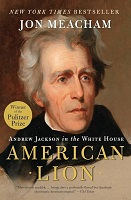
American Lion: Andrew Jackson in the White House – Jon Meachem

AndrewThe office of the American presidency is sought by many but obtained by few. And those who do serve can tell you there is no user’s manual and regardless of what you do, there will be pushback to your policies. However, presidents must make tough decisions and find ways to live with their choices. America’s seventh President Andrew Jackson (1767-1845), stood firmly behind his decisions which changed the course of history across North America. But there is more to his story than the policies that defined a nation. In fact, his life was anything but ordinary. His image can be found on the twenty-dollar bill, currency used daily as millions of people go about their lives. But just who was he and why is he so important to the story of America? Well, the answers to those questions plus other interesting facts are contained within this biography that should be required reading in classrooms across America. 
 The title of the book is appropriate, Jackson was a lion of a person. Today we cannot imagine a president who engaged in duels to the death or grapples with assassins. But Andrew Jackson was that leader whose fearlessness stands out in history. But before we reach his presidency, the author takes us back in time to his childhood and the American Revolution, a conflict which Jackson and his brother Robert would be directly involved in. And an encounter with a British troop would leave Jackson with a memory that lasted his entire life as America flourished. The Jackson family found itself in unusual times, but it is not long before tragedy strikes at home. The events that transpire are heartbreaking, and his mother’s demise reminded me to cherish my parents for as many years as they are here. Following service in the military, Jackson eventually finds his way to Nashville, Tennessee and it is here that his legal and political careers are born. However, no one could have predicted then that Jackson would become president.  

I found the story deeply interesting, and students of politics will love how the author has composed the accounts of the election campaigns. It is a course in political history and highlights the importance faced by every figure to preserve the growing union. In 1829, Jackson was elected to the presidency, but comments in the book from those who knew his character are intriguing. He was not the person who most thought should be commander-in-chief. However, he had won public support, and the electoral college cemented his win. During his time in office, he would oversee controversial policies that altered the American landscape. It is imperative to remember that at this time, there was no Republican Party, and the Whigs do not appear until later in the story. In fact, the Democratic Party had not yet been completed and the electoral votes pale in comparison to the numbers today. But in 1828, this was the America that Jackson was chosen to lead. And as the story moves forward, the author takes us on a wild ride. 

There are two events in the book which left me astonished. The first is that Jackson carried in his chest a bullet from a duel in 1806. That insane story is told here and after reading Meachem’s account of what happened, I could only stare in disbelief. Jackson not only talked the talk, but he also walked the walk. The second incident involves the Benton family, and once again gunplay is involved. It is another crazy story from 1813 which caused me to wonder why anyone in their right mind would challenge Jackson to anything. The man was absolutely fearless and not afraid of direct confrontation. Those traits were needed as he navigated Congress and Southern States suspicious of Washington. I should point out that the violent incidents were the result of serious issues, and the story of his late wife Rachel (1767-1828) has to be understood as a primer for the deadly encounters.  Her death shattered Jackson and I learned for the first time that he did not have any biological children. But all hope was not lost, and the arrival of Andrew (1799-1871) and Emily Donelson (1807-1836) into his life was profound. The couple played a crucial role in Jackson’s presidency as shown in the story, at times to great personal sacrifice. And their feud with John (1790-1856) and Margaret Eaton (1799-1879), also part of Jackson’s administration, takes center stage in unpleasant ways. 

Historically, Jackson’s presidency does have its controversy and rightfully so. There are several elephants in the room, and the author does not shy away from them. The first issue is slavery. This should come as no surprise as it was a normal practice in America during that time period. Jackson was deeply anti-abolitionist and a slave owner himself, so it was no surprise to see him urging the protection of human bondage. Admittedly, it was hard to reconcile this image of him with the president who viewed the union as above any man and believed freedom to be paramount. Andrew and Emily were also pro-slavery and the reliance upon enslaved persons remains a dark stain in America’s past. And while I understood Johnson’s views on keeping the union intact, slavery was an issue which would not go  away quietly as America  learned in 1861.

In keeping the union intact, Jackson had to confront an extremely serious crisis brewing in South Carolina in the shape of the nullification crisis over tariffs on foreign goods. The matter was deadly serious and talks about secession were common. The saga is fascinating, and we are given a ringside seat into Washington as Jackson is faced with no choice but to assert the Government’s authority over the states. South Carolina was defiant but Jackson would have none of it. Thus, we learn about the Force Bill which became a showdown between the states and the Federal Government. And this is a story I did not learn in school. 

Both issues above were grave, but we cannot ignore the plight of the Native Americans. And this is a very dark part of Jackson’s term in office and North America. The Indian Removal Act of  1830 and Trail of Tears are discussed by the author briefly, but to fully examine each would require a completely different book. However, the author makes it clear that the forced removal of Native Americans from the South was  inhumane. But in Jackson’s mind, it was the destiny of America, and he did not shed any tears for Indians forcibly removed from their homes. And this adds further complexity to the legacy of Andrew Jackson. 

Following his departure from office in 1837, he faded away from public light but continued to assert his influence behind the scenes. We follow him as he supports his candidate for president Martin Van Buren (1782-1862) who succeeds Jackson as America’s eighth president. Physically, his decline is evident, but I also took notice of his constant health issues throughout the book. In fact, a crucial part of the story is Johnson’s struggles with his mortality and the struggles of those around him, in particular Emily Donelson, who served as the “First Lady” due to Rachel’s untimely passing in 1828. In the end, there is no dramatic scene, but a simple end to the life of a political juggernaut who reshaped America. He was complex, a man of good traits and questionable character, but someone who believed that the Republic was beyond any one person, and that no one should ever forget that. Highly recommended. 

“Jackson’s vision was elementary yet expansive in the context of the early Republic. He wanted a political culture in which a majority of the voters chose a president, and a president chose his administration, and his administration governed by its lights in full view of the people, and the people decided four years hence whether to reward the president with another term or retire him—and them—from public life.” 

ASIN ‏ : ‎ B001FA0JSM
Publisher ‏ : ‎ Random House; 1st edition (November 4, 2008)

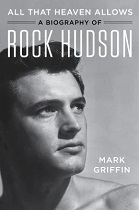
All That Heaven Allows: A Biography of Rock Hudson – Mark Griffin

rockThe 1980s stands out as a decade beloved for the changes across the globe. It was a time of  shock and awe, as Hollywood won us over with classic films, the Soviet Union began its decline, and a new disease caught the world’s attention. Originally described as a “gay cancer”, Human Immunodeficiency Virus (“HIV”) and its advanced form, Acquired Immunodeficiency Syndrome (“AIDS”), forced everyone to pay close attention as people from all social classes of life succumbed to it. On October 2, 1985, Roy Scherer, Jr., known to the world as Rock Hudson (1928-1985), became another victim of the disease, but his death shocked the world not only because of the virus, but because he was a Hollywood star whose gay lifestyle had been carefully hidden from the public. With Hudson’s passing, secrets began to emerge in the form of lawsuits and “tell-all” interviews. However, there is more to his story as told here by author Mark Griffin in a biography that is both revealing and tragic.
Hudson is part of the “Golden Age” of Hollywood when stars were able to create carefully crafted images impervious to the prying eyes of fans and blackmailers. Unlike today’s world in which social media exposes any and all things, in Rock’s time, privacy was paramount, and it required a team of professionals who excelled in damage control. But who was the real Rock Hudson? I picked up this book to satisfy my own curiosity about a star who became a statistic of the AIDS epidemic. The story begins in Winnetka, Illinois, in the Scherer household, which proves to be anything but stable. In fact, his father’s actions toward his family left me speechless. Mother and son pick up the pieces and another male figure enters the picture, but he too was not the male figure the young child needed. But all was not lost, and the story takes interesting twists and turns as Roy, Jr. inches closer to his destiny.

I was surprised to learn that not only was Hudson a legendary star, but he was also a veteran. Like other actors of his time, he enlisted in the U.S. Navy and served during World War II. His military service is discussed, and what we learn is interesting. There are no smoking guns but signs to the lifestyle that had to be contained. Upon discharge from the military, he moves out west and attempts to reconnect with his biological father who had relocated to California. This part of the story is where we take a sharp turn and series of events play out that usher his arrival into Tinseltown. And the man responsible for that is Henry Wilson (1911-1978), who singlehandedly transformed Roy Scherer, Jr. into Rock Hudson. Prior to reading this book I did not know Wilson’s story or his role in shaping Hollywood stars. He left a complicated legacy full of accomplishments and dark revelations. The details are unnerving but not entirely surprising. The term “casting couch” did not come about overnight. Despite Wilson’s personal satisfactions, he did transform Hudson into a leading star, but one issue remained which threatened to derail everything Rock and others like him had accomplished.

An irony in the story is that once Rock became famous, it became increasingly necessary to hide any trace of the actor’s sexual orientation. The lengths to which Wilson does is surreal when viewed from today’s point of view. But sixty years ago, stars could not publicly come out as gay, lesbian, or transgender. The gay rights movement still had much ground to break across America. In Rock’s case, an image of a fierce lady-killer riding high on success was the prescribed course of action from Wilson and his team, and is a tactic employed by other agents who found success in sham marriages and women posing as “beards”. As Rock’s fame surges, the efforts to hide his orientation also increase, but behind the scenes Rock had his own drama and the story takes yet another turn when Wilson is pushed out and replaced by Tom Clark, a publicist who was both a blessing and a curse to Rock.

Hollywood was priority number one and Hudson was a professional at his craft. Through anecdotes included in the book and behind-the-scenes looks into production sets, it is apparent that he was beloved by those who knew him. And his sexuality was an “open secret”, just as it was for others in the industry. In fact, a scene that plays out with his “wife” Phyllis Gates (1925-2006) as she makes a cross-country trip before their wedding caught my attention and is a reminder that everyone has carefully guarded secrets. From the beginning, it is clear that the marriage is doomed, and when it ends, Rock is left to his own devices. But father time spares no one, and we also see an aging star who no longer has Hollywood as his playground. The downward slope commences but the tragic finale does not immediately play out. First, there is more to Rock’s personal life.

The third act which begins to play out, sees Clark on the east coast, and the arrival of Marc Christian McGinnis (1953-2009), whose actions after Rock’s death raised eyebrows. The controversy surrounding his life and actions are topics for another book and the author does a respectable job of addressing Christian’s role without devoting too much time which would have detracted from Rock’s story. However, Christian was with the star towards the end of his life. Attempting to pinpoint when Hudson became infected with HIV is futile, but there is a section in the book which revisits an encounter with former First Lady Nancy D. Reagan (1921-2016) which set off my alarm bells. Readers who are familiar with the breakout of Kaposi’s Sarcoma will instantly understand what is taking place. And once the illness begins to attack his immune system, the final stage of his life takes shape. His decline is rapid, including noticeable weight loss, fatigue and other conditions associated with the virus. And when death comes for him, there is no fanfare or dramatic ending but the silencing of a star who made his mark on Hollywood and was forced to live a life of secrecy. But he remains an icon of the Golden Era in Hollywood. This is the life of the late and great Rock Hudson.

ASIN ‏ : ‎ B075JDGVHL
Publisher ‏ : ‎ Harper; Reprint edition (December 4, 2018)

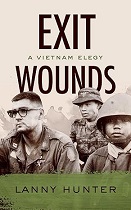
Exit Wounds: A Vietnam Elegy – Lanny Hunter

HunterOn October 19, 1965, North Vietnamese soldiers fortified their positions surrounding the Plei Me camp located twenty-five miles south of Pleiku City. Before nightfall, the soldiers launched the first major offensive of the Vietnam War, a conflict that lasted ten years and deeply divided two countries. One of the soldiers who fought and survived the battle is Lanny Hunter, a former medical officer in the United States Army Special Forces. This is the story of his military service, the offensive at Plei Me, and his return to Vietnam in 1997 to locate Y-Kre Mlo, a Montagnard interpreter who remained in Vietnam following America’s withdrawal.  

Hunter’s book does not follow the traditional autobiography format. Instead, we shift gears between current-day return to Vietnam and his memories of from the war. This approach gives the book an enhanced feeling of authenticity as we follow his journey back to Vietnam in two different time periods full of memories that will last a lifetime. Other veterans have returned to Vietnam in search of closing, internal peace, and other personal reasons. One book I recommend is ‘Goodbye Vietnam‘ by William Broyles in which the author examines his service in the war and where America went wrong. Hunter had no desire to return but a message helps to change his mind, and he soon boards a Boeing 747 bound for Ho Chi Minh City (formerly Saigon). By his own admission, he had a range of emotions returning to Indochina and as we see in the story, the combatreflexes were dormant but still present. However, he soon begins to adjust to a new Vietnam free of NVA soliders, landmines and other horrors of war. And when he reunites with Y-Kre, the story takes on a sentimental tone that remains until the end.  

The siege at Plei Me takes center stage, and Hunter revisits the battle through his role as a medic.  His descriptions of battlefield wounds and deaths are not to be taken lightly and emphasize the severity of warfare. As he treats the injured soldiers, his medical training kicks into high gear but there are  also occasions in the story where his combat training was needed. While doing his best to survive the siege, Hunter is seriously injured but mends his wounds and ensured that he remained in country to continue his role as a medic. His service in Vietnam was not solely centered around Plei Me, and there are other stories in the book of his actions as a doctor, including treatment of sexually transmitted diseases and wounds inflicted during drunken fights between “allies”. The anecdotes are interesting and provide more context for the ugliness of war. 

During his return visit, he eventually finds Y-Kre, and their reunion is heartwarming. And it was in this book that I learned more about the Montagnard people and their role in the Vietnam War. Y-Kre’s story of how Vietnam changed after the war is dark, and the way in which he and other Montagnard’s were abandoned by the United States Government is heartbreaking. He survived the war and its camps, but it took many years for him to recover both physically and mentally. Hunter also explains the war itself, including America’s escalating involvement into the conflict which originated when the French sought to reclaim its colonial possessions following World War II. But they underestimated the charismatic Ho Chi Minh (Ngyuen Sinh Cung)(1890-1969), North Vietnam’s first leader and the father figure in the war for independence. Hunter provides his perspective as a soldier trapped in a war doomed from the start through this statement which is a sobering truth:  

“Well-versed in Cold War facts and steeped in Cold War rhetoric, I was ignorant of Vietnam’s long, complex history. In this, I was little different from my government, its military leaders, and my commander in chief. The United States had overlooked the first rule of war: “Know your enemy.”

Ho Chi Minh was a complex figure, but he was not anti-American. In fact, he had lived outside of Vietnam for thirty years before returning to the nation of his birth in 1941. And one of his places of residency was my hometown of New York City. Following Japan’s defeat in World War II, Vietnam began to see itself in a different light and Ho recognized that America’s recognition of their government was critical to success. As Hunter explains here again: 

“Between August 1945 and February 1947, Hồ sent the American government eleven diplomatic communiqués pleading for an interest in the plight of the Vietnamese and, in particular, for protection from the French. Neither Truman, nor the State Department, acknowledged a single communication. Instead, America supported France in her effort to retain her colonial empire.” 

The die had been cast and in August 1964, incidents and alleged incidents in the Gulf of Tonkin provided the spark that catapulted America into Vietnam. As Hunter’s tour continued, he came to know the enemy composed of men such as himself. They were husbands, sons, cousins, and fathers determined to defend their country against imperialism by any means necessary. American military leaders struggled to understand this but infantry soldiers and officers who paid attention to the North Vietnamese came to learned their resolve and developed a form of respect for their opponents’ tenacity and dedication. And when he later returns to Vietnam, Hunter encounters former officers who have fought their own personal battles to put the war behind them and find peace in their lives. As I read the story, I could see the author’s challenges in facing men who fought against America on the battlefield thirty years prior. Regardless of which side troops were on, the horrors of war remained and Hunter opens up about his own issues with a condition once deeply misunderstood. 

When my uncle returned from Vietnam, he had to readjust to the world as my father has explained. While aboard the aircraft returning to the United States, senior officers instructed the troops to take off their uniforms before entering the terminal due to anti-war protestors and demonstrations. Taking off one’s uniform is simple but confronting Post-Traumatic Stress Disorder (“PTSD”) is not. Hunter is not immune to it and discusses his acceptance of the condition and the effects of war on those who survive. Sadly, other veterans died before being able to heal and took to their graves, memories that haunted them night after night. As part of the healing process, the author visits the Vietnam War Memorial in Washington, D.C. and finds the names of the men whom he knew during his time in country. Through his words, their memories and sacrifices live on. 

After making his rounds in Vietnam and making peace with the past, Hunter returns to the United States but there is still more to the story. The war will always be with him. To help with this, the veterans have  meetups the veterans have where they re-live their shared experiences and how the war changed each one of them. The snippets of conversation highlight the immense bond formed by men in combat. It is unbreakable and life long. Hunter’s recollections about the friendships between the men is a fitting end to a story about the Vietnam War that is sure to keep you intrigued from beginning to end. Highly recommended.

ASIN ‏ : ‎ B0C1QNBLZ5
Publisher ‏ : ‎ Blackstone Publishing (October 10, 2023)

Radiant: The Life and Line of Keith Haring – Brad Gooch

HaringThroughout the years, I have been asked what life was like in New York City during the 1980s. I explain that the city was dangerous, the subway was as bad as it looked in pictures, and the skyline looked vastly different from what we see today. And people were doing their best to survive in the concrete jungle. Despite the rough conditions, there was no time like it and there has not been a time like it since. The 1980s remains a decade like no other. In 1978, a young transplant from Kutztown, Pennsylvania named Keith Haring (1958-1990), made his way east and found a home in the “City That Never Sleeps”. No one knew it at first, but over time, Haring would become a prominent figure in New York City’s artist circles and left a legacy as his creativity came to life. This is his story by author Brad Gooch, who takes us back in time to an era when life moved fast, people partied hard, and a new virus became a ruthless killer.
Prior to reading the book, I did have knowledge of Keith Haring and some parts of his life. Further, he appears in the Netflix docuseries ‘The Andy Warhol Diaries‘ (2022) in archival material. However, that series is about Warhol (1928-1987) himself and a good look into his personal side. There is some debate regarding the diaries which were edited by his close friend Pat Hackett who also appears in the series to give interviews. I noticed that both Haring and Warhol were natives of Pennsylvania. A coincidence for sure, but that might partly explain Haring’s adulation for Warhol as he navigated the art scene. But before we reach Keith’s arrival in New York to study at the School of Visual Arts, we first learn about the family’s life in Kutztown during the late 1950s when Senator Richard Nixon (1913-1994) was gaining popularity as a presidential candidate, and the Republican Harings were all for his election to the presidency. However, Keith shows early signs that he will be the child that is different, and it is not long in the story before he charts his own path, to the consternation of his mother Joan and father Allen. Pennsylvania is a beautiful state, but Keith wanted more in life, and New York City finds itself in the crosshairs. And it is there that his life and New York City history changes.

As Keith settles into his new surroundings in New York City, we follow him as he begins to make friends and explore his artistic side. The pace of the book is steady without feeling rushed at times or slow moving. But as life picks up the pace, so does the story. Haring’s sexuality was no secret to those who knew him or followed him, but the story of how he discovered it and the relationships he had during his lifetime are crucial in understanding his life and the art he created. I once heard someone comment that artists view the world through a different lens. That applies here as Haring struggled with his sexual orientation before embracing his attraction to men. The stories of his partners are also told here, adding a deeply personal side to the story. Juan Dubose (d. 1989) and Juan Rivera (1957-2011) are the love interests who find themselves walking in Haring’s shadow as he travels the globe riding the wave of fame. Both were committed to Haring who comes off at times oblivious to the emotional harm he causes to others. But, at times Haring was at war with himself as he partied into the morning hours and indulged in a steady supply of narcotics. However, it was the 1980s, so no one should be surprised that cocaine was a drug of choice in many circles. By no means was Haring a drug addict, but his creativity sometimes had help.

Following his initial entry into the art scene, his rise moves quickly, and the names we have come to know appear in the book. Besides Warhol, Haring becomes friends with Jean-Michel Basquiat (1960-1988), Tseng Kwong Chi (1950-1990) who captures Keith’s adventures in photos and a young singer going by the stage name of Madonna. Basquiat appears in the story on a handful of occasions, and I did learn something about his apartment that I did not know previously. Warhol’s appearances in the story are in social settings, typically at a night spot and some journal entries he makes about Keith are provided. I have made a mental note to myself to read Warhol’s diaries as I have had the book for several weeks. During the day, the artists created and brainstormed but at night was when the parties began, and as Haring’s life moves forward, we re-live New York City’s after-dark scene as Manhattan’s gritty and unpredictable landscape becomes a playground for the rich, famous and anyone looking for a fun time. In one place, Keith and his crew party regularly to music mixed by legendary NYC D.J. Larry Levan(1954-1992), whose mix of the Nick Straker Band’s ‘A Little Bit of Jazz‘ will make anyone move their feet. Admittedly, I was surprised to see Levan’s name in the story. To be sure, he is known among the older generation of clubgoers and party animals who once turned Manhattan upside down but to today’s generation, he is unknown. Gooch left no stone unturned. Keith was soaring high, but we know there is a dark side to the rush of fame and NYC underworld. Eventually, his friends become sick, with each showing similar symptoms with sudden physical decline. A storm was brewing, and Keith knew life for all of them would never be the same again.

While New York City’s gay nightlife continued to thrive, three thousand miles away in San Francisco, events would soon unfold that shattered any illusions that America could ignore a new silent killer. Originally called the “gay cancer“, HIV and AIDS changed our way of life. Haring, his lovers and friends are all at elevated risk and as the news from California spreads across the country, it becomes apparent that the virus is far more serious than believed at first. In the Golden City, reporter Randy Shilts (1951-1994) was capturing history which he later turned into the best-selling book ‘And The Band Played On.  I must warn readers that the story takes an emotional turn as Haring’s friends succumb to the disease. Keith is aware of his own mortality and eventually learns that he too has contracted Kaposi’s Sarcoma, an indicator of HIV infection which is later confirmed. At this point it becomes a race against the clock. But before leaving, Haring makes sure to accomplish as much as possible, resulting in a trove of work, murals that have stood the test of time, and trips abroad to experience all that life has to offer. But even he could not outrun fate and his decline towards the end is heart wrenching. And although we know it is coming, it is a life gone too soon as AIDS continued to tear across America. The author did a good job of telling Keith’s story while also addressing the growing AIDS crises.

In his short life, Keith Haring lived a lifetime and left his mark on New York City through his art which can still be viewed today. He found his place in a city contending with financial peril, an understaffed police department, real life scenes from the ‘Death Wish’ films, subway vigilantes, the Italian American Mafia, crack cocaine, and a murder rate through the roof. But that same city was also a hotbed of creativity and inspiration, and a place where “getting lost” could open doors to social networks once unimaginable. If you lived in New York City during Haring’s time or are curious about that unbelievable decade, you must read this book which brings the past to life in vivid detail.

ASIN :‎ B0C3J5T7VT

© Harper Publishing, 2024

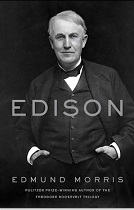
Edison – Edmund Morris

EdisonEach morning, men and women make their way to  the NJ Transit rail station located at 12 Read Street in Edison, New Jersey. The township consistently ranks among the best in the Garden State and is a desired suburb of the New York City area. Its Menlo Park section was once home to the brilliant inventor Thomas Alva Edison (1847-1931), whom the area is named after. Of course, the Edison Township we know today is vastly different from the open land the inventor called home in the 1800s. And it was here that some of his greatest successes were had as he helped propel America forward with the aid of innovative technology. This biography by author Edmund Morris, provides a solid glimpse into his unorthodox life. 
Readers should be aware that the book does not follow the standard biography format. In fact, it begins near the end of Edison’s life. The author then moves backwards in time, closing the story when reaching his childhood. The change in approach may deter some readers but there remains a relevant story to read. Almost immediately, we learn of Edison’s dietary habits and health issues, due to his erratic lifestyle and maniacal focus on his work. It has been said that there is a fine line between genius and insanity. Edison may have straddled it throughout his entire life. However, there is more to the book which is a trove of information. But I did feel that the technical explanations regarding the earth shatteing inventions may be too detailed for readers without a background in mechanical or electrical engineering, which may result in eager studens of history strugglin in understanding Edison’s inventions and the problems that arose. I was able to follow along in general but admittedly, some of the concepts require a solid understanding of the various components at play. Morris does a masterful job of simplifying the issues as much as possible, but the reality is that there are concepts which cannot be translated into layman’s terms. This is why Edison, and his contemporaries were in a league of their own.

I mentioned before that the book technically reads “backwards”. In fact, the author tells the story of his second marriage to wife Mina Miller Edison (1865-1947) before we learn of the full story behind his first marriage to Mary Stillwell Edison (1855-1874). Edison’s relationships with both were quite strange as he was rarely around. Further, their ages at the time of the weddings would certainly raise eyebrows today. His marriage to Mary would have invited public scrutiny and prosecution in modern times. However, in the 1800s times were different and Edison’s courtship of both paid off. Despite his time away from home as he patented one invention to the next, he also had to contend with his growing children and the blended family which resulted after Mary’s demies. This is undoubtedly the darkest part of the book. Did Edison love his children? Yes, but their bonds were often stormy and his son Thomas Alva Edison, Jr. (1876-1935) stands out as the most tragic of the brood. Frankly, the stories are unreal. Edison could control the inventions, but his family was another story. 

There is also the issue of Mary’s death which by all indications remains a mystery. I felt a chill in my body as I read the small passage about her death and the unanswered questions never addressed. I may do further reading to learn what really happened to her. Here, we are left with more questions than answers but the author is as surprised as we are, and there is the chance that the truth is lost to history. Of course, there is a plausible explanation but it is in need of firm evidence for a final conclusion.

Although the story is presented in an unusual format, I did enjoy reading it, in particular the section regarding the success of Edison and his team in creating the first power stations to provide light in Europe before turning their attention to lower Manhattan. It was an incredible feat in 1882 when Wall Street came alive with lights, and it helped set the stage for the power grids we have today. I also enjoyed reading about the phonograph and the capture of the human voice which could then be preserved forever. Edison was a marvel for sure, but privately, he still struggled with basic aspects of his life, most notably his constant health problems and endless drive to work without proper rest or nutrition. Both affect him more than once in the book, and I was surprised that he lived as long as he did. And while he dealt with both issues, there was also the business side to inventing which invited intelligent minds, backstabbers and grifters. All three factor into the story, and we see times in which Edison should have been more focused on finances. However, he was an inventor at heart and never stopped creating. 

There is a wealth of valuable information about Edison in the book, but it did feel as if his childhood did not get enough coverage. The author does discuss family life but briefly as the book’s conclusion approaches. I feel that the book would have benefited from a more extensive discussion of the young Edison. To be fair, we do learn some things about his childhood but there is much to be desired. And of course, it was America during the 1800s which invites questions about the nation’s struggle with race. Surprisingly, the Civil War barely receives a mention in the book and there are a couple of passing remarks in regard to racial issues that are never fully explained. It is known that Edison benefited from the help of African-American inventor Lewis Latimer (1848-1928) but that working relationship does not receive its due diligence. Further, the famed inventor was a staunch Republican but his views on society’s issues are not explored in the book. I would have liked to have known more about Edison’s views, if any, on the world in which he lived outside of the newest invention. Yet despite these shortcomings, the book is a good place to start if you want to learn more about the man who changed history. 

If Thomas Edison were alive today, he would be shocked and pleased to see how far technology has advanced. The electric cars we have today are far more advanced than the vehicle he conceived more than one hundred years ago. And his storage batter has stood the test of time. There is much we owe to Edison’s dreams and the creations which resulted from those visions. He was ahead of his time but also deeply flawed. As an inventor, he was able to bring ideas to life but as a father and husband, his absences left their mark repeatedly. And even those who knew him best often found him mystifying. But he remains one of history’s greatest minds and the next time you flick on a light switch, Thomas Edison is one of the people you can thank. 

ASIN ‏ : ‎ B07NCMDWZD

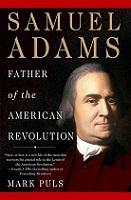
Samuel Adams: Father of the American Revolution – Mark Pu

adamsOn March 22, 1765, the British Parliament passed the Stamp Act, assessed a tax on  various forms of papers, documents, and playing cards, which was to be paid by the people living within its colonies on North American soil. The legislation provoked outrage and was abolished a year later. However, for the colonists it was a sign that independence from Britain might be the best course of action. One advocate for independence whose voice became dominant was Samuel Adams (1722-1803), a member of the Massachusetts House of Representatives and future Governor. Today he is known was the father of the American Revolution, but his life has become an afterthought. I found this biography by author Mark Puls and decided to learn the life story of a revolutionary who changed history. Having finished the book, I now have a new understanding of American history.
Friends of mine who live abroad have teased about America being a “young” nation in comparison to countries around the world. I cannot argue that point but also note that in its “short” existence, America has accomplished remarkable feats and played crucial roles in world events. And the key to understanding the American spirit lies in its creation in the late 1700s when colonists decided that British rule had to end. However, not all of them were anti-British, and some wanted to remain loyal to the crown. But for Adams, freedom was the only option. His story begins in Boston, where he was born in 1722, a time in which the British Parliament was in full control of its colonies. But that does not prevent the young Adams from coming of age, and we follow him as he matures into a young man blessed with a bright future. Love also enters the story when he meets Elizabeth Checkley (1725-1757). The couple take their vows but later experience unbelievable grief as we see in the story. I found Adam’s ability to continue after so much loss to be a testament to his character which was needed as the movement for independence grew. But not all was lost, and he later weds Elizabeth Wells (1735-1808) who remained with him until his death.

The passing of the Stamp Act is when the story picks up the pace. However, the British Parliament also passed the Declaratory Act which set off alarm bells throughout the colonies. England had started to seal its own fate. For Adams and like-minded individuals, the crown had gone too far and thus, the revolution was born. Before we reach the War of Independence, the movement needed members and this is where the suspense heightens in the book as familiar names enter the story such as future President Thomas Jefferson (1743-1826), and Declaration of Independence signatories John Hancock (1737-1793) and Benjamin Franklin (1706-1790). Britain was not oblivious to the rumblings in the colonies and as explained by the author, it took steps to quash the growing discontent. However, the movement was carefully guarded, with subversion as a useful tactic. In fact, Franklin becomes aware of the colonists’ plans while stationed in London. And his importance cannot be overstated. All were aware that England was watching yet they were determined to see independence. The story becomes a cat and mouse game as the revolutionaries move under the radar while Britain becomes focused on the trouble across the Atlantic. Both sides knew a breaking point was coming. And everyting did come to a head in one event that changed the course of history: the Boston Tea Party.

If you have visited Boston, I am sure you’ve seen the Boston Tea Party Museum. For those who have not, I highly recommend visiting the museum and seeing the preserved ship for yourself. It is step back in time when colonists began to see a country ruled by Americans. On December 16, 1773, Griffin’s Wharf became ground zero as colonists dumped tea chests into the water in protest of the Tea Act. The response from England was expected and severe but did not serve its purpose of deterring future rebellion. The fuse had been lit. And leading the way was Adams whose goal was complete liberation. War eventually comes and forces the colonists to prove their determination. Behind the scenes, Adams, Hancock, and others were hard at work laying the foundation for the United States of America. However, that also proved to be a challenge. In fact, as shown in the story, there were colonists who supported more freedom but also saw value in British rule. But for Adams and Hancock, whose friendship goes through its own roller coaster ride before finding solid footing before the latter’s death, a new nation was worth the bloodshed.

The author provides reports from the war as Adams’ story moves forward, including an appearance by America’s first President George Washington (1732-1799). As a history buff, I could not stop reading as the images of America’s founding were created in my mind. I do caution that the book is not about the war itself. This is Adams’s story and his actions which paved the way for the country I call home. I enjoyed reading about Adams, regrettably turned into a pop culture through a brand of beer. However, there was far more to this man than you might imagine, and to the men who turned a vision into reality. While reading, I could visualize the drafting of the Declaration of Independence and the early version of what became Congress. The founding fathers were brilliant at organization, and this can serve as a case study on how governments were conceptualized. Of course, not all was perfect, and amendments were needed. But the foundation had been laid and it continues to serve us today.

Following the birth of the United States, Adams finds a place in local government, right in his home state of Massachusetts. He came governor following Hancock’s death and remained at the helm until 1797 when he retired from public life for good. On October 2, 1803, he passed away peacefully at home. And when the end was near, I am sure he was able to look back with pride on all that he had one to create the newly independent United States and make his transition from this world to the next.

ASIN: ‎ B00Z65S44I

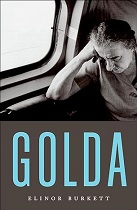
Golda – Elinor Burkett

Golda

On May 14, 1948, David Ben-Gurion (1886-1973) beamed triumphantly as the State of Israel was formally created.  The nation’s first prime minister delivered the declaration of independence in Tel Aviv as the world watched. The establishment of a Jewish nation in the wake of World War II became a pivotal moment in world history. One of the signatories to the declaration was Golda Meir (1898-1978), who later became the first female prime minister of the country. The occasion was monumental but the alarm bells soon started to ring as tensions with the Arab world intensified.  In public, Meir  presented a stern face and immovable character as she championed Israel’s future. But in private, her life was vastly different and rife with personal struggle. It is a stunning contradiction of the woman who carried the torch as she led Israel. This is her story as told by author Elinor Burkett.

I recognize that due to current events, matters regarding Israel, the Palestinian people and the Gaza Strip are disheartening and controversial. If you are a staunch supporter of the Palestinian people, this book may not be for you. However, I can say after finishing the book that Meir was not oblivious to the plight of Palestinians and had foresight that could have prevented future bloodshed. But hindsight is always perfect vision and there is more to her story than the events on the world stage. Her story begins in Ukraine as the Meyerson family is forced to leave due to persecution of Jews. They emigrate to American settling down in in Milwaukee and soon learn the ways of the Midwest. But Golda is not one to stay put and in her late teens, leaves for Denver, Colorado to live with her sister Sheyna (1889-1972). And it is apparent early in the book that she is unlike any of her peers or her family members. Golda’s stubborn independence would carry her throughout her life as she rose through the ranks in the Israeli government. But first shefound a significant other.

In 1917, Golda married her husband Morris (1893-1951), who agreed to relocate to Palestine in order to have her hand in marriage. However, that did not help their relationship, and this is one of the saddest aspects of her story. It also made me question her extreme commitment to Israel’s cause. Surely, the creation of the Jewish state was important but was it worth the personal sacrifices she made? Morris comes and goes in the story, constantly trying to reconnect with his wife. His efforts are futile but after his death, Golda never remarried nor did she ever forget him. The couple bring two children into world, Menahem (1924-2014) and Sarah (1926-2010). And like their father, they too would not have the relationship they desired with their mother who was always away working for the Israeli cause. Golda was not ignorant of the fact that her children felt neglected and on occasion in the story, she tries to mend fences. There is no doubt she cared for them, but the lack of quality time and guidance is vividly apparent. She even seeks affection outside the home, and those relationships proved to be just as problematic.

While away from home, Golda is hard at work as we see in the book and seems to never run out of steam as she campaigns for the cause. However, she was suffering in private, and health issues arise. They are  compounded by a poor diet and a steady stream of cigarettes. But Golda never slows downs, even in the face of sexism which became an issue as she became the favorite for the prime minister role. And in 1956, anyone who doubted her was forever silenced when she became the first female prime minister. Her work was far from done, and this is where the story changes gears as the threats from Arab nations increase. War eventually breaks out placing Israel in a fight for its existence. Domestically, the issues of territory and displacement of Palestinians also arise and Golda’s views on both are likely to surprise some readers. She was keenly aware of what was happening to the Middle East but hardliners within her own government proved to be quite a challenge. But those domestic issues were forced to take a backseat when the Yom Kippur War ignited in 1973. The author provides a good recap of actions behind the scenes highlighting what was at stake. Further, Israel’s relationship with the United States factors into play as Golda does her best to influence America’s president Richard M. Nixon (1913-1994).

Israel survived the war, but Golda’s career did not fare as well. We follow her in private as she contemplates her decisions, the broken relationships in her life and mortality. The “Iron Lady” had proven to be a capable leader but the role took a heavy toll on her life. And it is this side of the story which is the most heartbreaking as her physical decline becomes apparent. Yet she never asks for pity and keeps going when possible. She accomplished what was thought to be unthinkable for a woman but that came with a steep price. Her passion, drive and willingness to make tough decisions are all on display. Quotes by Golda herself provide further insight to her character and her personal issues which she was unable to conquer.

On December 8, 1978, Golda lost a twelve-year battle with lymphoma and was laid to rest in Mount Herzel, leaving behind a complicated yet history changing legacy that is relevant to this day. If you are looking for a biography of Golda Meir that shows both sides of the public figure, this is a good place to start.

No matter how anyone else, now or then, measured her life, Golda had an unwavering standard for herself: “I can honestly say that I was never affected by the question of the success of an undertaking. If I felt it was the right thing to do, I was for it regardless of the possible outcome.”  

ASIN : B0017ZMZ0U