The Dead Are Arising: The Life of Malcolm X – Les Payne & Tamara Payne

malcolmFebruary 21, 2024, will mark fifty-nine years since the assassination of Malcolm X (el-Hajj Malik el-Shabazz) (1925-1965) at the Audobon Ballroom in Harlem, New York. His murder remains a topic of discussion, but the crime itself has been de-mystified through books and documentaries. Malcolm authored his own autobiography with the help of Alex Haley (1921-1992), but omitted certain aspects of his life. In my search to learn more about him, I came across Manning Marable’s (1950-2011)  ‘Malcolm X: A Life of Reinvention.  I also read Bruce Perry’s ‘Malcolm: The Life of a Man Who Changed Black America‘, which contained surprising allegations regarding Malcolm’s persona life. Marable also made salacious claims which are still up for debate. Perry’s biography is a good starting, but lacks the detail of Marable’s work and the biography here by Les Payne (1941-2018) and his daughter Tamara, who finished her father’s writing after his untimely death. However, compared to Marable’s writing, the Paynes take a different approach by leaving out gossip and assumptions while focusing on Malcolm’s time within the Nation of Islam (“NOI”) which cast a dark cloud over Malcolm’s last days.

The authors revisit Malcolm’s early life and in particular his father Earl Little, Sr. (1890-1931) who has an interesting story of his own. In fact, I learned more details about him than I had previously known. And those details add more to Malcolm’s story which sadly is left out of the 1992 film starring Denzel Washington as the late iconic figure. The book moves at a steady pace and the authors do not give too much attention to areas which would have prolonged the story. We are given more than enough information about Malcolm’s youth, his move to Boston where his sister Ella Little-Collins (1914-1996) takes him in, and his fall from grace as he is tried, convicted and sent to prison. Like Marable, the Paynes ensure that Ella is a crucial part of the story. Sadly, she is not shown in the film due to personal differences behind the scenes. Another figure crucial to the story is Minister Louis Farrakhan, who appears in the story but only briefly towards the end. I first thought this was odd but having finished the book I understand the decision to keep Farrakhan’s role to a minimum.

The crux of this book is unquestionably Malcolm’s time in the NOI under the leadership of Elijah Muhammad (1897-1975). As a primer, the origins of the NOI are discussed and the disappearance of its mysterious founder Wallace D. Fard,  whose exodus paved the way for Muhammad. Interested readers can review the case files maintained by the Federal Bureau of Investigation (“FBI”) here. I have started to examine them and Fard has quite the story. There are statements in the book from people who met Fard providing a glimpse into who he was. However, it is not clear what happened to him in 1934 when he vanished without a trace. But with Fard gone, the NOI was in the firm grip of Muhammad who through his rising star minister would expand the NOI and capture the FBI’s attention.

The first hint of trouble in Malcolm’s relationship with the NOI comes through a well-hidden story which has not garnered enough attention: the working agreement between the NOI and the Ku Klux Klan (“KKK”). This explosive story is not entirely secret and is reconstructed here to show the impact it had on Malcolm and the contradictions he was forced to confront. Further, as he became more popular, Malcolm gained more enemies, some of whom were members of Muhammad’s family. The dysfunction within Muhammad’s family is a story of its own but what stands out here is the contempt some of Muhammad’s children help for Malcolm. Further, the revelation of Muhammad’s illegitimate children by his son Wallace added fuel to the fire, and what develops is a toxic relationship between Malcolm and the NOI. And this is where the stage is set for his murder. Marable did discuss the attempts on Malcolm’s life but while reading this book, I read between the lines more closely to understand what Malcolm himself was saying about the NOI as his date with destiny approached.

Enemies of Malcolm had called for his removal as early as 1963, but the reasons for it need further exploration. The tension between him and Elijah Muhammad were an issue, but after reading this book I have come to believe that it is what Malcolm knew about NOI affairs as a whole that sealed his fate. In fact, he alluded to this several days before his death as discussed in the book. Frankly, he was too popular, too smart, and too willing to tell the truth about the Nation to remain alive. Readers will see the nexus of conspirators come into focus as the story progresses. And the picture, which is emerges, is of a man facing enemies both seen and unseen, determined to end his existence and project Muhammad and the NOI. Missing from the story is Malcolm’s relationship with his wife. Of course, Betty Shabazz (1934-1997) is in the story but very little is discussed regarding their marriage. This diverges sharply from Marable’s book which did discuss their marriage and personal struggles. Also left out of the main narrative is Clara Muhammad (1899-1972) whose marriage to Elijah Muhammad suffered under the strain of the paternity issues facing him as his deeds came to light. However, the story remains intriguing without those items on the agenda, and I did not lose focus on the growing web of danger surrounding Malcolm. In fact, the story builds up the suspense and it felt as if everyone else could see what Malcolm did not. It reminded me of the scene in the film where Betty (Angela Bassett) says to Malcolm (Denzel Washington) ” Open your eyes. Open your eyes. You can face death 24 hours a day, but the possibility of betrayal never enters your head. Open your eyes”.

The dreaded moment we know is coming arrives when Malcolm takes center stage at the Audobon Ballroom. The fracas and ensuing chaos are re-told here in vivid detail, including the events at Newark’s Mosque No. 25 as the assassins returned from New York. And it is alleged that among these killers was William Bradley (1938-2018), who is also examined in the Netflix docuseries ‘Who Killed Malcolm X?“. And like the docuseries, we learn here that the murder was an “open secret” within the NOI. I felt chills down my spine as the book’s conclusion played out. To be fair, Bradley was never convicted in a court of law of any wrongdoing. And though he did have a criminal record, none of the charges were related to Malcolm’s death. However, convicted assassin Talmadge X Hayer (Thomas Hagan) did admit that Bradley was the assassin who fired the sawed-off shotgun that day. The Paynes do not go into the subsequent arrests and convictions, choosing to end the book with Malcolm’s passing. They do, however, include a section about undercover New York City Police Department (“NYPD”) officer Gene Roberts who also comes under scrutiny in the Netflix docuseries. Needless to say, Roberts was not the only person who saw the assassins that day. Scores of informants were in the ballroom that day, and each reported to case officers following the shooting.

We may never know the full truth about Malcolm’s death, and at least two shooters escaped justice. Malcolm is gone but his life will not be forgotten. And every year he is remembered for what could have been. If you need a streamlined account of Malcolm’s short but extraordinary life, you may find this to be exactly what you are looking for.

ASIN‏ :‎ B085T2DG2L

George Marshall: Defender of the Republic – David L. Roll

MarshallIf you were to ask me to find one word to describe the late Gen. George C. Marshall (1880-1959), the word that comes to mind is unsung. In comparison to the larger-than-life figures who served in World War II such as President Dwight D. Eisenhower (1890-1969) and Gen. Matthew B. Ridgeway (1895-1993), Marshall remained behind the scenes and helped formulate the plans behind the missions that sustained and propelled the Allied effort. When I saw this book on sale, I decided to take a look into Marshall’s life to learn more about the man whose name was given to the “Marshall Plan“. And what I learned has improved my understanding of World War II, the existential threat from  Adolf Hitler’s (1889-1945) Third Reich, and the conflict’s impact to this day.
Marshall’s story begins in Uniontown, Pennsylvania, a city known for its role in the Underground Railroad, which was supported by the staunch abolitionists who resided there. Among them was Marshall’s mother Laura. The family is typical of what one would expect in late 1800s America. Marshall grows into a fine young man and finds his calling at the Virginia Military Institute. It is here that his introduction to the armed forces begins and is the first step on a journey that took him across the world and made him a part of history. The story picks up in pace after he marries his first wife Lily, but also takes an unexpected turn as we learn of the relationship between Marshall and his older brother Stuart, who disappears from the remainder of the story for reasons explained by the author. Life was good for the young couple in the years that followed, but in 1914, World War I would change everyone’s lives.

The first world conflict was a turning point in history and Marshall was on the front lines to see its effect. His service in the war is discussed by the author and we learn that he performed admirably and earned the respect of those who knew him. But it is not long before commanders realize that Marshall is far more effective as a planner of campaigns. His tutelage under the late Gen. John J. Pershing (1860-1948) would advance his career in ways no one could have imagined. Marshall returns home from the war and resumes his career in the armed forces. The war was over, but he had become convinced that America needed to improve its military for future threats. As can be seen in the book, it becomes an uphill battle before events in Europe begin to change the minds of Americans. In 1927, Marshall would face his first experience with personal tragedy as he confronts his wife Lily’s mortality. Her story is heartbreaking, and it is clear throughout the story that Marshall never fully recovered. A second wife named Katherine enters the story and their life-long romance is included as back drop to main story, which is Marshall’s life in the military which changed yet again on September 1, 1939, when the Third Reich invaded Poland and ignited World War II. On that same day, Marshall was appointed as chief of staff of the U.S. Army and was determined that America would face any threat and win.

Undoubtedly, World War II where the book gains momentum and the suspense increases as Marshall fights for military spending, a draft and sounds the alarm about the growing German threat. However, there was another threat as we see in the book, which later came back to haunt Marhsall and his subordinates. Tensions between the United States and Japan had been increasing before the attack on Pearl Harbor and this was not lost on the Army Chief of Staff or the White House. Roll revisits the weeks before the attack to examine what commanders did know and which actions, they performed to warn commanders at Pearl Harbor of a Japanese operation. And though there is no “smoking gun” that gave precise details of the upcoming attack, there were warning bells that the military should have been on heightened alert. The author does not explore any conspiracy such as President Franklin D. Roosevelt (1882-1945) “allowing” the attack to happen. If Roosevelt knew for certain and did nothing, then that is information he surely took with him to his grave. The author does explore what is know about the Japanese communications which had been decrypted by the military. Once the attack happened, all of that was out the window as America had become drawn into World War II, and Marshall would have to rise to the occasion. The war would touch him in many ways, including personally, as he and wife Katherine suffered their own loss. Further, the war also opened Marshall’s eyes to the experiences of Black soldiers who faced rampant discrimination, segregation, and violence. His faults at understanding the issue of race are presented by the author, and Marshall himself later makes statements about his failures to take needed actions. While it easy to condemn Marshall, I also understood how he viewed things from a military perspective and not a civilian or political vantage point.

There are few words I can say about the savagery of World War II that have not already been said. It remains the most brutal conflict in world history. The Allied victory was won through enormous sacrifice and the brilliant minds of Marshall, subordinate Dwight Eisenhower, and scores of legendary military leaders who fought in America’s defense. Interestingly, without Marshall, Eisenhower may not have made a name for himself in Europe. Their relationship is explored in the book, and I wondered what would have happened if Marshall had taken control of the European Theatre. He may have succeeded Truman as president. But Marshall was not a political person and his aversion to politics is clear in the book. His goals were to defend the nation and improve the military. While reading the section regarding World War II, I noticed that the author streamlined the narrative beautifully. We are given enough information to understand the military operations being launched and the behind-the-scenes interactions with the British who sorely needed American support and the Soviet Union. The relationships were not without friction but what is clear is that without American intervention, the war in Europe may have concluded very differently. In the Far East, China was a simmering hot plate as the battle between Chiang Kai-Shek (1887-1975) and Mao Zedong (1893-1976) heated up. And sitting back examining all aspects was the Soviet Premier Joseph Stalin (1878-1953) whose Red Army helped turn thetide against Nazi Germany. If you love World War II history, this part of the book will have you glued to the pages. At some point we know Germany’s defeat is imminent, and it does come. Following the European victory, we reach the Pacific’s climax with the introduction of the Atomic bomb, and its use on the Japanese cities of Hiroshima and Nagasaki. Following the collapse of the Axis powers, Marshall focused on rebuilding Europe and his vision which became the Marshall Plan, remains a critical part of world history. But, his work was far from done and President Harry S. Truman (1884-1972) would call him back into service again as Asia heated up.

On June 25, 1950, the North Korean military invaded the South and kicked off the Korean War. Marshall would once again find himself involved with a conflict that threatened world peace. Compounding his frustrations and those of Truman, was the tense situation between Washington and Gen. Douglas McArthur (1880-1964). The late general had become both a legendary and mythical figure. But as we see in the book, his unilateral actions, contradictory to White House policy, caused fear and panic that America would be drawn into World War III. The unbelievable story plays out here again but the full story has been covered thoroughly by author H.W. Brands in ‘The General v. The Present: McArthur and Truman at the Brink of Nuclear War. Today we know with hindsight that a world war did not happen, and an armistice was signed on July 27, 1953. But the possibility of a wider war was very real, and Marshall had no illusions of Chinese and Soviet intervention. The Chinese did get involved, forcing several American retreats but the Soviets did not. The world had dodged a bullet. For Marshall, there was not much left to do as he had aged, Mao Zedong had established the People’s Republic of China and the DMZ was created in Korea. He returns to private life following the Korean conflict and the story reaches its own sad conclusion with his passing in 1959. The book is a remarkable account of an incredibly important figure that is sometimes a footnote in history. Marshall is truly an unsung hero. This biography is invaluable in learning about the life of the man who changed the United States Armed Forces.

ASIN‏ :‎ B07JYQV52N

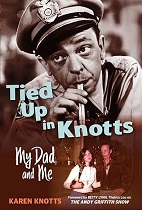
Tied Up in Knotts: My Dad and Me – Karen Knotts & Betty Lynn

KnottsMy brother and I often reminisce about old American television sitcoms we enjoyed while they aired and continue to enjoy them through DVD and streaming services. One of these shows is ‘Three’s Company’ with the late John Ritter (1948-2003). The show was a massive success but a cast change during its run helped cement its place in television history. A supporting character named “Mr. Furley” was the landlord and after the departure of the first actor retained to play the role, a well-known comedic star named Jesse Donald “Don” Knotts (1924-2006) was brought in to replace him. And the rest, as they say, is history. Knotts had earned his stripes in Hollywood before being cast as Furley, but this show undoubtedly helped propel his legacy as a television great. But who was the real Don Knotts? His daughter Karen has carried her father’s legacy and authored this book about the man she called her dad.
As opposed to a standard biography, this book is a collection of memories from friends, family members, former co-stars, and Karen herself. The interviews are eye-opening and provide valuable insight into the personal life of a man who made millions of people laugh. His early life is discussed, and we learn of his origins in the Appalachian town of Morgantown, West Virginia. There were a few things that did surprise me, as I had no prior knowledge of them beforehand. The most surprising thing is that Knotts was a decorated World War II veteran. He was not the first star to serve in the war but joins an honored list of performers who served in a war that turned the world upside down. Following the war, Knotts set his sights on bigger goals, and embraced his role as a husband and father. But his life changes significantly when he meets a fellow star who was blazing his own trail in Hollywood, Andy Griffith (1926-2012). Fans of the ‘Andy Griffith Show‘ will love this part of the book. Karen is there to provide comments about behind the scenes events that reveal the personal side of the stars who created the beloved fictional town of Mayberry, North Carolina. Knotts became “Barney Fife” the deputy who provided comic relief to Griffith’s “Andy Taylor”. The show was a hit and is still fondly remembered today. But behind the camera, Knotts had his own personal struggles which Karen and his son Thomas recall as they talk about their late father.

As I read, I was surprised to learn of Knotts’s multiple marriages, and string of romances. In contrast to the fictional Fife who provides comedic relief, the real life Knotts was well-liked by women. But as Karen explains, his love life was not always stable, however, this also shows that Knotts was human, and no one has the “perfect life”. Additionally, the reality of divorce, addiction, and physical ailments could not be overlooked with the star learning of a condition that would affect him for the rest of his life. Knotts refused to let anything get him down and continued perfecting his craft, and even reels his daughter in on occasion to join him on camera. Karen was a keen observer and discusses stars she met as her father guided her around Hollywood. Her story is fascinating and her friendships with other childhood stars are interesting. The two that stand out are Ron Howard and Desi Arnaz, Jr. Although their father was famous, both Karen and Thomas had their own personal struggles which they frankly discuss in the book. Hollywood may create fiction, but the lives of its stars are very real.

Karen Knotts continues to keep her father’s legacy alive, but for readers looking to understand her famous dad, this book is invaluable. The stars we love give us shows, films and interviews to last a lifetime, but behind the camera, they too fight their own personal battles. But as they say in Hollywood, the show must go on, and for Don Knotts it always did. And as a testament to his character, none of the people interviewed had a negative word to say about him. Knotts himself also speaks in the book, looking at himself objectively and observing the world around him as comedians have always done. This is his story, and that of his children who proudly carry the Knotts name.

ASIN :‎ B08XQZGNPY

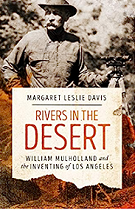
Rivers in the Desert: William Mulholland & the Inventing of Los Angeles – Margaret Leslie Davis

“When the well’s dry, we know the worth of water.” – Benjamin Franklin (1706-1790)

America is a young nation compared to countries around the world, but despite its youth, there is fascinating history contained within its borders. When I saw this book, I realized that I was not familiar with the name of William Mulholland (1855-1935). My curiosity heightened and I found myself eager to see what author Margaret Leslie Davis had to say about him and the City of Los Angeles. It is no secret that California has had issues with its water supply. Droughts induced by the desert climate in the southwestern section of the United States and lack of rainfall have long taken their toll.  And water has always been a treasured commodity essential for human life. But how many of us know how Los Angeles developed its water supply? The story is presented here in a book that affirms the concept of “visionary”.

The story begins at the Owens River as Mulholland and fellow engineer Frederick Eaton (1856-1934) are in search of a water supply sorely needed by Los Angeles. Realizing that the Owens River sits at a higher elevation and has the supply needed for the growing city, they each set out to make the dream a reality. However, their paths soon diverge creating a love hate relationship that remains prevalent throughout the book. Mulholland becomes superintendent of the Municipal Water Department and is soon given the green light to construct the Los Angeles Aqueduct. But the road the completion was far from simple, and the author relives the day-to-day working conditions which proved to be deadly on occasion.  The brutal environment becomes known as well as the vices that plagued workers, mostly Irish immigrants like Mulholland. In fact, one vice is so widespread that the city legislature is forced to step in and pass new laws regarding the aqueduct project. The threat of cave-ins, falling debris and suffocation are eerily present, but the other deadly killer was disease. There are several scenarios that play out in the story highlighting the need for sterile working environments and the importance of efficient medical treatment. And we cannot ignore the importance of food which becomes a crucial issue as the miners ply their trade.

Eventually the Los Angeles Aqueduct is finished, and Mulholland becomes a hero in Los Angeles. But with every great rise, lays the risk of great fall. Further, Mulholland suffered tragedy and grief in his personal life which offsets the jolly public figure tasked with moving Los Angeles forward. The aqueduct project was a booming success and for Mulholland, his name became attached of the American Dream. But on the night of March 12, 1928, everything changed, and the story is turned upside down. Around midnight, the dam collapsed and sent gallons of water flooding the territory below resulting in hundreds of deaths and extensive damage. The fallout and its suspense, captured perfectly by the author, is nothing short of devastating. And Mulholland soon found himself in the crosshairs of an ambitious prosecutor, Asa Keyes (1877-1934). A trial commenced, and Mulholland was on the defense. Davis includes some of his testimony here showing the tense atmosphere surrounding the trial and the grief that consumed Mulholland who is never the same again. Witness statements are also included to give readers an idea of how powerful and fast the flooding water was. And while this drama plays out, the life of Eaton takes its own roller coaster ride, yet the former friends turned into partial enemies, still found a way to connect with each other in times of need. In the end, both engineers suffered their own personal losses and griefs but were instrumental in creating modern day California.

Following the jury’s verdict in which Mulholland is found to be negligent but not criminal, he slowly recedes from the public light. But karma never forgets, and Davis follows up with information on Keyes who has his own fall from grace that left me speechless. As for Mulholland, he was still revered, and his ideas are still relevant today. We follow him all the way to the end in the story as his health declines and destiny approaches. Fate and bad luck changed his life forever, but his contribution to the City of Los Angeles cannot be denied. His legacy is complicated but also a permanent part of California’s history.

ASIN:‎ B00J90EUO4

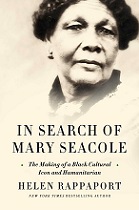
In Search of Mary Seacole: The Making of a Black Cultural Icon and Humanitarian – Helen Rappaport

Seacole

One of the reasons I love to read is because there is always something new to learn. In fact, I would go as far to say there is always a new story waiting to be learned of. I saw this book while browsing for a new read and could not recall seeing the name of Mary Jane Seacole (1805-1881) previously.  The image did look familiar but the story behind the face eluded me. There was only one thing left to do so I bought the book. And what I found is a story that is unique, interesting, and beneficial in discovering history that should be more widely known. Author Helen Rappaport went on a search for the real Mary Seacole, and though there are parts of her life lost to history, this account of her life is a solid foundation. 

I have seen online that debates continue in whether Seacole should be recognized as a nurse, businesswoman or other. The truth is that she was a mix of both and took advantage of the opportunities that came into her life. Her story begins on the island of Jamaica in the early 1800s. The author provides a good discussion of life in that Caribbean nation, then under the control of the British Government. England’s influence can be felt throughout the story, particularly during the Crimea War which Mary sees firsthand. But first, the story of Mary’s life plays out in Kingston, Jamaica. And this includes her marriage to Edwin Seacole (1803-1844). Following his death, Mary’s life took off and we follow her journey to Central America and Great Britain. She rarely sits still in the book and when the war breaks out, she moves again, determined to make her way to the battlefront to assist in any way possible. And it is here that I believe the confusion and controversy over her exact title begins. 

To be clear, Seacole was never designated as “nurse” in the traditional sense. However, she did render aid to wounded soldiers and had prior experience in confronting cholera, still largely misunderstood and without clear remedy. Today, we have an arsenal of tools to fight a cholera outbreak but in Seacole’s time, treatment was non-existent and home remedies were experimental. Further, Seacole was a businesswoman who had success and extensive contacts in the British military. But that success also came with enemies. And readers may be surprised to learn of the animosity between Seacole and the well-known Florence Nightingale (1820-1910). This part of the book did catch me off guard and the dislike and envy from Nightingale is glaringly apparent. Seacole was not a nurse, but she could not be ignored. Rappaport establishes Seacole’s importance with the remark that: 

“There is no doubt that from the late 1850s to her death in 1881, Mary Seacole was the most famous Black woman in the British Empire. Indeed, until she was voted Greatest Black Briton in 2004, only the Trinidadian pianist Winifred Atwell and the Welsh mixed-heritage singer Shirley Bassey had enjoyed an equivalent celebrity; but their popularity had not come until after the Second World War.” 

Seacole’s life was amazing but the biggest mystery in the book is her alleged daughter Sarah, also known as “Sally”. This part of the book leaves room for further research but from all indications, Sally disappeared, and her life remains unknown. However, that did not stop Nightingale from entering the fray and her allegations about Sarah’s parents are startling, but no conclusive evidence was ever produced. We may never know what happened to Sarah, but she did exist and is part of this story. 

Following the war, Mary moves around again, and finds herself in declining health. And on May 14, 1881, died in London at the age of seventy-five. Decades after her death the Jamaican government officially recognized her life and today, she is seen as an iconic figure in both Jamaican and British history but during her time, she endured hardships, heartache, racial prejudice, and sexism but persevered, nonetheless. This is a fascinating read about a figure who made her mark in history at a time when blacks and mixed-race people were still held in bondage. History buffs will also like that the author asks for any contributions to Seacole’s life be made online so if you do know more about her life that is not in the book, you can send the author your suggestions to make the Seacole story as complete as possible. 

ASIN: B09SGP3WJB

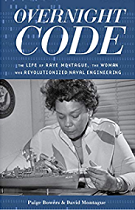
Overnight Code: The Life of Raye Montague, the Woman Who Revolutionized Naval Engineering – Paige Bowers and David Montague

MontagueA friend once asked me why I loved history. I replied that there was always something to learn and that the history we learn in school is a fraction of the information that can be found regarding humanity’s evolution. When I saw the title of this book, I paused instantly and decided to investigate further. A brief synopsis on Amazon told me what I needed to know: there was an important story within that I did not previously know. My intuition was correct, and I felt a sense of shame at not knowing who the late Raye Montague (1935-2018) was and what she accomplished during her time working for the U.S. Government.  This book by Paige Owens and Montague’s son David, sets the record straight and ensures that her story will never be lost to history.
The story begins in Arkansas where Raye is born during the dark Jim Crow era in America. The descriptions of life for blacks in the South are exactly what you would expect to find of that era. And reading what life was like in America is still disturbing. But it is also a testament to the strength to be found in the people who moved forward in life despite their difficult origins. Montague’s story is typical for a Black American at that time, but it changes when she goes to work for Uncle Sam. She found herself in a brand-new environment with a young son she was raising as a single mother. Her trials and tribulations in the dating and marriage markets are discussed throughout the story and what we learn is surreal. But Montague never lets her personal life interfere with her professional life, and even goes to extreme lengths to keep her career going. However, she had to confront two obstacles in the forms of racism and sexism. As a black woman, she stepped into a world dominated by white men. And though she lacked the training they had been afforded, she learned on the job and by chance, is given an opportunity to work on the computers when the main engineers are unavailable. Her supervisor took notice and her life changed permanently.

To say that she accomplished incredible feats would be an understatement. Frankly, she embodies the concept of determination. And her uncanny intelligence is on full display and what she accomplished is amazing. Some of her awards are mentioned as the story progresses but after the book’s conclusion, a full list of her awards is provided, along with photos of Montague and her family. She was nothing short of brilliant. Yet despite her talent, knowledge, and ability to socialize anywhere, opposition to her advancement remained an issue throughout her entire career. She speaks frankly on the issues in the story but never speaks ill of anyone. I am sure she kept many grievances close to the chest as we say, but never lost sight of her goal to be the best engineer in her department. She reached that goal when she generated the first computer designed blueprint for a United States Naval vessel.

There are both antagonists and protagonists in the book. Her guardian angel comes in the form of Wallace “Wally” Dietrich whose guidance helps push her career forward. But there were also detractors, surprised to see a black woman as a peer. But to be fair, there are no acts of violence towards her, and she did form close relationships with co-workers both black and white. And through her hard work and perseverance, she was opening doors for women following her lead. Her personal struggles are the dark side of the book, and I could not believe what she went through in multiple marriages. But her son David was always her priority and she never wavered in making sure he was well taken care of. Today he continues to keep his mother’s legacy alive.

After I finished the book, I took a moment to think about everything I read. And I realized that this book is a perfect example of why history is important. The adage is true; if we want to know where we are going, we must know from where we came.

“I was put here for a reason,” she said. “That reason is to open doors for other people.” – Raye Montague

ASIN:‎ B085175PYS

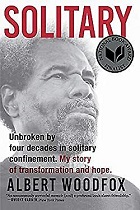
Solitary: Unbroken by Four Decades in Solitary Confinement. My Story of Transformation and Hope – Albert Woodfox

AlbertThe late rapper Tupac Amaru Shakur (1971-1996) soberly noted that prison kills one’s spirit. Each day becomes a repeat of the day before with instructions from guards and strictly observed times for each day’s events. Shakur served eight months in 1995 being bailed out while his conviction was on appeal. Tragically, he died on September 13, 1996, without the appeal having been decided. His story is unique but there are millions of others who are still in prison, serving extensive sentences in some of the country’s most dangerous facilities. Albert Woodfox (1947-2022) was one of those people, having served forty years in prison with most of the time served at Louisiana State Penitentiary in Angola also known as “the Farm”.  Woodfox’s story stands out because he not only served four decades but spent that time in solitary confinement for crimes he did not commit. This is the story of his life and time behind bars as he put his criminal past behind him and transformed himself into a civil rights activist and advocate for prison reform. 

The story begins in Louisiana where Woodfox was born to a mother who could not read and write, and a father who did not stay around to raise his son. But his mother meets another man who becomes his stepfather and fills the void left by his biological father. However, the happy family did not last, and a series of events fractured the once happy household, changing the lives of everyone for good. And it is not long before Woodfox begins his career on the street with drugs and petty crimes which result in early yet short prison sentences. But ironically, the crime that sends him to Angola was not one he was a participant in. Despite his conviction, he should have only served a few years there before being released. But that all changed on April 17, 1972, when corrections officer Brent Miller was stabbed to death. Woodfox did not know it at the time, but the murder of this guard would be the catalyst for keeping him behind bars for forty years. 

Miller’s murder is terrible, and readers should be aware that his last moments were nothing short of horrific. Woodfox becomes an immediate suspect due to his clashes with prison officials over living conditions. Even before Miller’s death, Woodfox was on the warden’s radar and the reasons for this will shock readers and force them to question whether prison is truly for rehabilitation. The conditions he describes are inhumane, but Angola has always had a reputation for being a place you do not want to go to. Despite knowing this, I still found myself aghast at what I was reading. Admittedly, when I read that Miller had been attacked, I did not think Woodfox was responsible. In fact, he was the last person I suspected. For him to murder Miller would have been completely insane due to his high profile and the fact that he had never met the guard. But there is far more to the story that will leave readers shaking their heads and questioning the criminal justice system. 

The saying a “jury of your peers” is supposed to carry significant weight but as can be seen in the book, for Woodfox and others accused of Miller’s murder, the State of Louisiana had other ideas. And we cannot overlook the issue of race which plays heavily in the events that follow. Woodfox had turned to the teachings of the Black Panther Party during his incarceration and had come to understand how his life was affected by the lack of a stable home. But that did not deter him from helping other inmates change their lives. Further, he speaks on a topic that will be upsetting to some readers and that is the dehumanizing experience of sexual assault. If there are any doubts that incarceration destroys what is left of someone, Woodfox removes it here. Frankly, what he describes is out of control but flourished with the knowledge and cooperation of guards whose goal was to break each man down to a shadow of his former self. But as the author explains, he refused to be broken and along with others committed to their cause, remained strong in the face of unrelenting racial hostility and pressure from prison officials. 

Unbelievably, Woodfox was convicted of Miller’s murder with two co-defendants. As someone who works in the legal field, I could not believe my eyes. To say that the investigation into Miller’s death was “sub-par” would be an understatement. In fact, there was hardly any investigation, and the real murderer never paid for the crime. Officials had who they wanted to be convicted and they succeeded. But, over time the story falls apart and attracts the attention of people outside the Angola becoming aware of the horrors the prison system inflicts on inmates. And even those who initially believed in Woodfox’s guilt, change their opinion after learning the truth about Miller’s murder. The efforts of his supporters were not in vain, and he does get a new trial but is convicted again for Miller’s murder. But the way the trial is conducted and the ways in which the prosecutors present their case is absolutely infuriating. Yet Woodfox remains unbroken. But that is not to say he didn’t suffer emotionally as well. He openly discusses his frustrations and the impact on his mental health from the deaths of loved ones he could not be with in their last moments. 

While Woodfox is focused on maintaining his sanity behind bars, outside of Angola interest in his case increases. He and his two co-defendants, Robert King, and Herman Wallace, become known as the Angola 3. King was released 2001 after accepting a plea deal which is explained in the book and Wallace died in 2013. I must warn readers that Wallace’s story is tough to read and the way the State of Louisiana treated this man even at the end of his time in Angola is surreal. Following his release, King becomes the spokesman for Woodfox’s release and the movement to change Angola. The author receives a guardian angel in the form of former U.S. District Court for the Middle District of Louisiana Judge James J. Brady (1944-2017) whose commitment to the law provides hope for Woodfox to keep his faith. This part of the story is interesting because we are witnesses to the legal battles between Brady and the Fifth Circuit Court of Appeals, each wrestling with the questions of Habeas Corpus, cruel and unusual punishment, and Woodfox’s right to fair trial. But in the background is the book’s antagonist, former Louisiana Attorney General James D. Caldwell, also known as Buddy Caldwell. His actions towards Woodfox are disheartening. Woodfox was eventually released but not in the way he would have preferred. However, it brought an end of over forty years of confinement, and he was able to live out his days free from Angola. Sadly, in August 2022, Woodfox became another victim of the Covid-19 virus and passed away at the age of seventy-five. He is now gone but this story will live forever and remind us of the horrors of solitary confinement, prosecutorial misconduct, racial injustice, and the tolls they take on one’s physical and mental health. 

“My fear was not of death itself, but a death without meaning.” —Huey Newton (1942-1989)

ASIN‏:‎ B07MWJ1NPM

JFK: Coming of Age in the American Century (1917-1956) – Fredrik Logevall

20230304_180326“Never be without a book in your hand”. Those words, spoken by President John Fitzgerald Kennedy (1917-1963) to his youngest sibling, the late Senator Edward M. Kennedy (1932-2009) stayed with me after finishing this Pulitzer Prize winning masterpiece biography by Fredrik Logevall. As I read those words, I pictured bibliophiles all over nodding their heads in agreement. At the age of forty-six, John F. Kennedy was felled by an assassin’s bullet in an act that changed America. The hopes and promise of significant changed died with him in Dallas, Texas on November 22,1963.  And though his successor Lyndon Baines Johnson (1908-1973) was successful in pushing forward groundbreaking legislation, the wound from Kennedy’s murder was destined to never heal.  As someone who has read countless books on his assassination and incredible life, I had a firm grasp on the Kennedy story before starting this book. However, there were parts of Kennedy’s story I learned for the first time. But more importantly, I witnessed a young man coming of age in the century that saw profound change across the globe.
This November will mark sixty years since Kennedy’s sudden death, yet he remains one of the most popular politicians in history.  His legacy is complex with successes and failures. The world came to the brink of nuclear war in October 1962 but was resolved without a weapons exchange to the relief of all. The Bay of Pigs invasion was a nightmare but not without its warnings. But those events await readers in volume two. Had Kennedy secured a second term, I believe he would have been able to accomplish more of the goals he envisioned for the nation. And the key to understanding why his death was so devastating is to find out how who he was as a person and what shaped his views of the world. Logevall begins as expected with a short biography of the Kennedy and Fitzgerald families, and their roots in Ireland. After the marriage of former U.S. Ambassador to Great Britain Joseph P. Kennedy, Sr. (1888-1969) and Rose Fitzgerald (1890-1995), the story picks up in pace as the Kennedy children begin to arrive.  Joe Jr. (1915-1944) arrives first and becomes the son chosen for the dreams Joe Sr. has of a Kennedy in the White House. Jack arrives next and from their childhood to their service in World War II, they maintain a rivalry that may surprise readers. In fact, Logevall sheds light on a plausible reason for the final mission Joe Jr. embarked on that claimed his life. Next in line is Rosemary (1918-2005) whom author Kate Clifford Larson `called “the Hidden Kennedy Daughter” in her book of the same title.  She is followed by Kathleen, who is known affectionately as “Kick” and her closeness to Jack should not be underestimated. The author highlights the importance of Kick in his and the impact of her death at the age of twenty-eight. In short order siblings Eunice, Pat, Bobby, Jean, and Ted arrive and the Kennedy story is never the same again.

Kennedy’s story is well-known, but there are key elements which I believe Logevall expertly homed in on that sets this biography apart from others.  The sibling rivalry with Joe Jr. is interesting because not only is it filled with ironies but because each son was unique, though they did complement each other.  Joe’s physical abilities contrasted with Jack’s intellect, but both excelled in many ways.  When Joe Sr. is appointed Ambassador to the United Kingdom, the family’s life changes significantly and Jack’s exposure to the world takes shape, and until the day he died, never lost touch with events around the globe. The list of countries he visited even before serving in the military is staggering. From an early age, it is clear in the book that Jack had his eyes and ears glued to the world around him and was not content to sit still.  However, the Kennedy story was nearly cut short multiple times as Jack found himself at death’s door.  Logevall revisits the episodes in which Jack’s health took turns for the worst and the young man who later became president nearly met the Grim Reaper. Jack’s famous humor is on display throughout the book, and in one instance where he learns about his own health status and refers himself as “2000 to go Kennedy”.  There is one revelation in the book that caught me off guard but looking back, I can say that I should not have been surprised. This health issue would come back to haunt him later in life but played no part in his demise.

In 1939, German Chancellor Adolf Hitler (1889-1945) set his sights on dominating the European continent and on September 1 of that year, the Third Reich’s armed forces invaded Poland, and ignited World War II.  Joe Sr. was widely known to be an isolationist and that view contrasted with his son Jack, whose travels abroad and extensive knowledge of history had shown him that Hitler had to be stopped and America could not avoid getting involved forever.  After the Japanese attack at Pearl Harbor, the fates of Joe Jr. and Jack were sealed but by the war’s end, Joe Sr.’s plans for his children’s lives had been unexpectedly altered. Jack, and not Joe, would become the Kennedy who took the family to new heights. And to reach those heights, his father instinctively tapped into Jack’s service record and heroic actions after his PT-109 cruiser was destroyed by a Japanese naval vessel. It is an incredible story and almost unbelievable, but Kennedy had earned his stripes and returned home a war hero. Joe Jr. was not so lucky and the murky details about his death are cleared up by the author.

Following Jack’s service, he returns home and begins his journey in the world of politics. Logevall also refutes the idea that Joe Sr. pushed his kids into public office.  In fact, Jack was acutely aware of politics and had his own ambitions. But before he reaches the Senate, the Kennedy family is forced to confront more heartache as the lives of Kick and Rosemary take sharp turns. Without dwelling too much on the circumstances, Logevall explains both events with the right amount of detail to explain what happened and how the family reacted. Kick was the sibling that resembled Jack the closest in spirit and her defiance directly challenged Rose’s puritanical views.  And her choices in men push Rose to the brink and readers will be surprised the family’s response to her passing in 1948.  All of this was not lost on Jack, who confronts his own mortality throughout the book.

Towards the end of the story, Jack’s future wife Jacqueline Bouvier (1929-1994) (“Jackie”) enters the story but the two do not immediately become an item. In fact, there were maneuvers behind the scenes to bring them together and the author shows, and after they do become a couple, issues remain due to a notorious habit of Jack’s which serves as the “elephant in the room” in the book.  Kennedy was widely known for his romances and affairs after marrying Jackie. Personally, I did not pay much attention to the women he had romances with, though I knew of the stories beforehand.  As a young attractive bachelor with money, I am sure Kennedy had his pick of women, but I also had to remember that his roving eye was no secret.  However, after marrying Jackie, it was disheartening to see that his philandering did not slow down. His father had his own affairs, and it was something that Jack may have normalized. Or it might have been a side effect of the treatment plan for his medical condition which was carefully kept a secret from the public as he ran for office.  And at times, he does show an aloofness to his actions, including his habits of not keeping cash at hand and leaving his places of residency is disarray. But if everyone knew about Jack’s ways, then why did women flock to him? The answer is found in Logevall’s biography, which shows that there was no one like him and he was one of a kind.  His uncanny ability to absorb knowledge (enhanced by learning how to speed read) set him apart from peers. And by the time he enters the Senate, his core support unit of Irishmen is formed, and they supported Jack all the way until the last visit to Dallas.  People loved Jack, and women loved him more, and he knew how to reach people. And that is a recurring theme throughout the book. He came of age and was destined to make his mark on the world. His college thesis “Why England Slept‘ still holds a place in World War II literature and a place on my bookshelf.

In the Senate, Jack makes friends from both sides of the aisle, including a young politician from California named Richard Nixon (1913-1994) whom he later faces in the first televised presidential debate during the 1960 election campaign. But that is for the second part of the biography. Here, Jack’s eye is on the 1956 Vice-President nomination, but he finds himself up against fierce and seasoned competition in former Illinois Governor Adlai Stevenson (1900-1965) and Senator Estes Kefauver (1903-1963). And though he did not secure the nomination, a star had been born. The electricity surrounding the Democratic convention can be felt as the author replays the buildup to the climactic moment when the crowd shows it support for the upstart Kennedy. Logevall closes the book out with Jack ready for the future and the years 1957-1963 will bring a whole new set of challenges in his life and his own demise. But I am sure Logevall will tell that story as beautifully as he told this one which was written in a style that did not require any significant notetaking. The story flows so smoothly and is so interesting that I was able to retain what I read with ease. Following Jack was a breeze, and I am ready to see where he goes next.

ISBN-10 ‏ : ‎ 0812997131
ISBN-13 ‏ : ‎ 978-0812997132

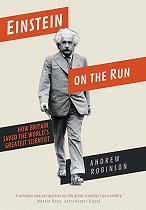
Einstein on the Run: How Britain Saved the World’s Greatest Scientist – Andrew Robinson

einsteinOn January 30, 1933, Adolf Hitler (1889-1945) became Chancellor of Germany and established the Third Reich, formed under the banner of national socialism, as the country’s ruling party. The Sturmabteilung known informally as the “Brown Shirts”, embarked on a campaign of terror across the nation persecuting opponents of the Reich and those determined to be “undesirable” of Aryan citizenship. Millions of Jews had already fled the country, alarmed by the rise of Hitler’s party and the anti-Semitism spreading like wildfire. Among those who left was famed scientist Albert Einstein (1879-1955), who never returned to the nation of his birth after his departure in 1932. And though he had left Germany, he remained on the radar of the Third Reich which moved swiftly to erase his name from Germany literature. After leaving, Einstein moved across Europe before finally settling in the United States. But what is often neglected in discussions of his life and fame is the time he spent in England as the Nazi party gained strength and war with Germany became a reality.

Admittedly, I knew little of Einstein’s life after fleeing Germany. Today he is remembered for the theory of relativity and his equation E=mc2. Both were groundbreaking events in science but while Einstein was making a name for himself in Britain, Hitler was ramping up efforts to eliminate his opponents abroad and those around Einstein remained keenly aware of the threat. Author Andrew Robinson has examined the late scientist’s time on the run and compiled a story that is both unbelievable and tragic. And though it contains biographical information on Einstein, the book was not written as a definitive account. But the information is crucial to understanding Einstein’s motives and his complicated life.

There is an incident revisited in the book that played an integral part in Einstein’s decision to leave. The murder of journalist and government official Walter Rathenau (1867-1922), served as a wake-up call for German Jews indifferent to growing anti-Semitism and a new group of rebels calling themselves National Socialists. Rathenau’s assassination remains one of Germany’s darkest moments and a pivotal moment in resentment towards Jews. Einstein knew Rathenau personally and was disturbed by his murder. The crime removed any illusions that he would be safe in Germany should Hitler gain power and ten years later, Einstein and second wife Else (1876-1936) left for good. Their arrival in England as captured by the author, shows a Britain receptive and in awe of the Germany scientist. And it is here that Einstein accomplishes some of his greatest feats. However, he was still a man without a home and as Robinson shows, no one knew where he would finally end up. The couple moved around quite a bit and, in the book, Einstein reports from multiple locations playing host to the man awarded the Noble Prize in 1921.

Though the threat of assassination is always present and one on occasion, a high possibility, the author provides valuable insight into Einstein the person. I did not know previously, how Einstein felt about Zionism and his Jewish faith. His relationship with Chaim Weizmann (1874-1952), the First President of Israel, is interesting and shows that Einstein was able to view an issue from both sides when necessary. Further, his relationships with both wives, his son Eduard (1910-1965) and stepchildren from Else are complex and reveal his shortcomings. Fans of Einstein will find these parts of the book both shocking and hard to accept but the reality is that despite his brilliance, he struggled in other aspects of his life. Frankly, we see the human side of Einstein and all his faults. But despite his personal life, he remained at the forefront of science and paved the way for nuclear fission. Interestingly, Robinson provides information about the atomic bomb and Einstein’s role that is often misunderstood. Further, the idea of nuclear fission did not belong to Einstein who was quite indifferent to his own successes. However, after the bomb’s development and use against Japan in August 1945, Einstein became an ardent opponent of its use and earned himself a spot on the subversive list of none other than former Federal Bureau of Investigation Director J. Edgar Hoover (1895-1972). I cannot say I was too surprised by this as Hoover was fanatical about “communists” and others he deemed threats to the United States.

Einstein’s stay in England was temporary and the couple eventually settled in Princeton, New Jersey. The author provides plausible explanations for the decision to leave Europe for America and the simplest reason is correct, in that Einstein needed to be far away from the threat of Nazi terror and in a place where he could find peace. America was not perfect, but it was nothing like Europe being forced to confront the growing German menace. Einstein never returned to Europe, remaining in America until his death in 1955. Today his image can be found on posters, t-shirts, websites, and other memorabilia, but there was a time when his image meant persecution and death. Hitler never succeeded in punishing Einstein, but the Nazis did confiscate everything they found belonging to him. Had they succeeded in capturing Einstein before he left, history and World War II might be quite different today. But as the saying goes, everything happens for a reason. Fans of Albert Einstein will appreciate this book.

ASIN:‎ B07XD5QKN5

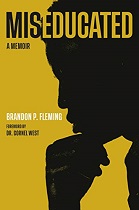
Miseducated: A Memoir – Brandon P. Fleming, Foreword by Dr. Cornel West

flemingEvery so often, a recommendation shows up in my list that catches me completely off guard. This book is one of them. At first, I was not sure what to make of it and had not heard of it previously. But after seeing the high rating, I decided I had to see for myself and now that I have finished the book, I can state with certainty that it is a true gem. As stated on the cover, the book is a memoir by Brandon P. Fleming, a former debate coach at Harvard University and the Founder & CEO of The Veritas School of Social Sciences. The school was formerly known as the Harvard Debate Council Diversity Project. And though he has found success through years of challenging work, there was a time when Fleming could have become an inner-city statistic.

The book begins with all the makings of a story about a kid who falls victim to the streets. Fleming and his siblings are being raised by a single mother enlisted in the military. Added to the mix are multiple fathers and a stepfather concerned only with himself. From the very beginning, I noted the lack of a stable family structure and the impact it had on the author’s life. By his own admission, he was a problem child but for reasons that are understandable. The section about Lucas was difficult to accept but it is a common occurrence that sets the stage for future dysfunction. Around 2007, the author’s mother receives orders to deploy with her unit as United States Armed Forces landed in Iraq. For the author, this meant a change of scenery and he soon began to spend more time in the belly of the beast: on 227th Street in the Bronx, New York. It is here that Fleming admits he learned how to craft the persona that nearly derailed all his hopes in the years to come. And his term for the form of education he learns there is jolting but also an aspect of life in the ghetto. As the author and siblings age, they are ushered through the school system sometimes without care for their development as students and individuals. The author somberly reflects that:

“I had not learned a thing since middle school, or before. I had never read an entire book. I did not know how to write essays. I knew nothing about thesis statements or citing sources. My SAT scores were so low that I was put into remedial, 100-level English and math courses.” 

As I read his heartbreaking story, I thought of the young children who are in similar situations. Fleming emerges as a prime example of how young black kids are “miseducated”. Surprisingly, Fleming advances far enough to enroll at Liberty University in Lynchburg, Virginia and has a promising basketball career. But a devastating injury changed those plans and left the author reeling and on the brink of self-destruction. And this is where his life takes a sharp turn, and the story becomes more uplifting with each passing chapter. Of course, there are setbacks, but through chance encounters with several people who influence his mind, and determination, he pushes forward. And before long, he finds a group of kids who he begins to cultivate as future debaters, giving birth to the ideas that have provided him with the platform he has today. Upon reflection, he asks this crucial question that will resonate with Black Americans:

Why is it that basketball was all I ever wanted? It’s because passion is born through exposure and affirmation.

Towards the end of the book, Fleming’s students evolve as a force to be reckoned with. And after a successful performance, he is approached with the suggestion of working at Harvard. And though I was only reading the book, I too felt elation at this point in the story. I also felt sad because a move to Harvard would mean moving away from the other young kids who need mentoring. But as Fleming explains to the young minds looking to him for guidance, they are all part of a movement. His arrival at Harvard is smooth but he soon notes that the debate program suffers from a lack of diversity. At this point, the writing is on the wall. Administrators agree and give the author the freedom to bring his vision to life and give readers the happy conclusion we patiently wait for throughout the book.

There is one part of the book that really stands out and it is the section in which he takes his first group of students out to eat. He is downcast because he cannot seem to reach them but suddenly an opportunity presents itself for debate and the light goes off in Fleming’s head. What he learns and explains is absolutely gold in the field of education and even teachers who read this book may learn something from it. Old dogs can learn new tricks.

Fleming’s story is a true rag to riches account but in no way is it standard. In ghettos across America, children remain stuck in homes that are dysfunctional and neighborhoods that are deadly. Brilliant minds are hidden due to the environment in which they live that dictates survival over anything else. Yet, that does not have to be the final word in their lives. They too can succeed but first need a path that leads from the darkness to awakening. And to drive this point home, the author sums up his experience and that of other black kids with this quote that says it all:

“Too often, Black youth, no matter how gifted or talented, miss out on opportunities because their family’s earning power is less than their white classmates’. Lack of access, not lack of ability, often keeps Black people from accomplishing what they could in a more equitable world.”

Brandon Fleming is only one person, but his story and success is a template for what can happen when brilliant minds are presented with the opportunity to create their visions and test the waters. Every action and decision do not always mean success but as he explains to one of his Harvard students, you always get back up. Highly recommended.

ASIN:‎ B08KQ3WLBG