
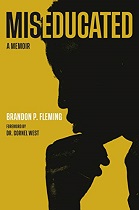
 Every so often, a recommendation shows up in my list that catches me completely off guard. This book is one of them. At first, I was not sure what to make of it and had not heard of it previously. But after seeing the high rating, I decided I had to see for myself and now that I have finished the book, I can state with certainty that it is a true gem. As stated on the cover, the book is a memoir by Brandon P. Fleming, a former debate coach at Harvard University and the Founder & CEO of The Veritas School of Social Sciences. The school was formerly known as the Harvard Debate Council Diversity Project. And though he has found success through years of challenging work, there was a time when Fleming could have become an inner-city statistic.
The book begins with all the makings of a story about a kid who falls victim to the streets. Fleming and his siblings are being raised by a single mother enlisted in the military. Added to the mix are multiple fathers and a stepfather concerned only with himself. From the very beginning, I noted the lack of a stable family structure and the impact it had on the author’s life. By his own admission, he was a problem child but for reasons that are understandable. The section about Lucas was difficult to accept but it is a common occurrence that sets the stage for future dysfunction. Around 2007, the author’s mother receives orders to deploy with her unit as United States Armed Forces landed in Iraq. For the author, this meant a change of scenery and he soon began to spend more time in the belly of the beast: on 227th Street in the Bronx, New York. It is here that Fleming admits he learned how to craft the persona that nearly derailed all his hopes in the years to come. And his term for the form of education he learns there is jolting but also an aspect of life in the ghetto. As the author and siblings age, they are ushered through the school system sometimes without care for their development as students and individuals. The author somberly reflects that:
“I had not learned a thing since middle school, or before. I had never read an entire book. I did not know how to write essays. I knew nothing about thesis statements or citing sources. My SAT scores were so low that I was put into remedial, 100-level English and math courses.”
As I read his heartbreaking story, I thought of the young children who are in similar situations. Fleming emerges as a prime example of how young black kids are “miseducated”. Surprisingly, Fleming advances far enough to enroll at Liberty University in Lynchburg, Virginia and has a promising basketball career. But a devastating injury changed those plans and left the author reeling and on the brink of self-destruction. And this is where his life takes a sharp turn, and the story becomes more uplifting with each passing chapter. Of course, there are setbacks, but through chance encounters with several people who influence his mind, and determination, he pushes forward. And before long, he finds a group of kids who he begins to cultivate as future debaters, giving birth to the ideas that have provided him with the platform he has today. Upon reflection, he asks this crucial question that will resonate with Black Americans:
Why is it that basketball was all I ever wanted? It’s because passion is born through exposure and affirmation.
Towards the end of the book, Fleming’s students evolve as a force to be reckoned with. And after a successful performance, he is approached with the suggestion of working at Harvard. And though I was only reading the book, I too felt elation at this point in the story. I also felt sad because a move to Harvard would mean moving away from the other young kids who need mentoring. But as Fleming explains to the young minds looking to him for guidance, they are all part of a movement. His arrival at Harvard is smooth but he soon notes that the debate program suffers from a lack of diversity. At this point, the writing is on the wall. Administrators agree and give the author the freedom to bring his vision to life and give readers the happy conclusion we patiently wait for throughout the book.
There is one part of the book that really stands out and it is the section in which he takes his first group of students out to eat. He is downcast because he cannot seem to reach them but suddenly an opportunity presents itself for debate and the light goes off in Fleming’s head. What he learns and explains is absolutely gold in the field of education and even teachers who read this book may learn something from it. Old dogs can learn new tricks.
Fleming’s story is a true rag to riches account but in no way is it standard. In ghettos across America, children remain stuck in homes that are dysfunctional and neighborhoods that are deadly. Brilliant minds are hidden due to the environment in which they live that dictates survival over anything else. Yet, that does not have to be the final word in their lives. They too can succeed but first need a path that leads from the darkness to awakening. And to drive this point home, the author sums up his experience and that of other black kids with this quote that says it all:
“Too often, Black youth, no matter how gifted or talented, miss out on opportunities because their family’s earning power is less than their white classmates’. Lack of access, not lack of ability, often keeps Black people from accomplishing what they could in a more equitable world.”
Brandon Fleming is only one person, but his story and success is a template for what can happen when brilliant minds are presented with the opportunity to create their visions and test the waters. Every action and decision do not always mean success but as he explains to one of his Harvard students, you always get back up. Highly recommended.
ASIN: B08KQ3WLBG
 In September 1971, reputed mobster
  On the morning of December 21, 1940, American writer
 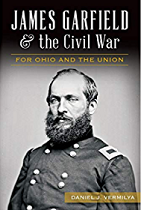 On September 19, 1881, United States President James A. Garfield (1831-1881) died in Elberon, New Jersey seventy-nine days after he was shot and mortally wounded by Charles J. Guiteau (1841-1882) on July 2, 1881. The assassin, motivated by a desire to see Chester A. Arthur (1829-1886) become president. Arthur did become the next president, but Guiteau was on borrowed time and was executed on July 30, 1882. Garfield was shot after two months in the White House and died in less than one year as president. His remarkably short tenure as president is often overlooked by history but there was far more to his story that has been taught in history classes. The story of his life is equally as intriguing as its ending and in this short but concise examination of the late president, Daniel Vermilya focuses on Garfield’s early life and his time as a Union officer in the American Civil War (1861-1865).
 In December 1963, one month after the assassination of U.S. President John F. Kennedy (1917-1963), former President Harry S. Truman (1884-1972) authored an op-ed piece in the December 22, 1963, edition of the Washington Post about the Central Intelligence Agency (CIA) and its role in America. While reflecting on what the CIA had become, he stated “there is something about the way the CIA has been functioning that is casting a shadow over our historic position and I feel that we need to correct it.” The agency had been established through the National Security Act of 1947 which was intended to both centralize and simplify national defense and the intelligence apparatus. Five years before the National Security Act was signed into law, President Franklin D. Roosevelt (1882-1945) had also addressed the need for foreign intelligence and through Executive Order 9128 on July 13, 1942, he formally established the Office of Strategic Services (OSS). And to lead the new agency, he turned to former director of the Coordination of Information (COI), the legendary William Joseph “Wild Bill” Donovan (1883-1959). Though he was never director of the CIA, Donovan is credited as being the father of intelligence. Author Richard Dunlop examines Donovan’s life in this intriguing biography and historical account of how the intelligence community came to exist.
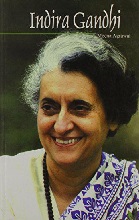 Few places are as fascinating as the nation of India. Its constitution officially recognizes twenty-two languages. English continues to serve as a critical method of communication in the business sector. Natives will proudly tell you that India is one of the most diverse countries in the world. Yet, despite the diversity, social issues such as poverty, corruption, and overpopulation are a reminder that India’s long struggle for success is far from over. Recently I was reading only and came across the name of Indira Gandhi (1917-1984), the former prime minister who was assassinated on October 31, 1984. Her father, Jawaharlal Nehru (1889-1964), served as the nation’s first prime minister after India gained its independence in 1947. Both father and daughter left behind legacies that remain with India to this day.
 On June 3, 1968, artist, and film director Andy Warhol (1928-1987) was shot and severely wounded as he talked on the telephone in his office located at 33 Union Square West in Manhattan. He was rushed to the hospital and declared clinically dead by doctors before being resuscitated. He underwent grueling surgeries that left a myriad of scars across his torso and required him to wear a surgical corset for the remainder of his life. Hours after the shooting, a young woman walked up to a police officer in Times Square, handed over her weapons and confessed to shooting Warhol. She was arrested and booked for the crime. The public soon learned the name of Valerie Solanas (1936-1988). Today she is best remembered as the woman who shot Andy Warhol. Her actions were horrific and nearly took Warhol’s life, however her story is not as widely known. Breanne Fahs decided to change that and find out the truth about Solanas’ turbulent life. This biography explores the life of Solanas, her relevance to the radical feminist movement and her descent into anarchy after shooting one of the biggest pop icons in history.
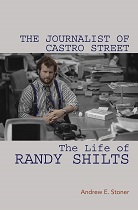 The first time I watched the HBO film “
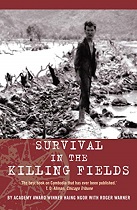 On March 25, 1985, the 57th Academy Awards ceremony was held at the Dorothy Chandler Pavilion, Los Angeles. During the ceremony, the category of best supporting actor was called, and the winner was Haing S. Ngor (1940-1996), a doctor born and raised in Cambodia, who had survived the Khmer Rouge dictatorship under the notorious Pol Pot (1925-1998). Ngor had starred as Cambodian journalist Dith Pran (1942-2008) in the 1984 film
 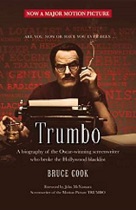 On March 9, 1954, CBS journalist Edward R. Murrow (1908-1965) prepared for a scheduled broadcast of the television program “
 FREETHINKING BIBLIOPHILE
You must be logged in to post a comment.