
 Martin Scorcese’s recent film ‘The Irishman’, reunited the legendary director with ‘Goodfellas’ stars Robert Dinero and Joe Pesci. Al Pacino also joined the cast, taking on the role of former Teamsters President James “Jimmy” Hoffa (1913-1975). The movie is great cinema and Scorcese delivers the goods with an all star cast. However, Hollywood is known to take liberties with films and here is no different. In fact, there is a lot of Frank Sheeran’s (1920-2003) story that is up for debate. His book ‘I Heard You Paint Houses‘ is an interesting read and served as the basis for the film. I had read Sheeran’s book prior to creating this blog and thought that while it was a good story, there were many claims therein that needed deep cross-referencing for validation. Sheeran is no longer here and cannot defend himself or answer the large number of questions undoubtedly generated by the release of the film. Al Pacino plays the role of Hoffa with the energy that we have come to expect from him, bringing the former Teamsters boos back to life on the silver screen. But there was more to Hoffa than is shown in the film. And it is here in this short but eye-opening book, that Hoffa tells his own life story to Oscar Fraley
The book was being written at the time of Hoffa’s disappearance. As a result, the story ends about a few weeks prior to July 30, 1975 when he told his wife Jo that he had a meeting with Anthony “Tony Pro” Provenzano (1917-1988) and Anthony “Tony Jack” Giacalone (1919-2001). The book is really an autobiography which Hoffa had intended to finish once he regained the Teamsters presidency. Although he never finished it, what he did write is highly informative. He takes us back to his childhood in Brazil, Indiana, highlighting the rough way of life that developed in the wake of the Great Depression. His words are frank and straight to the point. For those who have always wanted to know how he rose to power, he lays it out here, recalling his immersion into the world of unions and ascent in the Teamsters, which became the most powerful union in America under his guidance.
From the book, it is clear that Hoffa was born to be involved with unions. And despite several brushes with violence that could have killed him, he never wavers from the goals set by the union in support of its workers. The battles between employers and unions still place to this day and if Hoffa were alive, I am sure he would be right out front leading the way. In the book, things are going well with the Teamsters until the arrival of his arch enemy Robert F. Kennedy (1925-1968). It is at this point in the book that the story takes a sharp turn. To say that Hoffa and Kennedy were enemies is an understatement. There is no love lost between the two and here Hoffa explains how and why he found himself on Kennedy’s radar. And some readers may even wonder, was Hoffa really guilty of the charge he was convicted of? Or was he the victim of an ego trip of an Attorney General often ridiculed as being in his brother’s shadow? There is compelling evidence that both are true. Hoffa presents the case for readers to reach their own conclusions. One thing I can say is that I have rarely seen a feud as tense as what is found in this book.
Kennedy is not the only person who draws Hoffa’s wrath. In fact, he unloads on his successor Frank Fitzsimmons (1908-1981) and Charles “Chuckie” O’ Brien, his former protege. Hoffa does not mince words and makes it clear that he was dead set on purging the Teamsters and returning to power as its president. Tragically, his intentions never came to pass and his disappearance remains unsolved to this day. There are many theories about what did happen to him that day. Some are plausible while others have no basis in reality. Perhaps we may never know what really happened to Jimmy Hoffa but I am sure that whoever was responsible for his disappearance intended it to be that way. Tony Pro and Tony Jack are mentioned in the section about his disappearance but aside from that, their names appear briefly throughout the book. And to be clear, there is no smoking gun here regarding his disappearance. However, I do think what Hoffa says, offers some insight into why he disappeared. Readers that are well versed on the subject will probably agree.
If you loved the Irishman and are curious about the life of James Riddle Hoffa, then this book is a must read.
ASIN: B07ZJRTP5Y
 When I read the synopsis for this book, I was a bit surprised. Stories by defectors from North Korea are not uncommon, but the name of the author caused my interest to rise. The surname is clearly Japanese but the connection to North Korea was the part that pulled me in. Masaji Ishikawa was born in Japan to a Japanese mother and Korean father. In 1959, the Japanese Red Cross Society and the Korean Red Cross Society secretly negotiated a “Return Agreement”, allowing any native born North Koreans living in Japan to return to their homeland. The General Association of Korean Residents in Japan, then initiated a repatriation campaign which reached the Ishikawa family. His father was convinced by the league to return to North Korea in 1960, the family moved to North Korea under the illusion of a bright and prosperous future.
 A few days ago I was browsing recommendations on Amazon and came across this book whose title caught my attention. I have not read anything on Nazi Germany in quite some time so I decided to take a closer look. I was unaware of Hans Baur (1897-1995) and his relationship with Adolf Hitler (1889-1945). As the Fuhrer’s pilot, I knew Baur would have very intimate knowledge of Hitler’s life behind the scenes and the book does not disappoint. However, it should be noted that it is really Baur’s story with Hitler filling many of the pages for obvious reasons. The story is interesting but I could not help feel that Baur left many things out. Readers may also feel the same way for reasons that will be discussed below.
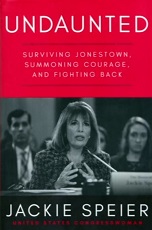 Forty-one years ago, over nine hundred men, women and children died at the People’s Temple compound in Jonestown, Guyana. Their charismatic and paranoid leader, Jim Jones (1931-1978), died of a gunshot wound to the head, avoiding the lethal liquid concoction given to a majority of his followers. Disturbingly, many of the deaths were not in fact suicide, but outright murder. Children and infants were forced to ingest the deadly brew that took their lives in a matter of minutes. The events of November 18, 1978, concluded the final tragic chapter in Jones’ tyrannical reign.
 In 1955, Warner Brothers released ‘Rebel Without a Cause’ starring the late film icon James Dean (1931-1955). And though the film cemented Dean’s legacy in Hollywood, the actor tragically died the month before the film’s release in a violent car crash while en route to Salinas, California. In death, Dean became the poster boy for the new sense of rebellion sweeping across America. In the film, he was joined by actress Natalie Wood (1938-1981) who played the role of Judy and Sal Mineo (1939-1976) in the role of Plato. The film was a hit and is considered a classic. The enormous success enhanced the careers of the three stars and Mineo quickly became one of Hollywood’s hottest new stars. The Italian kid from the Bronx had arrived with charming good looks and acting skills to match. For the next twenty-one years, he would leave his mark on Hollywood and television before his tragic departure on February 12, 1976. In just thirty-seven years, he had lived what could be considered for some, a lifetime. I knew of Mineo before reading this book but there was much about his life that I was completely unaware of. This book came up as a recommendation and I decided to see for myself, why Mineo is still revered.
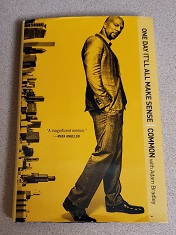 Some of you known him as a rapper, others know him as a film star. To be fair, he is both of them and a lot more. Personally, I knew of Common for years before he broke into Hollywood. The star of ‘John Wick 2‘ and ‘Run All Night‘ earned his stripes on the underground rap circuit before going mainstream. I saw him perform live at the Brooklyn Academy of Music and it was a show for the ages. The electricity was in the air and the place erupted as soon as he stepped on stage. He was larger than life and rightfully so. I saw this book in the lobby of my building and instantly grabbed it. Admittedly, I was unaware of this biography but thoroughly intrigued to see what he had to say.
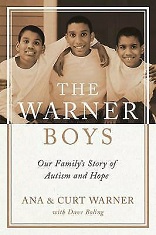 When I first heard of this book, I was slightly puzzled. As a fan of the NLF, the name Curt Warner was very familiar to me but it turns out that I had the wrong person in mind. And I am willing to wager that a large number of people who come across this book will also make the same mistake and instead think of the NFL player Kurt Warner, who once played for the New York Giants. Both are retired but only one has a family of four that includes twin sons born with autism. Many of us many know someone who struggles with autism. And others may be teachers who have taught autistic students. Regardless, we can all agree that it is a condition which requires enormous patience and understanding. This is the story of Curt and Ana Warner, two parents faced with the monumental task of raising twin sons born autistic while maintaining family life that includes tow other children.
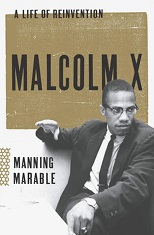 Last week, my mother and I had a discussion about the actor Denzel Washington, who is widely regarded as one of Hollywood’s greatest stars. For both of us, his role as civil rights figure Malcolm X (1925-1965) in 1992 biopic ‘Malcolm X‘, was a shining moment in which he showed the world his talent as an actor and Spike Lee’s known skills as a powerful filmmaker. I had been contemplating my next book to read and came across this biography by late author Manning Marable (1950-2011). I had previously read
 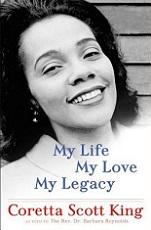 I find that as I age, I am more focused on historical events that changed the course of America, in particular from Black Americans. It has been said that in order to know where you are going, you have to know where you come from. For millions of Black Americans, the question of identity has been a difficult one to answer. Some prefer the term African-American while others prefer Black-American. And there are some who prefer Afro-American or just simply Black. Regardless of the label, there is a shared history of pain, struggle and the never ending goal for full integration American society. Over the past fifty years, tremendous progress has been made in the United States but there is still much work to be done. But one of the greatest things about America is our ability to correct and learn from mistakes that have lingered for too long. The young generation of today lives in a world far removed from only twenty years ago. Their world is one in which technology is ingrained and life moves at an even faster pace. My father often thinks back to the period of integration and the times where it seemed as if America was going to tear itself apart. Even to him, as a kid it seemed as if the accomplishments by Black Americans over the years were just a pipe dream.
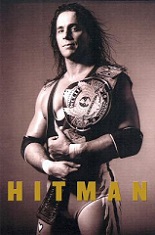 Baseball has long held the title of America’s pastime. The NBA and NFL have respectable followings of their own. However there is also the world of sports entertainment that has been made famous by the phenomenon of professional wrestling. My father has always called it “rassling” and when I walked around the house doing my best impersonations of the stars of what was then called the World Wrestling Federation (“WWF”), he always shook his head in laughter. In spite of the wisdom he possessed about the spectacle I was obsessed with, not once did he ever try to dissuade me from watching the heroes that I came to believe in. And when he and my uncle took my brother and I to Madison Square Garden to see Hulk Hogan live in person, it was if we had been transported to wrestling heaven. As I aged, my view of wrestling changed and so did the characters I found to be standouts. Among them, was Bret Hart, known as the Hitman and leader of the Hart Foundation, the heel group that had an enormous following of fans. When he retired not long after suffering a devastating concussion in the ring, I and many fans looked back on the many matches he took part in with sadness knowing he would never set foot in the ring again. I always wondered what really went on behind the scenes and when I saw that he had written this autobiography, I knew that I had to read it. And I am happy to report that the book did not let me down and it is one of the best books about the wrestling industry that I have ever read.
 FREETHINKING BIBLIOPHILE
You must be logged in to post a comment.