
 Those of you who follow my blog probably know by now that I have covered quite a number of books regarding Northern Ireland the conflict known as “The Troubles”. My curiousity with the conflict in Northern Ireland stems partly from my love of history and partly from my visit to Ireland in 2016. I sought to fully understand the battle being waged by Republicans to unify the country and the opposition mounted by Loyalist who remain in support of British rule. Author Tim Pat Coogan has written of the 1916 Easter uprising, the lives of Michael Collins (1890-1922) and his Twelve Apostles, and others who remained focuses on Irish independence from the Crown. This book is his own memoir of his life in Ireland, time as a member of the Irish press and author of several significant books one of the world’s longest running feuds.
Coogan opens the book by recounting his family’s involvement in the development of tensions between Republicans and Loyalist. His grandfather once belonged to the Royal Irish Consabulary (RIC) and his father Edward worked on behalf of Republican forces even being tasked with organizing an unarmed police force during the Irish Civil war which erupted in the wake of the establishment of the Irish Free State. As a child, he grew up in Monkstown, County Dublin, far removed from the dangers of the north. However, fate would take him back to the Northern Ireland and land him right in the mix of the Troubles which would consume his writing material much later in his life.
Readers should be prepared to learn a lot about Irish history. Coogan has written extensively on the conflict and in particular the life of Eamon de Valera (1882-1975). As a journalist, he would form a working relationship with de Valera’s son Vivion (1910-1982), whose actions as owner of the Evening Press, played a critical role in the path Coogan’s life took over the years. The Irish press, of which Coogan was a part, figures prominently throughout the story as the Troubles rage and Ireland finds itself in the middle of fierce debate over aborition, divorce and even contraception. Coogan and other journalist walked fine lines as they tried to remain ahead of the competition and get the jump on new stories. His experience and zest for journalism took him to foreign nations, including the United States and Vietnam, where he was able to witness the war in person to report back about what he saw in comparison to what politicans in Washington were being told from commanders in the field.
The story is a roller coaster ride that shows the organized chaos of journalism and printing. Coogan is fully embroiled in this world while being married and the father of six children. As the Troubles heat up, the press is forced to take notice and Coogan remarks in the book that:
“another form of cancer that was to affect me profoundly during my career as editor, as it did the political life of the country as a whole, was the Northern Ireland situation“.
At the time the Troubles erupted, Coogan could have never imagined that one day he would be one of the most respected authors on the subject. The book is a not mean to be a complete history of the Troubles but rather an explanation of key events that pushed the two sides in Ulster province to engage in violence.
Some have accused Coogan of being Republican friendly in his writings. While his books do cover the Troubles mostly from the Republican view, I have found that in the books I have read to date by him, that he has so far provided balanced and detailed accounts of what actually happened. What is clear in this book is that his relationship with Vivion de Valera was strained by the time it ended and he came to realize many truths about de Valera which he reveals here. As part of his job, he was required to meet with the IRA which included figures such as Mairead Farrell (1957-1988), Joe Cahill (1920-2004) and Brendan Hughes (1948-2008). His visits to Belfast and the prison maze at Long Kesh helped form the discussion of the Troubles that he wrote after his final parting of ways with de Valera.
The demise of the Evening Press and affiliated publications are also examined in detail, showing the mis-steps and complex nature of de Valera, who was unable to see the larger picture. As one would expect, the long hours and story chasing proved to be a heavy burden on Coogan’s personal life. This part of the book is tough to read but not completely unexpected. In fact, the stage is set early in the book as Coogan describes the different lifestyles he and his wife lead. The entry of other figures into his life, helped seal the door on other parts and the complicated situation is explained by Coogan.
In spite of everything that happens, he did lead an incredible life which is sure to leave you with as much Irish history as any textbook on the market. Coogan is a wealth of knowledge on the Troubles and the history of the Irish Republic. He remains one of the best in the business and his books on on the conflict will surely stand the test of time. This is his story and that of Ireland, composed of the good, the bad and the tragic. Highly recommended.
ASIN: B00GVG173Q
 When this book came up as a recommendation, I thought back to the movie ‘
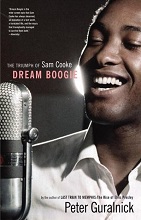 If you have ever listened to a song by Sam Cooke (1931-1964), then I am sure you can agree that no one is ever the same after hearing his voice. My parents and grandparents played his albums and knew many of his songs by memory, singing them with as much passion as Cooke did while on stage. For millions of black Americans, Sam Cooke was the best singer of his time and his death on December 11, 1964, sent music fans into mourning as one of the most beloved singers in America was laid to rest. Today, almost fifty-six years after his death, the songs he produced sound as if they were recorded yesterday. In fact, earlier today, I listened yet again to ‘A Change is Gonna Come’ which many people believe to be his best recording. Spike Lee opted to use it in the 1992 film ‘Malcolm X’, in the scene where Malcolm (Denzel Washington) walks toward the Audubon Ballroom and his fate after parking his car. Cooke’s music has stood the test of time and will continue to do so. But just who was the real Sam Cooke?
 On Easter Sunday, my mother would have my brother and I watched the epid Hollywoof Film ‘The Ten Commandements’. It is one Chartlon Heston’s (1923-2008) best roles and his agtonist in the film, Yul Brynner (1920-1985), delivers an equally compelling performance a Ramesses II. In fact, it remains the film by which I have always recognized Brynner. However, like most great stars of his era, often called the “Golden Era of Hollywood”, there was more to his life than the public was able to see. His son Rock Brynner decided to turn memories of his childhood into this memoir of the time he spent with his father, one of Hollywood’s leading men.
 Many years have passed since I studied philosophy in college. Names such as Kant and Freud were part of my regularly assigned reading. However, one name I was not particularly exposed to was Carl Gustav Jung (1875-1961), the late Swiss psychiatrist and psychoanalyst who is widely held high regard as a pioneer in the field of psychology. I saw this biography on Amazon and decided to take another look at his life and beliefs. When starting the book I had no judgments about Jung but was sure I would learn a new way of looking at the human mind and what lies behind our thoughts and actions. And while I did find some very interesting concepts put forth by Jung, there is far more to the book than meets the eye.
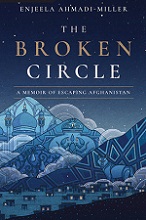 On December 25, 1979, the armed forces of the Soviet Union invaded Afghanistan in support of pro-Communist forces engaged in a power struggle with insurgent forces known as the mujahideen. Soviet forces marched into the capital city of Kabul and later succeeded in staging a coup in which President Hafizullah Amin (1929-1979) was removed and replaced with Soviet loyalist Babrak Karmal (1929-1966). Thousands of Afghan citizens were rendered homeless as bombs fells and brutal fighting produced collateral damage. For Enjeela Ahmadi-Miller, the war changed her life in ways she could have never imagined.
 In the state of South Dakota, the Pine Ridge Reservation is home to the descendants of the Oglala Sioux Native American tribe. The children of Pine Ridge aspire to enroll in the Red Cloud High School with hopes of attending college. Many of their parent, suffer from alcoholism, a plague that has followed the Oglala Sioux since their first encounter with white settlers in the early 1800s. Poverty and discrimination have resulted in depression and despair which has yet to be fully addressed. The true story of the Native American experience remains misunderstood and in some cases neglected. They current day Oglala are the descendants of indigenous people whose home was a North American continent in which life was simple yet effective with languages largely unwritten and passed down through oral teaching. The Sioux were only one of hundreds of tribes, some of whom are now extinct such as the Canarsie Indians. Chief Luther Standing Bear (1868-1939) was born in Rosebud, South Dakota into the Oglala Sioux tribe and this is his story of his life and his people.
 On September 22, 1980, the Iraqi military marched into neighboring Iran under the orders of President Saddam Hussein (1937-2006). Tensions between Hussein and Ruhollah Khomeini (1902-1989) had been brewing over control of the Shatt al-Arab river, Iraqi nationalism and Khomeini’s calls for the Ba’ath party to overthrow the Iraqi government. The conflict raged for eight years before a cease-fired was signed in August, 1988. It is estimated that the war resulted in the deaths of nearly 1.5 million Iraqis and Iranians. On both sides, villages were destroyed, leaving thousands homeless and families permanently separated. Children as young as thirteen were conscripted to serve, becoming trained killers before the age of twenty-one. After the cease-fire, prisoners of war remained held in prisons on both sides before they were slowly repatriated. This book is the story of two of those prisoners who survived the war, living to tell their story about the war that changed their lives.
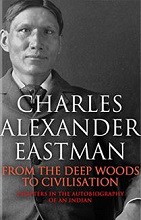 The history of Native Americans was for many years, untold and in some cases omitted. the trail of tears is just one example of the systematic process of relocation enforced by the United States Government as America continued to expand. The natives were seen as uncivilized in comparison to their American and European counterparts. The natives would readily say their lives were uncomplicated and simple. Many resisted the influence of soldiers on their land and fought to the death to preserve their homes. Others did not resist and accepted the lifestyle and religion of the white man. Dr. Charles Alexander Eastman (1858-1939) was one of those who migrated from one world to another and in this short but interesting autobiography, he recalls his life and his path from the deep woods to civilization.
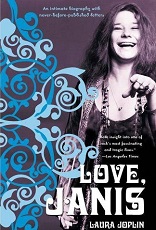 On October 4, 1970, singer Janis Joplin (1943-1970) died from a lethal combination of heroin and alcohol at the Landmark Hotel in Los Angeles. The building is still there but has been renamed the Highland Gardens Hotel. In death, she joined the 27 Club, a group of famous stars who all tragically died at the young age of twenty-seven. In stardom, she had come to symbolize the culture change taking place across America as the ideals of the 1950s and 1960s were replaced by the liberated generation of the 1970s. To some, she was everything wrong with the “hippie” culture and to others she was inspiration and an example of someone who came from humble beginnings to leave their mark on the world. To a small group of people, she was simply Janis, daughter and older sister. This book is a look at her life from the eyes of her younger sister Laura, born six years after her famous sibling.

You must be logged in to post a comment.