
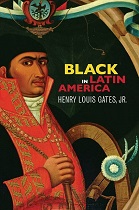
In March 2018 I visited the South American nation of Uruguay, located to the east of my beloved Buenos Aires, Argentina. The visit was my first and as I walked down the streets of Montevideo, I found myself a witness to an impromptu dance celebration in which Afro-Latino culture was on full display. The performance was brilliant, and following that surprise, I visited a museum dedicated to the garments worn during carnival. I also learned about Rubén Rada, a multi-talented Uruguayan performer. I felt a sense of pride at seeing people who would pass as Black Americans displaying their cultural heritage. But I also asked myself, why was I so surprised? It is no secret that Black people can be found all across Latin America. Further, I can trace my own family’s roots on my father’s side back to Central America. And my father has told me more than once that Spanish was spoken by the older generation when he was a kid growing up in Brooklyn, New York. When I saw this book by Professor Henry Louis Gates, Jr., I decided to pick it up and see what was inside. What I found is a valuable tool in understanding world history and the complexities countries struggle with to this day.
The book is presented in a different format than might be expected. We follow the author as he travels around Latin America, meeting scholars and historians who do their best to answer his questions about the concept of race in countries where official labels have been removed. The past is always prologue, and to understand things today, Gates through the help of those being interviewed, takes us back in time when the Spanish Empire perfected the process of colonization. We make stops in Brazil, the Dominican Republic, Haiti, and even Mexico, learning how colonization shaped the culture and policies. Revolutions broke the shackles of Spanish rule but sadly, the matter of color did not go away as we learn through the speakers in the book. And if there is one thing that is constant, it was that in every country, Afro-Latinos continue the struggle for recognition and advancement. But not all is dark in the book. In fact, there are bright moments all throughout the story as the feats and accomplishments of historical figures come back to life, highlighting diversity and resilience across Latin America.
No travel memoir would be complete without food and that applies here. Gates makes sure to let us know about the cultural delights across Latin America as he becomes a guest to individuals whose intellect and actions which make exploration a necessary tool in broadening the mind. The history we learn is incredible and will change the way you view Latin America. But there is an iron that I could not ignore while reading the story. Latin American nations, in an effort to “confront” racism, embraced the elimination of ethnic labels. However, as we see in the book, that decision had an effect they did not anticipate which continues to this day. On the positive side, the acknowledgment of Afro-Latino heritage continues to grow, and as I have seen with my own eyes, Latino is not a monolith. I have shared meals, drinks and sleeping quarters across Latin America with people of all shapes, sizes, and skin colors. And in those moments, they were my brothers and sisters or as they would say “nosotros somos hermanos”. In this story, Gates is the brother of another mother who learns things about Latin America that leave him both shocked and with more questions.
As I read, I found myself enthralled with the people the author meets who are all beautiful people. Their knowledge is surreal and through Gates, we learn history either hidden or omitted. Brazil is a special stop as the country contains the largest Afro-Latino population of any Latin American nation but the countries which caught my attention the most were Haiti and the Dominican Republic. The latter I have visited multiple times but have never traveled to its western neighbor. As I write this blog post, Haiti remains locked in the vice grip of gangs who seized control of the country while acting Prime Minister Ariel Henry was on a trip to Kenya. He has agreed to step down as a “transitional council” is completed to restore order in Haiti. Gangs have warned that any movement without their consent will result in further anarchy in Haiti. I hope that peace prevails, and Haiti can find a path forward. The Dominican Republic has secured its borders and air space and drawn criticism for sending Haitians back across the border to their country. But underneath the surface, these two countries have a long history and Gates dives into it, providing a crash course on the history of Hispaniola.
Gates does a respectable job of asking tough questions, and also gets multiple opinions, sometimes from taxi drivers and bystanders on the streets. The answers vary, and show that within Latin America, things are far from black and white. In fact, there are many shades of grey. And a full discussion on the history of Hispaniola would require a book several times longer than this one. But what Gates provides is enough information, paying close attention to the dates and iconic figures who changed Latin American history. Seasoned travelers, historians, and readers from the countries he visits will know many of the things, if not all, that he writes about. But for readers who have never traveled to Latin America, this book is a primer on cultural aspects that are both insightful and sometimes uncomfortable. But issues can only be resolved if they are confronted.
Currently, change is spreading across Latin America as people have reached their limits with poverty, corruption, ineptitude and political instability. Chile continues its mission to full replace its constitution. Argentina elected a new president who is sending shockwaves across the country. In Peru, the government continues to face mounting dissention. And in Brazil, a former president is facing accusations of falsifying Covid-19 data and having plotted to subvert an election. This is only a sample of the list of places currently in the midst of unrest. Change is coming, but any improvements that occur should include all Latin Americans regardless of what they look like. Progress is slowly being made but there is still work to be done. And despite the long-lasting effects of Spanish colonialization, understanding and acceptance of ancestry will continue to grow as technology advances and history is revealed.
In the summer of 2017 while on a trip to Miami, Florida, a fellow traveler visiting from Puerto Rico struck up a conversation with our group and told me “you and I are brothers, we share the same bloodlines”. Others in the group were surprised because the two of us had quite different appearances. But what I understood is that he was acknowledging the island’s African and Taino legacies, which remain crucial parts of Puerto Rican culture. I thoroughly enjoyed reading this book in which the story never loses its pace. Once Gates hits the ground, he is off to the races, exploring Latin America and all that it has to offer. The title is eye-catching, but I can assure you that the book is not a “rage against the machine” or an attempt to paint Latin America as a dark and unforgiving place. In fact, whether you are Black, White, Hispanic or other demographic, you can find something of value in this book. History is not always pleasant, but it does teach. And here we are the students who must learn history that can help plan the future. Highly recommended.
ASIN : B005C9GNTQ
 There is a saying that behind every great man is a great woman. Truth can be found in that statement, and I would also add that sometimes great women can stand alone. One definition of mythology is that it is a widespread belief or assumption that has grown up around someone or something. Regarding the Mexican female soldier known historically as the “Soldadera”, this is undeniably true. Their role in history of often obfuscated or unknown outside of Mexico. However, in Mexican history, they earned a well-deserved place that cannot be overlooked. But when exploring history, it is imperative to separate fact from fiction, and that is exactly what author Elizabeth Salas has done here in this book that examines the Soldadera and her role in Mexican society.
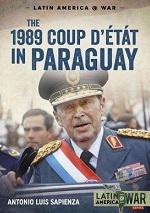 In the Colombian capital of Bogotá, protests which began on April 28 have increased and has resulted injuries to more than eight hundred people. The demonstrations are the result of public frustration with the country’s economic crisis that has been accelerated by the Covid-19 pandemic. The country has a long history of social unrest and what is taking place today is a scene common across Latin America, a region familiar with political and social unrest. The issues that have plagued Latin American nations have been compounded the by tyranny of right-wing dictators that solidified their power in the wake of World War II. On May 4, 1954, the Commander-In-Chief of the Paraguayan Army, Alfredo Stroessner (1912-2006), led a coup d’état that placed him in power of the small South American nation for more than thirty years. In 1989, he was removed in another coup d’état that return a sense of democracy to the country. Author Antonio Luis Sapienza is a native of Paraguay and here he recalls the reign of Stroessner and its impact on his nation.
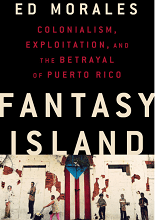 Those of us who have traveled to Puerto Rico and have seen the island outside of San Juan, known why it is called the island of enchantment. There is no one word explanation for Puerto Rico and I firmly believe that it is a place you have to see to truly understand. Several years have passed since my last visit to the island but upon resolution of Covid-19, I do plan on returning to the place that holds a special place in my heart. Hurricane Maria arrived in Puerto Rico on September 20, 2017, and the devastation was nothing short catastrophic. The storm’s wake revealed the underlying infrastructure in dire need of upgrade that was unable to cope with the hurricane’s power. The electrical grid began to collapse, roads became blocked and residents had to rely on each other to survive each day. Currently, the island is still recovering from the storm’s effects and the Trump Administration’s response to the storm is seen by many as subpar. Some might call that a euphemism but I always refrain from coming as political in any posts. Further, a political discussion can be found within the pages of this incredible book that explains clearly and thoroughly what went wrong with Puerto Rico from the moment the United States launched its invasion in 1989. And I believe that the book will leave you with a very different view of the island’s problems and a range of emotions about how it reached its current state.
 On March 24, 1976, Army Commander General Jorge Videla launched a successful coup against the government of Isabel Peron. The coup marked an end the reign of the Peronist party, universally known from the era of former President Juan Perón (1895-1974) and wife Eva (1919-1952). For many Argentines, the departure of Isabel Peron was a sign that perhaps the country would truly be on the road to democracy. In fact, Berta observes the occurrences and remarks:
  On May 12, 1898, the United States Military invaded the island of Puerto Rico, the Caribbean island once under the control of the Spanish Empire. The occupation by the United States ended hopes of an independent Puerto Rico, the dream of Dr. Ramón Emeterio Betances Alacan (1827-1898) whom author Armando Pacheco Matos calls the “Father of the Puerto Rican Motherland”. Betances died in Neuilly-sur-Seine, France on September 16, 1898, and did not live to see what would become of the island he loved. Had he lived, he would have been appalled at the annexation of Puerto Rico by the United States and its designation as a commonwealth. Betances’ goal from the start was complete independence of Puerto Rico from the bruality of the Spanish empire. Today, his name is rarely mentioned but if we want to have a discussion about Puerto Rico’s history, he must be part of the conversation. To understand why, it is necessary to read this book which captures Betances’ life and how it impacted the history and culture of Puerto Rico.
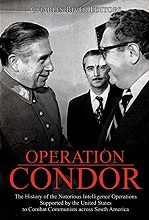 History has many dark secrets that some have wished remained hidden from the official record so that the history that has been portrayed remains sanitized and above reproach. But it is also said that what you do in the dark always comes to light. In the wake of the coup that saw the overthrow of Chilean President Salvador Allende (1908-1973) on September 11, 1973, the country was placed in a vice grip by his successor, Augusto Pinochet (1915-2006), who commenced a program of retribution against enemies, activist and those “suspected” of being part of the opposition to the new government. His regime was marred by human rights violations for which he was arrested by British Police in England on October 17, 1998. Pinochet was extradited back to his native Chile but never stood trial for his actions. He died on December 10, 2006 of congestive heart failure and pulmonary edema. His death marked the end of legal action to bring him to justice but it did not stop the prosecution of others who were complicit in the horrific actions that took place in the aftermath of the coup. Researchers continued to investigate Pinochet’s actions and those of fellow dictators in Argentina, Brazil, Paraguay and Uruguay. During one such expedition in Paraguay, a trove of documents were uncovered that shed light on a joint program created by several neighboring countries to track down those deemed enemies of the state with the purpose of execution. The program is known as Operation Condor and here Charles River Editors provides a concise summary of how and why the program came into existence.
 I still remember the video footage taken during the live testimony of Lt. Col. Oliver North (Ret.), as Congress sought to unravel interconnected covert operations that revolved around Iran, Israel and Nicaragua. North appeared on television in full military dress, earing the sympathy and admiration of a large segment of American citizens. There were some who felt he should have been incarcerated and that his actions were a dishonor to the very uniform he had on. Regrettably, his testimony did little to help fully understand what had really taken place. And even my father who follows politics and news religiously did not fully understand what had taken place. Wh
 For the first time in a long time, I found myself emotional and angry as I finished this book about the relationship between the United States and the military dictatorship in El Salvador during the small Central American nation’s civil war in the 1980s. I had expected the book to be a tough read and contain many facts that would be both uncomfortable and upsetting. But I admit that I was not prepared for what I learned. This is not the first book I have read or reviewed regarding El Salvador. There are many other books that are very good but take different approaches to the subject matter. It might be fair to say that the other books were a primer for what I was to learn here in this mind-blowing and deeply troubling book by Raymond Bonner, a former Marine who served in Vietnam and current staff writer for the New York Times.
 If you have visited the Caribbean island of Puerto Rico, then you know very well why it is called the “Island of Enchantment”. It has a mystical feel to it and attracts thousands of tourist everyday. The presence of the United States is found across the island, reminding the visitor of the territory’s status as a commonwealth. Regardless, Old San Juan is like a step back in time several hundred years earlier as European explorers under the command of Christopher Columbus (1451-1506) make their way to the new world. The history of Puerto Rico is often misunderstood or unknown. The American occupation and the events that followed still ring fresh in the minds of Puerto Ricans both on the island and across the continental United States. But for a large number of people, the history of Puerto Rico prior to American intervention is often a mystery. This book by Rudolph Adams Van Middeldyk addresses that very topic, providing a true history of how Puerto Rico came into existence and why it ended up in the possession of the United States.
 FREETHINKING BIBLIOPHILE
You must be logged in to post a comment.