
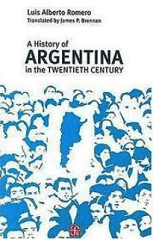
 On April 6, 2017, The Global Confederation of Labor (CGT) conducted a one-day general strike in protest of the policies of the administration of President Mauricio Macri. (1959-) Inflation, high taxes, low wages and job cuts have constrained the people of Argentina into an economic vice grip as the president attempts to steer the country away from a looming economic crisis. The strike is just one in many that have taken place during the last one hundred years in one of South America’s most popular countries. In July, 2017, I had the privilege to visit Buenos Aires, the city that has been called the Paris of South America. In July of this year I will return to the nation that is home to world-famous steaks, milanesa, wine, asado and dozens of culinary delights that make the heart flutter and the mouth water. I do not know what the political climate will be like when I visit but I can be sure that the people of Buenos Aires will show me the same hospitality that they did in the past and in the process help to create memories that will remain with me for the rest of my life. My favorite Argentine presented this book to me as a gift, a gift that keeps on giving. This book is a history of the Argentine Republic during the twentieth century. And what is contained in the pages of this book is essential in understanding modern-day Argentina. James P. Brennan has translated the work of Luis Alberto Romero (1944-), who became a Professor of History at the University of Buenos Aires in 1967. The book is written as only a professor could but presents the reader with a wealth of critical knowledge that is invaluable.
The story begins towards the end of the 1800s as Argentina sees an influx of foreign immigrants, a trend that continued forming the blend of culture that became a signature to this day. Politically, the nation is still in early stages at attempts to embrace democracy. In 1916, the course of the nation changed forever with the election of Hipólito Yrigoyen (1852-1933), the “father of the poor” and co-founder of the Unión Cívica Radical. He is seen as a reformist and one of the nation’s best leaders. He was succeeded by Marcelo Torcuato de Alvear before being elected for a second time in 1928. On September 6, 1930, he was deposed in a coup by the military, a trend that would continue for decades to come and cast a dark light on the future of Argentine politics. Several military officials followed and assumed the office of the presidency. But in 1943, Argentina’s history was forever changed once again with the assumption of power by the late Juan Perón. His reign over the nation, subsequent political activity up until the time of his death and the party that bears his name, became permanently fixed in Argentine politics making it extremely hard for opponents of the party to exist as they attempt to transform society.
While the story of Argentina is complex and volatile as shown intricately in the book, there were other players involved in the development of the country. The United States and Great Britain played critical roles in Argentine society in more ways than most Americans or Brits may be aware of. Personally I learned a few things about my own government’s actions in Latin American and in particular Argentina that help explain how and why the nation still struggles with its economy. When President Barack Obama visited Argentina in February, 2016, it was crucial step in repairing relations to two nations that were once more closely aligned. Moving forward, it is hoped that both countries continue the effort and solidify a growing bond that will benefit both parties. But in order to do so, it is necessary to revisit and reconcile the past not only with America but with England as well. The conflict over the Malvinas Islands, instigated by then president Leopoldo Galtieri and the rise and fall of the export of beef, are dark moments in Argentina’s history that are examined in detail in the book.
The role of the military is not overlooked and throughout the book, its presence is continuously felt as one president after another is deposed and replaced by the next general in line. And during the rule of Galtieri, the plague of the “disappeared” during the Dirty War that resulted in the deaths of thousands of Argentines with the final number possibly as high at thirty-thousand people. The nefarious actions of the government would result in the formation of the Madres de Plaza de Mayo, the organization of Argentine mothers who demanded answers into the final destinations of their children and loved ones. The group is supported by the Abuelas de Plaza de Mayo. The true number may never be known but what is certain is that many lost their lives as the government enforced a crackdown on all forms of opposition. Their efforts proved to be futile as opposition parties continued to flourish as legitimate threats to the crown of the highest office. The elections of Carlos Menem and Fernando de la Rúa marked a stark change as neither candidate was a military official at the times of his election. However, each left office in controversy with the latter being forced to leave quite unceremoniously. He was succeeded by Adolfo Rodríguez Saá (1947-), Eduardo Duhalde (1941-), Néstor Kirchner (1950-2010) and Cristina Fernández de Kirchner (1953-) before Macri’s successful campaign as the candidate of the Republican Proposal (PRO) party. Macri’s future is unknown at the moment but he finds himself in the position of former presidents who have struggled to maintain control of the country while attempting to balance the budget, promote economic growth and curtail the rising rate of inflation that has plagued Argentine society for several decades.
The highlight of Romero’s work is the attention paid to the economic policies that nearly crippled the economy and threatened to cause the country to self-destruct. Seemingly, the ministers of finance were replaced as often as the deposed presidents. Martinez de Hoz (1925-2013) and Domingo Cavallo (1946-) stand out in the book as pioneering reformists and also contributors to the woes of Argentines. They are two among dozens that have tried without long-lasting success to complete fix the nation’s problems. Romero’s investigation into their policies and their effects serve as a lesson in economics that can be revisited in the future by other ministers of finance.
For those wishing to understand the political history of modern-day Argentina, this is the place to start. So take a seat and follow Romero has he steps back in time revisiting the pivotal moments in the Republic’s history that has and continues to confound its citizens and those abroad.
“Argentina is amazing” – Arjun Kapoor
ISBN-10: 0271021926
ISBN-13: 978-0271021928
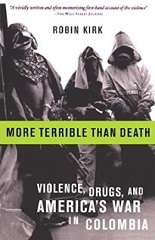 Earlier this year, Netflix released the second season to the hit show ‘Narcos’ starring Wagner Moura as the infamous Pablo Escobar. While not exactly a dead ringer for Escobar, Moura pulls off a stunning performance bringing the late drug czar back to life. The series is violent and gritty but a look into a time in Colombia’s past when life was more terrible than death. Robin Kirk is currently the
  The reputation of Christopher Columbus and his actions continue to be re-examined as more cities throughout the United States pay homage to the nation’s Native American population. His arrival in the Caribbean in 1492 set off a chain of events critical to development of the area as we know it today. It is common knowledge that many atrocities were committed during Columbus’ voyages to what was called the New World. As the Spanish colonized the Caribbean, the native Indian population began to decline and was nearly non-existent by 1524. We know them by the name Taino but their history and significance is still widely understated. But just who were the Tainos and how did they come to inhabit what is today the Spanish, British, Dutch and French West-Indies?
 July 19, 1979- Nicaraguan dictator Anastasio Somoza Debayle is overthrown in a coup headed by the Sandinista National Liberation Front. His removal brings an end to a thirty year reign of tyranny and oppression from the Somoza family, supported by the United States. Somoza joins a long list of puppet dictators enabled and sustained by U.S. foreign policy guided by financial interests. Today, Nicaragua is the second poorest nation in the Americas behind Haiti. In some areas, residents are forced to live on as little as
  October 8, 2017 will mark 50 years since Ernesto “Che” Guevara died in the jungles of Bolivia as he attempted to spread revolutionary ideology throughout Latin America. The legendary and iconic symbol for revolution around the world became a martyr in the process and to this day, his image can be found on posters, hats, shirts and even coffee mugs. His final campaign to bring revolution to Bolivia and the tragic fate that awaited him is one of the defining stories of the 20th century. Guevara, the razor-sharp Argentine intellectual, posed a threat to the dominance of imperialism throughout Latin America and in particular was a deadly threat to the business interests of United States businessmen. His death brings a sigh of relief to many governments around the world and deals a devastating blow the Castro regime in Cuba. Che, although no longer legally a citizen of Cuba at that point, is finally returned home 30 years after his death, when he is returned with several other revolutionaries in 1997 and buried in Santa Clara.
 On May 30, 1961, Rafael Leonidas Trujillo, the dictator of the Dominican Republic was assassinated in the capital city of Santo Domingo. His death concluded a 30 year reign of oppression inflicted upon the Dominican people and the neighboring country of Haiti. Widely considered to be the worst dictator Latin American history, he is responsible for the Parsley Massacre in 1937, the deaths of the Mirabal sisters and an unknown number of murders. True to the form of an egomaniac, he went as far as to have statues of himself constructed throughout the country while at the same time renaming the capital Trujillo City. His initiation of the system of ethnic cleansing that attempted to “whiten” the republic created a climate of racial dysfunction that affects the island to this day. A thirst for blood and supreme dominance encouraged him to plot the assassinations of several Latin American leaders and threatened to destabilize the Caribbean and curtail American business interests. Fifty-five years later, the question of how Trujillo assumed power is often asked. The relationship between the U.S. and the Dominican Republic is a long fractured story and a prime example of the effects of imperialistic foreign policy. Eric Paul Roorda has studied the complex relationship between the two nations and the rise of a tyrant.
 It’s often said that everyone comes into your life for a reason. Fairly recently, I became acquainted with a lovely young woman who has since become a very close friend. She was born in El Salvador and forced to flee her home with her family during one of the worst civil wars in modern history. Because I was quite young at the time of the conflict, my knowledge of the situation and the experiences of the survivors was severely limited, making it difficult for me to offer any meaningful comments to her story. However, I listened thoroughly and have never forgotten what she’s told me and it was through her stories that I began to further understand the turmoil that continues to plague Latin America to this very day. Recently I read the autobiography of retired marine Oliver North. Most readers will remember him from the Iran-Contra scandal in the mid 1980s during President Regan’s administration. Forced to be the scapegoat following congressional hearings into the intelligence activities to free hostages in Libya and fund the contras in Nicaragua against the Sandinista National Liberation Front, North faded into the background and now lives a quiet life far removed from his former activities. It was in this book that I began to understand the events that occurred in El Salvador, why they happened, who is to blame and why they should never be forgotten.
 If you’ve ever visited Old San Juan, you’ll know why Puerto Rico is called the Island of Enchantment. The aura that permeates the old city fills the soul with a sense of warmth and nostalgia. I’ve visited the island twice spending time in various cities across the island and climbing the rocks at the El Yunque rain forest. The many friends that currently live there are some of the most hospitable people I’ve ever met and the cuisine is one of the best you’ll find in the western hemisphere. Founded in 1509, Old San Juan is a major tourist attraction for travelers from all parts of the world. United States citizens have a unique connection to the island in that no passport is needed and American currency is the standard. The relationship between Puerto Rico and the United States is perhaps the most complex and unique in all of the Caribbean. The island, ceded to the United States by Spain at the Treaty of Paris in 1898, has been in a state of steady economic decline resulting in a surge in crime rates and unemployment. The deteriorating conditions threaten to turn the island into a shell of its former self. The future of the island is a critical issue for Washington and as of today no clear-cut solution is in place.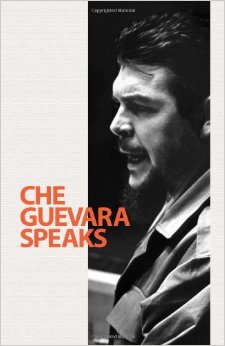
 FREETHINKING BIBLIOPHILE
You must be logged in to post a comment.