

On May 14, 1948, Israel was formally declared an independent state with David Ben Gurion (1886-1973) being appointed as the first prime minister. Over the objection of both diplomats and officials in the military, the administration of President Harry S. Truman (1884-1972) gave its support that same day. This historical event set in motion a chain of events that has resulted in a political and social divide across the Middle East that culminated with the Six-Day War in June 1967 in which Israeli armed forces launch strategic and coordinated attacks against several Arab nations. The conflict was brief but it changed the Middle East and heightened tensions between Israel and many of its Arab neighbors. Prior to the conflict tensions had been brewing between Israel and the Arab world with war hawks on both sides pushing for military action. But the questions remains, was the war preventable? And what exactly did happen to kick off the battle that last only six days? Author Guy Laron addresses those questions and many others in this spellbinding investigative account in the battle that broke the Middle East.
Though I continue to learn the history of the Middle East, I sometimes feel that there is much about the region lost to the west. American intervention in Middle Eastern affairs was at times sorely misguided as I learned in the book. The story of the war begins many years prior to 1967 and Laron assembles the pieces of the puzzle. And to dissuade readers from any idea that the war was a “total victory” he explains somberly that:
“The Six-Day War seemingly ended in one of the swiftest victories in modern history; in reality, the new post-1967 lines created new war zones, especially along the Suez Canal, where the warring sides were conducting a six-year trench warfare, which ended only with a bold assault by the Syrians and the Egyptians in 1973.”
Essentially, the conflict produced a domino effect that has never been resolved. The author provides a thorough and informative discussion on Middle Eastern history but only as far back as needed to set up the remainder of the book. And the country that takes center stage is the nation of Egypt under the leadership of Gamal Abdel Nasser (1918-1970). This part of the story I found highly fascinating due to the discussion regarding Egypt’s relationship with the United States. Similar to Vietnam, decisions made in Washington could have changed history had another course of action been taken with regards to foreign policy. I felt a chill run down my spine as I learned of the deterioration in relations between Nasser and Washington. The refusal to support Egypt’s goal of becoming a major player on the world stage is regrettable and I believe it is a lost moment that quite possibly could have altered the course of history. Readers may find themselves staring in disbelief at the treatment Egypt received from its American ally. Nasser himself also felt the chill and realized that Egypt could not depend on Washington in the long run.
On the other side of the spectrum, the relationship between Washington and Israel is scrutinized allowing readers to learn of the actions behind the scene that help propel Israel towards the military campaign in 1967. Similar to Egypt, war hawks had been read for some time to launch an offensive against the Arab nations. Despite the pressure in place by hawks, the call for attack had been resisted by the fairly moderate Prime Minister Levi Eshkol (1895-1969) who was not overly anxious to ignite a major conflict in the Middle East. Further, Washington had refrained from giving its support while signaling it would not interfere. America was playing both sides while at the same time keeping its eye on the Soviet Union whose entry into world affairs was always a concern. Although the conflict was not an extension of the Cold War, its presence can be felt at times. And the picture that emerges in the book is one of multiple parties all playing their own games while a major conflict hangs in the balance.
Behind the scenes, the discussions between Washington and Israel were not as fluid as one may believe. In fact, more than once, the allocation of funds had been reduced and two presidents had threatened to severely reduce financial aid should war break out. As the mantle passes from Truman to Dwight Eisenhower (1890-1969), the tone from Washington becomes sterner. Eisenhower had seen the effects of war up close was had no desire to take part in the ignition of a major conflict. His successor, John F. Kennedy (1917-1963) had even less desire and made it clear that Israel was to take part in the nuclear arms reduction plan his administration had set in place. This part of the book caught my attention because it is a part of the Kennedy presidency that receives very little attention. Prior to his death in November 1963, Kennedy had been applying pressure on Ben Gurion to open the Dimona nuclear facility for inspection. Israel had stalled forcing Kennedy to threaten to reduce financial aid in an attempt to get Tel Aviv to fall in line with his arms reductions plan. To illustrate just how heated the issue became, Laron explains that:
“Kennedy persisted and in mid-May 1963 sent Ben-Gurion his toughest letter yet, making clear that he would not budge and allow an Israeli nuclear bomb to jeopardize his administration’s campaign against the proliferation of nuclear weapons. A month after receiving that letter, Ben-Gurion stepped down as prime minister.”
After Kennedy’s death, the Dimona reactor never became an issue and the new president, Lyndon B. Johnson (1908-1973) had his eyes and thoughts focused elsewhere, in particular the growing crisis in Vietnam. There are no conspiracy theories in the book about Kennedy’s murder but the issue of Dimona is a crucial part in understanding who would have benefited from Kennedy’s removal. I leave it to the reader to take it from there.
The story picks up in pace under Johnson’s administration. Tel Aviv realized that the new president was not following Kennedy’s course on several major issues. One of them was the growing tensions between Israel and its Arab neighbors. Indochina had begun to consume Johnson who was also pushing forward on the domestic front with his Great Society programs. However, his actions with regards to weapons hardware across the Middle East are equally as surprising as the events surrounding the Gulf of Tonkin. I could not believe what I was reading and wondered to myself what Washington’s endgame really was because it helped set the stage for what was to come in 1967. It soon becomes apparent that Israel has more freedom to carry out its own plans under Johnson’s watch. And the incident involving the USS Liberty still remains one of the more puzzling of that year. Laron does not go into the story extensively but does mention the attack. Egypt also fared differently under Johnson but certainly not in the way it would have desired. In fact, Laron explains that:
“As for Nasser, he seemed to have realized that the game was no longer worth the candle. Eisenhower and Kennedy had allowed Egypt to pay for US wheat with its own currency, which it could print at will. Johnson, however, insisted on Egypt paying in dollars, which it lacked due to its severe economic situation.”
Johnson was in no rush to nor had the desire to appease the Arab world. His main goal was the defeat of Ho Chi Minh (1890-1969) and the North Vietnamese government. Tel Aviv is keenly aware of this and plans are set into motion for the ultimate offensive. But was the attack a surprise? Laron reveals a lot of interesting facts about Egyptian operations prior to the conflict that produce more questions than answers. Further, the most crippling part of the Egyptian defense network comes across as one of the simplest components that should have been addressed but was not. Had it been, the war might have ended differently or never have taken place. The glaring inadequacy reveals fundamentally different aspects between Israeli and Egyptian society that highlights the importance of military intelligence.
More than fifty years have passed since the Six-Day War but its effects are still being felt today across the Middle East. The Gaza Strip remains a hotbed for clashes and only time will tell if true peace and a solution will become a reality. Anyone seeking to understand the region will find this book to be invaluable. It is a step back in time during a decade when political upheaval was occurring around the globe. War and conflict were constant reminders of the savageness of man that would have to be addressed for future generations. However old wounds must be addressed and allowed to heal before humanity can truly move forward. This book is a definitive account of the Six-Day War and its profound effect on the Middle East. Highly recommended.
ASIN: B01NAZJWSK
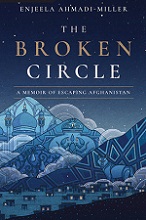 On December 25, 1979, the armed forces of the Soviet Union invaded Afghanistan in support of pro-Communist forces engaged in a power struggle with insurgent forces known as the mujahideen. Soviet forces marched into the capital city of Kabul and later succeeded in staging a coup in which President Hafizullah Amin (1929-1979) was removed and replaced with Soviet loyalist Babrak Karmal (1929-1966). Thousands of Afghan citizens were rendered homeless as bombs fells and brutal fighting produced collateral damage. For Enjeela Ahmadi-Miller, the war changed her life in ways she could have never imagined.
 On September 22, 1980, the Iraqi military marched into neighboring Iran under the orders of President Saddam Hussein (1937-2006). Tensions between Hussein and Ruhollah Khomeini (1902-1989) had been brewing over control of the Shatt al-Arab river, Iraqi nationalism and Khomeini’s calls for the Ba’ath party to overthrow the Iraqi government. The conflict raged for eight years before a cease-fired was signed in August, 1988. It is estimated that the war resulted in the deaths of nearly 1.5 million Iraqis and Iranians. On both sides, villages were destroyed, leaving thousands homeless and families permanently separated. Children as young as thirteen were conscripted to serve, becoming trained killers before the age of twenty-one. After the cease-fire, prisoners of war remained held in prisons on both sides before they were slowly repatriated. This book is the story of two of those prisoners who survived the war, living to tell their story about the war that changed their lives.
 On July 7, 2014, Israeli began a full scale assault on the Gaza Strip, a self-governing Palestinian territory. the assault claimed the lives of more than 1,600 men, women and children. The conflict was a culmination of long-simmering tensions between Israel and the Palestinians. The Israeli government has made it clear that it wants Hamas to recognize its right to exist. Hamas has called for a Palestinian state on the land it believes belongs to the Palestinian people. Multiple foreign governments have made an attempt to mediate the dispute, most notably Egypt. The role of the United States has generally been in support of its ally Israel. The vicious assault was captured and uploaded by Palestinians to such sites as Twitter and Facebook. The images on social media only tell part of the story of the realities faced by the Palestinians who found themselves under siege and facing an opponent superior in both weapons and finances. The full story of what was happening inside the Gaza Strip is a much darker and tragic story, revealed here as the Palestinians are given a platform to the break the silence surrounding their experiences under occupation.
 On the morning of February 26, 1993, Ramzi Yousef and a team of terrorist drove a bomb laden van into the basement of the World Trade Center complex in New York City. As I watched the news from across the river in Brooklyn that morning, I felt a sense of shock and vulnerability. America had been attacked. When Ramzi Yousef was captured and extradited to New York to stand trial, many New Yorkers breathed a sigh of relief. The Hon. Kevin Duffy sentenced Yousef to life with no parole plus an additional 240 years which he is currently serving at the ADX Florence Supermax facility in Fremont County, Colorado. Eight years later on September 11, 2001, America was attacked again when terrorists hijacked four commercial airliners, crashing two into the World Trade Center, one into the Pentagon and the final aircraft outside of Shanksville, Pennsylvania. The response from Washington was swift and a show of force nearly unparalleled in modern times. The mission to capture those responsible and root out terrorists, led to Afghanistan, a land-locked country in South-Central Asia. Images of U.S. troops and the enemy Taliban flashed across news screens as reports of successes in the mission to root out terror were triumphantly proclaimed. To many Americans, Afghanistan was another far away place across the world where people lived in ways that seemed to be from ancient times, going against “American ideals”. Today, Afghanistan is nearly completely forgotten by the American public. There has been no news about what America’s current role is and plans to withdraw American forces have been cast aside as yet another victim of the focus on what has become reality television politics. The story of Afghanistan and its importance to world history is often misunderstood and in some cases not even recognized. But there is far more that meets the eye and author Steve Coll explores this topic in this New York Times bestseller that tells the full story what did happen in Afghanistan between the Soviet Invasion and the deadly attacks on September 11, 2001.
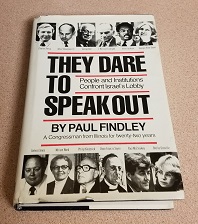 The title alone is enough to grab a person’s attention. Because of the subject matter, it was bound to stir controversy for it touches a topic that remains taboo thirty-seven years after its publication. And with the events this past week regarding the U.S. Embassy in Jerusalem, the contents of this book are as important now as they were then. Before you attempt to read this book, it is critical to understand the difference between Judaism and what is referred to as Zionism. There is a fundamental difference between the two that is often forgotten as charges of anti-Semitism and anti-Israel bias are leveled against those who dare to speak out. However, what I have learned from this book, is critical to understanding how our world functions and why peace is seemingly an impossible objective to accomplish in the Middle East.
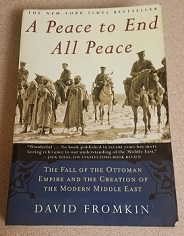 Ideology is sometimes as powerful of a tool as violence and in some cases has been the direct cause of violence. In the Middle East, ideology has maintain a stronghold as it finds itself on a crash course with modernity. Those who live outside the Middle East are at times confused and mystified by the traditions and events that occur throughout the Arab nations. In fact, many of us here in the United States do not know how the modern-day Middle East came into existence. To them, I say that the key to understanding the Middle East is to retrace its history to see why and how it developed into what we know it to be today. David Fromkin lends us a helping hand in this incredible historical investigative account of the fall of the legendary Ottoman Empire and the creation of a region that would never truly know peace.
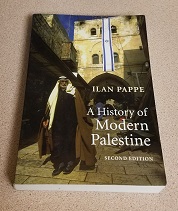 The crisis that exists between Israel and the area that was once the nation of Palestine has evolved into one of the most tragic the world has seen. Anger on both sides and the failure of mediation on more than one occasion has resulted in the continuation of the long feud. Each side has its supporters and detractors refusing to abandon their beliefs and stance of the matter. My interest in the conflict propelled me to acquire this high recommended book on the issue written by Israel historian and social activist, Ilan Pappe (1954-). Pappe was born in Haifa and continues to educate millions about the true origins of the raging battle. This phenomenal account of the history of Palestine and its current day status is a must read by anyone seeking to understand the origins of the matter. To be fair, Pappe is not anti-Israel, but he does however, confront many facts about the history of Palestine that are often very uncomfortable. But any good researcher should do just that and it is in this area that Pappe shines through.
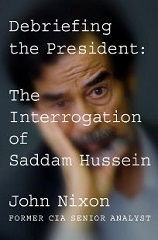 On March 20, 2003, the United States military invaded the Republic of Iraq. The invasion marked the second time US and Iraqi forces faced off in armed conflict. Saddam Hussein, the ruler of Iraq was deposed and fled into hiding. He was captured several months later on December 10, 2003 and three years later, executed by hanging. Over 10 years have passed since his death and Iraq continues to struggle with stability in the face of internal factions divided along tribal and religions lines and the emergence of ISIS intent of claiming their portion of territory across the Middle East. After he was captured, he was debriefed by American forces. The man who many Americans had seen as a powerful dictator on television, was reduced to another captured fugitive on a most wanted list. His appearance before cameras with a full beard and unkempt hear, remains one of the most popular images from that decade. However, it was a stark contrast from the man who allegedly had his mind-set on the destruction of America. But is that was Saddam Hussein really wanted? And what were his thoughts leading up to and during the invasion? John Nixon served as a former Senior Analyst with the Central Intelligence Agency and was tasked with debriefing the fallen dictator. This book is a recap of his career and the conversations he had with Hussein following his historic capture.
 America still struggles to understand the Middle East and a large number of Americans have suspicion and fear of the religion of Islam. Acts of terrorism and reports of the extremes of Sharia law have caused many Americans to dismiss Islam as an archaic system of faith maintained by fear, intimidation and capital punishment. Furthermore we are rarely exposed to the positive aspects of life in an Islamic state and are only shown the most extreme acts of aggression that occur. It has been planted in our minds that Muslims around the world would like nothing more than to see the United States collapse. Near the top of this list are the people of the Islamic Republic of Iran, a nation which shares a long and troubled history with the United States of America.
 FREETHINKING BIBLIOPHILE
You must be logged in to post a comment.