
 The recent events that have transpired in Northern Ireland have given rise to concern and fear across the United Kingdom. A return of the Troubles which resulted in the deaths of over three thousand peoples is on the minds of many as the situation plays itself out. Cooler heads have mostly prevailed up until this point and the paramilitary groups on both sides have managed to keep themselves largely in check. But there are those who know that a return of the violence that plagued Northern Ireland for more than thirty years, would take the conflict in a far more deadly direction. On the Republican side, the Irish Republican Army (“IRA”) has carried the banner of a United Ireland and will not rest until it sees the expulsion of British rule. On the loyalist side, the Ulster Volunteer Force (“UVF”) and Ulster Defense Association (“UDA”) are unwavering in their support of British rule. Currently, a cease fire remains in place but both sides are ready to resume operations if open warfare should return. After reading extensively on the IRA, I decided to shift my focus and look at the Troubles from the loyalist side.
I saw this book on Amazon and the title immediately caught my attention. The UVF is firmly cemented in the history of the Troubles but its full role is sometimes mentioned vaguely in discussions about the conflict. Authors Jim Cusack and Henry McDonald take us deep inside the loyalist cause in this book that peels back the layers of the UVF and the UDA. But before proceeding, I feel compelled to warn readers that this book is dark. The number of murders and violent acts is staggering and as I read through the book, I felt a chill as the magnitude of the Troubles fell heavily upon me. The actions of the IRA are well-documented, and the organization has been seen as a courier of death and destruction. But make no mistake, the UVF and UDA were just as deadly and just as feared. The authors put it even more bluntly:
“The UDA and UVF are merely the most violent manifestation of Unionist opposition to republican goals.”
The statement is telling but I would go even further to say that the conflict was far deadlier that some realize. The vitriol with which each side views the other is chilling and sets the stage for the dark times to come. Every story has its central figures as the Troubles are no different. But instead of figures such as Robert Gerard “Bobby” Sands (1954-1981), Brendan “The Dark” Hughes (1948-2008) and Dolours Price (1951-2013), we are introduced to others who remain martyrs to the loyalist cause. The Rev. Ian Richard Kyle Paisley (1926-2014) makes an appearance but only on few occasions. The UVF and UDA take center stage and no holds are barred as they go after the IRA and supporters of the unionist platform. The conflict spiraled out of control and those known to be Catholics were targeted for murder sometimes based on their faith I had previously learned of the IRA’s most infamous actions, but I began to see that the loyalists were just as fanatical and, in some cases, deadlier than their Republican counterparts. In fact, the UVF became some dangerous that even Britain began to take notice. We learn through the authors that:
“By October 1973 the British army view of the UVF was changing. The UVF was making and planting bigger and bigger bombs, killing more people. A senior British army witness called by the British government during the European Court of Human Rights case of 1975 indicated that before 1973, the army was not greatly concerned with acts of terrorism emanating from the Protestant community. He had regarded the UVF in the early 1970s as a shadow organisation, an object of curiosity and not to be taken seriously.”
That shadow organization along with the UDA had morphed into monsters that could not be contained by the Crown. Having finished the book, the names of Lenny Murphy (1952-1982), John “Big John” McMichael (1948-1987) and Billy “King Rat” Wright (1960-1997) have been seared into my memory as defenders of the protestant goal for permanent British rule in Ireland. As an American, I have always had an outsider’s view of the conflict and have never felt that passion that runs through the veins of loyalists and nationalists. And the violence that ensues was difficult to read about and at some point, I lost count of the names of victims for the list is simply too long.
There is another aspect of the story that I believe is quite interesting and that is the dis-jointed approach by the loyalist side. In particular, the strange and sometimes hostile relationship between the UVF and UDA is explored thoroughly and what is revealed is that both organizations co-existed but largely in a superficial manner. Sharp divisions in the loyalist beliefs and a bloodthirst for dead IRA and Catholics pitted loyalist factions against each other and numerous paramilitary groups operating under the radar. The haphazard approach was so dysfunctional that the two botched a hair-raising encounter involving former Sinn Féin Gerry Adams, a prized target of loyalist groups. The larger picture of course, shows that there were many paramilitary groups on both sides that turned Northern Ireland into a hotbed of extremism. And while a cease-fire continues to hold, tensions under the surface can rise at any moment. It is hoped by many on all sides that the peace remains firm. The road taken to achieve peace is also revisited from the loyalist side. Today we know with hindsight that peace was achieved and that there are those on both sides doing what they can to hold it in place. But the memories of the Troubles are never far away.
The future remains to seen for Northern Ireland but there is hope that peace will prevail, and that Brexit will not give away to a return of the violence that plunged the United Kingdom into darkness. This cold hard look at the UVF and loyalist groups serves as a case study of the true history of the Troubles and the messengers of death on both sides of the conflict. The IRA is widely seen as the organization responsible for violent acts across Ireland and England, but it can be seen here that they were joined in the mayhem by their opponents who equally as effective in committing acts of terror. For those who want to know more about the UVF, UDA and the loyalist side in the Troubles, this book is an excellent place to start.
ASIN : B00ANB8KPI
 Joseph P. Kennedy, Sr. (1888-1969) frequently reminded those he knew that his ancestor had come to America to escape the “potato famine” in Ireland. While Kennedy was certainly well versed at re-writing his family’s history, the famine did indeed exist and caused death and destruction across southern and western Ireland. I had known of the famine and it resulting in the mass exodus of Irish families who made new lives in North America. However, there was much about the famine that I did not know and felt that this book was the perfect choice to learn about a historical event that changed Irish history. Those of you who follow this blog might recall some of the reviews I have posted regarding the conflict in Northern Ireland known as “the Troubles”. Here, I am shifting gears a bit and taking a step back further in time. And the first question I had for myself before reading this book was just what exactly did happen during the famine? Author Susan Campbell Bartoletti provides the answer to that question and a wealth of information that will allow any reader of this book to fully understand the cause of the famine and the events that transpired.
 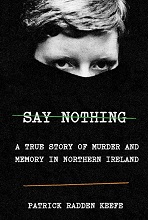 The eyes on the cover of this book are some of the most expressive I have seen although only half of the person’s face is exposed. As they stared back at me from the cover, I felt a chill because I knew they were the eyes of someone who did not fear death. I did not know who the person was but I found myself compelled to learn more. As I opened up the book and began to read, I soon learned the name of the woman on the cover whose story is one of several that are interwoven. Her name was Dolours Price (1951-2013) and this truly is a story of murder and memory.
 Discussions of the 1916 uprising in Ireland tend to focus on a select group of figures. The names of Patrick Pearse (1897-1916) and James Connolly (1868-1916) are legend in Irish history and their actions part of the narrative of the Republican fight for a united Ireland. In December, 1921, the British Government and Republican forces reached an agreement that officially partitioned Ireland into Unionist north and Republican south. The southern part was established as the Free Irish State, to be led by Michael Collins (1890-1922)who became Chairman of the Provisional Government of the Irish Free State. Collins is well-known in Irish history for his unwavering support of the Republican cause. However, there was another figure who not only worked closely with Collins, but someone whose own story and actions are typically left out of the official narrative. Pictured to the left General Richard Mulcahy (1886-1971), one of the founding members of the Irish Free State and staunch supporter of Irish independence. When I saw this book for sale, I knew immediately that I had to read it and understand who the intriguing character on the cover of the book really was.
 Those of you who follow my blog probably know by now that I have covered quite a number of books regarding Northern Ireland the conflict known as “The Troubles”. My curiousity with the conflict in Northern Ireland stems partly from my love of history and partly from my visit to Ireland in 2016. I sought to fully understand the battle being waged by Republicans to unify the country and the opposition mounted by Loyalist who remain in support of British rule. Author Tim Pat Coogan has written of the 1916 Easter
  The looming exit from the European Union by England will undoubtedly be watched by the whole world, which has been kept in suspense by the referendum in 2016 and failure of former British Prime Minster Theresa May to garner enough votes for a formal separation. Current Prime Minister Boris Johnson has declared it will happen and on January 31, 2020, he will be proven right or wrong on the matter. In Northern Ireland, there is fear and uncertainty regarding how the move by England will affect Ulster County, the loyalist stronghold composed of majority that stands firmly behind the Crown. The Irish Republican Army (“IRA”) will be following as well to see how the move will affect its goal for a united Ireland free of British interference. Time will tell how the departure from the European Union will affect both Britain and other nations. Recently, I decided to do some further reading on Northern Ireland and I came across this book by Tim Pat Coogan about an Irish revolutionary I was previously unfamiliar with. His name was Michael Collins (1890-1922) and this is the story of his group of assassins known as the Twelve Apostles and their fight for freedom from Downing Street by famed author Tim Pat Coogan.
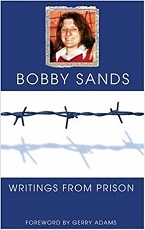 The hunger strike at the HM Prison Maze in 1981, captured the attention of the British Government and earned the IRA sympathy around the world. On May 5, news broke that IRA member Bobby Sands (1954-1981) had died after 66 days of refusing to eat. Sands and his fellow strikers were determined to be recognized as political prisoners and earn several other concessions from Margaret Thatcher’s (1925-2013) government. London had refused to give in and Thatcher had earned the nickname of “The Iron Lady”. Today, the “Troubles” as they are known, continue in Northern Ireland. The IRA remains committed to its goal of a unified Ireland and the removal of the British Crown from Ulster County. Sands had risen among the ranks in the IRA and during his incarceration, his reputation as a leader and intellectual grew every day. This book is a collection of his writings which were smuggled out in parts (The IRA prisoners at HM Prison Maze were engaged in a long running standoff with guards and were being kept in bare minimum cells with mainly a mattress and bucket to be used as waste disposal).
 Recently, I have become fascinated with the troubles in Northern Ireland, a culmination of long-simmering tensions between Catholics and Protestants in Ulster Province. The conflict is among the longest running in the world and has claimed the lives of thousands. In each of the books that I have read, I kept coming across the name Bobby Sands (1954-1981). I knew he was one of several prisoners at the Long Kesh correctional facility who died following a hunger strike in protest of the conditions at the jail and the policies of London. However, I did not know much about his life. I became focused on him and eagerly searched online for whatever I could find. Amazon delivered yet again with this definitive biography of Sands’ life by author Dennis O’Hearn that is nothing short of riveting.
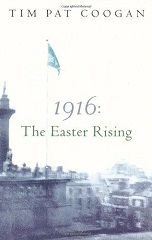 Several years ago, I visited Dublin to finally see Ireland for myself. And while I admit that I was not swayed by the Irish breakfast, there were many other things about Dublin that made up for the first morning and I left Dublin with a sense of warmth and humbleness. During my visit, I stopped by the General Post Office (“GPO”) to send out a few postcards. As I stood on line with other tourists, I marveled at the beauty of the building. After some time, I and the other customers departed and went our separate ways. But I do not believe that many of us on line that day, recalled or were aware of the historical significance of the post office. On April 24, 1916, members of the Irish Republican Brotherhood (“IRB”), staged an uprising across Dublin to force an end to the rule of the British Crown (“the Crown”) across Ireland. The GPO was one of many occupied buildings but is recognized as “ground zero” for the various seizures that occurred. The events of that day have become known as the Easter Rising and contained within the pages of this book, is the story from start to finish by author Tim Pat Coogan.
 The conflict in Northern Ireland between pro-British Protestants and Republic Catholics, is the longest running feud to date. The planned exit by England from the European Union has resulted in suspense and apprehension throughout the rest of the United Kingdom. The Irish have undoubtedly been watching closely as any movement by England will have a ripple effect that will eventually reach their shores. Belfast remains a major tourist attraction in the north, similar to its southern counterpart Dublin, and receives millions of visitors each year. History buffs may recall that Belfast is the city in which Harland and Wolff built the world-famous RMS Titanic for the White Star Line. But behind the fame of the doomed ocean liner, lies a dark side that has taken more lives than anyone could have ever imagined. Belfast and Londonberry (“Derry”) have served as the battlegrounds for the deadly war between Nationalists and Republicans forces. Across Ulster province, six of the nine counties are protected by the British Crown (“the Crown”) and unofficially by the Ulster Volunteer Force and Ulster Defense Association. The Irish Republican Army (“IRA”) stands firm as the opposition force founded to defend the minority Catholic population from what they believe to be the refusal of the Crown to let Ireland become a united country. Kevin Toolis is a journalist and screenwriter born in Edinburgh, Scotland to Irish parents. In this eye-opening and chilling book, he travels back to the country of his ancestors, seeking to understand what drives the men and women of the IRA.
 FREETHINKING BIBLIOPHILE
You must be logged in to post a comment.