
 Infamous gangster Alphonse “Al” Capone (1899-1947) famously quipped that “once you’re in the racket, you’re always in it”. The seasoned gangster knew the pitfalls of a life of crime and conditions that apply. He was convicted on October 18, 1931, of tax evasion and sentenced to eleven years in prison. On November 16, 1939, Capone was released from prison due to effects of Syphilis which had spread to his brain. The disease continued to cause deterioration in the mobster and on January 25, 1947, Capone did in his sleep. It was a sad ending for America’s most famous mobster but less violent than the grisly fates met by other gangsters “in the life”. Carmine “the Snake” Persico (1933-2019), a former Colombo Family boss, also escaped a grisly fate but remained in prison until his death on March 7, 2019. And with his passing was the end of another era in New York City history. In his prime, Persico was one of the City’s most notorious figures and implicated in scores of mafia-related crimes, including the murder of Albert “The Mad Hatter” Anastasia (1902-1957), revisited by here by Frank DiMatteo is a Brooklyn native raised in the Park Slope neighborhood controlled by the Persicos, with whom his father was affiliated. This is the story of Carmine Persico and the terror his mob family unleashed on the City of New York.
Readers familiar with Park Slope might be surprised to learn how saturated the area was with mobsters in the past. Today, the area has changed significantly but remnants of the old days still exist there as they do in other parts of New York. The early part of the book focuses heavily on the Park Slope area where the budding gangsters are getting experience on the gritty streets of Brooklyn. The crimes are petty and routine, until Carmine and older brother Alphonse Persico (d. 1989) have a fateful encounter with a friend turned rival named Steve Bove. At this point in the book, the writing is on the wall that Carmine is destined for a life of crime. From this point on, the schemes become more daring and the violence deadlier. Yet, Persico always manages to slip out of tense situations, earning him the nickname of “the Snake”.
Though Matteo is writing about Persico’s life, a bonus is that the book is filled with information about mob events that shocked the city. Sadly, there are no “smoking guns” that have not been previously revealed but he does offer information that might explain why the events happened. In particular, the murder of Joseph “Joe” Colombo (1923-1978) remains controversial. The assailant Jerome Johnson, was shot and killed immediately by one of Colombo’s bodyguards but the woman he was with, masquerading as a reporter, has never been found along with a second man in their group. The hit has never been fully explained but has been blamed on Colombo’s rival at the time, Joseph “Crazy Joe” Gallo (1929-1972) and his brothers at odds with Colombo and the family’s prior boss, Giuseppe “Joe” Profaci (1897-1962). DiMatteo discusses the Colombo murder, and it is possible that Gallo was telling the truth when he stated he had nothing to do with the shooting. As the author shows, Colombo was respected by not well-liked, and the list of people who might have wanted to see him removed was long. The truth about the crime may be lost to history. But there is no question regarding the bad blood between the Gallo and Colombo factions, a simmering animosity that caused division within the family. The feud between them became so infamous that a part of it was reenacted on screen in The Godfather Part II. I won’t go into detail here, but if you have seen the movie and read this book, you will know which scene it is. Also provided is a satisfying amount of inside information about the production of the Godfather films and the filmmakers’ interactions with real-life gangsters including Persico. DiMatteo does mention other notable crimes in mafia lore such as the Air France Cargo robbery in 1967 and the Lufthansa Heist in 1978, both of which are depicted in Martin Scorsese’s mob classic ‘Goodfellas‘. The crimes are well-documented, so the author does not devote too much of the book to them, but they are discussed in relation to Persico’s story and the state of the mafia at the time.
Hollywood eventually moved on, but as we see in the book, the mob was getting stronger, and more blood was spilled on the streets of New York City before peace was established. But the difference is that the next war was within the family. With Colombo in a comatose state, the grabs for power kicked into high gear. And at Persico’s side was notorious hitman Gregory “The Grim Reaper” Scarpa (1928-1994). Scarpa’s reputation in mob history is cemented as someone not to cross. The section about Scarpa is not a biography but readers unfamiliar with him may want to read Peter Lance’s ‘Deal With The Devil: The FBI’s Secret Thirty-Year Relationship With A Mafia Killer‘ and the account by Scarpa’s daughter titled ‘The Mafia Hitman’s Daughter‘. Scarpa was a dark figure and the battles between the Persico faction and the soldiers loyal to acting boss Vittorio “Little Vic” Orena feel like a story out of the motion picture industry.
The story takes a significant turn at this point and is nothing short of wild. Combined with the inter-family wars brewing, Persico is also on the radar of the U.S. Government and was indicted multiple times as detailed by the author. Franklyn, it seemed that as soon as he was released, he was back inside yet again facing more charges. The unbelievable story as told by DiMatteo highlights the lengths to which federal prosecutors were willing to go in their mission to dismantle the Italian American mafia. The introduction of the Racketeer Influenced and Corrupt Organizations Act, known as the “RICO Act”, signaled that the end was near for the mob. The legislation drafted by attorney G. Robert Blakely became an invincible tool in the Government’s arsenal that is still used to this day. As the convictions piled up, mobsters facing RICO charges knew the only options were to make a plea or face life in prison. Persico ended up with life in prison and had to live with the fact that his sons “Allie Boy” and Michael also followed their dad down the path of no return.
The sad fates of the major players compose the concluding section of the book and there are no happy conclusions. Death, incarceration, and financial ruin decimated the mobsters who found themselves targets of the Government. DiMatteo finished the story before Persico’s death resulting in the epilogue not containing mention of his passing. However, the sentence Persico received made it clear that he would die behind bars and that is exactly what happened. At the time of his death, the power, fame, and money he enjoyed on streets was gone but at his height, his life was one heck of a ride that even Hollywood could not have scripted. This is a fascinating look at the mob and the reality of life in it.
ASIN: B077WW4W1T
 New York City is famously known as the “Melting Pot” due to the diversity among the residents that call it home. As a lifelong New Yorker, I can attest that the city attracts people from every part of the world. However, what is often neglected is that diversity and assimilation are two very different concepts. That is not to say that the entire city is divided. In fact, my neighbors hail from places both domestic and abroad. My father has told me stories of his childhood in Brooklyn and his neighbors who had emigrated from Eastern Europe. He has fond memories of the Italian woman who cooked breakfast for him and my uncles and the Jewish neighbor who made fresh breads and other dishes they loved. But that all changed when my grandmother moved the family to a different part of Brooklyn and the Government began to de-segregate public schools. The pushback from the middle class was swift and in May 1968, tensions came to a head at P.S. 271 in Ocean Hill-Brownsville, Brooklyn, when teachers engaged in the first of several strikes that changed New York. This is the story of those strikes and the people whose actions changed New York City politics.
  A subway ride through the underground portion of the New York City Transit system can reveal far more than most might anticipate. And if you find yourself on a train passing through lower Manhattan, you might pick up images of abandoned stations or long-lost passages through the windows of the subway car, forgotten with time as relics of the City’s storied past. The system itself is truly is a modern marvel that continues to be renovated and upgraded. But there are still many parts that remain hidden, known only to workers of the Metropolitan Transit Authority (MTA) and possibly others who have dwelled in prohibited areas far removed from the sight of strap-hangers. In the 1980s, the City saw a rise is the number of people living beneath the sidewalks, in crevices, tubes and tunnels buried far below the surface. The total number of underground dwellers will most-likely never be known. But their existence is a telling sign of the extremes some people go to when living on the streets. Jennifer Toth, stepped into this world, largely unknown even to those that live in New York City. Some may call her foolish and others may feel that she was courageous. I believe that she had a mix of many things as she covered the lives of those she met as she explored a completely unknown and different world that could only seem to exist in fiction.
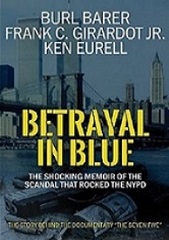 Nearly twenty-six years ago, New York City Police Officer Michael Dowd was arrested by the Suffolk County Police Department in cooperation with the U.S. Drug Enforcement Agency for the possession and distribution on narcotics. His arrest, trial before Judge Kimba Wood of the Southern District of New York and testimony before the Mollen Commission solidified Dowd’s reputation as the dirtiest cop in NYPD history. Arrested with him were other officers, drug dealers and other participants. Ken Eurell was retired at the time of his arrest but during his active tenure, he patrolled the streets of the Seventh-Fifth precinct with Dowd and embarked on a path of corruption that is still unbelievable to this day. The duo recounted their life of crime in the 2015 documentary The Seven Five. Undoubtedly, Dowd is the main focus and his recollections are backed up by Eurell and the other former officers. This is the story from Eurell’s point of view about how and why he found himself more deeply immersed in crime with Dowd.
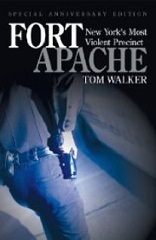 Today it is hard to imagine that less than fifty years ago, New York City was once considered one of the most dangerous cities in America. Rising crime, poverty, budgetary mismanagement and police corruption combined to turn the Big Apple into a city that took more than it gave. The New York City Police Department was tasked with maintaining order in the concrete jungle in the face of budget cuts and incredibly layoffs in the late 1970s. The officers who survived those dark years carry with them endless memories about their time on the streets of New York City. Tom Walker, who retired in 2004, spent several years of his career at the 41st Precinct in the South Bronx, nicknamed by the officers as “Fort Apache”. The name sounds heroic but as we learn in the book, it was for darker and more tragic reasons that the station was referred to as a fort. Outside the walls of the precinct existed a world that bordered on the surreal and gave a glimpse into what hell must really be like.
 The arrest and subsequent conviction of former NYPD Police Officer Michael Dowd highlighted the perils of decades long corruption that plagued many precincts in the New York City Police Department. Dowd and several other officers had engaged in a multitude of crimes ranging from narcotics trafficking and possession, armed robbery and accessories to murder . Several had even violated department protocol by appearing for work under the influence of alcohol or narcotics or sometimes both. When the scandal in the 75th precinct made headlines, a whole city was stunned and for many, it confirmed many of their beliefs about the NYPD being a corrupt agency full of crooked cops. The fallout from the scandal would force Mayor David Dinkins and Police commissioner Lee Brown to act quickly. The Mollen Commission was created to investigate the pattern of police corruption that had been plaguing the City of New York. Its final report was published in July, 1994 and remains freely available for those interested in one of the darkest periods in New York City history.

 FREETHINKING BIBLIOPHILE
You must be logged in to post a comment.