
 The wars that have been fought by mankind contain many secrets that have survived the test of time. Hindsight has become society’s treasured tool in investigating the past to learn what really happened. The Vietnam War is among the most unpopular conflicts in American history. The war continues to haunt the United States as a reminder of failed foreign policy and according to some as a premonition of the 2003 invasion of Iraq. As we look back on the Vietnam War, we come to learn about the very dark side of the American involvement in Southeast Asia and the devastation that occurred when two nations collided in a struggle that pitted ideology against weapons at war. Douglas Valentine, author of The Strength of the Wolf: The Secret History of America’s War on Drugs, returns with this account of his research into The Phoenix Program, which for many years remained a mystery to those outside of military and political circles. But just what was the Phoenix Program and how much of it as true?
The story begins with a gentlemen named Elton Manzione, who is a former member of the armed forces. Manzione claims to have been part of the program but Valentine readily states that his service records do not show him being a part of the program or in country at the time. For some readers that may be enough to disregard what follows but the key to following the book is not Manzione’s story but the complex web that composed the program itself. I forewarn the reader that the number of acronyms is staggering. If you have served in the military or are a Vietnam Veteran, then you will probably be familiar with many of the terms. But for the average reader, many of them will be unfamiliar and a challenge to remember. Regardless, the story is interesting but I do believe many parts of it will be lost to history. But what we can learn from the book is that there did in fact exist a program whose purpose was to infiltrate North Vietnamese and Viet Cong strongholds through the use of counterintelligence and other black operations. Somewhere along the line, things took a dark turn and many regrettable incidents took place that forever cast a dark cloud over any success the Phoenix Program may have had.
To be fair to Valentine, the book is not simply an account of atrocities that occurred. The My Lai Massacre and other incidents have been documented and the accounts are not for readers who do not possess a strong composition. Valentine does provide broad descriptions of shocking incidents but spares the reader of extensive and more revolting details. The book can be tedious to read and requires that the reader follows along closely to get a visual of the many parties in operation in both North and South Vietnam. But the key to understanding the book is not to memorize all of the names but to follow the bigger picture. What is paramount to remember is that many honorable men and women served in Vietnam, some of them part of the Phoenix Program. They in particular might agree with Valentine or feel that his book is way off base. There were also darker elements of the U.S. military apparatus and intelligence communities whose actions during the war could possibly be considered war crimes. And through Valentine’s work, we are forced to inquire about the real objective of the United States Armed Forces in Vietnam. We will never know many secrets of the war but books such as this provide a look inside of some of the more controversial aspects of America’s most unpopular war.
ISBN-10: 1504032888
ISBN-13: 978-1504032889
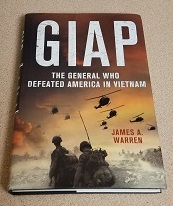 April 30, 1975-The city of Saigon, the capital of South Vietnam, falls to the People’s Army of Vietnam and the National Liberation Front of South Vietnam. The siege of the capital is the final push by North Vietnam on the course towards reunification. The final withdrawal by U.S. military and government personnel marks the of a deadly and protracted war that cost 58,000 American lives and over 1 million Vietnamese lives. To date, it is the only loss suffered by the United States Armed Forces. The success of North Vietnam is a shining moment in the Vietnamese struggle for independence for colonialism by France and the anti-communism policies of the United States. Ho Chih Minh becomes a legend in Vietnamese history and many years later Saigon is renamed in his honor. Ho died on September 2, 1969, several years before the war’s conclusion, but his ideology and belief in a free Vietnam helped his successors continue his goal of unconditional victory. Looking back at the war, it seems almost absurd that a country the size of Vietnam was able to resist and defeat efforts by the French and Americans to impose their will. Both nations were equipped with better weapons, bigger budgets and highly skilled armies. However on the Vietnamese side, there was a general who proved to be just as sharp as any the French or the United States had to offer. And by the end of the war, he would also become a legend in his own right. His name was Võ Nguyên Giáp. (1911-2013)
 On January 20, 1968, Ron Kovic was shot and critically injured while leading a reconnaissance mission near the village of My Loc north of the Cua Viet River. The injury leaves him paralyzed from the waist down. After being transported back to the United States, he is moved to the Bronx VA hospital and witnesses first had the substandard treatment given to soldiers injured in the conflict. Upon his discharge, the young marine leaves the hospital a changed man forever, no longer an innocent 18-year-old kid with dreams of being a rough and tough marine. As outcry against the war continued to grow and he began to read literature given to him by his cousin’s husband, his views on the war began to change and he eventually became one of the most outspoken anti-war activist in country.

 FREETHINKING BIBLIOPHILE
You must be logged in to post a comment.