
 The names of the 58,000 Americans who died in the Vietnam War that are found on the memorial in Washington, D.C., are a reminder of a conflict deemed by many to be the worst the United States has ever been involved in. The withdrawal of U.S. forces in March, 1973, brought a sigh of relief to the American public which had long grown tired of a war with no end in sight. The dark truth which we now know is that we did not by any means accomplish the mission. And the mighty American war machine failed to secure a victory. I have met many veterans of the war and have an uncle who served. What I recall most about all of them is that they do not speak of their experiences while in combat. I know the memories are there and for some of them, they were unable to leave parts of the war behind. Today we call it PTSD, but back then you simply found a way to move forward in life. But why were they in Vietnam to being with? Was the domino effect really a threat to the United States?
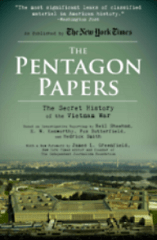
On May 11, 1973, Daniel Ellsberg found himself the talk of the town as charges pending against him for espionage were dismissed by U.S. District Judge William Byrne. He had been indicted for leaking what became known as The Pentagon Papers, the subject of this book and the topic of the movie The Post starring Tom Hanks and Meryl Streep. The New York Times, after several battles in court, was finally allowed to move forward with its plan to publish The Pentagon Papers and contained in the pages of this book are the documents that the U.S. Government tried in earnest to hide from the American public under the guise of “national security”. Ironically, the facts that are revealed in this book have absolutely nothing to do with national security but rather several presidential administrations that failed to find a workable solution to Indochina.
The late Secretary of Defense, Robert S. McNamara (1916-2009) has been called the architect of the war and was loathed by many because of it. However, the title is misleading and in some ways unfair. The war had many architects either by wishful thinking, uncontrolled ego or naiveté. What is truly ironic is that as the war waged on, McNamara became a strong voice of dissent. And in spite of what we have been led to believe, our existence in Indochina began many years before 1965. The story of U.S. involvement in Vietnam is a long tale, filled with hard truths, false truths, deception and ultimately failure. But this is how it happened and why.
The papers are divided into several sections which correspond to a different aspect of the conflict. The administrations of Eisenhower, Kennedy and Johnson are examined to understand what each cabinet did and did not do as it grappled with the growing headache. Step-by-step Southeast Asia opens up as black hole as more advisors are committed, instability rages in South Vietnam and war hawks finally get their wish as the United States jumped nearly feet first into a jungle conflict that proved to be nothing short of disastrous. Rolling Thunder, troop deployments and South Vietnamese politics are just some of the issues that antagonized Washington for nearly a decade.
If you served in Vietnam, I forewarn you that the book might anger you in many ways. For others, this is a critical source of information in order to understand the war from a behind the scenes view. We are often told that the military fights to protect the country and our freedoms that we take for granted. But did a nation over 13,000 miles from U.S. soil really pose a threat to the most powerful nation on earth at the time? And what would we have accomplished if we had in fact won the conflict? Perhaps Vietnam would have become a second Korea, partitioned between a communist controlled North-Vietnam and a U.S. controlled South-Vietnam. Following the U.S. withdrawal, Saigon fell and the North achieved its goal of reunification. Today the war is a distant memory for young Vietnamese but for the older generation, many painful memories remain. The figures in the book are long gone but their actions will stay with us and the Vietnam war will always be a regrettable example of U.S. foreign policy gone wrong.
ISBN-10: 1631582925
ISBN-13: 978-1631582929
 The wars that have been fought by mankind contain many secrets that have survived the test of time. Hindsight has become society’s treasured tool in investigating the past to learn what really happened. The Vietnam War is among the most unpopular conflicts in American history. The war continues to haunt the United States as a reminder of failed foreign policy and according to some as a premonition of the 2003 invasion of Iraq. As we look back on the Vietnam War, we come to learn about the very dark side of the American involvement in Southeast Asia and the devastation that occurred when two nations collided in a struggle that pitted ideology against weapons at war. Douglas Valentine, author of
 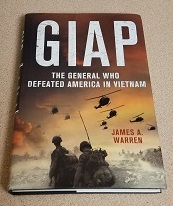 April 30, 1975-The city of Saigon, the capital of South Vietnam, falls to the People’s Army of Vietnam and the National Liberation Front of South Vietnam. The siege of the capital is the final push by North Vietnam on the course towards reunification. The final withdrawal by U.S. military and government personnel marks the of a deadly and protracted war that cost 58,000 American lives and over 1 million Vietnamese lives. To date, it is the only loss suffered by the United States Armed Forces. The success of North Vietnam is a shining moment in the Vietnamese struggle for independence for colonialism by France and the anti-communism policies of the United States. Ho Chih Minh becomes a legend in Vietnamese history and many years later Saigon is renamed in his honor. Ho died on September 2, 1969, several years before the war’s conclusion, but his ideology and belief in a free Vietnam helped his successors continue his goal of unconditional victory. Looking back at the war, it seems almost absurd that a country the size of Vietnam was able to resist and defeat efforts by the French and Americans to impose their will. Both nations were equipped with better weapons, bigger budgets and highly skilled armies. However on the Vietnamese side, there was a general who proved to be just as sharp as any the French or the United States had to offer. And by the end of the war, he would also become a legend in his own right. His name was Võ Nguyên Giáp. (1911-2013)
 On January 20, 1968, Ron Kovic was shot and critically injured while leading a reconnaissance mission near the village of My Loc north of the Cua Viet River. The injury leaves him paralyzed from the waist down. After being transported back to the United States, he is moved to the Bronx VA hospital and witnesses first had the substandard treatment given to soldiers injured in the conflict. Upon his discharge, the young marine leaves the hospital a changed man forever, no longer an innocent 18-year-old kid with dreams of being a rough and tough marine. As outcry against the war continued to grow and he began to read literature given to him by his cousin’s husband, his views on the war began to change and he eventually became one of the most outspoken anti-war activist in country.


You must be logged in to post a comment.