
 When I learned that Astrid Lindgren (1907-2002), the author of the fictional character Pippi Longstocking, had kept a diary during World War II, I was instantly intrigued. Like millions of others, I remember Pippi Longstocking and the impact it had on pop culture here in America and abroad. But who would have known that the character she created almost remained hidden from the public? The story behind the character is contained within as well as a different view of the war, from neutral Sweden. When I started the book, I had realized that I had forgotten Sweden’s neutrality. But that is not to say the Swedes did not have an opinion of Adolf Hitler (1889-1945) and the Third Reich. In fact, Lindgren is very vocal about the expanding war and the terrors of the Nazi regime. However, there is also another side to the diaries, and that is her family life, which includes her roles as a mother and wife. Her diaries encompass a range of topics but come together to reveal a woman deeply concerned about society and the effects of warfare.
This is the first book that I have read from the Swedish point of view. In contrast to neighboring countries, Lindgren humbly explains that shortage of food and supplies was not a significant issue in Sweden. There are occasions where the author feels guilt for the excesses they have at home, but the nation’s neutrality undoubtedly affected its ability to remain stable. However, the Swedes were aware of the war’s developments, the plague of the Jewish people attempting to flee Germany, starvation across Europe and the monstrous acts committed on people deemed “undesirable” within Reich territories. Lindgren was deeply affected by what she read and carries a heavy heart from start to finish. At one point she sadly explains that:
“Poor human race: when I read their letters I’m staggered by the amount of sickness and distress, grief, unemployment, poverty and despair that can be fitted into this wretched earth”
The wave of terror Germany unleashed across Europe led to Lindgren lamenting the human capacity for war. In one entry she questions why England and France were slow to respond to the growing threat from Berlin. Readers interested in the slow response to the Germany arms build-up will find ‘Why England Slept‘ by John F. Kennedy (1917-1963) to be a thorough analysis of the inaction from London. To be fair, outside of Germany, knowledge of internal movement would have had its limits. But Hitler’s actions building up to the invasion of Poland were no secret. And by the time nations realized how far he was willing to go, the world was at war. For Lindgren, every day became another chapter in a brutal war that claimed millions of lives. The author does her best to remain positive and fills the diary with details about Swedish delicacies, holiday traditions and family matters to which we can relate. But above everything, she desired an end to the war that should never have taken place.
As we move to 1943 in the book, the tide begins to turn in war and a German victory becomes further from reality. The fighting between the Russians and Germans is the focus in this section. And though America had entered the war by this point, the battles across the Soviet Union were of major importance. She clearly wanted the war over, and Germany defeated but she did not ignore the danger posed by the Red Army and wanted no part of Russia’s army in Sweden. And this is a part of World War II often neglected. The Red Army could be as savage as the Germany Army and in some cases, it was far worse when atrocities were committed. Entries in the diaries will clue readers in. The savagery of the war was not lost on anyone in neutral territories, but that neutrality was of the utmost importance as she acknowledges towards the end of the book.
The section focused on 1944 sees an elated author as the Americans invaded and former Nazi territories were liberated. The Soviets are still battling Hitler’s troops on the eastern front and Germany is in trouble. Step by step the allies push back Germany divisions and as 1945 approaches, hope builds for the war’s end. The suspense can be felt in her words as news of Allied victories filter in. And by the time 1945 arrives, the world is waiting for Germany’s collapse which comes at the end of April. She follows the news from Berlin of Hitler’s defeat and demise but finds herself shocked at the introduction of the atomic bomb. She contemplated what she learned and somberly reflects that:
“Nineteen forty-five brought two remarkable things. Peace after the Second World War and the atom bomb. I wonder what the future will have to say about the atom bomb, and whether it will mark a whole new era in human existence, or not. The peace is not much to put one’s faith in, with the atom bomb casting such a shadow over it.”
The war ended but the reality of atomic weapons became very real. There are other entries in the diaries about nuclear weapons and her concern about their place in society. But the sense of relief that the war had ended cannot be overstated. Today it may be hard for us to understand how dark the future looked during her time. But her diaries provide a valuable resource to understand a time when the world was at war. Her family survived the war, and she created a character that still entertains children today. But she also carried with her dark memories of the years in which Adolf Hitler embarked on a quest for world domination. Highly recommended.
ASIN: B01M299IMP
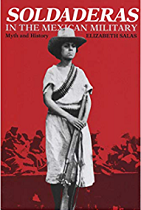 There is a saying that behind every great man is a great woman. Truth can be found in that statement, and I would also add that sometimes great women can stand alone. One definition of mythology is that it is a widespread belief or assumption that has grown up around someone or something. Regarding the Mexican female soldier known historically as the “Soldadera”, this is undeniably true. Their role in history of often obfuscated or unknown outside of Mexico. However, in Mexican history, they earned a well-deserved place that cannot be overlooked. But when exploring history, it is imperative to separate fact from fiction, and that is exactly what author Elizabeth Salas has done here in this book that examines the Soldadera and her role in Mexican society.
 After finishing the most recent book from my reading list, I was in search of something different to change gears. I came across this book while browsing recommendations and the cover instantly caught my attention. I vividly remember the legendary comedian Rodney Dangerfield (1921-2004) and the endless laughs he provided to households across America and abroad. But sadly, I knew very little of his personal life. I have heard that there is a dark side to comedy and behind the jokes there is often trauma and tragedy. I was not sure what to expect when I started this book but before it was over, I realized I did not want it to end. Dangerfield died on October 5, 2004, but the book was published after his death. His life was a roller coaster ride and anyone who remembers him will enjoy the book. The story is a mixed bag with the good, the bad and the ugly. But it is also full of laughs and moments of reflection by a man in his senior years aware that Father Time comes for everyone.
 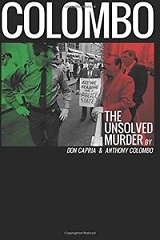 On June 28, 1971, the Italian American Civil Rights League (“IACRL” held a “Unit Day” rally in Manhattan’s Columbus Circle. The league was co-founded by
 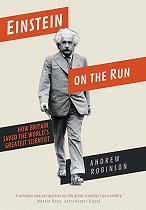 On January 30, 1933,
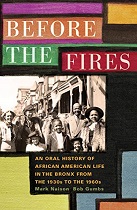 The Bronx, New York is known as the birthplace of hip-hop music and the home of the New York Yankees. It is also a melting pot and home to immigrants from all parts of the world. And the history of the Bronx is as storied as the people who call him home. During the 1970s, New York City had ventured into its darkest days with the threat of bankruptcy and crime rate nothing short of astronomical. In the Bronx, an epidemic of fires emerged but not solely due to arson. In fact, arson played a minor role in the plague of fires that struck the Bronx. Regardless of how and why the fires started, the tragedies altered the Bronx landscape and left its people wondering where things went wrong. However, life in the Bronx was not always as perilous. Authors Mark Naison and Bob Gumbs conducted interviews with former residents of the Bronx to learn what life was like before the fires and drugs devastated communities.
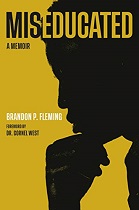 Every so often, a recommendation shows up in my list that catches me completely off guard. This book is one of them. At first, I was not sure what to make of it and had not heard of it previously. But after seeing the high rating, I decided I had to see for myself and now that I have finished the book, I can state with certainty that it is a true gem. As stated on the cover, the book is a memoir by Brandon P. Fleming, a former debate coach at Harvard University and the Founder & CEO of The Veritas School of Social Sciences. The school was formerly known as the Harvard Debate Council Diversity Project. And though he has found success through years of challenging work, there was a time when Fleming could have become an inner-city statistic.
 On May 14, 1948, World Zionist Organization executive head
  FREETHINKING BIBLIOPHILE
You must be logged in to post a comment.