
 Anyone who uses a mobile cellular device has undoubtedly experienced the issue of a dropped call. Upon resumption of the call, one party will typically ask the other who their service provider is. The choices of mobile service providers today are plenty but prior to 1982, the American Telephone and Telegraph Company controlled phone service across America (“AT&T”). But all that changed when a small communications company challenged AT&T’s rule and set int motion a chain of events that resulted in the breakup of the communications giant, paving the way for the diversity in service providers we have today. Author Steve Coll tells the unbelievable story here in a book that beautifully captures a crucial event in American history.
This book was in my list of recommendations, and when I noticed it the title instantly grabbed my attention due to me being a mobile subscriber of AT&T, Inc. And when I think back to my childhood, my family were also subscribers of AT&T. None of us questioned why but would agree today that we never had issues with phone service. But if AT&T was so good, why was it broken up? Well, a small company called MCI Communications (“MCI”) decided that it wanted to get into the communications field and had no choice but to impose on AT&T’s territory. The tech giant balked at first, but officials at the Federal Communications Commission had other ideas and approved MCI’s request to go into business. But there was a catch, and as Coll explains:
“When the FCC authorized MCI to go into business, over the strenuous objections of AT&T’s Washington lobbyists, the commission told AT&T that it had to allow MCI to interconnect with the basic phone network. But the commission didn’t tell AT&T how much it should charge MCI for connections, or how fast AT&T should install MCI’s lines, or how AT&T should calculate its own costs when determining an interconnection price for MCI.”
The leasing agreement worked on the surface, but MCI’s William G. McGowan (1927-1992) was far from finished and on March 6, 1974, MCI filed an anti-trust suit against AT&T. Several years later in 1978, the two parties entered the ENFIA Agreement about the leased lines, but the lawsuit had also provided the framework needed by the U.S. Department of Justice in its own lawsuit to end AT&T’s dominance. But the tech giant did not go away quietly and had the best lawyers it could afford. And they were ready for battle when the Government filed suit in what became United States v. American Tel. and Tel. Co., 552 F. Supp. 131 (D.D.C. 1983). The first judge assigned to the case passes away and it is re-assigned to the late Judge Harold H. Greene (1923-2000) whose summary judgment opinion changed telecommunications in the United States. But before we reach that point, the author provides a crash course of litigation and discovery that those in the legal field will appreciate. The snippets of courtroom discussions and conversations revisited between the parties reveal the complexities litigators face in intricate litigation. And behind the scenes on each side, things were unpredictable as well. One area that stands out is the confusion at the U.S. Department of Justice. Before the case is over, several attorneys take the lead, each with a distinctive style. And at times, it seems as if no one on the Government’s side is on the same page, particularly when the parties begin settlement negotiations. However, while the two sides were revisiting strategy, politics in America were changing the course of nation and a former Hollywood star was soon on his way to the White House.
About halfway through the story, the narrative changes with the incoming administration of President Ronald Reagan (1911-2004). At first, I thought it was strange that his administration would play a role in the story but as the book progresses, the reasons behind the importance of the AT&T case become clear. One issue regarding national security gives credence to the Government’s intrusion. But strangely, Reagan never takes the lead in the matter, nor does he get involved but instead leaves the matter to others. Coll points out this characteristic of Reagan’s time in office with this keen observation:
“The advantage of Reagan’s style was that on many issues, that consensus led to unity and strong, positive leadership within the administration. The disadvantage was that the President had a slim grasp of the questions being deliberated by his counselors and was thus unable to intervene when, as was the case early that summer, debate on a particular issue became skewed by personality clashes, turf wars, and internal White House politics.”
Frankly, Reagan is a non-factor throughout the story, but cabinet officials take far stronger positions. At the Justice Department, a settlement remains a priority, but the attorneys remain committed to trial and seeing the case through. The agreement reached with AT&T in 1956 was seen as a slap on wrist and attorneys were determined not to let it happen again. AT&T’s attorneys resort to filing a summary judgment motion but even as the two sides engaged motion practice, they all remained oblivious to decisions in Washington, one of which pulls the rug out from under your feet:
“Neither Greene nor the majority of attorneys trying the case was aware on that September morning that a nearly irrevocable decision not to drop U.S. v. AT&T had already been made by the White House.”
The White House had left AT&T to defend itself and was not going to step in. But settlement negotiations proved to be successful, and the case was eventually dismissed. And that settlement awakened the sleeping giant known as Congress. Coll explains what happened when the settlement went through and how its terms shaped modern telecommunications. And surprisingly MCI suffered an adverse effect from legislation that should have been to its benefit. Today, the matter of U.S. v. AT&T is history rarely discussed. But the decision of Judge Greene, the settlement reached and the actions by Congress, changed the telecommunications industry for good. The United States Government has commenced anti-trust litigation countless times and will surely use it in the future. But the breakup of AT&T will remain one of its most important cases. Highly recommended.
ASIN: B071D53HV8
 On March 5, 1953, Soviet Union leader
  In the afternoon of August 16, 1977, legendary recording artist
 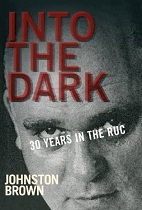 The conflict in Northern Ireland known as “The Troubles” claimed over thirty-five hundred lives and brought the
  When I learned that
  There is a saying that behind every great man is a great woman. Truth can be found in that statement, and I would also add that sometimes great women can stand alone. One definition of mythology is that it is a widespread belief or assumption that has grown up around someone or something. Regarding the Mexican female soldier known historically as the “Soldadera”, this is undeniably true. Their role in history of often obfuscated or unknown outside of Mexico. However, in Mexican history, they earned a well-deserved place that cannot be overlooked. But when exploring history, it is imperative to separate fact from fiction, and that is exactly what author Elizabeth Salas has done here in this book that examines the Soldadera and her role in Mexican society.
 After finishing the most recent book from my reading list, I was in search of something different to change gears. I came across this book while browsing recommendations and the cover instantly caught my attention. I vividly remember the legendary comedian Rodney Dangerfield (1921-2004) and the endless laughs he provided to households across America and abroad. But sadly, I knew very little of his personal life. I have heard that there is a dark side to comedy and behind the jokes there is often trauma and tragedy. I was not sure what to expect when I started this book but before it was over, I realized I did not want it to end. Dangerfield died on October 5, 2004, but the book was published after his death. His life was a roller coaster ride and anyone who remembers him will enjoy the book. The story is a mixed bag with the good, the bad and the ugly. But it is also full of laughs and moments of reflection by a man in his senior years aware that Father Time comes for everyone.
 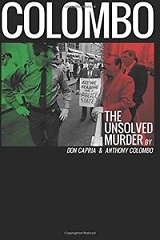 On June 28, 1971, the Italian American Civil Rights League (“IACRL” held a “Unit Day” rally in Manhattan’s Columbus Circle. The league was co-founded by
  On January 30, 1933,

You must be logged in to post a comment.