Carmine the Snake: Carmine Persico and His Murderous Mafia Family – Frank DiMatteo and Michael Benson

carmineInfamous gangster Alphonse “Al” Capone (1899-1947) famously quipped that “once you’re in the racket, you’re always in it”. The seasoned gangster knew the pitfalls of a life of crime and conditions that apply. He was convicted on October 18, 1931, of tax evasion and sentenced to eleven years in prison. On November 16, 1939, Capone was released from prison due to effects of Syphilis which had spread to his brain. The disease continued to cause deterioration in the mobster and on January 25, 1947, Capone did in his sleep. It was a sad ending for America’s most famous mobster but less violent than the grisly fates met by other gangsters “in the life”. Carmine “the Snake” Persico (1933-2019), a former Colombo Family boss, also escaped a grisly fate but remained in prison until his death on March 7, 2019. And with his passing was the end of another era in New York City history. In his prime, Persico was one of the City’s most notorious figures and implicated in scores of mafia-related crimes, including the murder of Albert “The Mad Hatter” Anastasia (1902-1957), revisited by here by Frank DiMatteo is a Brooklyn native raised in the Park Slope neighborhood controlled by the Persicos, with whom his father was affiliated. This is the story of Carmine Persico and the terror his mob family unleashed on the City of New York.

Readers familiar with Park Slope might be surprised to learn how saturated the area was with mobsters in the past. Today, the area has changed significantly but remnants of the old days still exist there as they do in other parts of New York. The early part of the book focuses heavily on the Park Slope area where the budding gangsters are getting experience on the gritty streets of Brooklyn. The crimes are petty and routine, until Carmine and older brother Alphonse Persico (d. 1989) have a fateful encounter with a friend turned rival named Steve Bove. At this point in the book, the writing is on the wall that Carmine is destined for a life of crime. From this point on, the schemes become more daring and the violence deadlier. Yet, Persico always manages to slip out of tense situations, earning him the nickname of “the Snake”.

Though Matteo is writing about Persico’s life, a bonus is that the book is filled with information about mob events that shocked the city. Sadly, there are no “smoking guns” that have not been previously revealed but he does offer information that might explain why the events happened. In particular, the murder of Joseph “Joe” Colombo (1923-1978) remains controversial. The assailant Jerome Johnson, was shot and killed immediately by one of Colombo’s bodyguards but the woman he was with, masquerading as a reporter, has never been found along with a second man in their group. The hit has never been fully explained but has been blamed on Colombo’s rival at the time, Joseph “Crazy Joe” Gallo (1929-1972) and his brothers at odds with Colombo and the family’s prior boss, Giuseppe “Joe” Profaci (1897-1962). DiMatteo discusses the Colombo murder, and it is possible that Gallo was telling the truth when he stated he had nothing to do with the shooting. As the author shows, Colombo was respected by not well-liked, and the list of people who might have wanted to see him removed was long. The truth about the crime may be lost to history. But there is no question regarding the bad blood between the Gallo and Colombo factions, a simmering animosity that caused division within the family. The feud between them became so infamous that a part of it was reenacted on screen in The Godfather Part II. I won’t go into detail here, but if you have seen the movie and read this book, you will know which scene it is. Also provided is a satisfying amount of inside information about the production of the Godfather films and the filmmakers’ interactions with real-life gangsters including Persico. DiMatteo does mention other notable crimes in mafia lore such as the Air France Cargo robbery in 1967 and the Lufthansa Heist in 1978, both of which are depicted in Martin Scorsese’s mob classic ‘Goodfellas‘. The crimes are well-documented, so the author does not devote too much of the book to them, but they are discussed in relation to Persico’s story and the state of the mafia at the time.

Hollywood eventually moved on, but as we see in the book, the mob was getting stronger, and more blood was spilled on the streets of New York City before peace was established. But the difference is that the next war was within the family. With Colombo in a comatose state, the grabs for power kicked into high gear. And at Persico’s side was notorious hitman Gregory “The Grim Reaper” Scarpa (1928-1994). Scarpa’s reputation in mob history is cemented as someone not to cross. The section about Scarpa is not a biography but readers unfamiliar with him may want to read Peter Lance’s ‘Deal With The Devil: The FBI’s Secret Thirty-Year Relationship With A Mafia Killer‘ and the account by Scarpa’s daughter titled ‘The Mafia Hitman’s Daughter‘. Scarpa was a dark figure and the battles between the Persico faction and the soldiers loyal to acting boss Vittorio “Little Vic” Orena feel like a story out of the motion picture industry.

The story takes a significant turn at this point and is nothing short of wild. Combined with the inter-family wars brewing, Persico is also on the radar of the U.S. Government and was indicted multiple times as detailed by the author. Franklyn, it seemed that as soon as he was released, he was back inside yet again facing more charges. The unbelievable story as told by DiMatteo highlights the lengths to which federal prosecutors were willing to go in their mission to dismantle the Italian American mafia. The introduction of the Racketeer Influenced and Corrupt Organizations Act, known as the “RICO Act”, signaled that the end was near for the mob. The legislation drafted by attorney G. Robert Blakely became an invincible tool in the Government’s arsenal that is still used to this day. As the convictions piled up, mobsters facing RICO charges knew the only options were to make a plea or face life in prison. Persico ended up with life in prison and had to live with the fact that his sons “Allie Boy” and Michael also followed their dad down the path of no return.

The sad fates of the major players compose the concluding section of the book and there are no happy conclusions. Death, incarceration, and financial ruin decimated the mobsters who found themselves targets of the Government. DiMatteo finished the story before Persico’s death resulting in the epilogue not containing mention of his passing. However, the sentence Persico received made it clear that he would die behind bars and that is exactly what happened. At the time of his death, the power, fame, and money he enjoyed on streets was gone but at his height, his life was one heck of a ride that even Hollywood could not have scripted. This is a fascinating look at the mob and the reality of life in it.

ASIN: B077WW4W1T

Unchosen: The Hidden Lives of Hasidic Rebels – Hella Winston

winstonSeveral years ago, I accompanied a friend as she undertook the task of burying her late mother who had passed after several years of ill health. The cemetery is for followers of the Jewish faith and as part of the internment process, I was required to wear a yarmulke and spread dirt over the grave. The rabbi explained the meaning behind the acts, and the presence of others in attendance who did not know her mother but came out after hearing of her death. That day I was a witness to a side of Judaism I was not previously aware of. My friend was not Hasidic but strongly identified with her Jewish roots. Today when I drive through parts of Brooklyn, I take notice of the Hasidic Jewish communities in Crown Heights, Borough Park, and Williamsburg. To the public, the people of these sects are elusive and mysterious. Author Hella Winston stepped into these worlds to learn the truth about those who become unchosen.

It is imperative to recognize that Jewish is not a monolithic term. In fact, the divisions between sects, mainly the Satmar and Lubavitch, should not be overlooked. However, what is uniform is their commitment to preserving their faith and the importance of never forgetting the name of Adolf Hitler (1889-1945). The Third Reich’s determination to exterminate Europe’s Jewish population had an unintended result here in New York as Winston points out. Readers will not be surprised at what they learn but what the author does reveal, will put the Hasidic community’s cohesiveness in a clearer perspective. The horrors of World War II cannot be understated and as Winston notes,

“One of the most striking things I came to understand during the course of this research is the power of the Holocaust, and the history of Jewish suffering in general, both in the actual lives of some Hasidic people and in the imaginations of these communities as a whole. There is, of course, the plain historical fact that the Hasidic communities that exist in America today were started almost entirely by refugees from World War II”.

Of course, the Hasidic culture we see does not exist solely because of the war. The scriptures impact every aspect of daily life and readers familiar with orthodox customs are aware of the restrictions in place around the Sabbath and during holidays. The individuals she became acquainted with revealed deeply personal parts of their lives and provided information that I learned of for the first time. One section that stands out is the view held towards Theodore Herzl (1860-1904), considered to be the father of Zionism. Brooklynites may recall that a street in the Brownsville section of Brooklyn bears his name. The reason for the view of Herzl held by the Hasidim is quite simple and in the overall context of the book, makes sense. But there is far more to the story than just Herzl and the people we are introduced to are anything but orthodox.

Winston picked members of both genders and from various families and each story has similar tones but are in fact different. I did observe that although they wanted a different life, they still loved their families and the communities they grew up in. The struggle with faith is not an easy one. Critics online have blasted the book as a condemnation of the Hasidim. I disagree and did not get that feeling while reading and have no ill will towards them. Admittedly, there were customs that I would not want to adhere to but it is not for me to say they are right or wrong for others. And I feel that anyone reading this book has to do so with an open mind. There are however, parts in the stories of the women that will make you scratch your head and have feelings of disapproval and/or disgust. These are the sections that bring to light the reality for Hasidic women. We pass them on the street, on the subways and maybe even the park, but the truth about their daily lives is carefully guarded. Whether the women are happy with their lives or not is for them to reconcile but if we digest what is contained here, it is apparent that not all are content and the number of women who yearn for more out of life could be higher than we think. The same applies for men due to the number of readers who contacted Winston after the book’s publication.

The book’s star is undoubtedly Yossi, whose story is a roller coaster ride in itself. But for all that we do learn about inside the community, there is a realization to be had for those who venture outside of it; none are prepared for the secular world which might as well be another planet. And this is one the tragedies of the book. The speakers have decided to venture in the secular world but have no real foundation to do so as the majority of their lives was spent inside the community which offered not only the resources they needed but security as well. The streets outside the community are unforgiving and more than one speaker falls victim to its darker elements. Thankfully, none perish but their experiences highlight the unchartered waters that await anyone who decides they no longer believe or wish to be Hasidim.

A common aspect I found in the stories is that they were living double lives. While they believed in the scriptures, they could not reconcile that with the practices they witnessed daily. It is a difficult position to be in and the mind will find itself at war with itself. The stories of Chaim, Yitzchak, Dini, Malkie and Leah are all intense on their own and in each one we see that regardless of location or religion, human nature is strong and cannot always be contained. The quest for freedom led some to take extreme measures as they struggled with choices I have been forced to make. And this is one of the best parts of the book that is possibly overlooked. All isolated communities have their secrets and the Hasidim are no different. But what readers should come away with is that if you are not a part of the community, you have freedoms and liberties that are desired by people within the community. And the reality is that they may never know the world as you do. For them, the scriptures control their lives and those in high positions of power pick up where faith does not. The narratives are controlled but not impervious. Over time, I believe that the Hasidim will also adjust to modern times as the younger generation seeks a new path in a rapidly changing world.

Despite the information revealed in the book, there are positive aspects to the Hasidim way of life and there are followers who are happy in the community. And as Winston points out, they too are human beings. The Hasidim also have fears, concerns, passions and insecurities. Winston’s book is not about which way is right or wrong but provides a window in a world we see only from the outside. In no way is the book a definitive account of the Hasidim nor was it intended to be. But if you can see the value in the stories contained within, then you will appreciate what she has brought to light. And if there are Hasidim who have left their communities and not sure about what to do, the organization Footsteps which was started by Malkie Schwartz, a speaker in the book, provides assistance to those in need.

If you are curious about the Hasidic way of life and what happens to those who leave, this is must-read.

ASIN:‎ B0053CUNJ8

The Far Side of Paradise: A Biography of F. Scott Fitzgerald – Arthur Mizener

fitzOn the morning of December 21, 1940, American writer Francis Scott Key Fitzgerald (1896-1940), better known as F. Scott Fitzgerald, was reviewing the Princeton Alumni Weekly when he felt discomfort in his chest before succumbing to a heart attack at the youthful age of forty-four. The author who had published The Great Gatsby and This Side of Paradise had struggled with his health in the years before his death. In the years following his untimely passing, his novels have gained popularity and Fitzgerald is considered one of the greatest writers of the twentieth century. In 2013, actor Leonardo DiCaprio starred in the Hollywood production of The Great Gatsby, which earned mixed reviews. Fitzgerald remains a literary icon, but I could have never imagined the turmoil that existed in his personal life. I saw this book in my recommendation list and was intrigued by the high ratings. Having finished the book, I can say that it was worth the purchase and revealed a side of the author that highlights the lines between genius, insanity, and tragedy.
This book was originally published in 1951, eleven years after Fitzgerald’s death but reading it on an electronic device removes the sense of time and the story flows as if it were written today. However, there are clues in the form of now outdated terms that set the time definitively. Mizener’s account is written beautifully and after revisiting Fitzgerald’s childhood spent between St. Paul, Minnesota, and New York City, we are introduced to the writer who made a name for himself in his shorty yet extraordinary life. And the person that emerges is a complicated figure in a complicated life. As the author points out, 

“There never was,” as Fitzgerald said in his Notebooks, “a good biography of a good novelist. There couldn’t be. He’s too many people if he’s any good.”

Thus, the search begins for the real F. Scott Fitzgerald. His friend and author Ernest Hemingway (1899-1961) provides his observations of Fitzgerald in the story as do several others. But surprisingly, it is Scott himself who provides an open window into his innermost thoughts due to the collection of materials he left behind. Like every great writer, he was both tormented and encouraged by his success. And he was not immune to the seduction of intoxicants. This is undoubtedly one of the darker aspects of the book in addition to the impact of his wife Zelda (1900-1948), whose story is equally as tragic as Fitzgerald’s but not as widely known. In fact, Mizener accurately points out that, 

“A good deal of injustice has certainly been done the Zelda of the twenties because she later went insane and it is difficult not to let the knowledge that she did so affect one’s view of what she was like before 1930.”

As I read the book, I could not help but to notice the stark contradiction between the successful writer known the public and the financially inept and abusive person under intoxicated. For all his success, he is always close to destitution throughout the story. And the tumultuous relationship between him and Zelda should not be overlooked. Fitzgerald comes across as Dr. Jekyll and Mr. Hyde, but he was aware of his insecurities and struggles. However, he could not overcome his demons and that theme forms the crux of the narrative. Regardless of whom he was interacting with, Fitzgerald could be his own worst enemy. And as can be seen in the book, his unpredictable nature and dark habits resulted in scandalous situations and the involvement of law enforcement. The story is not easy to read, and a forgotten victim is the couple’s daughter whose voice does not appear in the story. Paradoxically, Fitzgerald was devoted to her and his concern for her well-being despite his own fragile condition is heartwarming. 

Zelda plays a crucial role as his wife in the story, for better and worse. When her symptoms first appear, it is not clear why she is having issues, but the author slowly reveals her plight. And as their conditions deteriorated, they became co-dependent and continued to exist in a relationship that is nothing short of surreal. Readers will see the writing on the wall and following their decline is like waiting for a car wreck to happen. We know they will not come out of this the same way but to say that they had rough lives would be an understatement. They lived fast and died young but along the way, they also left their mark. Towards the end of the story, Zelda is removed from the story for reasons readers will discover and later in life, Fitzgerald became involved with gossip columnist Sheilah Graham (1904-1988). Their relationship was no less turbulent than his marriage with Zelda, as the story reveals. Sheilah’s appearance in the story is brief but she remained with Fitzgerald until the end. Despite their differences, she did have a positive influence over him. Ironically, at the time of his death, he had finally come to terms with the demons he had been fighting and repaired strained relationships. But the damage he had done to his body was extensive. Even Sheilah could not prevent the inevitable. 

Though the book is a biography, Mizener does discuss selected works of Fitzgerald’ and the back stories behind them. But he makes sure not to let the book become a critique of Fitzgerald’s work and keeps the focus on his life, and despite the tragedy playing out, there are bright moments in the book, and when not under giving in to his demons, Fitzgerald shines brightly in personality and creativity. Sadly, he did not think he would live to old age and in the end he was right. The warning signs had been there, but Fitzgerald lived on his own terms. The roaring twenties were a remarkable sight and for F. Scott Fitzgerald, some of the best times in his life. His story, as told by Arthur Mizener, is one of success, tragedy, self-sabotage, and the painful reality of addiction. The genius in him left us with books that have stood the test of time. But the insanity that became his life, resulted in him leaving the world before his time. After his death, Zelda has a rare moment of clarity about her late husband. Mizener relays the fitting quote, 

“Though she was ignorant of much of Fitzgerald’s life after 1934, Zelda was substantially right when she wrote, a few days after his death, “Scott was courageous and faithful to myself and Scottie and he was so devoted a friend that I am sure that he will be rewarded; and will be well remembered.”

More than seventy years later, he is still remembered. 

ASIN: B085WZXMKY

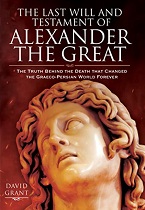
The Last Will and Testament of Alexander the Great: The Truth Behind the Death that Changed the Graeco-Persian World Forever – David Grant

grantThroughout history, rulers and conquerors have left their mark on the world with legacies that remain intact to this day. Alexander III of Macedon (356-323 BC) was only thirty-two years of age when he died. But in his short and extraordinary life, he ruled an empire that changed world history. In mainstream culture, he is known as Alexander the Great and in his era, the mention of his name evoked fear across territories threatened by the Macedonian empire. Yet for all of his power and accomplishments, he died intestate, having failed to clarify his wishes as he faced death. Whether it was due to procrastination, sickness or paranoia is lost to history. But what we do know is that following his death, the interactions between his former generals became dark and deadly. And before the violence was over, multiple participants had been dispatched to Hades. Strangely, there is no official cause of death for the legendary ruler. There are rumors of possible poisoning or a deadly illness such as typhoid, but the different accounts of his final days add more confusion to the mystery. Author David Grant dissects the known diaries of events that purport to contain the truth about Alexander’s death in an effort to resolve the matter.

Readers without prior knowledge of Alexander’s life may find value in first watching a documentary about him or reading articles online. I say this because in the wake of his death, key figures once under his command take on various roles and each having their own agenda. There are names in the book that will stand out easily such as Aristotle (384-322 BC) and Cleopatra (357-308 BC). But they play minor roles in the story which focuses heavily on the former generals and their actions. As I read, I found keeping track of the figures slightly challenging as the story moves from place to place. However, I recommend getting familiar with each character as you make your way through the discussion. Essentially, two major factions appear after Alexander’s death, one side led by Perdiccas (356-321) and Eumenes (362-313 BC) who are loyal of Alexander’s line of success and the other by Meleager (d. 323 BC),  Antigonus I Monophthalmus (382-301 BC), and Antipater (397-319 BC) who see the power vacuum as a chance to consolidate power.  Added to the mix are the roles and rights as heirs of Alexander’s sons Alexander IV from wife Roxana (340-310 BC) and Heracles (327 -309 BC) from wife Barsine (363-309 BC). The story is deeply intricate with alliances and double-crosses, and the author did an exceptional job of researching the events and composing this account that examines the known facts. But complicating the task are the various accounts of Alexander’s death.

The name of Eumenes will be seared into reader’s minds for multiple reasons. He becomes a prominent figure in the book due to his account of how Alexander died. His explanation is not beyond suspicion, and historians have questioned its authenticity. Grant also questions its accuracy and provides compelling reasons why it cannot be trusted entirely as the definitive account of the Alexander’s end days. Despite its questionable contents, Eumenes was a witness to Alexander’s final days and would have included truths in his account. They may stand in contrast to the story presented by the Royal Diaries which found subscribers in historians Arrian of Nicomedia (86-160 AD) and Plutarch (46-119 AD). The Royal Diaries, sometimes referred to the Journal, are accepted as authentic. But with other aspect of Alexander’s final days and the deadly power struggles that ensued, questions remain about the source material used to explain those events. And as the author explains in the book’s conclusion, the authenticity of any alleged “wills” is subject to scrutiny due to events that transpired and their participants. But that examination should not take away from the facts that are known and other truths we may never know.

Between 322 and 275 BC, Alexander’s former generals engaged in the Wars of the Diadochi, a conflict that spanned several decades and led to the collapse of Alexander’s empire. The author refers to them, when necessary, but the book is not a discussion of the multiple wars. However, they are relevant to the story as they show the deception and greed to be found in the wake of Alexander’s death. The plots are intricate and some sections might need to be revisited for clarification, but the venom between parties was intense and everyone seemed to have a role to play including Alexander’s mother Olympias (375-316 BC) who was determined to maintain the line of succession. Grant pulls no punches and brings the past to life as enemies plot ways to have each other killed. The amount of blood spilled during these wars is unimaginable. Olympias proves to be a formidable threat and she has her own story in the book and her fate becomes tied to the actions of Antipater’s son Cassander (355-297 BC). This is one part of the story that reaffirms the savagery of the ancient world. The tragic truth is that the wars were both deadly and costly, and erased any chance for Alexander’s line of succession to continue.

This book is not light reading by any means but it also an invaluable tool when examining Alexander’s demise. There are no happy endings in the story. And whether the cause was typhoid fever or poison, Alexander’s death at the age of thirty-two remains one of history’s biggest conspiracies. But whether there actually was a conspiracy is still unsolved. Voltaire (1694-1778) once said, “to the living we owe respect, but to the dead we owe only the truth”. Grant seeks the truth about Alexander’s will and so do we. I can say that reading the book resulted in me further researching the historical figures. And having done so makes the story easier to digest. If you love ancient Greek history, this book is must read.

ASIN: B098PJ9FML

Iwo Jima: World War II Veterans Remember the Greatest Battle of the Pacific – Larry Smith

iwoIn the 1989 film ‘Born on the Fourth of July‘ by Oliver Stone, there is a scene in which the Marine Corps. recruiter (Tom Berenger) is speaking to high school student Ron Kovic (Tom Cruise) and his high school class. To boost interest, Berenger calls out the names of the battles that defined the United States Marine Corps. The list is extensive and impressive but to this day, the deadliest battle in the history of the Marines is Iwo Jima. Between February 19, 1945, and March 26, 1945, the Marines suffered thousands of casualties as they secured the island which translates into “sulfur island” in English. The battle is also famous for the image captured of Marines and Corpsman raising the American flag as they pushed forward against Japanese resistance. Despite the high casualty rate, thousands of Marines survived Iwo Jima and returned home. But they never forgot the sights, sounds and smells from the fierce battles being fought as the world was at war. Larry Smith talked to veterans of Iwo Jima and has compiled those interviews into this book that provided the retired Marines with a platform to tell readers what they remember from the battle that claimed lives and left others with dark and haunting memories.

Sadly, the Marines in the book who fought on Iwo Jima are deceased and the number of surviving World War II veterans decreases each year. Their voices are silent, but their stories are powerful and will leave readers with a sense of gratitude and shock. The battlefield and injury descriptions are graphic in nature, and discretion is advised. Further, the scenes that are relived are nothing short of hell on earth and highlight the deadly environment waiting for arriving Marines. I also found myself shocked at the age of the young Marines at Iwo Jima. More than one in the book was not old enough to buy alcohol but found himself shipped off to the Pacific where the Japanese were waiting. Military commanders knew that it would be costly to take Iwo Jima, but the number of casualties suffered is staggering and the author specifies that

“On the first day alone the Marines suffered 2,420 casualties, including more than 500 killed.” 

The number of casualties increased exponentially on both sides of the conflict as the battle raged. Eventually the Marines began to gain ground and reached the top of Mt. Suribachi. It was there that the American flag was raised more than once. The emotional scenes were captured on camera and the second image of the Marines hoisting the stars and stripes remains one of the most popular images in American history. But there is more to the story of the flag than one might suspect. In the book, Marines who were there speak on the matter, clearing up any confusion or misinformation that has persisted over time. Readers who are interested in a more thorough discussion of the event will appreciate ‘Flags of Our Fathers‘, by James Bradley and Ron Powers. Bradley’s father John “Doc” Bradley (1923-1994) was a Navy Corpsman and one of the soldiers captured in the iconic second photo taken on February 23, 1945. As we learn in the book, seeing the American flag being raised was a tremendous boost to morale. The pride felt by Marines tasked with taking the island is best captured by former soldier Chuck Lindberg who reminisced:

 “It was a great patriotic feeling, this chill that runs through you. . . . My proudest moment of my time in the Marines was raising the American flag on Iwo Jima. My feeling of being a Marine is I served with the finest, and I feel proud every day that I can tell somebody that.

That sentiment is echoed by others who survived combat on Iwo Jima. On the Japanese side of the conflict, losses were equally devastating, and it became clear that Japan could not win against the Allies. Reasons for the Japanese defeat are not discussed here but the speakers do recall how they felt when they learned that the atomic bombs had been dropped resulting in Japan’s surrender. Unbelievably, it would take four more years to remove the last Japanese soldiers from the island. Every war has its mysteries and World War II is no different. The biggest unsolved mystery in this book is the fate of Japanese Imperial Army General Tadamichi Kuribayashi (1891-1945). I previously was not aware of his demise but am inclined to believe that the Japanese troops knew what happened to their fallen commander. A surprising discovery explained in the book provides information that explains the general’s thoughts that were almost lost to history. While researching the book, Smith made the acquaintance of Colonel John W. Ripley, USMC (Ret.) who did not serve in World War II but did serve in the Vietnam War and became a military historian of Iwo Jima. The issue of the general’s last known location was a source of interest during and after the war but as Ripley explains, 

“ The thing which is the most irrefutable evidence of all is that Kuribayashi’s body , which was a hot item , was never found . Every single body involved in that last attack was not necessarily identified , but they knew it wasn’t Kuribayashi . Every single one . Because they were looking for him . And he wasn’t there . Period . So that is the premier fact that refutes his involvement in that battle .”

As I read the book, I thought of my great-grandfather who served in Europe during the war. As a black infantry soldier, I am sure he had his share of unfortunate experiences. But he served his country and never spoke negatively of America, nor did he discuss what he saw in combat. In the story at hand, black Marines do play a role as the speakers explained but at the time, segregation existed in the armed forces and on Iwo Jima that also applied. However, as we learn from the Marines in the book, blacks played pivotal roles in the American victory and the burial of deceased Marines whose remains were later retrieved from the island after Japan’s defeat. Smith even had a discussion with Thomas McPhatter, a black Marine who provides a needed perspective on the black experience in the Pacific. I personally learned for the first time from the author that regarding the African American experience, 

Between fifteen hundred and two thousand blacks served on Iwo. Each Marine division had a regimental service battalion or field depot staffed by black marines, not to be confused with the Army DUKW drivers.

I thought to myself that had more black Marines been accepted and deployed, the battle on Iwo Jima might have ended sooner and very differently. De-segregation of the military continued in the years following World War II, but its existence placed America in a difficult position of attempting to deliver freedom around the world whiles struggling to enforce it at home. Despite resistance and discrimination, blacks continued to serve in the military and do so today. This is in no way detracts from the heroic efforts of the Marines of all backgrounds who fought on the island. Their experiences and success in turning the tide of the Pacific war remains firmly entrenched in the annals of military history. 

Readers might ask themselves why Iwo Jima was important. That question is answered in the book as the speakers and the author explain its significance. to success in the Pacific. The number of casualties was undoubtedly high, but without occupation of Iwo Jima, the Allied effort to force Japan’s surrender might have taken longer and the full-scale invasion of Japan on November 1, 1945, could have become a reality. President Harry S. Truman‘s decision to drop the bomb ended the war in the Pacific and brought feelings of relief to the Marines and other military personnel who remained at their posts in the Pacific. V-J Day brought World War II to a close, but history cannot forget mankind’s deadliest conflict. These are the stories of the Marines who served on Iwo Jima in the battle that further defined the Marine Corps. and sealed Japan’s fate.

ASIN:‎ B00ZHJEJWO 


The Killing of Tupac Shakur: Who Did It and Why? – Cathy Scott

scottAt 4:03 p.m. on September 13, 1996, rap star Tupac Shakur (1971-1996) died from gunshot wounds he received on September 7 while riding in the passenger seat of a BMW driven by former Death Row Records CEO Marion “Suge” Knight on the Las Vegas strip. Shakur was twenty-five years old and left behind a complicated legacy that remains a top of discussion in rap music culture. I remember with vivid clarity the shock that was felt when his death was announced and have always believed that a part of the rap music genre died with him that day. Officially his murder is listed as unsolved and an open case by the Las Vegas Police Department. Off the record, it has been alleged and believed that Crips gang member Orlando “Baby Lane” Anderson (1974-1998) pulled the trigger of the gun that ended Shakur’s life. The case is filled with rumors, mysteries, and chilling facts. Journalist Cathy Scott stepped into this murky world to set the record straight on Shakur’s murder.

Anderson was never charged by Las Vegas Police for Shakur’s murder but the physical altercation between the two earlier that night at the MGM Grand Hotel did provide a highly probable motive. He had been attacked and beaten by an entourage composed of Shakur, Knight, and affiliates of Death Row Records, who were visiting Las Vegas to attend the Mike Tyson – Bruce Seldon boxing match. The incident was captured on camera and the footage is widely available on the internet for those who have yet to see it. After the shooting on the strip, Anderson was questioned but not detained by police. In interviews following the rapper’s death, he maintained his innocence, and any secrets he did have went with him to his grave when he himself died from gunshot wounds on May 29, 1998. For a more thorough examination of Orlando Anderson’s story, I recommend Lolita Files’s ‘Once Upon a Time in Compton, which provides a more detailed analysis of the raids by the Los Angeles Police Department and Compton Police Department on Anderson’s homes and the evidence that was seized. The information is based on the work of former Compton Gang Unit detectives Tim “Blondie” Brennand and Robert Ladd.

It should be noted that no “smoking gun” exists here in the book. If it had, Scott would have certainly been heralded as the person who finally revealed the truth. Instead, the book is a thorough and chronology of the events that night, the subsequent investigation, and the relevant murder of rapper Christopher “The Notorious B.I.G.” Wallace (1972-1997), whose death on March 9, 1997, seemed to indicate that it was open season on rappers. Interestingly, I found that although I have followed the Shakur case since the shooting, there were things that I learned here that I had not previously known. Further, Scott does not subscribe to any conspiracy theories, thus removing any trace of bias in the book. She is the investigative reporter relaying to the reader what she discovered.

Before discussing the murder, the author sets the stage by exploring the background of Death Row Records and its founder. Readers who have watched the documentary ‘Welcome to Death Row‘ will be familiar with the label’s history and the role of convicted drug dealer Michael “Harry O” Harris. The documentary is far more extensive in the amount of information provided but Scott includes the right amount here to provide an overall picture of how Suge Knight accumulated power in the American music industry. The life of Tupac is also discussed and anyone who has not seen the film ‘Tupac Resurrection‘, should view it either before or after reading this book. In 1995, the lives of Knight and Shakur crossed paths when the CEO offered Tupac a way out of prison. Contrary to widely held belief, Suge Knight did not bail Tupac out of jail but did facilitate the move. The truth about who bailed him out can be found in this New York Times article. Before their meeting was over, Tupac promised that he would put Death Row on the map. He did not exaggerate.

On September 7, 1996, Shakur attended the short-lived boxing match between Tyson and Seldon. While walking through the lobby, his entourage spotted Anderson standing by himself. The story that has persisted over the years is that Trayvon Lane whispered something in Tupac’s ear that caused him to take off running towards Anderson. Investigators later learned that Anderson was part of a group that had assaulted Lane and taken his Death Row chain and medallion and the Lakewood Mall in July 1996. To this day there is speculation regarding what Lane said since he has never given interviews and Shakur is deceased. What is clear is that Tupac was intent on getting to Anderson. Following the assault at the MGM, all hell broke loose as shots were heard on the strip. Police rushed to the scene to find Shakur and Knight wounded. The author goes through the events minute by minute capturing the chaos that ensued. She also reveals that multiple cars did chase the white Cadillac seen by witnesses but there is no further mention of what happened as a result. Finding witnesses willing to talk proved to be a challenge for investigators but one member of the rap group “The Outlaws” named Yafeu Fula (1977-1996), did tell detectives that he was able to see the shooter’s face. The lost opportunity to utilize his knowledge is an additional tragedy in the book and his fate will leave readers speechless.

There was one part of Scott’s discussion of Orlando that did stand out with regard to the lawsuit filed by Anderson against Shakur’s estate and Afeni’s countersuit. Both were pending at the time of Anderson’s death but there had been a surprising turn of events in the case hours before his death. Anderson was no saint, but it is hard to answer the question as to who he really was. The facts presented by Scott stand in contrast to the street reputation of “Baby Lane”. On the A & E show ‘Who Killed Tupac‘, his brother and cousin adamantly stated that Anderson did not shoot Shakur. While reading the book a sense of gloom overcame me due to the story serving as an example of the black-on-black violence that continues to plague inner-city neighborhoods. The author is mindful of this and includes statistics that are sobering. As relayed by Scott,

Statistics show that black-on-black gun violence has been the leading cause of death for black youths 15 to 19 years old since 1969. From 1987 to 1989, the gun homicide rate for black males 15 to 19 increased 71 percent. Of the roughly 20,000 murders committed each year in the U.S. between 1991 and 1995, 50 percent were cases involving black victims.

After Shakur was admitted to the hospital, the level of craziness continued to escalate. Due to Shakur’s notoriety, the hospital found itself a target of the press, prank callers and enemies of the slain rapper. In the years since this book was published, YouTube has become a powerful platform for video presentations and multiple people affiliated with Death Row Records have spoken publicly about the events in Las Vegas. Kenya Ware was a stylist for the record label and Shakur. She spoke with him shortly before the shooting and stated in interviews that as they sat on the Las Vegas strip stunned, passing cars continued to taunt the Death Row entourage. It is not clear if Scott knew this at the time, but she does recall discussions she had outside the hospital with more than one person who told her that they knew who did it and the shooters were not from Las Vegas. That explains the retaliation shootings discussed in the book that erupted across Compton, California in the wake of Shakur’s death.

Inside the hospital, the scene was somber and tense. Scott brings the past alive and discards anything that is hearsay. Her possession of the official autopsy report placed her in a position to stick to the facts of how the rapper died. Stories about Tupac’s final days at the hospital are endless and filtering truth from fiction is a challenge. However, she sticks to the facts and keeps the story streamlined and void of useless gossip. In doing her due diligence as a reporter, Scott spoke to hospital personnel who revealed the absurd phone calls they received. After Shakur died, the number of calls increased, and what the callers were in search of speaks volumes about human nature. Afeni Shakur (1947-2016) had flown to Las Vegas after learning her son was shot and endured days of agony before the end came for him. But she might not have known at the time that her work on behalf of her son was just beginning. Scott discusses Afeni’s actions after her son’s death and her contributions to his legacy. Sadly, Afeni passed on May 2, 2016.

The elephant in the room is the feud between Shakur and Wallace but the author refutes any claims that Bad Boy Records CEO Sean “Puffy” Combs played a role in Shakur’s death. In fact, the entire book is filled with clarifications of long-running rumors with no basis in fact. One rumor is the belief that Suge Knight orchestrated the hit. I never believed the theory nor did the author. Knight, who is serving a twenty-eight-year prison sentence on unrelated charges, has always denied being behind the shooting. She also puts to rest conspiracy theories that claim Shakur is alive after having faked his own death. This book was published in 2002, nine years before the publication of former Los Angeles police officer Greg Kading’s ‘Murder Rap‘ in which Orlando Anderson’s uncle Duane “Keefe D” Davis reveals how Shakur was allegedly killed. Scott was not aware of these claims at the time she wrote this but further complicating matters is that Davis’s claims are unable to be verified as the three other people whom he said were in the car are deceased. Personally, one part of Davis’s story that always bothered me was if he participated in the murder, then why were there no attempts on his life that we know of? And why haven’t Las Vegas police arrested him if he is confessing to being part of the murder? I do not know if Scott will publish a follow-up to his book or a revision addressing Davis’s claims, but if she does, it will be an enjoyable read. Kading has made a name for himself on the matter, but I strongly recommend readers listen to a podcast called ‘The Dossier’ which focuses on the murder of Christopher Wallace and its connection to Shakur’s death.

In recent years, interest in the murders of both rappers has increased and it is remarkable that more than twenty years later, we are still talking about their lives. Both are tragedies in which two young men died far too young. I will never forget the sense of loss felt when their deaths were announced and the realization that rap feuds had moved from the records to the streets. On one of the busiest nights of the year on one of the busiest streets in the country, Shakur was shot and killed in front of hundreds of witnesses, yet his murder remains unsolved as the television show of the same name shows. We may never know the full truth about the shooting that took his life, but this is the story of his murder as it happened in September 1996. Highly recommended.

“I’m not saying I’m gonna change world. But I guarantee that I will spark the brain that will change the world. So keep your head up. Do what you gotta do. And then inside of you, I’ll be reborn“.                    – Tupac Amaru Shakur

ASIN: B00IYS049C

We Could Not Fail: The First African Americans in the Space Program – Richard Paul and Steven Moss

nasaOn January 28, 1986, Americans watched in horror as the Space Shuttle Challenger suffered a catastrophic rupture in its rocket booster shortly after liftoff. Among the seven crew members who perished was Ronald McNair (1950-1986) and African American astronaut who had joined a diverse crew of individuals who were making history. As a student, I remember being in awe of McNair and the mission he was on. Naturally, my fellow students and I also had an affinity for Christa McAuliffe (1948-1986) a schoolteacher whose hometown was watching that day as well. To millions of young black children, McNair was a remarkable sight, but he was not the first to break NASA’s color barrier. In fact, NASA had begun to integrate the space program decades before, during the administration of President John F. Kennedy (1917-1963), whose initiative to travel to the moon led to NASA changing itself and playing a significant role in the Civil Rights Movement.
When I first started to read the book, I was not sure what to expect but admittedly, I did not associate the cover with the movement for civil rights. However, I knew that what I was about to learn would provide me with knowledge of the men and women who have not been given credit for their journeys in life that undoubtedly had obstacles along the way. Readers may ask why the story of NASA’s role in the movement is unknown. Until I read this book, I was not aware of the agency’s importance. The authors are also cognizant of this and pull no punches in stating that:

“NASA’s role in southern desegregation remains an unwritten and almost forgotten chapter in the history of the space program.”

I believe this to be an understatement and cannot recall any of my history books mentioning this. But such is the beauty of reading; there are always new things to learn. The story focuses on the American South where Jim Crow was at the height of its power. The Kennedy Administration could not ignore the growing social unrest in America but faced challenges in Southern States and their representatives in Congress who were openly hostile to the thought of minorities having equal rights under the law. However, former Attorney General Robert F. Kennedy (1925-1968) did not shy away from difficult tasks and when “ruthless Bobby” was needed, he delivered. Space exploration was not on the administration’s primary agenda but once it became clear that the program could be a vehicle to drive forward integration, all hands were on deck. And soon NASA found places to operate its growing program in Alabama, Florida, Mississippi, and Texas. The goal was admirable but even NASA learned that the South was unlike any place in America.

On March 6, 1961, President Kennedy signed Executive Order 10925, which was a multi-part order that set into motion important procedures. The most crucial was the creation of the President’s Committee on Equal Employment Opportunity, known by its acronym PCEEO. Upon the creation of this committee, civil rights activist and government agencies committed to dismantling segregation kicked into high gear and the space program itself became a prime target. As the story shifts its focus to the South, the complicated position of NASA and its black employees takes shape. The recruitment of blacks did commence but the South was not ready to change, which created a strange paradox across the region. NASA struggled to attract qualified candidates due to the South’s infamous reputation. Added to this unusual operation was the role of Werner Von Braun (1912-1977), the former Nazi party official and director of the Marshall Space Flight Center in Huntsville, Alabama. The irony that a former member of Adolf Hitler’s (1889-1945) Third Reich became a key figure in the movement for civil rights and integration will not be lost on readers. The authors are even more frank in their assessment when they remark,

“The word “ironic” does not begin to capture what it meant that a man tasked with implementing a program of racial equality had once worked for Hitler. Von Braun had used the slave labor of concentration camp inmates to build the V2 rockets that fell on London and elsewhere. Yet this was the man tasked with correcting the legacy of slavery in Alabama.”

Mark Twain (1835-1910) had it right when he remarked that “truth is stranger than fiction, but it is because fiction is obliged to stick to possibilities; truth isn’t“. But in a time when society was changing rapidly and alliances were needed, the unlikely became reality. However, that is not to say that the introduction of Black Americans into the space program was without its setbacks. The new recruits arrived to find that NASA as an agency was responsive to federal law but changing the culture within NASA required more time and determination. That did not deter the men in this book whose names are part of history such as Julius Montgomery (1929-2020), Clyde Foster (1931-2017) and Theodis Ray (1942-2021). In Washington, the White House was watching the progress at NASA and remained committed to seeing it succeed. But as the authors show, not everyone within the administration was on the same page. The bitter rivalry between Robert Kennedy and future President Lyndon B. Johnson (1908-1973) again rears its ugly head. Following John F. Kennedy’s assassination, Johnson continued the movement towards integration, and he was able to succeed in the senate in comparison to Kennedy, whose civil rights bill had not gained any significant traction. Johnson’s reputation as a master politician is on full display.

Outside of NASA facilities, the movement continued, and the authors also discuss what was happening on the ground as marches, sit-ins and strikes took place in the hotbed of segregation. The scenes are disheartening and readers sensitive to the subject matter may want to use discretion. The events are well-documented but revisiting them here is as unsettling today as they were then. However, the emphasize the seriousness of the change NASA was attempting to bring to the South, the authors had to show the threat of death that existed for blacks who dared to challenge the system and the deplorable living conditions of blacks trapped under Jim Crow. There were successes but also tragedies as we see in the book. And like places in which conflict has occurred, there was a talent and brain drain out of the South, which is another part of the movement that is not discussed.

Through location, NASA found itself co-existing with a growing movement that was not going to slow down. The agency did act on occasion but as we see in the book, there were also missed opportunities. The NASA effort was not perfect, but the agency did have success and it did help change the social climate in America. The story is not as popular, but it is equally as important as any in history. Moving forward I hope to see more young men and women from all backgrounds take interest in the space program. Tools of untapped talent exist everywhere, and NASA learned this surely but slowly during the 1960s. Today America is a different place, but in the future, younger generations will be required to carry the torch. As we look for those future engineers, astronauts, and important personnel, this book will remind us that they can be found in the most unexpected of places. Highly recommended.

ASIN:‎ B00VGELYTU

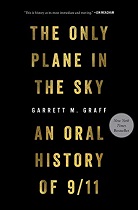
The Only Plane in the Sky: An Oral History of 9/11 – Garrett M. Graff

graffThis past Sunday marked the twenty-first anniversary of the September 11th attacks which claimed the lives of 2,996 people. The mood in New York City was somber, with rain and dark clouds all day. However, that did not stop anyone from remembering the tragedies on September 11, 2001, a day that changed America. Friends are always surprised to learn that I have never visited the 9/11 Memorial and Museum. As a New Yorker who was in Manhattan on the day of the attacks, and watched the events unfold from an office window, I will always have my memories of that sad day. But my reluctance to visit the museum has never prevented me from reading and hearing stories from people who were at the World Trade Center and survived. Undoubtedly, there are survivors who have never told their stories, choosing not to re-live the events of that day. Thousands of others did go on the record and their words have been preserved so that the history of 9/11 can continue to be told to future generations. Author Garrett M. Graff has compiled hundreds of statements from survivors, Bush Administration officials, NYC officials, military personnel and first responders, and has turned them into this oral history of the attacks.

Because the book is an oral history, there is no standard narration. The author does provide relevant information when needed but otherwise, the speakers tell us what happened as the day progressed. They range from former President George W. Bush to office workers at the World Trade Center complex. To be clear, Bush does not give an interview but what is included are snippets from the speeches he gave to the country on the evening of the attacks. Readers may feel that the approach is disjointed at first because the statements provided by the speakers are short but also long enough to give you relevant information. And the format works beautifully because it allows them to add small pieces to the bigger picture. And what emerges are unbelievable stories of luck, courage, heartbreak, and fate. You will experience a range of emotions and in the epilogue, the author discloses that even he became emotional while authoring the book. But he pressed forward, and the result is a masterpiece that belongs in the vast archive of materials about the 9/11 attacks.

Readers will notice that there are four stories in the book, one for each phase of the attacks that morning. They began in New York when the North Tower was struck at 8:46 a.m. At first, it was thought that a horrible accident had taken place but when a plane struck the South Tower, it was clear that America was under attack. Surprisingly, the response to the threats did not move at the speed at which one would hope. In fact, the confusion and chaos within America’s air defense network is clear in the book. Fighter pilots were forced to take flight in time spans they would never see under normal conditions. And what the pilots reveal about how prepared they were, and the reality of confronting Flight 93 will give you chills.

There are no smoking guns in the stories and the alleged hijackers are rarely mentioned but there is a wealth of information in the book about what took place behind the scenes within the World Trade Center, the Pentagon, the hijacked airliners and Air Force One which found itself the only plane in the sky as officials shut down America’s air space. As I read the book, I noted that the sobering reality of that day is that no one imagined that type of scenario. Former New York Fire Department Commissioner Thomas Van Essen, who watched the deaths of hundreds of firefighters, first responders and civilians has stated that “nothing could have ever really prepared us for what happened—or how fast the events would unfold“.  All hell broke loose in Manhattan and the horrors of the battle to survive at the World Trade Center as told by the survivors is haunting. I felt chills reading of the last moments from trapped workers on floor about the crash location and the breakdown in communication that could have saved lives. At the helm was Mayor Rudolph Giuliani and his statements also show how chaotic the day had become. 9/11 was a day that no one thought could ever happen but there were warnings that something was brewing and that an Islamic fundamentalist had America in his crosshairs.

Prior to the attacks of 9/11, the name Osama Bin Laden (1957-2011) was unknown to the public. But there were officials in Washington who knew of him and his plan to destroy America. The author does not explore whether Bin Laden was guilty and how planning was executed or any connections between the alleged suspects. He leaves that to the speakers who do state that they believed Bin Laden was behind the attacks. Aboard Air Force One, President Bush was briefed throughout the day and the former administration officials who appear in the book clarify any theories about his alleged “strange behavior” that day. The main concern was always Bush’s safety due to the belief that the president himself was a target. Action was swift and the Secret Service was taking any chances. The cabinet’s departure from Florida and decision to land at Barksdale Air Force Base are revisited in vivid detail and the suspense unfolds like Hollywood but this is what happened, and there was no script that day. People had jobs to be done and they went into action to the best of their abilities. The number of heroes in the book is staggering and chance encounters proved to be a matter of life or death.

The day after 9/11 I remember the feeling in New York City that what had transpired the day before could not have been real. It felt as if we were trapped in a horrible nightmare that would not end. We wanted to go back to Monday September 10 and keep that day going instead. But as weeks turned into months and crews continued with the cleanup of debris and identification of remains, the dark and unsettling truth that America was not immune to attack became clear. The country had changed, and the threat of terror became the number one priority. Children coming of age today will only know the attacks through multimedia but for older generations, 9/11 remains vividly clear. And we have authors such as Garrett M. Graff to thank for the books that preserve the history of the attacks that impacted the United States and the world. This oral history of that day is a treasure and a literary work that is a gift that keeps on giving.

ASIN:‎ B07P5H18W6

A Great Sacrifice: Northern Black Soldiers, Their Families, and the Experience of Civil War – James G. Mendez

MendezThe more I learn about history, the more I realize how much of it is not taught in schools. I recall learning about the Civil War but in limited discussions. And I fondly remember the 1989 film Glory featuring Matthew Broderick, Morgan Freeman, and Denzel Washington. The story of black soldiers in the Civil War needed to be shown but of course, there is far more to the story. Here, author James G. Mendez discusses the experiences of the Civil War’s black soldiers and their families during a time when America was being pulled apart at the seams. And what he shows is that there is far more to the story of the Civil War than one might expect.

When I saw this book in my list of recommendations, it immediately caught my attention. I knew beforehand that it would not be an easy read and my suspicion was correct. And though the story is not all tragedy and heartbreak, it is rife with examples of the grueling hardships black troops faced in the Union Army during the war as they fought for their freedom and the lives of millions of Black Americans.  But before the author arrives at the point of the induction of black troops, he first provides a discussion of the social climate in America which constantly denied African Americans basic rights. Frankly, life was brutally hard for blacks and as the author shows, basic rights were a dream for them. Readers might be shocked to see that states considered to be “liberal” or “blue” today have their own dark history including New York, my home state. Mendez pulls no punches and shows that even in the North, blacks still faced enormous hurdles, and support for the war effort varied and was not unified behind the idea of eradicating slavery. In fact, the author’s work shows that attitudes towards slavery were varied and unpredictable. However, the abolitionists were determined to see its demise.

I once told a friend that black history is American history. I say this because you cannot separate the two. And as can be seen in the book, the efforts of Black Americans have been crucial in the history of this nation. In regard to combat, Mendez explains:

“Blacks fought, both as slaves and free men, in every American war, including the Revolution, the War of 1812, and the Mexican-American War. They fought bravely and received accolades from prominent American leaders such as Andrew Jackson, who acknowledged after the Battle of New Orleans (December 1814 to January 1815) that black soldiers played a major role in his victory.” 

Despite the contributions of blacks, resistance to black troops during the Civil War was strong and commonplace. Readers will be disheartened and surprised to learn of the attitude towards using black troops held by those in power in across states in the Union and in the army itself. Delaware in particular will stand out to readers in the book. As the war progressed, it became apparent that the Union Army needed manpower and eventually, the idea of using black troops became a reality due to the actions of Governor John A. Andrew (1818-1867) of Massachusetts. His vision and the developments that ensued will provide readers with a firm foundation as the story of the Northern Black troops kicks into high gear.

As one would expect, the arrival of black troops did not always go smoothly and the harsh reality the new soldiers faced is discussed. And their opponents were not solely those wearing a uniform. In fact, I learned for the first time about the deadly race riots in Detroit and New York City that were horrifying. The shocking events and impact on the troops’ morale is a crucial point in the book for it shows the difficult place black troops found themselves in. How did they have the courage and will to fight for a country that denied them basic rights? In the face of severe hostility and violence, blacks continued to enlist in the Union Army. And to put the importance of their service into perspective, Mendez provides key statistics:

“Nearly 200,000 black soldiers served in the Civil War—178,975 in the army and the remainder in the navy. Out of the total number in the army, 32,723 were from the North.” 

On the battlefield, black troops fought and died alongside white soldiers but even in death they and their families continued to suffer indignations. Not only was the pay between whites and blacks unequal but for black families, obtaining benefits for a loved one’s death could be impossible. The sad and complicated story of the unequal pay matter is one of the darkest parts of the book, yet it makes the story of the troops even more remarkable. The military and Congress did eventually address the matter, but the timing will leave readers mystified.

In the film Glory, the battle scenes are graphic, and it is known that the savagery in which battles were fought was not for the faint at heart. However, I learned here that soldiers often died due to conditions that would not be fatal today and the leading causes of their deaths may surprise you. Of course, what the author reveals does make sense in hindsight but is still shocking. Further, those who survived returned with their scars and trauma. Survivors of the war include Charles R. Douglass (1844-1920), the son of abolitionist and social reformer Frederick Douglass (1818-1895). His story is a prime example of the extensive damage the war inflicted upon its participants.

Eventually, the war reaches its bloody climax, and the Confederacy is forced to concede defeat. But the Union mission was far from over. Black troops were needed more than ever and how they were used after the South’s defeat is, yet another example of the difficulties faced by them before, during, and after the war. But what stands out here is that the reality of black troops being gatekeepers of the South was a recipe for a disaster and doomed from the start. The intricacies of the Union’s post-war actions and failures by Washington are additional tragedies that afflicted black troops and the country, inadvertently paving the way for the rise of Jim Crow. This book is not about the Reconstruction Acts, but Mendez does mention the actions of President Andrew Johnson (1808-1875) who clashed with Radical Republicans as the latter sought to rebuild the South completely.

I wish this book had been available and required reading when I was a student years ago. There is a wealth of information contained here often neglected or possibly unknown. America has come a long way since the Civil War, but the conflict continues to haunt the nation as the issues of race and equality remain at the forefront. In comparison to the 1800s, life for Americans is vastly different. But let us not forget that between 1861 and 1865, America was at war with itself, and joining the effort were its black residents fighting for their lives and the freedom of future generations.

ASIN:‎ B07BHQ6XKM

Goodbye Vietnam – William Broyles


BroylesSeveral weeks ago, during a phone call with an uncle on my father’s side, he opened up about his service in Vietnam, in particular, his return to the United States after his tour was over. He painfully recalled being confronted by mothers wanting to know why he returned, and their sons did not. He continued by describing the hostile environment soldiers returning from Vietnam faced due to the unpopularity of the war. Years would pass before Vietnam veterans finally received the attention and understanding they deserved regarding their experiences in Southeast Asia. The war is far in the past, but I know my uncle carries with him dark memories of what he saw and had to do in order to survive his tour. In 1988, the television show China Beach (1988-1991) premiered and became a hit with viewers. One of the producers, William Broyles, had served in Vietnam and served as a technical consultant. Viewers might not have been aware that before the show made its debut, Broyles had made a return trip to Vietnam to understand how and why the American mission failed and the effects of the war upon the Vietnamese people. This book is the story of his return trip and what he learned from the people he was once required to kill as a soldier. 

Readers may wonder why any soldier would return to the place where they once faced death. But as Broyles explains in the book, there were things he needed to understand that could explain his experiences. The war is considered a failure from a mission objective point of view. But the question still remains, what exactly was the mission in Vietnam? On April 30, 1975, after American troops were withdrawn, Saigon quickly fell to the North Vietnamese Army (“NVA”). Without the support of the United States, South Vietnam faced the reality that unification would take place but not exactly in the way that anti-communists had hoped. Broyles is under no illusions and bluntly states: 

“We had our own myths, of course, chief among them that we were helping the people of Vietnam as we bombed their villages, their crops, and their country into a bloody, soggy mess. And in our own history we have customarily gone to war as the protectors of virtue and morality, battling the evil empires of the Huns, the Nazis, the Communists. Our cause was just, therefore we were just. But in Vietnam we came to terms with history.” 

Early in the book, Broyles points out that he was not a supporter of the war but did honor his draft notice, reporting to duty for eventual service in Vietnam. He proved to be an adaptive commander and during the book, he shows how his men helped him become a better squad leader. However, it is also clear from his words, that Vietnam would be a loss if America continued the war with a disjointed approach. Upon his return to Vietnam, he finally had the chance to speak with former enemies who embraced him openly and without hostility. The Vietnamese had the uncanny ability to accept that the war was a different time and that life goes on. I cannot say the same would apply universally to other nations once at war with the United States. Broyles learns critical information about the North Vietnamese effort and the weaknesses they found and exploited on the American side. What they reveal will shock readers and cause them to wonder why American commanders did not understand these concepts. Broyles provides a clue: 

“The men who got us into these wars are my generation, but they didn’t serve in Vietnam. They avoided it, dodged it, found reasons not to serve, just as their children don’t serve in their wars today. Anyone who fought in Vietnam could have told them how this story turns out, but they never asked.”

The wealth of information provided by the former NVA commanders is unreal. While America had superior weapons, we lacked key fundamental principles that the Vietnamese understood and exploited. And after reading what they tell Broyles, the American failures throughout the war are easier to understand. The author also discusses the role of Ho Chih Minh (1890-1969) and how the United States lost an opportunity to develop a critical ally. And the drafting of the Vietnamese constitution might result in readers recoiling in disbelief. Readers familiar with the name Archimedes Patti (1913-1998) will quickly understand the missed opportunity with the North Vietnamese government in the wake of World War II. 

No story about Vietnam is complete without an understanding of the devastation caused to the Vietnamese people and their land. Broyles does not shy away from the topic and is fully aware of how much they suffered during the conflict. Further, he highlights the tragic results of the misunderstanding by American forces of the Vietnamese way of life. Frankly, it seemed as if no one had taken the time to understand how the Vietnamese viewed themselves. Due to either arrogance or reluctance, young men like Broyles and my uncle were sent to war in a conflict that claimed 58,000 American lives and resulted in over 1 million Vietnamese deaths. But if we are to prevent another Vietnam, Broyles’ account of his return to the country will be invaluable. Soldiers go when they are called sometimes without knowing why they are sent. But they understand they have a job to do even if it is not popular. For the veterans of the Vietnam War, acknowledgment and acceptance have taken a long time to come to fruition. There was once a time when veterans of the war would not tell people they had served. The reason is best explained by Broyles as he brings his story to a close: 

“We had been willing to give our lives for our country, no less than our fathers had been at Normandy and Iwo Jima. This war, however, was different. We lost. And the country that sent us did not take us back into its arms. It either hated the war or simply wanted to forget it.”

ISBN-13: 9781480404335