
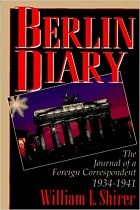
In December 1941, CBS News Foreign Correspondent William L. Shirer (1904-1993) sailed from Europe for the final time as World War II claimed lives and destroyed cities. At the time of his departure, World War II was heading into its second year but several months ahead of the Japanese attack at Pearl Harbor and the entry of the United States into the conflict. The journalist said goodbye to a continent to which he had devoted fifteen years of his life. Upon his return, he assembled his diary, carefully hidden from the Gestapo and Nazi Germany officials and turned them into this account of what he witnessed as Reich Chancellor Adolf Hitler (1889-1945) embarked on a path of world domination and plunged the world into its deadliest conflict. And the result is an eye-opening account of life behind the carefully crafted world image that Nazis put forth to keep the prying eyes of powerful nations averted as the Wehrmacht plundered its way across western Europe.
Shirer may be recognized by readers for his other phenomenal work on the Nazi regime, ‘The Rise and Fall of the Third Reich: A History of Nazi Germany‘, a masterpiece of writing that remains on my shelf and list of favorite books to this day. I strongly recommend it to readers in search of a thorough history of Nazi Germany. Here, the story is focused on life in Germany as the Nazis took hold of the country. At the start of the book, Hitler has already been made Chancellor, so there is little in the journal about the transfer of power from President Paul von Hindenburg (1847-1934) or the Reichstag Fire. The focus is on daily life in Berlin and the sobering Nazi conditions placed on the Reich’s citizens. As an American journalist, Shirer was allowed close access to the notorious figures of the Reich from President and Oberbefehlshaber der Luftwaffe Hermann Göring (1893-1946), Reich Minister of Propaganda Joseph Goebbels (1897-1945) and the notorious Gestapo Chief Heinrich Himmler (1900-1945). Shirer did cross paths with Hitler and witnessed his speeches, but there was no formal interview that Shirer would have referred to had it existed. Regardless of his location and situation within the Reich, he witnesses the truth behind the Reich that contrasted with what Hitler was saying to the German people.
Germany’s rearmament was a direct violation of the Treaty of Versailles, but Hitler had no intentions on adhering to the sanctions and rules placed upon the Fatherland. Western powers were slow to react to the Germany build-up but on the ground, Shirer was able to see how popular Hitler was becoming and the preparations for conflict like no other. He makes notes about German life from the peculiar behavior on the streets and Germans he knows personally. There are bits of humor in the observations yet the dark cloud on the horizon continues to approach. And in the weeks before the Germany invasion of Poland on September 1,1939, the suspense continued to build as Shirer shows in the daily entries. But there are two incidents in the notes that require a comment. The appeasement at Munich, widely seen as the last chance to stop Hitler’s plan is discussed and Shirer’s disbelief at the British actions towards Hitler’s aggression was shared by the author of this post. Former U.S. President John F. Kennedy (1917-1963) once wrote about this in his classic ‘Why England Slept‘, a valuable book about the failure to confront the Austrian menace in Berlin. The other entry in the journal relates to the German advancement on the Rhineland in 1936. What he notes in his journal about the missed opportunity to stop Hitler is one of the war’s most puzzling events. The comments by German officers following the de-escalation on the Rhine highlight the ability of the Germans to bluff their way through as Hitler consolidated power and seized territory.
The journal entries pick up in intensity as the threat of war increases. And like a runaway train, we know that it is coming but nothing can stop it, and the shock felt by Shirer as a correspondent on the ground is captured by his words written after the Germany invasion of Poland. From this point on, the diary takes an entirely different course as the Nazi machine kicks into high gear and then plateaus. England is the “antagonist” in the story according to Hitler, and a sizeable portion of the entries are related to the off and on-again discussions with London about “peace”, though Hitler had no desire to let England survive. The showdown between England and Germany intensifies and soon the Royal Air Force began to hit targets within the Fatherland. Experienced German pilots were aware that England would not be easily defeated, and that Germany had its weaknesses which made winning a world war impossible. As a journalist, Shirer was intent on publishing all news about the German war front both good and bad. However, censorship was in full effect and throughout the story, there are countless battles between the author and German officials who inspected incoming and outgoing communications. The propaganda war waged by the Reich was nothing short of absurd. But it worked within Germany’s borders. Shirer takes note of this and gives insight into German mindset that explains why the people gave Hitler the power he desired. And these observations could have only come from a correspondent in the field watching the events as they happened.
There are occasions in the book where Shirer leaves Germany and travels to other European nations but most of the entries are from Berlin where the promise of a quick war rings hollow as England puts up more of a fight than expected. And the realization that Germany is not invincible begins to dawn on the German people who create crude jokes to describe Third Reich leadership. In the distance is the looming threat of American involvement, about which Shirer makes a premonitory statement that later came to fruition. Hitler also knew it would happen and pre-emptively signed agreements with Japan and Italy, realizing that America would never surrender to German domination. Nonetheless, Shirer accurately sizes up Germany’s sealed fate and the insanity of Adolf Hitler. The final entry in the book provides a fitting conclusion to an unbelievable story. As Shirer watches Europe fade in the distance aboard the vessel that will begin his journey back to America he remarks:
“For a time I stood against the rail watching the lights recede on a Europe in which I had spent all fifteen of my adult years, which had given me all of my experience and what little knowledge I had. It had been a long time, but they had been happy years, personally, and for all people in Europe they had had meaning and borne hope until the war came and the Nazi blight and the hatred and the fraud and the political gangsterism and the murder and the massacre and the incredible intolerance and all the suffering and the starving and cold and the thud of a bomb blowing the people in a house to pieces, the thud of all the bombs blasting man’s hope and decency.”
A year after Shirer returned to the United States, Japan attacked the Pearl Harbor Naval base bringing America into the deadliest war in history. For the next five years the world remained at war in a conflict between democracy and tyranny. In the end, a dictator lay dead and nations in ruins. The threat of dictatorship will never subside and to protect society from the dangers of tyranny, we must remember how it was done. This is the inside story of the Third Reich and Adolf Hitler’s hold over Germany.
ISBN-10: 0883659220
ISBN-13: 978-0883659229
 The Bronx, New York is known as the birthplace of hip-hop music and the home of the New York Yankees. It is also a melting pot and home to immigrants from all parts of the world. And the history of the Bronx is as storied as the people who call him home. During the 1970s, New York City had ventured into its darkest days with the threat of bankruptcy and crime rate nothing short of astronomical. In the Bronx, an epidemic of fires emerged but not solely due to arson. In fact, arson played a minor role in the plague of fires that struck the Bronx. Regardless of how and why the fires started, the tragedies altered the Bronx landscape and left its people wondering where things went wrong. However, life in the Bronx was not always as perilous. Authors Mark Naison and Bob Gumbs conducted interviews with former residents of the Bronx to learn what life was like before the fires and drugs devastated communities.
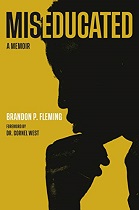 Every so often, a recommendation shows up in my list that catches me completely off guard. This book is one of them. At first, I was not sure what to make of it and had not heard of it previously. But after seeing the high rating, I decided I had to see for myself and now that I have finished the book, I can state with certainty that it is a true gem. As stated on the cover, the book is a memoir by Brandon P. Fleming, a former debate coach at Harvard University and the Founder & CEO of The Veritas School of Social Sciences. The school was formerly known as the Harvard Debate Council Diversity Project. And though he has found success through years of challenging work, there was a time when Fleming could have become an inner-city statistic.
 On May 14, 1948, World Zionist Organization executive head
 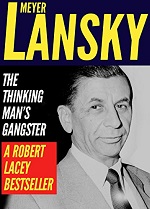 In September 1971, reputed mobster
 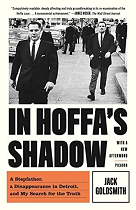 On the morning of July 30, 1975,
 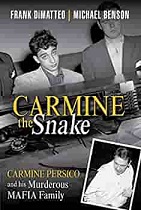 Infamous gangster
  Several years ago, I accompanied a friend as she undertook the task of burying her late mother who had passed after several years of ill health. The cemetery is for followers of the Jewish faith and as part of the internment process, I was required to wear a yarmulke and spread dirt over the grave. The rabbi explained the meaning behind the acts, and the presence of others in attendance who did not know her mother but came out after hearing of her death. That day I was a witness to a side of Judaism I was not previously aware of. My friend was not Hasidic but strongly identified with her Jewish roots. Today when I drive through parts of Brooklyn, I take notice of the Hasidic Jewish communities in Crown Heights, Borough Park, and Williamsburg. To the public, the people of these sects are elusive and mysterious. Author Hella Winston stepped into these worlds to learn the truth about those who become unchosen.
 On the morning of December 21, 1940, American writer
  Throughout history, rulers and conquerors have left their mark on the world with legacies that remain intact to this day.

You must be logged in to post a comment.