
 While reviewing my list of books to read, I did a double take as I read the title of this memoir by Pat Conroy. I had added it for a reason yet at the time, I could not recall why. But I put that aside and decided that there is no time like the present and it might be a hidden gem. It turns out that I was right in my assessment. However, I was not prepared for the incredible story within by Pat Conroy (1945-2016) that sheds light on the lives of those who have been forgotten even in the most powerful nation on earth. I knew that the story centered around education but of course, teaching is never as simple as writing on a blackboard. In fact, what is revealed in the book should remove all doubt that teaching is by any means as easy task. Some of us are naturally gifted to handle a classroom full of students, each with their own peculiar personality. In many ways, the teacher is conductor working the orchestra to fine tune all the instruments and produce a symphony that is pleasing to the ears. Conroy is the conductor here and what he accomplished on Yamacraw Island, South Carolina, will leave you sad, angry, and happy at the same time.
As I started reading the book, I asked myself where on earth is Yamacraw Island? The name is fictitious, but the land mass is known as Daufuskie Island which is located off the southeastern coast of South Carolina, close to Savannah, Georgia. It is only accessible by ferry or barge and has a population of less than one thousand people at any given time. The island has a rich history and is part of the region once home to the Gullah, African Americans who resided on the island and the nearby islands in South Carolina and Georgia. I had to take a break and look up the Gullah people as I did not know much about them. But Conroy points readers in the right direction:
“The island blacks of South Carolina are famous among linguists for their Gullah dialect. Experts have studied this patois for years and they have written several books on the subject. It is a combination of an African dialect and English; some even claim that remnants of Elizabethan English survive among the Gullah people.”
After doing some research, I came back to the book with a better understanding of the environment awaiting Conroy as he begins his teaching assignment on the island. Readers interested in the Gullah culture will find that this article contains a wealth of information. After arriving for his assignment with the blessing of Dr. Piedmont, Conroy is given a baptism by fire and soon learns that life of Yamacraw is unlike his comfortable existence in Beaufort and other parts of the South. Further, it will challenge his idea of blacks, largely formed by his middle-class background. The author is brutally honest and even discusses his own prejudice against blacks that had been cultivated in his youth. His transformation throughout the book is remarkable and it is fair to say that the kids of Yamacraw left their mark on him. Conroy also leaves his mark on the island which becomes evident as Piedmont seeks his departure from the school. The people in the book grew on me as well but there are many disturbing issues that come to the surface in the story as Conroy learns that he is really one of the very few people who cares about the island and its inhabitants.
The book is set in the 1960s and in the South, bringing the issue of race to the forefront. Race is everywhere in the story as one might expect and even those who try to appear as upstanding citizens are not free of bias that is shockingly horrific at times. The casual use of racial epithets and deranged ideas of communist hippies invading the island might make some readers recoil in disbelief and anger. Conroy feels the rage increasing within and after one unsettling experience, he remarks:
“Christ must do a lot of puking when he reflects upon the good works done in his name.”
As a Black American, I was not surprised at the attitudes in the book and even today there are people who strongly feel that way. But Conroy and others critical to the story, go above and beyond to change the lives of those students in any way possible. And although he stayed on the island just a couple of years, what he accomplishes is more than had been done previously even though the school is part of the larger Beaufort public school district. His work was not easy and on more than one occasion he crosses swords with Mrs. Brown who earns the wrath of the students. But surprisingly, some of the biggest challenges come from the natives themselves and not the administration in Beaufort. The author soon learns that he is embarking on difficult journey to break through a wall surrounding a culture that those outside of Yamacraw would never understand. Superstition, illiteracy, and the fear of whites make his job increasingly difficult as he implements an unorthodox program to help the students learn basic arithmetic, geography, reading and writing. The most basic skills a student should have are lacking and Conroy is in disbelief at how far behind the kids really are. All throughout the story, the backwardness of the island becomes hauntingly clear and changes his perception of the entire school system:
“Something was dawning on me then, an idea that seemed monstrous and unspeakable. I was beginning to think that the schools in Beaufort were glutted with black kids who did not know where to search for their behinds, who were so appallingly ignorant that their minds rotted in their skulls, and that the schools merely served as daytime detention camps for thousands of children who would never extract anything from a book, except a page to blow their noses or wipe their butts.”
The story is impossible to read without experiencing a range of emotions. But there are some beautiful moments such as their trip off the island for Halloween and the second excursion for a fair. The children absolutely love the experience and Conroy had opened their eyes to the world outside of Yamacraw. And the main characters among the children are charismatic in their own right. Mary is one of Conroy’s favorites next to Saul who is always interacting with the teacher whom they call “Mr. Conrack”. They are beautiful souls who have been failed by those closest to them and a school system that had no intention on improving their education which was virtually non-existent. When I finished the book, I wished that Conroy had written an epilogue that would have explained what did happen to the kids on the island. Some may have never moved away from it while others may have made the decision to see the rest of America and the world. If they have read this book, the memories of “Mr. Conrack” and his efforts to give them an education must surely bring back a flood of memories, some of which are quite painful. But if there is any solace to be found, it is that Conroy has put on the record, just how bad the education system in America was for many blacks living in areas that were neglected horribly.
The New York Times listed the book as a best-seller, and it is not hard to see why. It truly is an incredible story even if it seems unreal at times. However, Conroy reveals that in the United States, the “American Dream” is a myth for those whom society has forgotten about. And the account here can serve as an example of educational policies that are dismal failures. If you are looking for a good book about American society that explores a social issue which still rears its head, this is must-read.
ASIN : B003XKN65U
 The recent events that have transpired in Northern Ireland have given rise to concern and fear across the United Kingdom. A return of the Troubles which resulted in the deaths of over three thousand peoples is on the minds of many as the situation plays itself out. Cooler heads have mostly prevailed up until this point and the paramilitary groups on both sides have managed to keep themselves largely in check. But there are those who know that a return of the violence that plagued Northern Ireland for more than thirty years, would take the conflict in a far more deadly direction. On the Republican side, the Irish Republican Army (“IRA”) has carried the banner of a United Ireland and will not rest until it sees the expulsion of British rule. On the loyalist side, the Ulster Volunteer Force (“UVF”) and Ulster Defense Association (“UDA”) are unwavering in their support of British rule. Currently, a cease fire remains in place but both sides are ready to resume operations if open warfare should return. After reading extensively on the IRA, I decided to shift my focus and look at the Troubles from the loyalist side.
 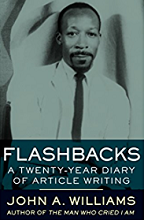 When I saw this book on sale, I felt a small sense of embarrassment because I did not know who John A. Williams (1925-2015) was. While it is true that he would be considered “before my time”, voices from the past are often as important as those of today. And any person that spends twenty years writing articles must have a significant number of experiences to reflect on. I gave in to my curiosity and decided to make the purchase. I can honestly say that I received more than I bargained for and have a newfound appreciation the late journalist. To be clear, the book is not an autobiography but more of a recollection of his most vivid memories about his early life, breaking into journalism and the numerous larger than life figures he had the chance to interview and, in some cases, form friendships with. Writers can tell you that composing an article is not always a simple as it seems and financially, it is not a way to get rich quick. In fact, the author removes all illusions of grandeur when he says:
 It truly is amazing that a person can learn so much about the future by examining the past. In America, there are parts of our nation’s history that people find difficult to control. Race is at the top of the list and continues to find itself the topic of discussions as the country grapples with instances of systematic discrimination and overt acts by individuals. However, America is also a very great nation that has the courage to critically examine itself. The problems we have are not new but instead, more attention is now being paid to them. And I honestly believe that to remedy those issues, we must continue to look at the past for it provides many valuable lessons from which we can learn. I picked up this book because 1) I have been a fan of Lorraine Hansberry (1930-1965) for many years and 2) I knew that the book would contain a wealth of highly intellectual discussions about American society that have relevance, even today. And I can say unquestionably that this short book is a good look at Hansberry’s brilliant mind that was able to dissect America in ways that sets the stage for meaningful dialogue and change.
  The death of George Floyd (1973-2020) initiated a chain of events that have resulted in a criminal trial and more discussions about race in America. It is a subject that will never go away and many still struggle to confront it with the honesty that is sometimes necessary. I have noticed that when it comes to race in America and the nation’s history, it is almost impossible to grasp the entire picture without factoring in the effect of the American Civil War (1861-1865). The conflict tore the nation apart over several issues, the most important of which was the topic of slavery. Many states in the North had already abolished slavery, but in the South, it remained a way of life. And because it was so critical to the South’s existence, the states that formed the Confederacy were willing to fight to the death to preserve what they felt was their right. Today we know with the benefit of hindsight that it was a lost cause from the start but the battle that ensued was a long and bloody conflict that left thousands dead and others critically wounded. Veterans who survived the conflict were forced to live with horrible memories of war that remained with them until their final days. Among the war’s combatants was the Eighteenth President of the United States and former General
  More than seventy years have passed since the end of World War II, yet it still fascinates historians and students. The number of books written about Adolf Hitler (1889-1945) and the Third SS Reich are perhaps the most written about any conflict and leader in history. The former Austrian vagabond rose to power in Germany and plunged the entire world into the deadliest conflict in the history of mankind. The emergence and use of the atomic bomb by American forces ushered in the nuclear age and set the stage for the Cold-War which lasted until the dissolution of the Soviet Union in December 1991. In my list of recommendations, I saw this title regarding the expulsion of Germans following the war. At first, I was not sure which expulsion was being referred to but quickly realized that it was pertaining to the Germans that were living in Nazi occupied territories outside of Germany. During the war, many of them enjoyed security and a stable life but in the wake of Germany’s defeat, nationalist governments came to power in former occupied territories, and they turned their wrath towards the German people that had been living within their borders. A staggering number of Germans were forced from their homes and sent back to Germany with no clear or concise plan for reintegrating them into a Germany struggling to recover and rebuild. And this is one part of the war that is often not discussed but a topic that should be known.
  Of America’s forty-six presidents that have served in office, few are as popular as Ronald Reagan (1911-2004). The 40th President of the United States is remembered for his time in Hollywood, his term as Governor of California and a presidential administration that had its share of controversy. The Iran-Contra scandal remains inextricably linked to Reagan and is a stark reminder of U.S. foreign policy gone wrong. The fallout in Central America from Washington’s influence and interference can still be felt to this day. Reagan is long gone from office and deceased since 2004. However, his name can still be found in conversations about politics in America, when discussing conservatism and the decline of Soviet influence across the globe. Although known to be a fierce conservative, Reagan was able to use his actor’s skills to conceal this from the public. But historians know all too well that there was dark side to the life of Reagan before and during his time in office. Journalist Dan Moldea takes another look at Reagan, paying close attention to his time in Hollywood as president of the Screen Actors Guild (SAG), its dealings with the Music Corporation of America (MCA) and the Italian American mafia.
 The Chileans have a saying that the Andes do not give back what they take. The survivors of Uruguyan Air Force Flight 571 are reminded of this each year as the anniversary of their ordeal is observed. On October 12, 1972 athletes from the Old Christians Rugby Club and selected family members departed from Montevideo, Uruguay en route to Santiago, Chile for a scheduled match. Inclement weather forced a stopover later that day in the Argentine city of Mendoza. On Friday, October 13, their plane departed Mendoza for the final leg of the trip but none of the passengers could have known that their flight would never reach its final destination. At 3:34 p.m., the plane impacted the mountains below causing the aircraft to break apart, killing several passengers nearly instantly. As the fuselage came to a rest, survivors found themselves in the valley of a mountain during the winter season and in unfamiliar territory. And for the next seventy-two days, the fuselage became their home as they struggled to keep going in the face of severe adversity. Eduardo Strauch was on the plane that day and survived the crash. But for more than thirty years, he has kept his silence about what he remembers and how it impacted his life. This short but poignant memoir is his account of what is known as the “Miracle in the Andes”.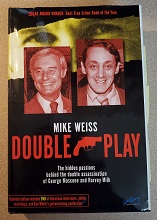
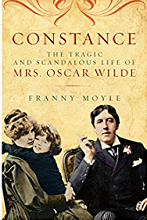 It is no secret that I absolutely love books and this blog is proof of that. The discovery of new reading material literally gives me a dopamine rush that only fellow bookworms can understand. When I saw this book about Constance Wilde (1858-1898), the wife of the late playwright Oscar Wilde (1854-1900), I knew that I had to purchase it. I often quote Wilde in conversation and when writing. He had a keen sense of human nature and his quotes still hold true today. At the height of his career, his plays were a hit, and the money was rolling in. But a scandal surrounding his sexual orientation changed all of that and left him a bitter and broken man. His story is complicated but what is often left out of it, is the role of his wife Constance whose own story is equally as moving. Author Franny Moyle takes a look at her life in this biography that just might make you look at the Wildes in a very different light.

You must be logged in to post a comment.