
 Americans in my age range and older will easily recall Nancy Reagan’s (1921-2016) advice to “just say no” to drugs. At the time, America had become fully engulfed in a deadly war against the rising trafficking and use of narcotics. The federal government continued to increase spending each year in the effort to combat drugs in America but regardless of the approach, the drugs kept coming and brought with them lengthy jail sentences, murder, and scores of addicts. However, the drugs did not arrive without help. Drug traffickers quickly realized that the growing market for cocaine and other hard drugs also produced large amounts of money. Drug routes began to sprout up all over the planet as traffickers continued to find ways to elude authorities. Stories of their exploits are plenty. And I believe everyone knows the names of the major drug kingpins such as Pablo Escobar (1949-1993) and Joaquin Guzman known as “El Chapo”. The bosses made the deals, but the groundwork was left to those willing to risk death and capture in a market worth billions of dollars. Among these fearless individuals was Adler Berriman “Barry” Seal (1939-1986). Fans of the Netflix show Narcos might recall Seal’s demise in season one. The scene is graphic but is also a fairly accurate depiction of Seal’s final moments. But what is missing from the show is Seal’s full background and his descent into the criminal underworld. Rumors have persisted that Seal was working for the Central Intelligence Agency (“CIA”) or other secret parts of the U.S. Government. But is there any truth to that? Author Del Hahn was an agent of the Federal Bureau of Investigation (“FBI”) and worked in the Baton Rouge field office at the time Seal was under active investigation. In this informative and gripping book, Hahn provides what may be the most accurate account of Seal’s tragic life.
Prior to reading the book, I had a fair amount of knowledge regarding Seal. Movie buffs will recall that Tom Cruise played Seal in the 2017 film American Made. The movie is pure Hollywood and its allegation that Seal was “recruited” by the CIA are nothing short of misleading. Hahn explores the issue at length and explains what did take place at the Mena Intermountain Airport in Mena, Arkansas as Seal was preparing to depart for a trip to South America. Officially, the CIA has stated that Seal never worked for their agency even though it did have a presence at the airport. Seal himself never said that he worked for the CIA. But what is more important in the story at hand is Seal’s downfall and his work for the Drug Enforcement Agency (“DEA”). However, before we reach that part of the book, Hahn provides a good biography of Seal, showing the twists and turns along the way even before he becomes involved in trafficking narcotics. It is clear that Seal’s life was anything but ordinary even from an early age. Further, I could see that Seal was an incredibly talented and articulate individual. Readers might be surprised to learn how early he became involved in the field of aviation. To say that flying was in his blood might be an understatement. It will be recalled by some that he began working for Trans World Airlines (“TWA”) in 1967. Although he was eventually terminated, he had established himself as a good pilot whose aircraft was the Boeing 707. After leaving TWA, Seal found a new source of income in the world of smuggling. But cocaine was not his first choice as Hahn explains as he shows the path Seal took from one drug to another. In some instances, Seal was at the right place at the right time and around the right people.
Similar to other players in the drug game, incarceration is never far away, and Seal found himself in trouble with the law on several occasions. But it was a major bust in an undercover sting operation by multiple law enforcement agencies that finally derailed the smuggler’s gravy train. This is the part of the book where the story takes a sharp turn down a darker path. At this point, Seal is fully engulfed in the cocaine business and associating with figures from the most notorious drug cartels in history. Faced with a stiff prison sentence and additional time in other pending cases, Seal makes a life changing decision and becomes more acquainted with the DEA that some may realize. The legal drama heightens the suspense in the story and Hahn does a solid job of putting everything in the simplest terms possible to help the story flow easily. I personally picked up a couple of things about the Title III Wiretap law and the Brady Rule which put things into a more clarified context. Law students and readers with an interest in criminal procedure will appreciate this part of the book. A sub-story to the legal drama is that the author refutes some of the more outlandish rumors about Seal’s alleged “work” for the CIA or any other intelligence agency through the explanation of the wiretaps. He also puts to rest any rumors about Seal’s connections to politicians in Washington. Hahn states frankly that:
“Mena/CIA conspiracy buffs should take note that during the entire time the Title III wiretap was in operation, there were no conversations intercepted between Seal, Terry Kent Reed, Bill Clinton, Lt. Col. Oliver North, or any representative of the CIA.”
The real story is not as sensational as some may wish but it is crazy enough on its own to keep readers glued to the pages of this book. Seal was a larger-than-life character with a love for the darker side of society. And he learned that in the drug game, no one can be trusted.
We know that Seal died in February 1986 but is what we see on Narcos the full explanation? Hahn also discusses how and why Seal was gunned down. And as I read the account of the events leading up to his death, I shook my head at the fate in store for Seal who has no idea that he has become a pawn in a much larger and deadlier game. As the 1980s progresses, Central America becomes a hotspot and the Reagan Administration becomes deeply involved in the war in El Salvador, events in Nicaragua and affairs in Honduras. Ret. Lt. Col. Oliver North also makes an appearance and provides the author with a statement that I believe should help put an end to the Seal mystique. North may be viewed suspiciously as some due to the Iran Contra affair but that is a discussion for another time. The focus here is on Barry Seal and North clears up any possible rumors about his alleged association with the notorious smuggler.
Throughout the book, not once does any information surface that Seal was anything other than a drug trafficker who got caught in an undercover operation and decided to work for the U.S. Government to help his own cause. That decision came with a heavy price, and he could not have known he was on a collision course with fate. His death while tragic, did nothing to stop the flow of illegal drugs into the United States. And Seal himself stated more than once that the narcotics could not be stopped by the war on drugs. Today we know that he was correct in his assessment. Seal may have been romanticized on screen, but the truth about his life is far more bitter and less glorious. If you want to know exactly who Barry Seal was and what really happened behind the scenes during the war on drugs, this is a must read.
ASIN: B01DJQWDJW
 A few years ago, I visited San Francisco and decided to take the boat ride around the bay under the Golden Gate Bridge. As the vessel made its way back to the dock, it traveled around the eastern side of the defunct prison once known as Alcatraz. The facility has long been closed but seeing it in person puts the stories about it into a new perspective. To some, the prison was simply known as “the rock”. Regardless of what it was called, it was home to some of America’s most dangerous criminals. And make no mistake, a decision to send an inmate to Alcatraz was not made lightly. Further, inmates knew that if you were sent to Alcatraz, you better be prepared to spend a lot of years there. Alvin F. Karpis (1907-1979) spent three decades at Alcatraz and in the annals of American history, he remains one of the most prominent crime figures from the outlaw era that saw the rise of such as John Dillinger (1903-1934), George “Baby Face” Nelson (1908-1934) and the deadly duo of Bonny Parker (1910-1934) and Clyde Barrow (1909-1934). Unlike many other outlaws, Karpis not only survived the 1930s but was eventually released from Alcatraz. This is the story his time on the run, capture by the Federal Bureau of Investigation (“FBI”) and later years as a free man.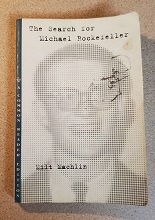
 On January 6, 2021, I and millions of people in America and abroad watched the events at the U.S. Capitol in which thousands of individuals breached security and entered the historic building in the belief that the 2020 Presidential Election had been stolen from Donald J. Trump. As I watched the video footage, a sense of gloom came over me due to the realization that the pillars of our vision of democracy were under siege. Personally, I have no political affiliation and regardless of which party we belong to, none of them are above reproach when our government is threatened from within or abroad. By evening, the dust had settled over Washington and officials began to piece together the chain of events that left several dead, dozens injured, and hundreds detained or the target of criminal investigation. Messages from family members and friends started to arrive on my phone with nearly if I had seen the events in Washington, D.C. The insurrection forced many of us to confront unsettling realities and acknowledge that threats exist all around us. Further, the day also showed how far America has strayed from the principles it professes to believe in.
 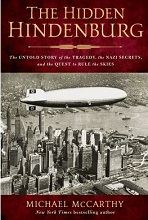 On May 6, 1937, the German aircraft LZ 129, officially known as the Hindenburg, crashed upon landing in Lakehurst, New Jersey. The crash claimed the lives of thirty-two people. Sixty-two people survived the disaster and later gave statements regarding what they saw and heard in the air ship’s final moments. In Berlin, the Third Reich went into crisis mode and grounded all Zeppelin air ships until authorities could figure out what went wrong. The accepted explanation for the disaster is that an electrostatic discharge ignited hydrogen leaking through an outer cover which resulted in a fast-moving fire that caused the air ship’s demise. The case seemed open and shut but is there more to the story? Author Michael McCarthy addresses that question and others about the Hindenburg’s history, Nazi Germany’s rise to power and the aftermath of the Hindenburg’s final voyage to America.
 Recently the world-famous Carnegie Hall in the midtown section of Manhattan announced its schedule for 2021-2022. After the history changing year of 2020, the music venue is set to resume operations as music lovers return to enjoy all that it has to offer. Opened in 1891, Carnegie Hall remains one of the most prestigious concert venues in New York City and keeps the name of its creator alive many years after his death. Andrew Carnegie (1835-1919) long ago cemented his place in American history as a successful philanthropist and one of the driving forces behind the expansion of the American steel industry. In his later years he sat down to write his life story that became this engaging autobiography.
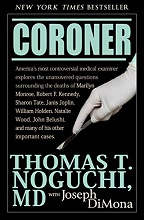 This may come as a shock to some, but I have always found the topic of death fascinating. I find it so because how we leave here often explains how we lived when we were alive. I am sure we have all asked the same question upon hearing of someone’s death: what was the cause? To determine the cause, care and faith is entrusted to the talents of forensic pathologists who become masters at unraveling the mysteries behind the final moments in the lives of humans. In the City of Los Angeles, pathologists have often faced heavy workloads in a city has seen its share of violent crime. For many years, Dr. Thomas Noguchi was the lead coroner in the County of Los Angeles and was tasked with performing some of the most important autopsies in history. In this short but highly engaging account of the cases that stand out, he explains what he found as he examined the bodies of larger-than-life figures Senator Robert F. Kennedy (1925-1968)(D-NY), actress Marilyn Monroe (1926-1962) and several other Hollywood stars. And though there are no “smoking guns”, Noguchi does a masterful job of explaining the forensic approach and how mysteries are sometimes simpler than they appear.
 When I saw the cover of this book, I had to stop for a second to see if I could pull up something from my memory about the Up Stairs Lounge. Satisfied that I had no prior knowledge of the incident described, I decided to buy the book and learn something new. On June 24, 1973, the people of New Orleans awoke to a typically early summer day. But by the time the sun set that day, the entire city was on edge and the patrons of the Up Stairs Lounge, an LGTB friendly establishment, found themselves in hell on earth. Sometime that afternoon, an arsonist intentionally set fire to the building and within minutes, patrons were engulfed by flames and smoke. The deliberate act claimed more than thirty lives with some victims perishing in grisly manners at the scene. Others met their ends while admitted to the hospital and the survivors were forced to confront mental and physical scars from one the deadliest days in New Orleans history. And the Metropolitan Community Church, which was friendly to the LGBT community, lost one-third of its membership. Author Robert W. Fieseler revisits that dark day in which the LGBT community New Orleans changed forever.
 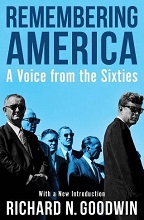 On more than one occasion my father has commented that the 1960s was the scariest decade of his life. The threat of Nuclear War, increasing tensions in Southeast Asia and the growing Civil Rights Movement captivated American society and the world. During one conversation he turned and said to me “at the time of the Cuban Missile Crisis, we didn’t know if we would live to see tomorrow or die in a nuclear exchange with the Soviet Union”. The assassinations of several activists and politicians spread fear across the nation and to many, it seemed as if America was on the verge of total anarchy. Richard N. Goodwin (1931-2018) worked in the administrations of Presidents John F. Kennedy (1917-1963) and Lyndon B. Johnson (1908-1973) and helped draft some of the most memorable speeches given by the iconic figures. In 1988 he completed this memoir which was re-published in 2014, of the decade he spent in politics with two presidents and two presidential candidates. And the result is a spellbinding account of a critical time in American history during which the country underwent profound heartache and change.
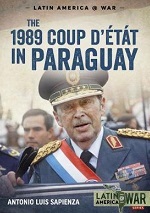 In the Colombian capital of Bogotá, protests which began on April 28 have increased and has resulted injuries to more than eight hundred people. The demonstrations are the result of public frustration with the country’s economic crisis that has been accelerated by the Covid-19 pandemic. The country has a long history of social unrest and what is taking place today is a scene common across Latin America, a region familiar with political and social unrest. The issues that have plagued Latin American nations have been compounded the by tyranny of right-wing dictators that solidified their power in the wake of World War II. On May 4, 1954, the Commander-In-Chief of the Paraguayan Army, Alfredo Stroessner (1912-2006), led a coup d’état that placed him in power of the small South American nation for more than thirty years. In 1989, he was removed in another coup d’état that return a sense of democracy to the country. Author Antonio Luis Sapienza is a native of Paraguay and here he recalls the reign of Stroessner and its impact on his nation.

You must be logged in to post a comment.