
 Undeniably, slavery is one of America’s darkest moments. It was an extremely dehumanizing system of exploitation and violence that destroyed families, claimed lives and helped propel the nation towards the Civil War. Even today, the issue is hotly contested as we continue to reconcile with its residual effects. We have come a very long way from the era of legalized slavery in the United States but still have a long way to go before achieving true equality for all. Black Americans have long suffered grave injustices but there is no need to go into them here. Instead, the focus will be on this autobiography that was written by a former slave named Harriet Jacobs (1813 or 1815 – 1897). In the book, the main character has the pseudonym of Linda Brent, who is the slave of the book’s antagonists, Dr. Flint and his family. And what she reveals about her life reaffirms the many dark truths about a slave’s life.
It may be hard for some readers to even approach the subject matter due to its nature but in the early 1800s, Jacobs’ experience was the daily reality for thousands of black men and women living in the Deep South. However, in this case there is a rare exception: Linda knows how to read and write. Generally, it was deeply forbidden for slave to become literate and nearly all faced death if it was discovered they had been reading and writing without the slave-owner’s knowledge. After introducing us to her immediate family, the story picks up in pace when Dr. Flint enters the picture. Linda finds herself maturing and catches the roving eye of the doctor, resulting in Mrs. Flint making Linda the target of her rage. Dr. Flint’s infatuation sets the tone for the rest of the book which is a struggle between good and evil until the very end. Linda’s brother Benjamin, provides us with the first act of resistance which shows how many blacks refused to be part of the degrading system of slavery. He would not be the last and even news of Nat Turner’s (1800-1831) rebellion reaches our main character. Linda possesses a keen eye to observe the dysfunction of slavery and American society. She reflects on the plight of the black man and makes a statement that captures the very essence of humiliation and degradation endured by black people:
“I admit that the black man is inferior. But what is it that makes him so? It is the ignorance in which white men compel him to live; it is the torturing whip that lashes manhood out of him; it is the fierce bloodhounds of the South, and the scarcely less cruel human bloodhounds of the north, who enforce the Fugitive Slave Law. They do the work.”
Dr. Flint is relentless in his pursuit and develops a fanatical obsession with ruling every aspect of her life. The two engage in a cat and mouse game with Linda doing her best to avoid the doctor’s advances. Her grandmother serves as her guardian angel but is limited in her capacity due to her status as a slave. Linda eventually becomes a mother herself and the rage of the doctor at this perceived “indignation” only reinforces her will to one day become free. The moment of clarity that comes to her, sets the stage for the second part of the book as she makes her break and finds a way north with the help of another guardian angel who finds a way for her to go north to the Free States.
Upon arrival in the North, Linda soon embraces a new world. And while prejudice still exists, she is finally able to live on her terms and away from the doctor. But he proves to be more resilient than expected and his actions to reclaiming her provide the remainder of the book with its heightened suspense that will keep readers in its grip. Linda moves throughout the Northeast, stopping in Philadelphia, New York and Boston. And incredibly, she experiences a trip abroad that widens her perspective on life in America. Before returning she informs us that:
“I remained abroad ten months, which was much longer than I had anticipated. During all that time, I never saw the slightest symptom of prejudice against color. Indeed, I entirely forgot it, till the time came for us to return to America.”
Although prejudice did and does exist in Europe, the American system of slavery is noted for its brutality. And America’s dark past with Jim Crow and other systems of discrimination have had profound effects on current day affairs. But her comment, reminds me of how the legendary musician Miles Davis (1926-1991) felt about Paris and returning to America. Linda does love her country and has found happiness in the North, far removed from the clutches of Dr. Flint. But a series of events results in her relocating to escape slave hunters. And the Fugitive Slave Act of 1850 sends shockwaves through the communities of free blacks and Abolitionists determined to end slavery once and for all. She does not fall victim to the act in the story and continues to live as a free woman, due to the interventions of a close friend who could not accept seeing her constantly fleeing for her life. Dr. Flint also meets his fate in the book and it helps bring the story to the conclusion we all will be hoping for. And although this is just one account of life in bondage, there were millions of others who had similar experiences. This story is a critical part of America’s dark and ugly past that continues to haunt us today. Highly recommended.
“Study the past if you would define the future” ― Confucius
ASIN : B08LG95G3G
 Quite some time has passed since my last post, mainly due to work matters and my being fully invested in finishing the book that is the subject of this review. Originally, I had planned on reading this three-part autobiography by William L. Shirer (1904-1993) one book at a time but Amazon also offers them combined and I decided to take the plunge. Shirer is by far, one of my favorite authors and there was no way I could pass this one up. Some of you may be familiar with him and recall that he is best known for his time as a CBS correspondent stationed in Nazi Germany during Adolf Hitler’s (1889-1945) rise to power. Upon returning to the United States, he moved to radio full time and lived the rest of his years as an author of historical non-fiction that has stood the test of time.
  February 9, 1979 marked 40 years since Paramount pictures released the cult-classic film
  During my first semester at the John Jay College of Criminal Justice many years ago, I attended a class in the field of fire science as part of my graduate degree track. In the class, we, were required to study one of the deadliest fires in New York City history: the Triangle Shirtwaist Factory fire on March 25, 1911. Our professor warned us that the story was deeply disturbing and that the detailed descriptions of the victims would be beyond grisly. However, he also explained that as part of the basis for a career in fire protection, we needed to understand the life safety code and the stories of how and why fire protection has continued to advance. Today, nearly twenty-three years later, I still recall the fire and its impact on workplace safety. But I decided to read this book by David Von Drehle to revisit the fire and perhaps learn something I did not know previously. And what I found within its pages, is a story much longer story than the one I had learned of over two decades ago. And similar to when I first read about the fire in college, I also felt chills go down my spine this time around.
 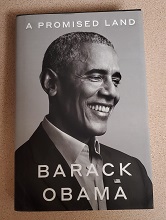 I believe that we can all agree that 2020 was a year unlike any other in modern history. The coronavirus, officially known as Covid-19, brought the world to a grinding halt and disrupted our lives in ways we could have never imagined. Here in the United States, we saw the pandemic take hold, social unrest erupt and the election of Joe Biden, Jr., as the next President of the United States of America. His swearing in on January 20, will mark the final stage in the transition between administrations. For some, it signals the return of politics largely void of the more extreme rhetoric that has gripped the country in recent years. Former President Barack Obama, will undoubtedly be called on for support and advice. I have often thought back to the Obama administration and the decisions that were made on a range of issues. But in particular, I have become even more interested in what life is really like as the Commander-In-Chief. This book, by the 44th President of the United States is exactly what I had been looking for. Not only does it provide an insider’s view into life within the White House, it is also a sobering account of life as a politician. There are highs and lows with a lot in between.
  Joseph P. Kennedy, Sr. (1888-1969) frequently reminded those he knew that his ancestor had come to America to escape the “potato famine” in Ireland. While Kennedy was certainly well versed at re-writing his family’s history, the famine did indeed exist and caused death and destruction across southern and western Ireland. I had known of the famine and it resulting in the mass exodus of Irish families who made new lives in North America. However, there was much about the famine that I did not know and felt that this book was the perfect choice to learn about a historical event that changed Irish history. Those of you who follow this blog might recall some of the reviews I have posted regarding the conflict in Northern Ireland known as “the Troubles”. Here, I am shifting gears a bit and taking a step back further in time. And the first question I had for myself before reading this book was just what exactly did happen during the famine? Author Susan Campbell Bartoletti provides the answer to that question and a wealth of information that will allow any reader of this book to fully understand the cause of the famine and the events that transpired.
 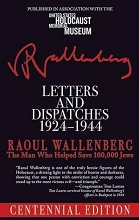 I am always on the lookout for stories that I have not yet heard and names of people I am not yet familiar with. When I saw the cover of this book, I tried to jog my memory with regards to the name of the author. I finally realized that I did not know of Raoul Wallenberg (1912 -1947?) but I knew instantly that I had to read this book. Admittedly, I am always interested in the personal correspondence of figures from the distant past to see how information was shared in the years before E-mails, SMS and social media. The cover of the book directly describes what is contained within which is a collection of the letters between Raoul, his grandfather Gustaf Wallenberg (1863-1937) and Raoul’s mother Maj von Dardel (1891-1979) whose replies to her son are not included.

 When we think of political dynasties in America, perhaps no other name has had as big of an impact as the Kennedys. They are both admired and loathed but their importance to the American experience cannot be understated. The patriarch, Joseph (“Joe”) P. Kennedy, Sr. (1888-1969) was once one of the wealthiest men in America. Yet for all of his financial success, controversy followed him and his family for years after his death. The family’s success undoubtedly reached its highest peak with second son John F. (“Jack”) Kennedy (1917-1963) was elected in 1960 as the next President of the United States. For Joe, it was a dream come true and reaffirmed his mantra that “Kennedys don’t lose”. To most of the public, the Kennedys seemed like figures out of a story book and the media’s creation of the term “Camelot” that was given to the Kennedy White House, further enhanced the family’s mythical status. The image presented to the public gave the impression of a fairytale marriage that any single person would envy. Today, we know through the benefit of hindsight that the truth is far less glamarous and behind the scenes, there were dark storm clouds gathering as infidelity, old man Joe’s influence and one foreign crisis after another made life as the first family strenuous to say the least. Rumors have persisted over the years that Joe Kennedy provided the money for all of his sons’ political campaigns and that the money he provided was used in several places to swing the election to his son Jack. And while there has never been documented evidence of such, statements have been made by many individuals that action were taken to give Kennedy the election. All knowledge of what really did happen went with Joe Kennedy to the grave and I doubt that even his sons knew the whole story. He was a master at compartmentalization and for years, remained chameleon like figure. Ronald Kessler decided to take another at Kennedy’s life and what he found has been compiled into this book that peels back the layers that have shrouded the Kennedy family is mystique for several decades.

You must be logged in to post a comment.