
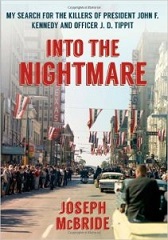
On occasion, I find myself coming back to the murder of President John F. Kennedy (1917-1963). His assassination remains one of the America’s darkest moments and officially, the crime is still an open case for the Dallas Police Department. Some may express surprise at that statement but it should be remembered that no one was ever convicted for Kennedy’s murder. A twenty-four year-old former Marine named Lee Harvey Oswald (1939-1963) was convicted in the court of public opinion as the assassin but was himself murdered before he could stand trial in a Dallas courtroom. Roughly forty-five minutes after Kennedy’s murder, Dallas Police Officer J.D. Tippit (1924-1963) was shot to death after stopping a pedestrian walking in the Oak Cliff section of Dallas. Oswald was arrested at the Texas Theater and charged with Tippit’s murder. But due to his death at the hands of nightclub owner Jack Ruby (1911-1967), he was never officially tried and convicted of Tippit’s murder, which is still an open homicide case. The Warren Commission established that Oswald committed both murders before hiding in the Texas theater and for years many have accepted the “lone gunman” theory. But if we look closer, there are many things about both murders and Oswald himself that just do not add up. Author Joseph McBride has spent thirty years researching and writing this book that takes us into the nightmare that occurred on November 22, 196,3 in Dallas, Texas. And what he has to say might make the hair on the back of your neck stand up.
The book opens with a recap of McBride’s childhood in Wisconsin during 1960 when Kennedy was ramping up his campaign for the presidency. McBride’s parents were both reporters and his mother was part of the local Democrat committee. Her position in the committee provided McBride to meet Kennedy on several occasions and during one of those occasions, McBride took a photo which is included in the book, of Kennedy in what could be described as an unguarded moment. On the day of Kennedy’s murder, McBride relates that information presented during news broadcasts raised his suspicions about the crime Those seeds of doubt grew into a life-long quest to find the truth about Kennedy’s murder. I should point out that McBride’s focus here is primarily on the murders of Oswald and Tippit. The book is not a broad discussion of the crimes such as Jim Marrs’ best-selling classic Crossfire: The Plot That Killed Kennedy, but a more streamlined approach to examine what former commission member David W. Belin (1928-1999) called the “Rosetta Stone” of the case.
Seasoned researchers into the Kennedy assassination will know that there has been a lack of focus on the life of J.D. Tippit. He has typically been portrayed as the simple yet heroic officer who tried to stop Lee Harvey Oswald and died in the line of duty. On the surface it fits the narrative of the good cop/bad suspect line that we are taught from a young age. However, if Tippit was attempting to arrest the man who allegedly had just shot the president, then why did he not have his gun drawn as he got out of his squad car? And how would he have known to stop Oswald when Dallas Police had yet to learn Oswald’s name according to the official timeline? There are seemingly endless mysteries surrounding both Tippit and Oswald regarding their alleged encounter. McBride journeyed down the rabbit hole and provides what I have found to be the most in-depth analysis of what may have taken place in the Oak Cliff section of Dallas on that fateful day.
I believe that by putting his focus on the Tippit murder, it allows readers to digest critical information without being overwhelmed by other events that took place in and around Dallas that day. Tippit’s murder undoubtedly is the Rosetta Stone of the case but not for the reasons that Belin believed as McBride makes clear. To be clear, McBride is not a conspiracy theorist. In fact, what I found is that he remains unbiased and does not shy away from presenting contradictory evidence when addressing a topic. I believe that makes the book even more fascinating. McBride presents an honest and thorough discussion of the Tippit murder. And at no point, did I feel he has moving too far in one direction but rather he moves through the book like a veteran detective with an eagle’s eye for clues. And frankly, the amount of information he provides about Tippit’s personal life is just staggering and has caused me to see the murder in a very different light. And although secrets remain about Tippit’s murder, the version presented in the Warren Commission’s report should be taken with a grain of salt. If you want to learn about the real J.D. Tippit, this is without question a book that you need to read.
Although Tippit’s murder is the nexus of the book, McBride does focus on other strange events that day after shots rang out in Dealey Plaza. The most telling are FBI reports from field agents in Dallas that reveal some very surprisingly decisions taken by Dallas officials. And the discussions between J. Edgar Hoover (1895-1972) and former President Lyndon B. Johnson (1908-1973) underscore the problems Dallas detectives faced in making their case. Further, a particularly deeply distburbing fact comes to light about the attitude of Dallas police towards Kennedy’s murder. I found myself staring in disbelief and what former detective Jim Leavelle (1920-2019) reveals about the effort to solve Kennedy’s murder. Before leaving Washington, Kennedy had been briefed on the right-wing climate of hate in Dallas and was advised not to travel there. But he insisted on doing so to show that the President of the United States cannot be afraid to travel within his own country. It was his fate to go to Dallas but the local police owed him far more of an effort than what is shown in the book.
The revelations of the numerous problems of proving Oswald’s guilt, provide the context for a discussion on the many problems with regards to the lone gunman theory. Capt. William Fritz of the Dallas Police Department was certainly aware of this and as McBride shows, most officials knew that making a case against Oswald would be a monumental task. Of particular interes are McBride’s notes of his discussion with former Dallas District Attorney Henry Wade (1914-2001). The statements by Wade in response to McBride’s questions are nothing short of mind-boggling and a sharp defense attorney would have made a name for himself picking apart the indictment against Oswald. However, that is only a small piece of the puzzle that McBride puts together to show the lack of evidence, planted evidence, hidden information and various other anomalies that make the lone gunman theory even more ludicrous.
There has always been confusion as to what Tippit was doing before he was killed. According to the Warren Commission report, there exist at least forty-five minutes between the shooting in Dealey Plaza and his murder in Oak Cliff. But much of what Tippit and Oswald were doing during that time remains shrouded in mystery. To piece the story together, McBride draws on several sources that include Tippit’s widow Marie, witnesses near Oak Cliff who spotted Tippit prior to his death, Dallas Police Department radio transmissions and witnesses to the murder, some of whom were never called to testify by the Warren Commission. As I read through the statements and series of events, I felt a chill run down my spine as I realized that there was a lot more to the events in Oak Cliff that we have been led to believe. Not only was Tippit out of his assigned area but his murder took place near the home of Jack Ruby who shot Oswald live on national television on November 24. Questions have persisted if Oswald, Tippit and Ruby knew each other. While I would stop short of saying that there is a smoking gun, what we do learn raises suspicion that many figures in Oak Cliff were more connected than the Warren Commission wanted to acknloweledge.
McBride’s analysis of the murders that day is spellbinding and anyone that has doubts about the official story should absolutely read this book. There are no outlandish theories or witness bashing. It is simply an honest and open discussion built on facts discovered by the author through meticulous and exhaustive research. I guarantee that after you have finished this book, you will find yourself looking at the murder of John F. Kennedy in a completely different light.
ASIN: B00EP6B0J0
 One of the things that I love about books is that there are so many that I have yet to read. Many of them will be classics that I will never forget. I had always been aware of Ralph Ellison (1914-1994) but remained in the dark about this classic book which was published in 1952. I noticed that I had it on my shelf and decided to see for myself why it remains so highly regarded. Having finished the book, I now understand why Ellison was ahead of his time and why this book is still relevant to this day.
 I am constantly amazed that in spite of all of the things I learned in school and through my own studies, that there are endless stories from the Civil Rights Movement that are continuing to be told. Amazon recommended this biography of Ethel Lois Payne (1911-1991) and as I looked at the cover, I recalled the name but the face did not ring a bell. My curiousity continued to pull me in and I knew that I had to learn more about this intriguing woman. Author James McGrath Morris has called her the first lady of the Black press. It is quite the title but as I learned while reading the book, the title was not only earned but it may in fact may be an an understatement.
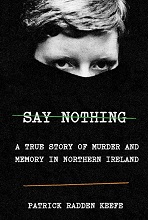 The eyes on the cover of this book are some of the most expressive I have seen although only half of the person’s face is exposed. As they stared back at me from the cover, I felt a chill because I knew they were the eyes of someone who did not fear death. I did not know who the person was but I found myself compelled to learn more. As I opened up the book and began to read, I soon learned the name of the woman on the cover whose story is one of several that are interwoven. Her name was Dolours Price (1951-2013) and this truly is a story of murder and memory.
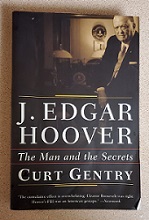 The mere mention of his name was enough to cause fear and apprehension. Politicans, film stars and celebrities of all sorts had learned that he knew all of their secrets. Exactly how many secrets he knew is still a mystery as his most sensitive files were destroyed when he died. But what is certain is that John Edgar Hoover (1895-1972) stands out as one of the most feared figures from his time as director of the Federal Bureau of Investigation (“FBI”). During his time in office, he witnessed six presidential administrations and three wars, the latter of which would continue after his death. His reign was supreme and no one deared to challenge it out of fear that they would wall fall victim to the wrath of one of America’s most powerful investigators. The public facade carefully crafted by Hoover, served him well in masking the many dark secrets he kept closely guarded. Curt Gentry peels back the layers in this look at the life of the legendary FBI director.
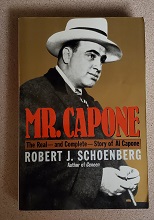 The City of Chicago has earned a reputation as being a tough metropolitan landscape in which winters are harsh, politics fierce and the streets are dangerous. In recent years, the rise in shootings on the south side of the city have made news headlines across America. The violence has been featured in documentaries and articles that are both eye-opening and horrific. No one yet knows if or when the violence will end but authorities in Chicago continue to grapple with gun violence that shows no signs of slowing down. The battles are reminiscent of another era in American history where blood flowed on Chicago’s streets as gangsters gunned each other down during the 1920s and 1930s. Of all the gangsters that called Chicago home, only one has retained a permanent place in American pop culture as the icon for organized crime. His name was Alphonse “Al” Capone (1899-1947) and this is the story of his life by author Robert J. Schoenberg.

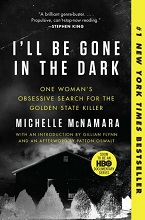 When I started reading this book, I was not sure if I should continue as I felt that the subject matter was darker than even I am used to. But something inside of me said to keep going and listen to what the author is saying. Less than ten minutes into the book, I realized that I would not be putting it down anytime soon. In fact, the book pulled me in so much that I finished it one day. I simply could not get enough of the story. Initially, the book came as a recommendation on Amazon. Like many others, I was aware of other killers in Californian history. The Zodiac? Check. Richard Ramirez? Check. Golden State Killer? I had no clue about this menace who terrorized southern California in the late 1970s and early 1980s. But as I read through the beginning of the book, I soon realized that author Michelle McNamara (1970-2016) was about to take me deep inside the story of the “Original Night Stalker”.
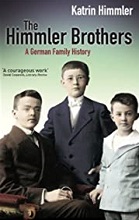 Learning one’s family history can be an enlightening and liberating experience. However, it can also reveal many truths that some wish to remain hidden. So what happens when you discover that your grandfather, the younger brother of a key architect in the “Final Solution” was not as innocent as you have been led to believe? Well, that is what happened to Katrin Himmler, whose grandfather Ernst Himmler (1905-1945), was the younger brother of Schutzstaffel Reichsführer Heinrich Himmler (1900-1945). Himmler’s father had asked her to search the Federal Archives in Berlin for information on his father Ernst and what she discovered was a trove of information not just on her grandfather, but on her uncles Heinrich and Gebhard Himmler (1898-1982). What started out as simple research request, evolved into the family history contained within the pages of this eye-opening account of the Himmler story.

You must be logged in to post a comment.