I Am Perhaps Dying: The Medical Backstory of Spinal Tuberculosis Hidden in the Civil War Diary of LeRoy Wiley Gresham – Dennis A. Rasbach MD FACS (Author), Janet Elizabeth Croon (Editor)

leroyIn November, 2019, I had the opportunity to read “The War Outside My Window: The Civil War Diary of LeRoy Wiley Gresham 1860-1865” by author Janet E. Croon. The book is a collection of the diary entries made by LeRoy Wiley Gresham (1847-1868) during the American Civil War.  He lived in Macon, Georgia and was born into a slave-owning family committed to the Confederacy.  Before reading the book I had no idea who Gresham was.  But what I found after reading his diary, is that he was a bright young man whose intellect improves as the journal progresses.  However, I also noticed that throughout the book he is in poor health that does not improve but instead declines as the diary moves towards 1863 and beyond.  LeRoy did not know he was dying until nearly right before his passing.  His parents and older sibling Thomas, most likely knew how severe his condition was but kept it hidden from him probably with the thought that telling him would break the will he had left following the devastating injury in 1856 that resulted in his left leg being crushed by a falling chimney.   We know that tuberculosis is what eventually took his life but at the time, there was much about his condition that doctors did not know and were unable to treat. Dennis A. Rasbach, M.D., F.A.C.S., has taken a look at LeRoy’s medical history to understand how his condition progressed and the various treatments prescribed to him by his treating physicians.

Dr. Rasbach has concluded that Mycobacterium tuberculosis is what ultimately took Leroy’s life.  It is formally known as Pott’s Disease, name after the late English surgeon Percival Pott (1714-1788).  Today, tuberculosis is rarely heard of and a diagnosis y would raise eyebrows and result in reactions of shock and surprise.  But during the time in which LeRoy lived, tuberculosis was the world’s deadliest killer and a diagnosis such as the one received by LeRoy, almost always resulted in death.  Dr. Rasbach elaborates further with the following statement:

In the second half of the nineteenth century, tuberculosis was the deadliest disease in the world, accounting for one-third of all deaths. Even today, a quarter of the world’s population is infected with TB, and the disease remains one of the top ten causes of death, claiming 1.7 million lives annually, mostly in poor and underdeveloped countries.”

Throughout the diary, LeRoy utilizes a number of medications and remedies to combat his deteriorating condition.  Each are examined in detail to see why doctors resorted to those specific remedies and how they affected his daily condition.  Readers might express surprise at some of the things LeRoy was given to take, most notably significant servings of alcohol. Today, we would not even think of giving a teenage alcohol to treat a condition but in the 1800s, it was a widely accepted method of treatment.  Incredibly, some of the things LeRoy used are still used today. Dr. Rasbach mentions where and some readers might be surprised to see exactly where.

The second half of the book is a collection of journal entries related mainly to his health which he notes is declining rapidly.  The descriptions are graphic and I can only imagine how difficult it must have been for those around him to tend to him daily.  He often complains of his back, headaches, upset stomach and contracted legs making it impossible for him to even think of walking.  The pain is so bad that in one entry, he writes “saw off my leg”.  This young man lived in daily pain and sadly, his doctors and family were powerless to help as the medicines we have today did not exist at the time. For LeRoy, it was a slow and agonizing death.  But he gave us plenty of clues about his health and in hindsight, Dr. Rasbach has connected all of the dots, revealing the culprit behind LeRoy’s death at just eighteen years of age.

If you have read LeRoy’s journal and want to know more about the health condition that plagued him throughout the book, this is a must read.  And even if you have not read it but want to know more about the deadly history of tuberculosis, this book will be a valuable addition to any library.

ASIN: B07D7G7RJ8

The Twelve Apostles: Michael Collins, the Squad, and Ireland’s Fight for Freedom – Tim Pat Coogan

Collins The looming exit from the European Union by England will undoubtedly be watched by the whole world, which has been kept in suspense by the referendum in 2016 and failure of former British Prime Minster Theresa May to garner enough votes for a formal separation.  Current Prime Minister Boris Johnson has declared it will happen and on January 31, 2020, he will be proven right or wrong on the matter.  In Northern Ireland, there is fear and uncertainty regarding how the move by England will affect Ulster County, the loyalist stronghold composed of majority that stands firmly behind the Crown.  The Irish Republican Army (“IRA”) will be following as well to see how the move will affect its goal for a united Ireland free of British interference.  Time will tell how the departure from the European Union will affect both Britain and other nations.  Recently, I decided to do some further reading on Northern Ireland and I came across this book by Tim Pat Coogan about an Irish revolutionary I was previously unfamiliar with.  His name was Michael Collins (1890-1922) and this is the story of his group of assassins known as the Twelve Apostles and their fight for freedom from Downing Street by famed author Tim Pat Coogan.

I believe that readers will find this book enjoyable if they have a sound base of knowledge regarding the conflict in Northern Ireland.  In fact, the author Tim Pat Coogan, has written extensively about the “Troubles”, and in his book “1916: The Easter Rising“, he explains the movements of the IRA and the seizure of the General Post Office and other critical facilities in Dublin.  That uprising is considered by many to be the defining moment in the Republican goal of a united Ireland and liberation from British rule.   The execution of IRA members in the wake of the uprising turned them into the martyrs and set the stage for the decades running battle between Loyalist and Republican forces.

Collins is the focus here and the author wastes no time in getting into the story.  From the beginning it is clear that Collins is man with strong convictions and had no repulsion to using violence as a tool of effecting change.  He was a complex character but firmly committed to the expulsion of the Crown.  I warn readers that this book does not have a happy ending. In fact, the story is gritty and acts of violence occur throughout.  But I do believe that if you choose to read this book, that is something you already know and have accepted. Collins and his group that are known as the Twelve Apostles carry out acts of aggression that will shock many readers.  The events in the book take place between the years 1916 and 1922 and their savagery rival violence seen even today.  As for Collins, Coogan remarks in the introduction that:

The Jewish leader Yitzhak Shamir both studied the methods of Michael Collins, and used the code name Michael as his own nom de guerre. And in the state of Israel which Shamir helped to form, I was made aware of a guilty foreboding on the part of those Israeli citizens who knew their history, that one day the Arabs too might produce a Michael Collins – and that if they did, there would not be a supermarket left standing in Israel“.

I completely agree and shudder to think of how the Gaza strip would be today if a Collins type figure had in fact existed and acted on behalf of the Palestinians.

In America, the murder of a policeman or elected official spurs outrage and swift action by law enforcement.  Nearly every criminal will tell you that no one wants to be charged with murdering a cop.  But for Collins and the Apostles, everyone was fair game.  No one escapes the wrath of the IRA and its band of enforcers are eerily similar to the mafia’s own Murder, Inc., based out of Brooklyn, New York.  The Apostles have a hit list and they go through it with deadly precision as part of their mission to obtain Ireland’s freedom.  Coogan tells the stories in all of their detail and at times, it felt as is a movie was being filmed. The assassinations and attacks are brazen and deadly, with an increasing body count that will cause some readers to sit in disbelief.

In December, 1921, the Irish Republic and the United Kingdom signed the Anglo-Irish Treaty, resulting in the creation of the Irish Free State, which was composed of 26 out of 32 counties in Ireland. The remaining six in Northern Ireland chose to leave and remain in firm support of England.  Collins became head of the Irish Free State and held the position until his own death in 1922.  The treaty was rejected by hardliners within the IRA and tensions led to the Irish Civil War of 1922, in which the IRA split into factions.  Collins now found himself at odds with those he had once stood next to in the fight for Ireland’s freedom including Éamon de Valera (1882-1975) who leaves and then re-enters the story at pivotal moments.  De Valera late formed Fianna Fáil in 1926 after separating from the anti-treaty Sinn Féin party.  Incredibly, he lived until the age of 92, when he died from complications of pneumonia and heart failure on August 19, 1975.

If you want to know more about the uprising in 1916 and the residual effects in the years that followed, this book is a must read.  However, it ends after Collins’ death, which comes after the Apostles have parted ways in the wake of the Irish Civil War.  Readers looking for a longer account of the conflict will be satisfied with Kevin Toolis’ “Rebel Hearts: Journeys Within the IRA’s Soul” and Peter Taylor’s “Provos: The IRA and Sinn Fein“. Both are highly informative and give excellent explanations about why the IRA continues to fight. And for a more personal story, I highly recommend Dennis O’ Hearn’s Nothing But an Unfinished Song: The Life and Times of Bobby Sands“, which is the definitive biography of the iconic IRA figure. Tim Pat Coogan has done it again with an excellent account of the activities of Michael Collins and the origins of the long running feud known as The “Troubles”.

ASIN: B073YFPTRR

My People The Sioux – Luther Standing Bear

lutherIn the state of South Dakota, the Pine Ridge Reservation is home to the descendants of the Oglala Sioux Native American tribe.  The children of Pine Ridge aspire to enroll in the Red Cloud High School with hopes of attending college.  Many of their parent, suffer from alcoholism, a plague that has followed the Oglala Sioux since their first encounter with white settlers in the early 1800s.  Poverty and discrimination have resulted in depression and despair which has yet to be fully addressed.  The true story of the Native American experience remains misunderstood and in some cases neglected. They current day Oglala are the descendants of indigenous people whose home was a North American continent in which life was simple yet effective with  languages largely unwritten and passed down through oral teaching.  The Sioux were only one of hundreds of tribes, some of whom are now extinct such as the Canarsie Indians.  Chief Luther Standing Bear (1868-1939) was born in Rosebud, South Dakota into the Oglala Sioux tribe and this is his story of his life and his people.

I found this enjoyable autobiography on Amazon while browsing through recommendations. I have always been curious about Native American history and the title quickly caught my attention.  This story begins in Rosebud, South Dakota during Standing Bear’s childhood.  Life is simple for the Sioux and he takes us through the motions, explaining daily life and the many customs practiced by their tribe.  There is a good amount of information about the Sioux and their approach to life.  Readers today may find some things strange but it is imperative to remember that this was a community that had no exposure at that time, to modern technology.

Life for the Sioux changes as the United States Government increases its policy of expansionism and begins to seize land home to native tribes.  The new settlers introduce the Sioux to new foods and customs, and his descriptions about them are eye-opening and highlight the stark difference in culture between the two groups.   But over time, the two groups become more acquainted with each other and the white settlers become determined to give the Sioux a formal education. Standing Bear enrolls the Carlisle Indian School under the direction of Captain Pratt who becomes one of the most important figures in his life as we read the book.   And it is at this point, that his life is never the same and his path of education would take him places he never imagined.  He adopted the English first name of Luther and it remained with him for the rest of his life.

As Standing Bear increases his knowledge and his expertise of the English language, he is accepted to work in a store owned by former United States Postmaster General John Wanamaker (1838-1922) which changes his view of the world and he soon realize that he must do what is possible to help his people the Sioux. He makes the tough decision to return to his home, with the intention of using his education and teaching skills to improve life for the Sioux.  But the story soon take takes yet another turn as he meets and marries Nellie De Cory with whom he would father several children.  And it is not long before opportunity comes knocking again and soon husband, wife and child are off to London as part of the traveling Buffalo Bill Show.  He recalls life in England and how he and fellow tribesmen adjusted to show business on the road in a foreign country.  Throughout all, he is the undisputed leader who lives an exemplary lifestyle founded on principle.  His heritage as a Sioux is of the utmost importance and the words of his father are never far from his mind throughout the book.

Upon his return to the United States, his life takes a series of turns, and his next destination was California, headquarters for the motion picture industry.  He finds work in Hollywood for a short time as an actor but quickly realizes that no one understands how to accurately portray Indians on screen. The non-existent presence of authentic Indians in motion pictures is not lost on him and he informs us at the book’s closing that he is planning on opening an Indian Employment Agency to help other Native Americans find work.  However, his ultimate goal was to help other Indians make the transition from the plains to the white man’s world. Their world is foreign to us but Standing Bear knows this and his purpose here is to help you understand and appreciate the Sioux. On February 20, 1939, Standing Bear died from complications of the flue while filming ‘Union Pacific’ directed by Cecil B. DeMille (1881-1959).  He was seventy-years old and had lived an extraordinary life as described within the pages of this book.

ASIN: B074TP7THN

I, Who Did Not Die: A Sweeping Story of Loss, Redemption and Fate – Zahed Haftlang, Najah Aboud and Meredith May

zahedOn September 22, 1980, the Iraqi military marched into neighboring Iran under the orders of President Saddam Hussein (1937-2006).  Tensions between Hussein and Ruhollah Khomeini (1902-1989) had been brewing over control of the Shatt al-Arab river, Iraqi nationalism and Khomeini’s calls for the Ba’ath party to overthrow the Iraqi government.  The conflict raged for eight years before a cease-fired was signed in August, 1988.  It is estimated that the war resulted in the deaths of nearly 1.5 million Iraqis and Iranians.  On both sides, villages were destroyed, leaving thousands homeless and families permanently separated.  Children as young as thirteen were conscripted to serve, becoming trained killers before the age of twenty-one.  After the cease-fire, prisoners of war remained held in prisons on both sides before they were slowly repatriated.  This book is the story of two of those prisoners who survived the war, living to tell their story about the war that changed their lives.

Zahed Haftlang was born in the town of Masjed Soleyman in Khuzestan Province, Iran. His relationship with his father, whom we come to know as “Baba”, is not good and serves as the main catalyst for his flight from home. At the age of thirteen, he joined Iran’s Basij paramilitary and for six years he fought in the war before being captured by the Iraqi army. in 1982.  By Iraqi protocols, he should have been executed, but his captor showed mercy and transported him back to base for medical treatment.  Along the way, he suffers more injuries at the hands of Iraqi soldiers but arrives in stable condition.  He was then joined by other captured Iranian soldiers and for the next seventeen years, he remained there as a prisoner of war before being released in 1999.

Najah Aboud was born in Iraq and grew up in the Shula neighborhood in Baghdad. At the age of eighteen, he joined the Iraqi army and was formally discharged in his early twenties.  He was called back to serve at the age of twenty-eight when the war broke out.  In 1982, he was captured by Iranian forces and and spent seventeen years as a prisoner of war.

The two stories are interesting and although parallel, they show two different sides of the war.  What is clear from the beginning is that neither man wanted the conflict but rather a normal life that would include a career, marriage and children.  Their goals are simple and under normal circumstances achievable.  In fact, Najah had been operating the Bruce Lee Restaurant before the war destroyed his efforts.  The arrival of the war changed all of their dreams each one recounts how destruction settled in as the bombs fell and all hell broke loose. It is at this point in the book that the stories change gears and the ugly realities of the war become vividly clear.

What I noticed in each account is that on both sides of the war, chaos reigned. Neither goes through any type of basic training but rather are thrown into positions and forced to learn through baptism by fire. Their recollections of battle scenes and the horrors of war are graphic and sobering.  Make no mistake, they do not sugar coat this part of the book, it is as real as it gets.  Eventually, both are captured and their experiences as prisoners of war are where their accounts diverge, showing a very stark difference in treatment of prisoners of war.  For Najah, his time served in Iranian camps is quite mild although mundane. He longs for his fiance Alyaa and son Amjad.  But for Zahed, the Iraqi camp is nothing short of a nightmare.  The descriptions given by him of his time as a prisoner of war are beyond shocking.  Inhumane would be an understatement to describe his treatment at the hands of officials, most notably the antagonist Mira Sahib, whose sadistic behavior is repulsive. By the time Zahed is released, he is a shell of himself and man haunted by the war in which he fought. A shining light comes in the form of Maryam, whose entry into his life influences the decisions he makes as love becomes a very real possibility.   Najah continues to carry his own own scars as well without any information of his future wife and son.

The realization that both Iraq and Iran suffered tremendously during the war hits home and they both realize that moving abroad is the only way to help their families and themselves.  In a twist of fate, both end up in search of a new life in North America.  Vancouver, Canada is the destination and fate intervenes in ways that no one could have ever imagined for them both.  Upon arrival life is tough for both, but various figures enter the story, each to serve a different purpose in their lives.  And even after adjusting to life in the U.S., there is still much they must deal with regarding their former lives as soldiers on the front line.

The ending of the book is beyond moving and puts the finishing touch on two incredible stories.  Both express their gratitude to author Meredith May for writing this book and I do too.  It truly is an exciting and emotional book to read but crucial in understand the effect of war on all involved.

ASIN: B01IA7TLL8

Losing the Race: Self Sabotage in Black America – John McWhorter

20200104_225214The African-American experience is a reflection of America’s dark past and its bright future.  Jim-Crow, anti-miscegenation laws and other legal conditions, provided roadblocks to the social and economic advancement of black Americans and other minorities. However, over time, individuals once considered minorities have made great strides and achieved great success.  In spite of this, black America finds itself confronted with issues that cause many to wonder what is really holding black men, women and children back?  When I saw this book on Amazon, I thought to myself that whoever wrote this book is beyond brave and was undoubtedly subject to attacks from all angles by those who wish to refute his conclusions. Upon closer inspection, I saw that the book was written by a black American, John McWhorter, who is a professor in English and comparative literature at Columbia University.  He has also worked at the University of California, Berkeley.  His experiences while tenuring at UC, Berkeley are what form the backbone of this book.

McWhorter provides three conditions which are adversarial to the black Americans:  Victimology, Separatism and Anti-Intellectualism. He provides compelling arguments for each and I do believe that many black Americans who decided to read this book will find common ground on many of the ideas he presents.  There are those who will have a knee-jerk reaction and write off the book as the ravings of a deranged self-hating crackpot.  But to do so would unfortunately result in the point McWhorter being proved.

Victimology is presented as the idea that black Americans are eternal victims resulting from the brutal system of discrimination in America.  But as McWhorter explains, the America that existed in 1960 and prior, is different from the America today.   Furthermore, the victim role can be a curse in disguise.  Its permeation into “woke” discussions and the rhetoric of numerous public figures, has created a cycle of which the very people inside are sometimes unaware of. McWhorter hopes to end that cycle and  discusses why the idea of the eternal victim does nothing to help black Americans.  Sure, there are true victims among us, typically older black men and women born well before 1965.  The younger generation finds itself at an advantage that older generations could only dream of.

Separatism touches of the idea of a separate black existence, culture and consciousness.  But in the era of integration beyond anything Dr. Martin Luther King, Jr. (1929-1968) could have imagined at the time, does separatism do more harm than good?  And if equality truly is the end goal, does it benefit black Americans to maintain a separate existence based on “blackness”?  The author provides an in-depth analysis of the many pitfalls of separatism and why it needs to be abandoned so that black Americans can form the social connections necessary for advancement in society.

Anti-Intellectualism is without a doubt the most controversial part of the book. But McWhorter does not shy away from it and confronts the subject head on.   His idea is frank and addresses the ingrained aversion to higher learning, which comes in the form of books, literature and other things considered to be for white people.  I have no doubt that some readers will either cringe or be filled with anger at McWhorter’s words, calling him a sell-out and possibly other unprintable names.  But if we pay close attention, he does not lay blame at the feet of black America for its anti-intellectual culture. He readily acknowledges that the creation of the culture is the result of legal and condoned oppression and discrimination.  The goal is to fix what was inherited and remove the obstacles that impede success for black Americans.

As always, there are exceptions to every situation. Here is no different and there are thousands if not millions of black Americans who do exceedingly well in education and in life.  And many of them love books and intellectualism.  McWhorter is fully aware of this and states such.  But unfortunately, they are often in the minority.  And that is the trend which must be reversed. Only then, can black America as a group, claim to be fully integrated in American society.  While addressing the education issue, McWhorter touches on affirmative action, one of the most debated practices in American academia.  It was implemented with the best intentions, to help correct what had been going wrong for so many years.  But more than 40 years later, is it still needed?  This book was published in 2001, but even today, questions remain about the effectiveness and contribution to true equality of affirmative action.  McWhorter’s confessions about his own advancement might surprise some readers.

In McWhorter’s defense, he does not ignore that racism still exist.  The cover of the book may convey the notion that black America is its own worst enemy but I can assure you that is not the case.  To highlight his full awareness that racism does play a role in our lives, he recalls random acts of discrimination he faced during his youth.   The point of his book is not to absolve white Americans of all guilt but instead to call attention to where black America has to work a little harder.  He is not shaming black America or putting it down.  His mission is to reverse trends that hold back rather than promote intellectualism and achievement for millions of black men and women. His words are tough and some truths are uncomfortable but I truly believe that if the message in the book is to be accepted and understood, there will be a brighter future in which black America can win the race.

ISBN-10: 0060935936
ISBN-13: 978-0060935931

From Deep Woods to Civilization – Charles Alexander Eastman

eastmanThe history of Native Americans was for many years, untold and in some cases omitted.  the trail of tears is just one example of the systematic process of relocation enforced by the United States Government as America continued to expand.  The natives were seen as uncivilized in comparison to their American and European counterparts.  The natives would readily say their lives were uncomplicated and simple.  Many resisted the influence of soldiers on their land and fought to the death to preserve their homes.  Others did not resist and accepted the lifestyle and religion of the white man. Dr. Charles Alexander Eastman (1858-1939) was one of those who migrated from one world to another and in this short but interesting autobiography, he recalls his life and his path from the deep woods to civilization.

Eastman was a member of the Sioux tribe in Minnesota and explains his early life in Minnesota.  From the beginning, he mentions the relationship between the Sioux Indians and white settlers.  And while there are a few acts of violence discussed, the book does not contain a lot of text devoted to it. In fact, his story is mainly about his development as a person.  There are White Americans who enter the story, but in a peaceful role and their actions help propel him to his next destination.  That is not to say that all in the book is glorious and without incident.  In fact, Eastman is fully aware of the plight of Sioux people and the deceit used by the American government in prior agreements with Native American tribes.  There are a couple of people who are not exactly “friendly” but in the end do him no harm.

About midway through the book, he makes the fateful decision to go to Dartmouth College.  And it is here that his life changes completely.  In time he met and married Elaine Goodale and the couple would go on to have six children.  The book ends before the fourth child is born but not before he accomplishes many things first as a doctor and then later as a representative on behalf of private business before the Indian Bureau, the President, and Congress. His time in Washington, afforded him the opportunity to meet several presidents and scores of congressmen. His observations about Washington are still relevant today.

Eastman possessed a very radical and freethinking mind for his era.   His ability to have empathy and see things from all sides is on display and I found myself nodding in agreement at many of his thoughts.  As an Indian and American, he was forced to navigate two worlds yet he never forgets his position in either.  And that is a true mark of maturity and character.   I have yet to read the other books he has published but have now added them to the list. Good read.

ASIN: B007X18D9O

Gaza Unsilenced – Refaat Alareer & Laila El-Haddad

GazaOn July 7, 2014, Israeli began a full scale assault on the Gaza Strip, a self-governing Palestinian territory.  the assault claimed the lives of more than 1,600 men, women and children.   The conflict was a culmination of long-simmering tensions between Israel and the Palestinians.  The Israeli government has made it clear that it wants Hamas to recognize its right to exist.  Hamas has called for a Palestinian state on the land it believes belongs to the Palestinian people.  Multiple foreign governments have made an attempt to mediate the dispute, most notably Egypt.  The role of the United States has generally been in support of its ally Israel.  The vicious assault  was captured and uploaded by Palestinians to such sites as Twitter and Facebook.   The images on social media only tell part of the story of the realities faced by the Palestinians who found themselves under siege and facing an opponent superior in both weapons and finances.  The full story of what was happening inside the Gaza Strip is a much darker and tragic story, revealed here as the Palestinians are given a platform to the break the silence surrounding their experiences under occupation.
Before reading this book, I do believe it is a good idea for readers to brush up on the conflict’s history.  One source that I can recommend is Ilan Pappe’s ‘A History of Modern Palestine ‘, which I have found to be an in-depth and thought provoking compendium on the Palestinian people, their home and the creation of the State of Israel.   A solid understanding of the conflict will undoubtedly highlight why this book is so important. It is a story that I am sure no reader will ever forget.

As a warning, the book contains graphic descriptions of bombings, shootings and other forms of military force.  The devastating results are tough to read at times and I found myself on more than one occasion wondering when the carnage would end.  Quite frankly, this book is not for the faint at heart. It is dark, gritty and without a happy ending. The damage to the Palestinian homeland and psyche is on full display and Israel flexes its military might.  The voices in the book are not soldiers or even leaders, but farmers, reporters, businessmen and others who find ways to survive in a system that resembles apartheid in South Africa and the ghettos of Poland in World War II.  Some of the deplorable conditions Palestinians live in, include a largely inoperative sewage system,  lack of water, restricted exports and woefully understaffed and under-equipped medical facilities.  Famine, disease and infection are the usual culprits aside from violence that have nearly broken the will of the Palestinian people.

I would like to point out that some of the tensions that do exist are not solely the cause of Israel. Hamas has been labeled a terrorist organization and its actions at times have not helped peace negotiations.  Whether its removal from Palestine will finally result in peace remains to be seen.  In December, 2016, the United Nations passed resolution 2334 condemning Israeli settlements in Palestinian territories.  The United States abstained from voting.  The reacting by Israel was swift and denounced by the Israeli government. For Palestinians and the international community, it was seen as a first step towards truly achieving a legitimate two-State existence.

To understand why life in Gaza exist the way it does, we must first ask why does Israel keep the Palestinians in such conditions?  There are many answers here and some of what is revealed might surprise some readers.   Money plays a role in nearly every major conflict and certainly does here, but the anti-Arab propaganda and horrific acts of discrimination against Arabs are some of the most shocking parts of the book.  The xenophobic thoughts are not just from random common folk, but also espoused by members of government, in effect providing a license to kill to those who believe in extremism.  Readers who are sensitive to this type of subject matter might want to use discretion.

In spite of the many dark lessons to be learned here, there is a bright side.  Voices for change can be heard on both sides of the conflict.  Older Israelis angered by the actions of their government and the younger generation have become more vocal in voicing opposition to the conditions in the Gaza Strip. The social media platforms that unmasked the devastation have also been used to gather support for a new approach by those who wish to see the conflict end.  And there are many who believe that attitudes on all sides are slowly changing and that peace is a real possibility.  But before that can happen, the truth about the Palestinian experience and life in Gaza has to be told.

ASIN: B019136FE6

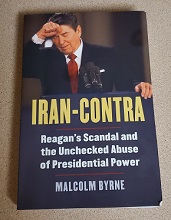
Iran Contra: Reagan’s Scandal and the Unchecked Abuse of Presidential Power – Malcolm Byrne

contra1I still remember the video footage taken during the live testimony of Lt. Col. Oliver North (Ret.), as Congress sought to unravel  interconnected covert operations that revolved around Iran, Israel and Nicaragua. North appeared on television in full military dress, earing the sympathy and admiration of a large segment of American citizens.  There were some who felt he should have been incarcerated and that his actions were a dishonor to the very uniform he had on.   Regrettably, his testimony did little to help fully understand what had really taken place.  And even my father who follows politics and news religiously did not fully understand what had taken place.  What was clear, is that the administration of President Ronald Reagan (1911-2004) had engaged in questionable and possibly illegal activities that sent shockwaves of panic through Reagan’s cabinet and raised alarm bells on Capitol Hill.  As more information came to light, the media began to call it the Iran-Contra scandal and even today, it is still known by that description.  It remains one of the darkest moments of Reagan’s time in office.  Author Malcolm Byrne revisits the Iran-Contra scandal to tell the full truth about how and why it developed, and the actions of a president abusing the powers of the Oval Office. 

If you have decided to read this book, I am sure that there is a good chance that you are already familiar with the Iran-Contra scandal. But even if you are not, the story will still be of interest and easy to follow. The story begins by revisiting the events of October 5, 1986, when a C-123 plane carrying arms for the contras fighting the Sandinista government is shot down while over Nicaraguan airspace.  Several days later, a revelation on Iranian television sent Washington in panic mode.  Nearly everyone began to question the actions of Reagan and his cabinet.  The full story was carefully hidden from the public through omissions and in some cases, deception.   Here we have the whole account and Byrne take us on quite a ride as he peels back the layers of obfuscation employed by key officials close to the President.

Although prior knowledge of the events that gave way to the scandal is not necessary, I do believe that it will help if the reader has some prior knowledge of the political climate of Central America and the Middle East during the time period in which the scandal took place.  In fact, the histories of Nicaragua, Honduras, Israel, El Salvador an Iran are all relevant to the information that Byrne is presenting to the reader.   The fear of a communist expansion under the thumb of the Soviet Union, continued to shape U.S. foreign policy following World War II.  The rise of left-leaning and popular figures across Latin America had caused Washington to pay close attention and subvert several governments through the Central Intelligence Agency.  Central America became the next battle ground and as Byrne shows, Reagan intended to pull out all of the stops.

There are many acronyms in the book due to the complexity of Washington’s design with regards to intelligence and foreign policy.  Several departments play a role in the story and Byrne keeps track of them all, keeping the story flowing smoothly.  Chapters one through twelve alternate between Iran and Nicaragua. It was a good decision by the author, for it allows the reader to focus one part of the story before going to the next and then back again.  The two tracks eventually merge but not before Byrne provides a ton of staggering and shocking information.  When the tracks do merge, the book takes another turn as Reagan’s cabinet goes into damage control and the full weight of Congress comes down on his administration.

The hearings and testimony are summarized here so readers should not expect full transcripts but only snippets of the most critical statements.   In fact, the section regarding the hearings and prosecutions by the Department of Justice do not make up a large portion of the book.  The majority is devoted to the developments in Central American and the Middle East.  But that in no way diminishes the importance of the later chapters and they are just as surprising as the rest of the book.

One section in the book that caught my attention was the discussion about Reagan’s health.  Putting aside the attempted assassination in 1981, there were other health issues that arose during his presidency that caused many to question whether he was fit for office.  His actions and later testimony provide evidence that the conditions he later suffered from, had began to manifest as early as the 1980s. Byrne does not give Reagan a pass because of this but is equally mystified at how he was able to function.  He also makes a compelling point regarding Reagan’s mental state and his interactions with subordinates. It is certainly food for thought about the 40th President of the United States.

America has always said that it does not negotiate with terrorist.   On the surface it sounds tough and gives off the impression that the United States can take as hardline of a stance as anyone else.  However,  the events described in this book, challenge that position and Byrne’s research shows that negotiation became as common as public denials.  For many Americans, the scandal is an afterthought.  Reagan died in 2004 and the suriving members from his cabinet who are still alive had faded out of the public light, well into their later years in age.  However, I do believe that the story is still important in light of the recent events regarding the administration of Donald J. Trump.  Impeachment and investigations are two words that give rise to fear and concern but the founding fathers knew early on that such a system of governing was needed if the United States would truly be a democracy.  Future presidents may also want to read this book so that they too are never accused of abuse of power.

This account of the Iran-Contra scandal lays it all out for the reader to digest. It is an incredible and unnerving story about the very dark side of United States foreign policy.  Highly recommended.

ISBN-10: 0700625909
ISBN-13: 978-0700625901

Love, Janis – Laura Joplin

Janis1 On October 4, 1970, singer Janis Joplin (1943-1970) died from a lethal combination of heroin and alcohol at the Landmark Hotel in Los Angeles.  The building is still there but has been renamed the Highland Gardens Hotel.  In death, she joined the 27 Club, a group of famous stars who all tragically died at the young age of twenty-seven.  In stardom, she had come to symbolize the culture change taking place across America as the ideals of the 1950s and 1960s were replaced by the liberated generation of the 1970s.  To some, she was everything wrong with the “hippie” culture and to others she was inspiration and an example of someone who came from humble beginnings to leave their mark on the world.  To a small group of people, she was simply Janis, daughter and older sister. This book is a look at her life from the eyes of her younger sister Laura, born six years after her famous sibling.
Laura begins the story by revisiting the day she learned of her sister’s death.  The news hits like a lightning bolt and no one wants to believe it.  Her father had come to dread the moment, always concerned about his first born.  Both parents had long realized that Janis marched to the beat of her own drum.  She was different from her siblings and from an early age, showed all that she was counter-culture and willing to stand up for what she believed in.  As we move into Janis’ story, Laura retraces the family’s genealogy, explaining the migration of both sides of the family from abroad to the United States.   The story is similar to other stories men and women who gave up their lives in search of a better life proving that America truly is a nation of immigrants. On January 19, 1943, Janis Lyn Joplin entered the world and before she would leave it, millions of people would know her name.

Admittedly, I had the inclination to believe that the book would be more focused on Laura but it really is a biography of Janis as told by her sister.  And while there are other books on Joplin, I felt that Laura’s version is by far a definitive account. In fact, the book is done so well, that at one point, I completely forgot that her sister is telling the story.  It was only during the moments where Laura recalls a family issue of one of Janis’ visits, that I was reminded that Laura is the narrator.  And I believe that is a testament to the skills required a well-rounded writer and editing team.

Early in the book, the story focuses on the family’s life in Port Arthur, Texas.  Janis’ time in high school shows that early on, her fiery spirit was already on full throttle.  Her stance on racial discrimination was a bold and telling move by a teenager who grew up in what her sister reveals was an isolated community in which no minorities lived.  Her acts of defiance would help form the person she became and stayed with her throughout her life.  And in spite of transgressions, it is clear that sister Laura truly admired her old sister and still does.

The book picks up pace after Joplin’s return to San Francisco to join the band Big Brother and the Holding Company.  Janis is coming into her own and the band is gaining recognition in the music world.  After several slow starts, Joplin and the band hit pay dirt and her life takes a new direction from which she would never return.  Laura chronicles all of it, following her sister’s footsteps as she moves through the music world which found her on The Ed Sullivan Show and signing a record deal with Clive Davis.  As Laura shows us, Janis’ life was a roller coaster ride composed of fame, lovers, drugs and ultimately heartache.  But Janis lived on her own terms and this piece of advice to her sister which Laura vividly recalls is perhaps the theme of the book: “Let yourself go and you’ll be more than you’ve ever thought of being.”

The pace of the book maintains its speed never slowing down.  As a result, I found myself glued to the pages and before I knew it, several hours had passed by before I even looked at the time.  It is an enjoyable read regardless of the ending that we know is coming.  But Janis has a way of pulling people towards her and as Laura tells the story, I found myself happy at her success and down during the moments where her demons took over.  Her times of sobriety are scattered and the letters she sends home are moving, standing in stark contrast to the woman who took hard drugs in a game of chicken with death.  But she was not a one-dimensional personal, rather a complex individual with no single adjective to describe her.

In 1995, Janis Joplin was inducted in to the Rock and Roll Hall of Fame. In death, her fame was catapulted and she has earned mythical status as a rock star.  In just a few short years she went from a struggling performer in San Francisco to one of America’s biggest stars.   Forty-nine years have passed since her death but in recent years, a resurgence of material about her life has re-surfaced, including the 2015 documentary ‘Janis: Little Girl Blue’.  The archival footage is good and once again she graces television screens.  Yet, no examination of her life would be complete without this heartfelt and moving account by her sister. Highly recommended.

ASIN: B0776T6FYB

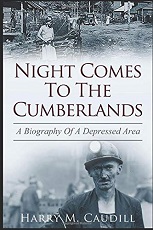
Night Comes to the Cumberlands: A Biography of a Depressed Area – Henry M. Caudill

caudill Recently, I have become more interested in the Appalachia region in the Southern United States.  What many of us have come to know as “coal country” is a region with a long story, often underrepresented in discussions about poverty and greed in America.  The people of this region are sometimes the butt of jokes with images of “backwoods hillbillies” from the movie ‘Deliverance’ coming to mind.  However, the true story of Appalachia and in particular the Cumberland region in Kentucky is an American tragedy with residual effects that continue to this day.  The late Henry M. Caudill (1922-1990) looked into the lives of the miners and the region that have called home.  And what he reveals in this book is sure to open the eyes to many and confirm for others, beliefs they have long held about coal country.

Caudill begins by revisiting Lyndon Johnson’s famous visit to the Paintsville, Kentucky in April, 1964.  The visit was used to support Johnson’s “war on poverty” in America.  More than fifty-five years later, poverty still exist and in many parts of Appalachia, there are no jobs, doctors and sources of hope for its people.  They do the best they can with what they have.  The sad truth is that for decades, they have been taken advantage of, ignored and forgotten.  The story of the Cumberlands is a textbook example of profits over people and is nothing short of mind-boggling.

Before reading this book, it is necessary to abandon any pre-conceived notions about Appalachia. You have to approach the material with an open mind free from any bias about “mountain people” or any other term used to describe the people of the Cumberlands.  Caudill takes us back in time to the original settlers in North America and traces their path from the coastal cities to the Appalachian mountains.   It is a good lesson in history and will help readers understand how and why the region came into existence.  Undoubtedly life was rough, far rougher than in big cities but the people of this region are accustomed to it.  In fact, as I read through the book, I had to marvel at how they adapted to the rigidness of life in the mountains.  To survive there required true grit and an iron will.  That is all is on display here and the author does not sugar coat anything.  The descriptions of mountain life are graphic and some readers might recoil at some sections.

As to be expected, coal enters the story and it is at this point that the region is transformed completely and the story develops its tragic course. The arrival of the coal companies and other business to the region offer at first the possibility of prosperity for the people of the Cumberlands.  But as we learn through Caudill’s words, there was much to be seen that was carefully hidden from the people, a majority of whom lacked basic literacy skills.  I simply cannot find the words to describe the shock that I felt as I learned about the level of manipulation by businesses as they reaped enormous profits at the expense of the common folk.  I am certain that you too will shake your head in disgust at the actions of corporations in the Cumberlands.  And sadly, this was just one of a long list of revelations about the reality of life in Appalachia.

Mining is dangerous and dirty business, and it is not long before automation enters the story.  For the miners of Appalachia, it proved to be a death kiss and caused the demise of coal, a fuel which has been replaced in many parts of America by cleaner and more efficient sources.  The integration of automated technology and decline of coal combine to form the book.  During the 2016 United States Presidential election, Donald Trump promised to “bring coal back”.  His words were promising for the legions of miners hoping to be put back to work to earn for their families.  But there was much about coal that Trump did not say and the truth about its demise can be found in this book, directly from the Cumberlands. And while there are plenty of articles online today regarding coal, the words here predate many of them by several decades.  The decline of coal is a story that the locals know all too well but for many of them, there is little semblance of a way out of the gripping poverty that can be found all around them.

The decline of coal, flight of professional young men and women and the emergence of clean sources of power, permanently changed the lives  of those in the Cumberlands and Appalachia.  There would be no return to the days of the past and moving forward, the future was uncertain.  Today the future is still uncertain for those in Appalachia.  At the time Caudill wrote this book, he did not have the availability of social media or the internet.   What he saw and experienced was unknown to many Americans.  Appalachia was seen as a hidden region full of backwards people who had no use for outsiders.  The reality is quite different and as Caudill shows, it is a complicated place created by exploitation yet sustained by government assistance. It is also paradox in a country that can spend billions in foreign aid but find itself either unwilling or unable to help its own citizens.

I had always wondered why Appalachia developed the way that it did.  I found the answers to my questions are far more in this deeply moving account by Henry Caudill.  If there is anything I could change about the book, I would have included an index and/or list of references. Dates and events can be cross-referenced without question but an index would have given the book even more of an authentic feel. Nonetheless, it is presented as an autobiography and Caudill was highly familiar with the region having traveled there himself. He also discloses that he has been there to visit family.  Having finished the book, I have a new understanding of the miners and their plight.  And as I sit comfortably in my home in New York City, I remind myself that the struggle to survive for people throughout Appalachia continues. Time will tell if there is indeed a brighter day for them.  It is said that the past is prologue.  This book should be read prior to any discussion regarding Appalachia and the issue of coal.   Many years have passed since it was published but the information contained within remains relevant.

ASIN: B0774XHYT3