
 On Easter Sunday, my mother would have my brother and I watched the epid Hollywoof Film ‘The Ten Commandements’. It is one Chartlon Heston’s (1923-2008) best roles and his agtonist in the film, Yul Brynner (1920-1985), delivers an equally compelling performance a Ramesses II. In fact, it remains the film by which I have always recognized Brynner. However, like most great stars of his era, often called the “Golden Era of Hollywood”, there was more to his life than the public was able to see. His son Rock Brynner decided to turn memories of his childhood into this memoir of the time he spent with his father, one of Hollywood’s leading men.
The book is an autobiography and biography at the same time. Rock tells the story of his father’s life while giving us insight into his own struggle as he grows up in the public spotlight. Yul Brynner has always remained something of a mystery. He never fully explained his upbringing in interviews but instead chose to spread misinformation and in some cases complete fabrications. The real story of the Brynner name is told here, putting to rest any outlandish rumors that have persisted throughout the years about Yul’s origins. If there was ever an instance of the apple does not fall far from the tree, it is definitely to be found here as the actions of Yul’s grandfather Jules and father Boris serve as a blueprint for the way Yul later lived his own life. Was it heriditary? I do not believe so but it is apparent that within the Brynner family, history continued to repeat itself in ways that will leave some readers speechless.
Yul Brynner remains the center of the story all the way throughout the book. His son lets us following along as his father leaves his native Switzterland and emigrates to New York and into a completely new world. From there, he would eventually make it west to Hollywood. The trials and tribulations endured by Brynner are reminiscent of the long paths taken by other stars to finally achieve stardom. He was a tenaciou individual, undaunted by adversity and determined to leave his mark on the film world. The fact that I am writing about him in 2020 shows that he was indeed successful. But what I found to be even more interesting was the fact that when he arrived in America, he spoke almost no English. Incredibly, the films later in his career reveal no trace of this fact.
Similar to other leading men and women in Hollywood, Yul’s life was filled with indescretions, controversy and financial troubles which hung over him like a dark cloud. The Unites States Government proved to be a formidable enemy, even pushing Yul to make a big move abroad that affected sitautions and events around him for the rest of his life. Rock does not hide anything and reveals the unorthodox world of the place they call Tinsel Town.
Rock supplements his dad’s story with his own that begins in a house with a roaming father with an eye for the opposite sex and a mother with an addiction that would later drive a wedge in between husband and wife. Virginia Gilmore’s (1919-1986) role as wife of Yul Brynner and mother of Rock Brynner proved to be no easy task and as we see in the book, it took an enormous toll on her well-being. Sadly, she never remarried after Yul Brynner. By contrast, Yul remarried several times and with each marriage came even more surreal events that would be added to his story. Rock is forced to confront his own demons and as I read the book, I could not help to feel as if he was spiraling out of control but in a way different from his father, whose own demons were catching up with him. And while I would hesitate to label the household as dysfunctional, there were certainly things that would not be accepted today even many homes around the world. But this is life as Rock remembers it: the good, the bad and the ugly.
One aspect of the story that will be of interest to readers is Yul Brynner’s health. His appearance in an anti-smoking commerical after his death had an eerie film to it as nearly everyone by then was aware that Brynner had long since been dead. I found the back story regarding his health to be eye-opening and it also provided insight into the many ways we live our lives even at the expense of longevity. I do believe that if Yul Brynner were live, he would warn many about the perilous behaviour that helped to cause his own demise.
Other celebrities make appearances throughout the book and the anecdotes by Rock Brynner are interesting and reveals small bits of information about some of the greatest stars to ever grace the silver screen. Not all of the storys have happy endings, some are dark such as small sections regarding the late Steve McQueen (1930-1980). Rock finds himself immeresed in this usual but highly seductive lifestlyle that would give rise to his own pitfalls that haunted him for many years. His struggle is equally as poignant as the story of his father’s life. Father and son had a great bond but differences of opinion that later became a source of tension between the two. Regardless, Rock never wavers in support of love of his father and is with him up until Yul’s final moments which are recalled towards the end of the book.
If you remember Yul Brynner and have always been captivated by his work, then this book is a must read. And even if you are not, there is enough interesting information in the book to hold your attention all the way through. Great read.
“Mr. Brynner is, quite simply, the King. Man and role have long since merged into a fixed image that is as much a part of our Collective Consciousness as the Statue of Liberty.” –Frank Rich, The New York Times
ISBN-10: 067169006X
ISBN-13: 978-0671690069
 Many years have passed since I studied philosophy in college. Names such as Kant and Freud were part of my regularly assigned reading. However, one name I was not particularly exposed to was Carl Gustav Jung (1875-1961), the late Swiss psychiatrist and psychoanalyst who is widely held high regard as a pioneer in the field of psychology. I saw this biography on Amazon and decided to take another look at his life and beliefs. When starting the book I had no judgments about Jung but was sure I would learn a new way of looking at the human mind and what lies behind our thoughts and actions. And while I did find some very interesting concepts put forth by Jung, there is far more to the book than meets the eye.
 President John F. Kennedy (1917-1963) is known primarily from his time in the White House and untimely death but many forget that he was also an accomplished writer. In the well-received “
 When I saw this book on Amazon, I was a skeptical as to what I found find inside of it. However, the nearly five star reviews convinced me to inspect it a bit further. I took the plunge and ordered it to see exactly what Shelby Steele had to say about race, a topic that continues to either unite or divide people in America. The phrase “content of our character” is known to many of us. It was the pivotal moment of Dr. Martin Luther King, Jr.’s (1929-1968) “I Have a Dream” speech on August 28, 1963. Fifty-seven years have passed since that monumental moment in American history and the question remains, do we judge each other on the content of our character? Further, have we progressed as a society or is America still the same place it was when Jim Crow made life miserable for millions of black Americans and others who emigrated to the United States in search of opportunity?
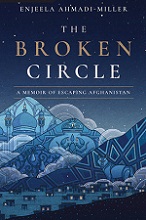 On December 25, 1979, the armed forces of the Soviet Union invaded Afghanistan in support of pro-Communist forces engaged in a power struggle with insurgent forces known as the mujahideen. Soviet forces marched into the capital city of Kabul and later succeeded in staging a coup in which President Hafizullah Amin (1929-1979) was removed and replaced with Soviet loyalist Babrak Karmal (1929-1966). Thousands of Afghan citizens were rendered homeless as bombs fells and brutal fighting produced collateral damage. For Enjeela Ahmadi-Miller, the war changed her life in ways she could have never imagined.
 In November, 2019, I had the opportunity to read “
 The looming exit from the European Union by England will undoubtedly be watched by the whole world, which has been kept in suspense by the referendum in 2016 and failure of former British Prime Minster Theresa May to garner enough votes for a formal separation. Current Prime Minister Boris Johnson has declared it will happen and on January 31, 2020, he will be proven right or wrong on the matter. In Northern Ireland, there is fear and uncertainty regarding how the move by England will affect Ulster County, the loyalist stronghold composed of majority that stands firmly behind the Crown. The Irish Republican Army (“IRA”) will be following as well to see how the move will affect its goal for a united Ireland free of British interference. Time will tell how the departure from the European Union will affect both Britain and other nations. Recently, I decided to do some further reading on Northern Ireland and I came across this book by Tim Pat Coogan about an Irish revolutionary I was previously unfamiliar with. His name was Michael Collins (1890-1922) and this is the story of his group of assassins known as the Twelve Apostles and their fight for freedom from Downing Street by famed author Tim Pat Coogan.
 In the state of South Dakota, the Pine Ridge Reservation is home to the descendants of the Oglala Sioux Native American tribe. The children of Pine Ridge aspire to enroll in the Red Cloud High School with hopes of attending college. Many of their parent, suffer from alcoholism, a plague that has followed the Oglala Sioux since their first encounter with white settlers in the early 1800s. Poverty and discrimination have resulted in depression and despair which has yet to be fully addressed. The true story of the Native American experience remains misunderstood and in some cases neglected. They current day Oglala are the descendants of indigenous people whose home was a North American continent in which life was simple yet effective with languages largely unwritten and passed down through oral teaching. The Sioux were only one of hundreds of tribes, some of whom are now extinct such as the Canarsie Indians. Chief Luther Standing Bear (1868-1939) was born in Rosebud, South Dakota into the Oglala Sioux tribe and this is his story of his life and his people.
 On September 22, 1980, the Iraqi military marched into neighboring Iran under the orders of President Saddam Hussein (1937-2006). Tensions between Hussein and Ruhollah Khomeini (1902-1989) had been brewing over control of the Shatt al-Arab river, Iraqi nationalism and Khomeini’s calls for the Ba’ath party to overthrow the Iraqi government. The conflict raged for eight years before a cease-fired was signed in August, 1988. It is estimated that the war resulted in the deaths of nearly 1.5 million Iraqis and Iranians. On both sides, villages were destroyed, leaving thousands homeless and families permanently separated. Children as young as thirteen were conscripted to serve, becoming trained killers before the age of twenty-one. After the cease-fire, prisoners of war remained held in prisons on both sides before they were slowly repatriated. This book is the story of two of those prisoners who survived the war, living to tell their story about the war that changed their lives.
 The African-American experience is a reflection of America’s dark past and its bright future. Jim-Crow, anti-miscegenation laws and other legal conditions, provided roadblocks to the social and economic advancement of black Americans and other minorities. However, over time, individuals once considered minorities have made great strides and achieved great success. In spite of this, black America finds itself confronted with issues that cause many to wonder what is really holding black men, women and children back? When I saw this book on Amazon, I thought to myself that whoever wrote this book is beyond brave and was undoubtedly subject to attacks from all angles by those who wish to refute his conclusions. Upon closer inspection, I saw that the book was written by a black American, John McWhorter, who is a professor in English and comparative literature at Columbia University. He has also worked at the University of California, Berkeley. His experiences while tenuring at UC, Berkeley are what form the backbone of this book.

You must be logged in to post a comment.