
 In 2019, streaming giant Netflix premiered “Devil at the Crossroads: A Robert Johnson Story“, in which focused is placed on the life of guitarist Robert Johnson (1911-1938). In the years following his death, Johnson was elevate to near mythical status as a pioneer of blues music. The documentary is captivating and received a positive rating by yours truly. Filmmakers took a long look at Johnson’s life to clear up the mysteries that surround it to this day. And while there is a significant amount of information regarding his life that is known, there remains an equal amount that is a question mark. By all accounts, Johnson kept very few friends and was a loner in the classic sense. However, he did record formally and his recordings stand as the only part of his life that has survived to this day.
Legendary guitarist Eric Clapton idolized Johnson and stated emphatically: “ It came as something of a shock to me that there could be anything that powerful…. At first it was almost too painful, but then after about six months I started listening, and then I didn’t listen to anything else. Up until the time I was 25, if you didn’t know who Robert Johnson was I wouldn’t talk to you…. It was as if I had been prepared to receive Robert Johnson, almost like a religious experience that started out with hearing Chuck Berry, then at each stage went further and deeper until I was ready for him…. I have never found anything more deeply soulful than Robert Johnson. His music remains the most powerful cry that I think you can find in the human voice”. If only going by Clapton’s words, it would appear that Johnson was the end all and be all for blues music. But one question that remains is what exactly was Johnson’s role in the development of blues? Author Elijah Wood tackles this question a book that will surely change the way you view the concept of blues music.
I should point out that this is not a biography of Johnson in the traditional sense. Wald does discuss Johnson’s life, but the main focus of the book is to examine the music of the Mississippi Delta, which was home to some of the best musicians that performed the music that society has labeled blues. And while Johnson does fit into the story, he is part of a much larger picture composed of many artists, some of whom remain obscure to music fans today. In some ways, the book is encyclopedic and provides thorough discussions of the lives of music greats of the era such as W.C. Handy (1873-1958), Son House (1902-1988) and Charley Patton (1891-1934). Their trials, tribulations and contributions take center stage as Wald takes us back in time.
But what exactly is blues? Did the musicians who played in the Delta consider their art to be blues? The questions are pertinent and what Wald reveals to us here just might surprise some readers. His work challenges long held beliefs about the definition of blues music. And while he is not attempting to re-write music history, he does intend to get the reader to see the concept of blues in a light that is often unseen.
There can be no discussion about blues music and America without addressing the issue of race. In the 1920s and 1930s, Jim Crow was alive and strong. Artist such as Johnson had to navigate their way through a country that afforded very little protection to people of color. Lynchings and segregation were constant reminders of the ugly side of America and helped fuel the music that would later captivate the minds of fans both black and white. However, to black and white Americans, what came to be known as blues looked very different depending on the person’s race and it is through both lenses that Johnson takes his place in the history of blues music. Wald’s discussion of Johnson’s place in the lives of both black and white Americans is interesting and clarifying. And I do believe that he provides a solid argument for Johnson’s place in the official narrative.
To be clear, Wald is a fan of Johnson and pays homage to his musical genius. He is not attempting to discredit Johnson in any way but simply provide a historical narrative that is closest to the truth. Johnson’s talents can never be denied and he is rightfully recognized as a pioneering singer in his field. But as Wald explores, even during his time, Johnson was not nor would he ever be, the founding father of blues music. Instead, he was one of many who helped create the sound that stands in a league of its own.
Blues music has no equivalent and once you have heard it, its sound remains with you. It is soul touching and extracts the rawest of human emotions. Listeners may be tempted to conjure up images of smoke filled shacks, filled with hard liquor, unbearable heat and enough soul to fill an entire state. It is an image that we love to imagine but in truth, the real story is far more complex. Wald’s analysis here is just what the doctor ordered and I feel that the author accomplished his goals. And understanding why musicians were escaping the Delta, is key to understanding the passion and emotion that gave way to the blues. Highly recommended.
ASIN: B003JBHW1W
 History has many dark secrets that some have wished remained hidden from the official record so that the history that has been portrayed remains sanitized and above reproach. But it is also said that what you do in the dark always comes to light. In the wake of the coup that saw the overthrow of Chilean President Salvador Allende (1908-1973) on September 11, 1973, the country was placed in a vice grip by his successor, Augusto Pinochet (1915-2006), who commenced a program of retribution against enemies, activist and those “suspected” of being part of the opposition to the new government. His regime was marred by human rights violations for which he was arrested by British Police in England on October 17, 1998. Pinochet was extradited back to his native Chile but never stood trial for his actions. He died on December 10, 2006 of congestive heart failure and pulmonary edema. His death marked the end of legal action to bring him to justice but it did not stop the prosecution of others who were complicit in the horrific actions that took place in the aftermath of the coup. Researchers continued to investigate Pinochet’s actions and those of fellow dictators in Argentina, Brazil, Paraguay and Uruguay. During one such expedition in Paraguay, a trove of documents were uncovered that shed light on a joint program created by several neighboring countries to track down those deemed enemies of the state with the purpose of execution. The program is known as Operation Condor and here Charles River Editors provides a concise summary of how and why the program came into existence.
 On June 6, 1944, American, British and Canadian troops stormed the beaches at Normandy, France and commenced an ground war against Nazi Germany. The European Theatre was marked by brutal fighting that saw high numbers of casualties on all sides of the conflict. In the end, Nazi Germany fell to allied forces and accepted an unconditional surrender on May 8, 1945, commonly known as VE Day. The Japanese military continued to fight and remained defiant until two atomic bombs forced it too into surrending to Allied forces. VJ Day marked the end to World War II and the world breathed a sign of relief. For the United States Army, the European Theatre was a hard fought campaign that no one ever wanted to see again. Author Stephen Ambrose has composed a breathtaking account of the Army’s mission from the beaches at Normandy until the Allies seized Berlin in May, 1945.
 Those of you who follow my blog probably know by now that I have covered quite a number of books regarding Northern Ireland the conflict known as “The Troubles”. My curiousity with the conflict in Northern Ireland stems partly from my love of history and partly from my visit to Ireland in 2016. I sought to fully understand the battle being waged by Republicans to unify the country and the opposition mounted by Loyalist who remain in support of British rule. Author Tim Pat Coogan has written of the 1916 Easter
 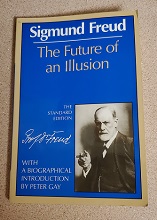 It is simply amazing that eighty-one years after his death, Sigmund Freud (1856-1939) continues to be part of American pop culture. The term “Freudian slip” is still used by professionals of all walks. It has been many years since I have read his work, in fact my memories of studying Freud come mainly from my time in college. A neighbor in my building needed to off-load some books and among the prized possessions was a group of Freud’s works. I picked them out rathern than see them head off to recycling, believing that even in the digital age, good books in print still have a place in every library.
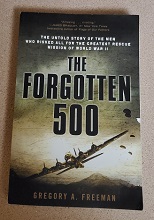 A colleague gave me this book as a gift during the holiday season, mainly due to his knowledge of my fondness for history. I quickly made a mental note to give it a read in the near future. When I saw the title, I was slightly puzzled at the term “The Forgotten 500”. I have read books on World War II but none mentioned any 500 forgotten soldiers. Upon closer inspection, I soon began to realize why I had not heard the story. At the time the mission occurred, it was carefully hidden by the State Department and Office of Strategic Services who did not wish to jeopardize the lives of any remaining U.S. soldiers still trapped behind enemy lines. Further, in the years that followed, the the story faded into the annals of military history regarding the second world war. Even my father, who is an ardent World War II buff, has never mentioned this story. Our next discussion will certainly be interesting.
 I was in search of a quick read and saw this book which I had added previously to my list of books to buy. In my neighborhood, there is a building with a mural dedicated to Frida Kahlo (1907-1954) and as I walk past each time, I think of the fact that so many years after her death, she is still revered by millions of people both in the United States and in her native Mexico. In September, 1925, Frida was a passenger on a bus with her boyfriend Alejandro Gómez Arias. Their bus collided with a street car and left Kahlo with devastating injuries. She suffered broken bones in several parts of her body and the accident displaced three vertebrae in her back. She never fully recovered from the accident and was plagued with constant pain until her death on July 13, 1954. On August 21, 1929, she married Diego Rivera (1886-1957) and accompanied him to the United States, first landing in San Francisco, while he worked as painter. Over course of her time living in the United States and later visiting, she received medical treatment for the lingering effects of the 1925 bus accident. She never failed to write home to her mother whom she loved deeply. Those letters have been translated into English and are composed here to show readers the very intimate relationship between mother and daughter.
 When this book came up as a recommendation, I thought back to the movie ‘
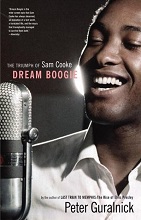 If you have ever listened to a song by Sam Cooke (1931-1964), then I am sure you can agree that no one is ever the same after hearing his voice. My parents and grandparents played his albums and knew many of his songs by memory, singing them with as much passion as Cooke did while on stage. For millions of black Americans, Sam Cooke was the best singer of his time and his death on December 11, 1964, sent music fans into mourning as one of the most beloved singers in America was laid to rest. Today, almost fifty-six years after his death, the songs he produced sound as if they were recorded yesterday. In fact, earlier today, I listened yet again to ‘A Change is Gonna Come’ which many people believe to be his best recording. Spike Lee opted to use it in the 1992 film ‘Malcolm X’, in the scene where Malcolm (Denzel Washington) walks toward the Audubon Ballroom and his fate after parking his car. Cooke’s music has stood the test of time and will continue to do so. But just who was the real Sam Cooke?
 June 30, 1960, the Democratic Republic of the Congo was formed after fifty-two years of Belgian colonization. Its charismatic leader, Patrice Lumumba (1925-1961), served as an inspiration and hope for the people of Congo, who wished to govern themselves and move their country into a new direction. Less than one year later on January 17, 1961, Lumumba was executed in Katanga as a result of a coup by military colonel Joseph Mobutu (1930-1997). The assassination and seizure of power by Mobutu, set in motion a cycle of violence that has continued for more than five decades. Between 1994 and 2003, the conflict known as “Africa’s first world war” ravaged the country and caused the deaths of an estimated five million people. Rebel groups continue to operate in various regions of the country, continuing the system of violence. In 2005, Anjan Sundaram was finishing his final semester at Yale University, where he graduated with a degree in advanced mathematics. After forming a friendship with a cashier, he made the decision to abandon a career in corporate American and move to the Congo, where he would ply his trade as a foreign correspondent in one of the most tumultuous places on earth. This book titled “Stringer’ is a memoir of his time in the Congo and the many people that became a part of his life.

You must be logged in to post a comment.