
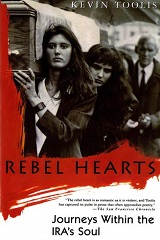
 The conflict in Northern Ireland between pro-British Protestants and Republic Catholics, is the longest running feud to date. The planned exit by England from the European Union has resulted in suspense and apprehension throughout the rest of the United Kingdom. The Irish have undoubtedly been watching closely as any movement by England will have a ripple effect that will eventually reach their shores. Belfast remains a major tourist attraction in the north, similar to its southern counterpart Dublin, and receives millions of visitors each year. History buffs may recall that Belfast is the city in which Harland and Wolff built the world-famous RMS Titanic for the White Star Line. But behind the fame of the doomed ocean liner, lies a dark side that has taken more lives than anyone could have ever imagined. Belfast and Londonberry (“Derry”) have served as the battlegrounds for the deadly war between Nationalists and Republicans forces. Across Ulster province, six of the nine counties are protected by the British Crown (“the Crown”) and unofficially by the Ulster Volunteer Force and Ulster Defense Association. The Irish Republican Army (“IRA”) stands firm as the opposition force founded to defend the minority Catholic population from what they believe to be the refusal of the Crown to let Ireland become a united country. Kevin Toolis is a journalist and screenwriter born in Edinburgh, Scotland to Irish parents. In this eye-opening and chilling book, he travels back to the country of his ancestors, seeking to understand what drives the men and women of the IRA.
I believe that anyone interested in this book probably has a fair amount of knowledge regarding the IRA and “the troubles” as they are known by the Irish. Toolis does not simply relay their well-known attacks but instead seeks to understand the mindset and conviction of those who have taken the pledge to see the Crown removed from Irish soil. He interviewed many high-ranking members, some of whom are now deceased such as Martin McGuinnness (1950-2017), families of fallen IRA members and even those on the other side of the conflict. And what he has come away with will shock readers who live outside of Ireland and are not of Irish ancestry. To outsiders, the conflict seems surreal and the deaths of so many beyond needless. It is a conflict that has no restrictions on violence and the ideology that fuels both sides is as strong as any found throughout the world. However, as I read the book, I did find myself aghast at the ease in which so many accepted jail and death as part of the plan. As the author shows, to nearly all of the figures, taking up the IRA flag is seen as an act of honor, even if it means certain death and/or prison time. It is a thought process that neither I nor many readers outside of the United Kingdom will be able to associate with. But for those that remain in Northern Ireland, the troubles have never gone away.
The author provides a clear and thorough explanation for the origins of the conflict and the imposition of the Crown more than 400 years ago when Oliver Cromwell led the Crown in the War of Three Kingdoms, setting the stage for British rule. As the book moves along, we are introduced to the IRA through polarizing and deadly figures. The uprising of 1916 by Patrick Pearse (1879-1916) marked a new era in the Republic of Ireland. His life and last moments are revisited here, showing the reader the level of conviction behind the Republican cause. The IRA has been home to a large number of larger-than-life characters including the late Bobby Sands (1954-1981), whose hunger strike and death at HM Prison Maze, Long Kesh earned the IRA a major publicity coup against the administration of Margaret Thatcher (1925-2013). Sands’ legacy and spirit are alive and well as a martyr in the cause for a united republic. Toolis moves through IRA circles with bravado and fear, knowing full well just how dangerous the interviewees were. But his journalist background, allowed him to continue his research as he descended deeper into the IRA’s soul.
The book is far more than just a collection of missions carried out by the IRA. Here we learn the names and personal stories of several figures who became popular and infamous in IRA lore. Some were heroes, others informers and the rest, tragically became casualties of war. Regardless of their roles, each has their own story to tell about their life in Ireland and whey they feel that the Crown should no longer remain in power in the north. One thing that did stand out is that in nearly every story, a common theme is terrible poverty and discrimination as a result of the majority Protestant rule. In fact, not one person in the book that Toolis interviewed, came from a family of extreme wealth. The opposite was more often than not true, and their prospects in life were grim. But the IRA and the dream of a united Ireland, was enough to lure many into committing acts intended to drive the British away once and for all. Frankie Ryan, Mairéad Farrell (1957-1988), Sean Savage (1965-1988), Daniel McCann(1957-1988), Joseph MacManus and Patricia Black (1972-1991) are just some of the names listed in the long register of IRA members who died tragically on behalf of the IRA. Their goal to force the Crown to leave Ireland has not materialized but the IRA continues to stick to its core mission.
At first glance, it is easy to write off the voices in this book as delusional militants whose numbers were never any match for the Crown of the British military. The six counties in Ulster province are still under the Crown but the IRA is recognized world-wide as the Catholic voice across the north. As I read the stories of the figures being interviewed, I continued to ask myself if there was any possibility that they could have taken a different path in life. For some, it almost seems that they were destined to join the IRA. In fact, as a few explain, it is what they grew up with and a part of life that became accepted. But those of us looking from the outside in may ask is the heartache and death truly worth it? Those part of the IRA will undoubtedly say yes it is. Even those that have been forced to bury siblings and even children, remain committed to the IRA’s cause: a British-free and unified Republic of Ireland.
Those who decide to read the book through pure fascination with the violence and gore that occurs will miss the point of the book. What Toolis has done is to allow us to see how and why young men and women who could have led ordinary and long lives, made the decision to join a cause that many of them knew from the beginning would result in prison and death. Their rationale for answering the call to arms and joining the IRA will provoke a range of reaction in readers. Some of us will be empathetic while others may dismiss them as nothing more than rebel hearts. But regardless of our own personal opinions, these are their stories and the reasons behind their decisions and actions. We do not have to agree with them but we can make the effort to understand their position. Furthermore, we are forced to ask ourselves what we would do in their place.
The British side of the question is not left out and the Crown does make an impact in the story through counter-intelligence missions spearheaded by MI5 and the Special Air Service (“SAS”), police action through the Royal Ulster Constabulary and informers within the IRA’s ranks. Deadly games of espionage, double-agents and collateral damage, turned Northern Ireland and even London in battlegrounds to force change to 10 Downing Street’s foreign policy toward its Irish neighbors.
Today there is a form of peace in Ireland but the Provisional IRA, which split for the traditional IRA in 1969, continues to operate. Time will tell if peace will continue or if the troubles will once again be re-ignited. As Britain struggles to find a suitable exit from the European Union, many eyes are on Ireland and the fears abound of the possible deadly impact of London’s final decision. There may indeed come a day when the Crown is finally removed from Irish soil and the dream of a united Irish Republic becomes reality. Protestants will have to make life changing decisions and for some that might include the use of violence. We can only hope that cooler heads prevail and a British exit from Ireland will be done in an orderly and peaceful fashion. But until that day comes, the IRA remains a force to be reckoned with and a voice for an oppressed minority seeking to change social conditions that have caused thousands of deaths. They are supported throughout Ireland and even here in the United States. But if peace will have a chance of prevailing through a long term solution, we must first understand those that have served and died in their commitment to the IRA. Some of those incredible and heartbreaking stories are captured here by Kevin Toolis in this breathtaking journey into the heart of the IRA.
ASIN: B00ZON5LIE
 When I first learned of the country called Burkina Faso, I felt a sense of shock at how little of it I had heard not only in school but through the media. The landlocked African nation was never mentioned in the history books that I had read and even today it remains a minor player on the world stage. But between the years of 1983 and 1987, events transpired there that were both remarkable and tragic. Had success prevailed, the world would know Burkina Faso today as the pioneer of progressiveness in modern day Africa driven by the ideas of its late leader Thomas Isidore Noël Sankara (1949-1983).
 If you have traveled to or live in Louisiana, I think you will agree that it is one American’s most unique states. The City of New Orleans has a storied past on its own and each year, it attracts millions of visitors, curious to see Mardi Gras (Fat Tuesday) and the world-famous French Quarter. Baton Rouge proudly serves as the state’s capitol and an icon on the landscape of the deep south. However, there is also a dark history of Louisiana, one that filled with racism, corruption, crime and poverty. Louisianans with a long memory will remember that there once lived a governor who ruled the state with an iron grip until his reign was ended by an assassin’s bullet. He was Huey P. Long (1893-1935), the 40th Governor of Louisiana who left a complicated legacy that is nothing short of surreal.
 On December 26, 1991, the world watched in shock as the Union of Soviet Socialists Republics (USSR) dissolved, splitting the once mighty Soviet Union into fifteen separate nations. I vividly remember watching the news broadcasts and seeing the flag of the Soviet Union lowered for the last time. It was the end of an era highlighted by the Cold War in which Washington and Moscow viewed each other as a threat to world peace. Paranoia, suspicion and espionage propelled the two to the brink of nuclear war on several occasions. In October, 1962, the world watched in gut-wrenching suspense as the Cuban Missile Crisis heated up and threatened to be the spark that ignited the next world war. President John F. Kennedy (1917-1963) and Soviet Premier Nikita Khrushchev (1894-1971) found their selves in a situation that could have resulted in the physical destruction of half the planet within a matter of minutes. Diplomacy eventually prevailed through the use of back door channels encouraged by the realization of figures in both governments that the looming showdown would produce no winners. Tensions between the two super powers cooled but never full subsided and as the dissolution of the USSR played out on television, Washington closely monitored the events while re-examining its global position as Russia emerged from the post-Soviet empire as the country to watch. Twenty-eight years later, the USSR is still recalled as one of the greatest powers in history. Its fall was earth shattering and left so many wondering, how and why did it happen?
 On February 13, 1961, United Nations Ambassador Adlai Stevenson (1900-1965) placed a call to President John F. Kennedy (1917-1963) and informed him that Patrice Lumumba (1925-1961), the first Prime Minister of the Independent Democratic Republic of the Congo, had been murdered a month earlier. The moment that Kennedy took the call was captured by a photographer and the image shows him with his hand covering his face in shock. The picture truly does speak a thousand words and Kennedy’s dismay resonated with millions of people around the world.
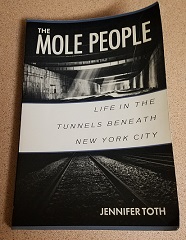 A subway ride through the underground portion of the New York City Transit system can reveal far more than most might anticipate. And if you find yourself on a train passing through lower Manhattan, you might pick up images of abandoned stations or long-lost passages through the windows of the subway car, forgotten with time as relics of the City’s storied past. The system itself is truly is a modern marvel that continues to be renovated and upgraded. But there are still many parts that remain hidden, known only to workers of the Metropolitan Transit Authority (MTA) and possibly others who have dwelled in prohibited areas far removed from the sight of strap-hangers. In the 1980s, the City saw a rise is the number of people living beneath the sidewalks, in crevices, tubes and tunnels buried far below the surface. The total number of underground dwellers will most-likely never be known. But their existence is a telling sign of the extremes some people go to when living on the streets. Jennifer Toth, stepped into this world, largely unknown even to those that live in New York City. Some may call her foolish and others may feel that she was courageous. I believe that she had a mix of many things as she covered the lives of those she met as she explored a completely unknown and different world that could only seem to exist in fiction.
 On March 13, 2018, Dr. William Hunter came home to find his eleven-year old son Tom and housekeeper Shirlee Sherman lying in pools of blood after having been brutally murdered by an unknown assailant. Police soon arrived on the scene and detectives began their investigation into two homicides that unnerved the quiet suburban enclave. Five years later on May 14, 2013, doctors Roger and Mary Brumback were shot and killed in their West Omaha home. The brutality of the murders shocked even the most seasoned investigators and left many wondering what how one person could commit such a grisly crime. Detectives Derek Mois and Scott Warner became the lead investigators and continued to examine the two murders, looking for any clues that would lead them to a suspect. A crucial link was soon discovered between the two victims and led investigators to take a closer look at the Department of Pathology at Creighton University.
 In the early morning hours of April 26, 1986, engineers at the Chernobyl Nuclear Power Plant in Pripyat, Ukraine, began the process of conducting a test of Reactor No. 4. Unwilling to postpone the test another year, engineers pushed forward under questionable circumstances that proved to have deadly consequences. Within minutes, disaster struck as a thunderous roar and cataclysmic explosion were felt and heard throughout the facility. The eruption of the reactor resulted in a complete implosion and the propulsion of a radioactive dust cloud into the atmosphere. Instantly, Soviet officials set in motion an official coverup of the disaster in an attempt to keep the news of the reactor’s meltdown from reaching western news outlets. On the surface, the Politburo maintained the image of business as usual, but behind the scenes it was pandemonium. In the days and weeks that followed, the people of Pripyat looked death in the face as the reality of the nuclear fallout become terrifyingly clear. Within days, cross-winds moving across Europe carried the dust cloud across several countries, setting off alarm bells as radiation dosimeters showed readings that were literally off the charts. Before long, it became clear that a nuclear disaster had occurred and the most likely source was somewhere in the Soviet Union. Soviet authorities pulled out all the stops in denying anything was amiss but the truth began to leak out and forced Moscow to make troubling admissions. These events an those that followed have become known as the Chernobyl disaster and that story is told here again by author Adam Higginbotham who tells what is perhaps, the full story behind the world’s worst nuclear disaster.
 My father recommended this book at the end of a conversation during one of my typical weekend visits. He commented that he had read the book during his late teen years and always remembered it for standing out as unforgettable. When I arrived back home, I went online to begin my search and quickly found it on Amazon. The book is fiction, which I rarely read, but my father generally has great recommendations on all types of media. And I am happy to report that once again, he did not let me down. I have already called him twice to discuss this short but powerful book by the late Samuel Eldred Greenlee, Jr. (1930-2014). The title alone is enough to raise eyebrows and at first glance, seems politically incorrect. But behind the cover page is a story that takes the ingredients of Washington, the Central Intelligence Agency (CIA), Civil Rights Movement and Black militancy and combines them into tale that is sure to be remembered for years to come by all who have opened the pages of this book.
 In 1974, the feelings of innocence and safety that were pillars of Icelandic society, eroded when two men disappeared and were later presumed dead. The crimes brought home the reality to thousands of Icelanders that even their nation could experience what was believed to only happen in other places such as America. On January 27, 1974, Gudmundur Einarsson disappeared after leaving a nightclub in the area known as Hafnarfjordur. Ten months later, Geirfinnur Einarsson disappeared after receiving a phone call from an unknown caller. He left home in a hurry and his car was later found abandoned by authorities. The bodies of both men have never been found. The cases would have remained cold if not for the arrest of a young couple for embezzlement. Erla Bolladottir and Saevar Ciesielski’s apprehension by police eventually set into motion a chain of events that resulted in the convictions and imprisonment of six people whose names continue to carry the stigma of Iceland’s worst killers. Kristjan Vidar Vidarsson, Tryggvi Runar Leifsson, Albert Klahn Skaftason and Gudjon Skarphedinsson joined Erla and Saevar as defendants in the cases that polarized an entire nation. At first glance, the story seems simple, two kids were caught committing a crime and then confessed to other crimes wherein they implicated previously unknown co-conspirators. But upon closer inspection, many problems arise with the official story and to this day, there are many unanswered questions. Anthony Adeane traveled to and from Iceland for several years conducting research for this book and what is contained in its pages has caused me to take an even deeper look at a case that had already caught my attention.
 FREETHINKING BIBLIOPHILE
You must be logged in to post a comment.