
 The Chernobyl Nuclear Power Plan was supposed to be the pinnacle of Soviet innovation and a testament to the drive inspired by the spirit of Lenin & Stalin. Its very construction was intended to be a statement that the western powers were no match for their Soviet counterparts. But on April 26, 1986, a meltdown at the Number Four reactor changed all of that and the course of world history. Moscow moved quick to suppress any information coming out of the Soviet Union. Initially the damage control was somewhat successful but before long, nuclear engineers in neighboring countries and across Europe realized that something was terribly wrong and all indicators pointed towards the Soviet Union. Officials were forced to issue a public admission regarding the incident, setting off alarm bells across the globe. I remember watching the news of the disaster with my parents and being in complete shock. My father could only watch and shake his head in disbelief. No one knew what would happen next but it was clear that this accident was unlike any that the world had ever seen before.
All hands were on deck as Soviet troops, doctors, engineers and plant workers scrambled to contain the damage. Massive amounts of gamma rays were escaping by the minute and those in the immediate vicinity of the reactor absorbed lethal dosages of radiation that would later wreak havoc on their bodies and decimate the number of relief workers. Years would pass before doctors and scientists fully understood the lasting effects of exposure to radiation at the plant. However, even today there is still much about Chernobyl that remains hidden. The second sarcophagus that covers the reactor opened on July 3, 2019 and time will tell if it is a permanent fix to contain the deadly amounts of radiation found within the buried reactor.
I have always wondered what happened to ordinary people that lived in Pripyat and surrounding areas. We know that those who worked in the plant or were assigned cleanup and rescue jobs close to it, developed numerous health conditions that often resulted in death. Author Adam Higginbotham captured the plight of workers at the plant in his phenomenal book, Midnight in Chernobyl: The Untold Story of the World’s Greatest Nuclear Disaster. Svetlana Alexievich was born in the Ukraine and raised in Belarus, one of the many former Soviet Social Republics. In 2015 she was awarded the Nobel Prize in Literature and is known for her criticisms of the Soviet Union. In this eye opening collection of personal accounts of life post-Chernobyl, she allows ordinary men and women to tell their stories of how Chernobyl changed their lives. The filter is off and the people interviewed here are frank and unapologetic. I caution the reader that the subject matter is graphic and the stories may send a chill down your spine. But they are not here to make people feel good, they are telling the truth about life following the worst nuclear disaster in modern history. Importantly, the author does not coach any of the people, she gives the green light and lets them tell us what they know and feel.
I believe that it goes without saying that any reader who decides to choose to this book should have an overall knowledge of the Chernobyl story. While it is not necessary to read any prior material on the disaster, doing so would give the reader an even greater sense of how misinformed people were regarding the plant and the effects of radiation. As I read through the book, I found the stories to be tragic and at other times surreal. There is without a doubt a genuine disconnect between what the people believe and the danger that actually existed. I found it hard to reconcile and can only surmise that the source of the disconnect was the Soviet way of life which relied on the tight control of information and the use of propaganda. But did this control of information cause more deaths than necessary?
The stories paint a dark picture in which millions of citizens are largely unaware of the danger posed by the reactor’s meltdown. Some go on as if nothing has changed, oblivious to the mortal danger around them. The true danger of the exposure to radiation would later manifest itself not just in those with direct contact but even unborn children. The births defects that plague the babies of Chernobyl are some of the most heartbreaking moments in the story. The mothers are conflicted by anger, sadness and regret. They believed in the Soviet system and that everything would be okay. It is what they were told by those they trusted and by Moscow. And the inability to actually see radiation undoubtedly made it harder for many to believe that where they were living was contaminated. Their ignorance is perhaps a glaring defect of the Soviet system: a population drive by innovation was also hindered by the suppression of information and a strict chain of command that did not permit freedom of speech. The inability of lower level party members to sound alarms and take measures that could have changed things is yet another tragedy in the Chernobyl story. And it is discussed here in several of the interviews.
Sadly, as time continues to move forward, more individuals that are known as “Chernobylites”, will succumb to the long lasting effects from their time near the reactor and living in the areas in and around Pripyat. Children born to that generation will continue to live with their birth defects and struggle to understand the unfair hand that they have been dealt in life. The Soviet Union is long gone and it is believed by some that Chernobyl helped to bring about its demise. The disaster did damage the Soviet reputation and spread mistrusts across the republics but there were other factors involved that lead to the Soviet Union’s dissolution in December, 1991. Chernobyl will continue to haunt Russia and Ukraine, serving as a reminder of a dark time in Soviet history. The recent HBO show of the same name has renewed interest in the disaster but to accurately capture what really happened, in particular to those that lived through it, the voices here are invaluable.
ASIN: B016QMCBKM
 In
In  I recently reviewed Volume I in this exceptional review of the murder of President John F. Kennedy (1917-1963). Author John M. Newman returns in Volume II to the incredible story of the events leading up to Kennedy’s time in office and his untimely demise. Here we change gears and take a deeper look at the alleged defection of Lee Harvey Oswald (1939-1963) to the Soviet Union, the mob ties of Joseph P. Kennedy, Sr. (1888-1969), the role of Italian-American mobster Sam Giancana (1908-1975) and the foreign policy decisions in Cuba, the Congo and Southeast Asia.
 The lone gunman theory remains the official position taken the United States Government with regards to the assassination of President John F. Kennedy (1917-1963). The alleged assassin, Lee Harvey Oswald (1939-1963) was convicted in the court of public opinion before standing trial in a Dallas courtroom. His assailant, Jack Ruby (1911-1967) permanently silenced Oswald forever and prevented Americans from knowing more about the former Marine that had once lived in the Soviet Union. The big question surrounding Kennedy’s death is who did it? The crime is similar to a black hole, puzzling even the most hardened researchers. The late Jim Marrs (1943-2017) once said that we know who killed Kennedy, we just have to look at the evidence. Author John M. Newman has joined the group of assassination researchers and has produced this first volume in what will be a multi-volume set about the deadly events in Dallas, Texas on November 22, 1963.
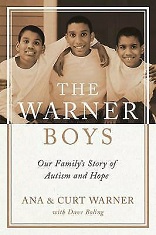 When I first heard of this book, I was slightly puzzled. As a fan of the NLF, the name Curt Warner was very familiar to me but it turns out that I had the wrong person in mind. And I am willing to wager that a large number of people who come across this book will also make the same mistake and instead think of the NFL player Kurt Warner, who once played for the New York Giants. Both are retired but only one has a family of four that includes twin sons born with autism. Many of us many know someone who struggles with autism. And others may be teachers who have taught autistic students. Regardless, we can all agree that it is a condition which requires enormous patience and understanding. This is the story of Curt and Ana Warner, two parents faced with the monumental task of raising twin sons born autistic while maintaining family life that includes tow other children.
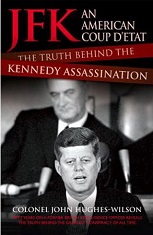 Last week I was debating what book to read next and realized that I had not covered anything on the assassination of President John F. Kennedy (1917-1963) in quite some time. To many Americans, his death is in America’s past, and a crime never to be solved. With that being said, his murder is a reminder of how easy it once was to remove a sitting president from the highest office in the land. Kennedy’s death endures as one of America’s darkest moments and the unanswered questions surrounding the events in Dealey Plaza still send chills down the spines of even the most seasoned researchers. Colonel John Hughes-Wilson has taken another look at the crime and lays out his case for what he believes was a coup d’état on November 22, 1963. In the fifty-years since JFK’s death, researchers have been able to compile a staggering amount of revealing evidence throughout independent research and the release of government files under the Freedom of Information Act and the President John F. Kennedy Assassination Records Collection Act of 1992. Incredibly, Hughes-Wilson has managed to compress thousands of pages of information into a book that is less than 400 pages. But contained within the pages of this book is an excellent summary of what happened before, during and after Kennedy’s murder.
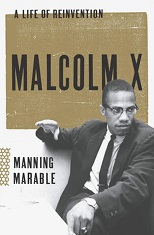 Last week, my mother and I had a discussion about the actor Denzel Washington, who is widely regarded as one of Hollywood’s greatest stars. For both of us, his role as civil rights figure Malcolm X (1925-1965) in 1992 biopic ‘Malcolm X‘, was a shining moment in which he showed the world his talent as an actor and Spike Lee’s known skills as a powerful filmmaker. I had been contemplating my next book to read and came across this biography by late author Manning Marable (1950-2011). I had previously read
 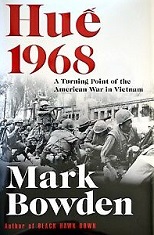 Several months ago, my uncle and I had a discussion about aging and how health becomes more important as the years pass by. He recalled when he left the military following his service in Vietnam. His hearing is permanently damaged as a result of being stationed near the 50 caliber machine gun while out on patrol. Over the years, he has spoken about Vietnam on rare occasions but I know for a fact that he and millions of other veterans of the war, carry with them many dark memories and emotional scars from their time in a war that has been viewed negatively for several decades. Author Mark Bowden revisits the war in this phenomenal account of the battle for Hue during the Tet Offensive in 1968. My uncle was not stationed in Hue but in another part of the country and has told me many things about the war that made my skin crawl. For the United States Armed Forces, the battle of Hue and the Tet Offensive changed the war in Vietnam and the for the first time, it became increasingly clear, that this was a war that America could possibly lose.
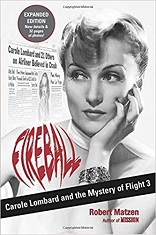 Aviation is truly one of the world’s modern marvels. To say that it has made the world smaller is an understatement. There is something mystical and surreal about moving through the air at 39,000 feet, at speeds in excess of 500mph. Every flyer knows that there are inherent dangers when we take to the skies. Pilots are incredibly skilled and make the experience seem like magic to those of us in the cabin. And air travel is safer today that at any point in history but there many tragedies over the years that we have learned from in order to make air travel as safe as possible. Seasoned pilots will tell you that the early days of aviation were quite dangerous and flying literally was like rolling the dice. On January 16, 1942, movie star Carole Lombard (1908-1942) was a passenger on TWA Flight 3, a flight that began in New York and had a final destination of Burbank, California. Most of the trip was routine, but a sudden change of events in Las Vegas, changed the course of history and resulted in one of the deadliest aviation accidents of the 1940s. Shortly after takeoff, the plane crashed full speed into Mt. Potosi, causing the aircraft to disintegrate upon impact. There were no survivors.
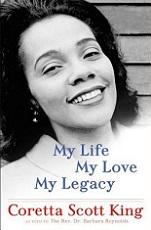 I find that as I age, I am more focused on historical events that changed the course of America, in particular from Black Americans. It has been said that in order to know where you are going, you have to know where you come from. For millions of Black Americans, the question of identity has been a difficult one to answer. Some prefer the term African-American while others prefer Black-American. And there are some who prefer Afro-American or just simply Black. Regardless of the label, there is a shared history of pain, struggle and the never ending goal for full integration American society. Over the past fifty years, tremendous progress has been made in the United States but there is still much work to be done. But one of the greatest things about America is our ability to correct and learn from mistakes that have lingered for too long. The young generation of today lives in a world far removed from only twenty years ago. Their world is one in which technology is ingrained and life moves at an even faster pace. My father often thinks back to the period of integration and the times where it seemed as if America was going to tear itself apart. Even to him, as a kid it seemed as if the accomplishments by Black Americans over the years were just a pipe dream.

You must be logged in to post a comment.