
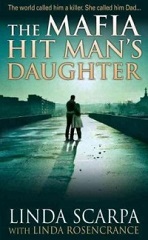
 This book is not by any means, an investigative report into Scarpa’s activities. For the full story on his crimes, relationship with the FBI and its aftermath, the best book that comes to mind is Peter Lance’s ‘Deal With The Devil‘ which chronicles Scarpa’s working relationship with the bureau which spanned several decades. This is his daughter Linda’s story infused with the recollections a few selected family members and a friend of the family. The book serves as her journal of what life was like under the roof of the feared mobster whose name sent chills down the spine of many. Similar to Albert DeMeo, Phil Leonetti and Anthony Colombo, Linda’s story reveals the ugly and tragic truth of life in a mafia family. And what we learn through Linda is that no one escapes that life unharmed in some sort of way whether it’s mentally, physically or emotionally. Prison, murder and other acts of violence become routine occurrences, leaving the surviving family members to grieve for those lost in street wars and deadly encounters of other sorts.
Scarpa, like most other mobsters, did protect his family from the life he led up to a point. And as we see with Linda, as she ages and learns more about the streets and the life her father has chosen, the stark reality of “the life” hits home awakening her to the bitter truth surrounding the nature of her father’s business. She is frank with what she knew and what she felt and through her words, we are to see the level of dysfunction plaguing their social circle resulting in a deadly web of violence. And as the internal struggle for power escalated into an all out war, she is forced to confront even more, the knowledge that her father has murdered men and will murder many more before his own demise from AIDS related complications in June, 1994.
A good portion of the book is narrated by Linda’s mother, “Big” Linda, Scarpa’s widow. And through her recollections, we learn about the true nature of the relationship between Scarpa and the FBI. A valuable asset during the civil rights era, Scarpa never received pubic credit for his role in breaking those cases, but Linda sets the record straight as she traveled with him on more than one occasion. And sadly, he was left out of the movie “Mississippi Burning” due to the highly sensitive nature of his working relationship with the bureau. Former FBI Agent Lin DeVecchio was charged with being complicit in murders carried out by Scarpa, but was acquitted on all charges. The nature of his relationship with Scarpa came under close scrutiny and in this book, that topic is also discussed freely by both mother and daughter. It is left up to the reader to decide the level of DeVecchio’s complicity in Scarpa’s activities.
This story by his daughter is moving and filled with all of the elements that could make a modern-day gangster film. Marriage, divorce, mistresses, money, power and violence all make an appearance throughout the book. But the one thing that stands out is that nothing is glorified. There is no glamour or gloating and she is pointedly clear that there are no winners. What is left are her, her mother and other relatives trying to put their lives back together and even though more than 20 years have passed, their lives continue to be in need of repair. For some, that healing may never come and others go on trying to live the best life that they can. Her father is long gone as is her brother Joey, tragically murdered himself on the same Brooklyn streets his father once ran. For Linda, life will never be the same again and through this, she shares her story to inform others of the risk taken by a life of crime and violence and reminds us that not only do our actions affects us, but they also can affect everyone around us even after we’re long gone from this earth.
ISBN-10: 0786038705
ISBN-13: 978-0786038701
 On January 19, 2013, Hans J. Massaquoi, the former editor of Ebony magazine and writer for Jet magazine, died at his home in Jacksonville, Florida at the age of
 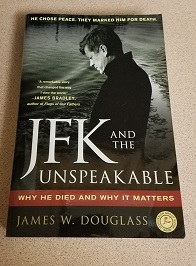 Recently, I re-watched President Kennedy’s peace speech at American University on June 10, 1963. The speech is considered to be one of Kennedy’s shining moments. In the speech, he called for a new vision of peace in the face of the escalating conflict in Vietnam and continuing aggression with the Soviet Union and its Cuban ally, Fidel Castro. Researchers into Kennedy’s administration and his murder have often said that this is the speech that served as the final straw for those surrounding him wishing to have him removed from office. Tragically, several months later, after this speech, that’s exactly what happened as he was murdered in broad daylight on the streets of Dallas, Texas. Two days later, his alleged assassin, Lee Harvey Oswald was also murdered raising more questions that have yet to be answered to this very day.
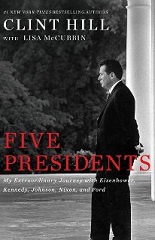 The 20th Century was filled with some of the most earth-shattering events the world has ever seen. The home video shot by Abraham Zapruder that recorded the assassination of John F. Kennedy stands as one of the most important pieces of motion picture ever captured. During that film, as former Firs Lady Jacqueline Bouvier Kennedy reaches to the trunk of the car to retrieve a portion of JFK’s skull, a secret service agent can be seen leaping on the trunk of the car as the motorcade sped down the Stemmons Freeway en route to Parkland Hospital. The agent, Clint Hill stands out in the film as only one of two agents to make any major movement to help the fatally wounded Kennedy and Gov. John Connally. Hill would go on to serve three more presidents and today is a best-selling author with several books published about his time working in the United States Secret Service.
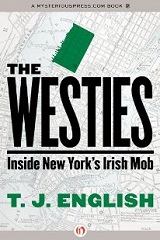 In New York City history, the Italian-American mafia has always captured the public spotlight in regards to organized crime headlines. The five families, filled with larger than life characters, captivated the American public becoming glorified in films and music. But at one time in New York City, in a small neighborhood known as Hell’s Kitchen, the Irish mafia controlled the streets. T.J. English takes us back in time to when Hell’s Kitchen was one of the most dangerous parts of New York City. Today the area has changed substantially. The faces have changed and the area once known to harden criminals, has seen a surge in gay and lesbian residents. The bars are still there but the area has become a focal point for New York City nightlife. The violence is long gone but some of the remnants from the past will always remain.
 The Holocaust remains one of the most regretful moments in the history of mankind. The Final Solution, engineered by Adolf Hitler’s Nazi government, resulted in the deaths of over six millions Jewish men, women and children. The many concentration camps became factories of genocide and symbols of the Third Reich’s relentless efforts to remove all Jewish citizens from Germany and the occupied territories of the Reich. As Hitler made his rise to power, many Jews fled Germany fearing the worst under the rule of the tyrannical dictator from neighboring Austria. Others were forced to seek refuge in Germany and survive in any way possible. But still there were other Jews who found help among non-Jewish Germans and were able to hide themselves right in Berlin, under the eyes and ears of the N.S.D.A.P.
 On October 3, 1995, I was in my sophomore year at Bishop Loughlin Memorial High School in Brooklyn, New York. Not long after the lunch periods had ended, our classes were interrupted as the teachers informed us that the verdict in the O.J. Simpson murder trial was scheduled to be read. We stopped class and turned on the television to witness what we all knew was a historic event. When the verdict was read and Simpson was found not guilty, the school erupted in cheers and howls. None of us wanted to see Simpson convicted of murder and to many African-Americans, he was proof that you could in fact make it to be someone in America if you were a person of color. After the acquittal of the police officers involved in the beating of motorist Rodney King, racial tensions had peaked across the nation and the Simpson trial would showcase the issue of race to the fullest. The images of Marcia Clark, Robert Shapiro, Christopher Darden, Johnnie Cochran and Det. Mark Fuhrman have permanently been burned into the memory of nearly every American who watched the gripping trial from start to finish.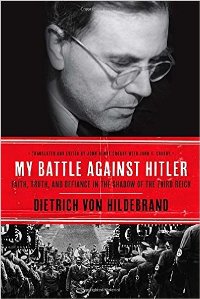
 On April 14, 1865, John Wilkes Booth changed the course of United History. The murder of Abraham Lincoln marked the first time a sitting U.S. President had been slain by an assassin. Tragically, Lincoln would not be the last to be assassinated. John F. Kennedy would meet his tragic fate on the streets of Dallas, Texas on November 22, 1963. Lincoln’s murder has become fodder for conspiracy theorist intent on proving that a web of deceit surrounded Lincoln paving the way for the tyrannical Booth to execute his plan. But just how much of a conspiracy was there? And did it involve members of the Confederacy? Was Edward Stanton complicit in pulling back Lincoln’s security detail? And was Mary Surratt rightfully convicted? Edward Steers, through painstaking research answers those questions and more in what is the definitive examination of the assassination of Abraham Lincoln.
 On January 30, 1957 the United States Senate Select Committee on Improper Activities in Labor and Management was created to investigate corruption in American labor unions. Designated with the role of Chief Counsel was a young attorney who later went on to become attorney general and 1968 democratic presidential hopeful, Robert F. Kennedy. In this memoir of his time on the committee, Kennedy recounts the exhaustive investigative efforts of those who served on the committee in an effort to shed light on the nefarious dealings of union and labor officials and effect reform throughout the United States. At the center of the committee’s target lay James R. Hoffa and his International Brotherhood of Teamsters. Starting with Dave Beck, Kennedy carefully reconstructs the deeply seated mismanagement of union funds resulting in the most opulent lifestyles for top officials. Facing a culture in place for many years, Kennedy and his staff are met with opposition and resistance to efforts to probe into the dark side of American labor unions. It’s no secret that Kennedy and Hoffa had a strong distaste for each other and on more than one occasion, Hoffa threatened the future attorney general with physical violence. Kennedy would respond with his “get Hoffa squad” in an attempt to bring down the man who Kennedy believed was a menace to the American way of life.
 FREETHINKING BIBLIOPHILE
You must be logged in to post a comment.