
 July 19, 1979- Nicaraguan dictator Anastasio Somoza Debayle is overthrown in a coup headed by the Sandinista National Liberation Front. His removal brings an end to a thirty year reign of tyranny and oppression from the Somoza family, supported by the United States. Somoza joins a long list of puppet dictators enabled and sustained by U.S. foreign policy guided by financial interests. Today, Nicaragua is the second poorest nation in the Americas behind Haiti. In some areas, residents are forced to live on as little as $1 per day. And on September 21, 2016, Congress passed the Nicaraguan Investment Conditionality Act which mandates that any loans to Nicaragua are to be withheld unless there are signs of fair elections and the implementation of democratic processes. The Act is eerily similar to the actions in the early 1900s when the U.S. tried to seize control of the Banco Nacional, the country’s main bank. The recent law by Congress highlights the long and tragic relationship between Washington and the fascinating Latin American nation.
Let us for a minute examine Latin America under U.S. foreign policy. El Salvador. Guatemala. Panama. Cuba. The aforementioned nations are just some the examples of the failures of U.S. foreign policy and its disastrous and in some cases, deadly effects. Coup d’etat was the primary weapon on choice and many rising stars would fall victim to it. Nicaragua joins this list and the history which we learn in the is exceptional account by Michael Gobat is the key to understanding modern-day Nicaragua. Today, the name William Walker is unknown to most Americans, but there was a time when his name was one of infamy, following his attempt with the of the filibuster, to take control of Nicaragua which had been determined to be the best passage for international shipping. The Panama canal later claimed the title, but that did not suspend of terminate the interest of Washington in Nicaraguan society. Although Walker failed in his attempts, Washington would be provided with several more opportunities to enforce its will as the overseer of the Americas. And as Gobat shows us, the repercussions for Nicaragua were catastrophic.
Civil wars and the occupation by the United States Marine Corps., created an unusual paradox that defied logic on many levels. The structure of Nicaragua society which at the time was modeled after the U.S., and the rising anti-imperialism movement, formed a contradictory relationship between the conservative elites and the man who threatened to changed Nicaragua forever, Augusto Sandino (1895-1934). His tragic fate and the assumption of power by Anastasio Somoza Garcia, plunged Nicaragua into decades of conflict in which thousands lost their lives and the horrific policies of the United States came to light.
Central America is a stronghold of civil unrest, poverty and skyrocketing murder rates. Political instability and corruption continue to plague the region and the future is uncertain for many of them. Honduras currently has one of the highest murder rates in the world and the story of El Salvador has been told many times over. What they all have in common is that they are all the victims of imperialistic intervention. The United Fruit Company and other U.S. companies operating in the Caribbean and Latin America, helped turned the region into a group of “Banana Republics”. Today, we have all but forgotten Nicaragua. It is rarely mentioned and the majority of Americans remain ignorant of our dark relationship with our Central American neighbor. The truth that we should acknowledge is that Nicaraguan history is American history for our actions and policies towards the small nation exemplify our misguided attempts to enforce democracy and exploit the defenseless. This investigation report by Gobat is the truth about a time we would rather forget. But his words and the research he has done, show us what happened and why.
Che Guevara once called the United States the enemy of humanity. His words may sound extreme, but we are required to recall that he was present in Guatemala in 1954 when the government of Jacobo Arbenz was overthrown in a CIA backed coup. His witnessing to the aggression by the United States and the destitute conditions forced upon Latin America helped shaped his revolutionary ideology which he carried with him all the way to the jungles of Bolivia. His sentiments have been echoed by millions of people throughout the Americas disillusioned with the false promises and nefarious acts utilized by Washington. But if we are to understand Nicaragua and its tragic history, then we must begin with books such as this. And then we will learn the true story of the forgotten republic.
ISBN-10: 0822336472
ISBN-13: 978-0822336471
 The late James Baldwin (1924-1987), remains one of America’s most gifted authors. He is also remembered as an icon of the civil rights movement who was fiercely outspoken against the injustices committed against African-Americans. Similar to Bayard Rustin, his homosexuality resulted in a life long inner turmoil in a quest to find true love and happiness. When he died in France in December, 1987, he left this world as a bachelor and without children. It could be argued that his children are the writings he left behind that examined society, human nature and emotions. One of these stories is Giovanni’s Room, Baldwin’s masterpiece about the complexities of the human heart and the burden of living with repressed sexuality.
 On August 16, 2003, Idi Amin Dada, the third President of Uganda from 1971-1979,
  This gem for which I have written a review came as a recommendation by a close intimate in Argentina. And although short in its duration, the book contains powerful messages about our concepts of love, sex, race, class and justice. The story is of Ndi Sibiya, a young man from a town called Mzimba in the continent of Africa, who is condemned to death after being convicted of the rape of an English woman in the “whites only” section at the local beach. At the beginning, Sibiya informs that he is to die but at first we do not know the exact crime he has been charged with. As the pieces of the puzzle come together, we learn that each day for the past several weeks, he has had a wordless encounter with an English woman who sun bathes naked on the beach. She initially caught him watching her but did not report him and according to Sibiya, continues to show him her body. One day the tension proves to be too much and the two engage each other intimately. Sibiya is arrested and charged with violation of the Immorality Act and rape, both of which carry the death penalty.
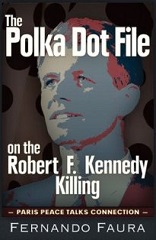 Each time I drive across the Robert F. Kennedy memorial bridge as I pass from Queens to the Bronx and sometimes Manhattan, I think about his importance to the State of New York and the United States. The former attorney general, senator and presidential candidate was one of the most polarizing figures of his time. His murder on June 5, 1968, shocked the world leaving millions of people speechless about what they had just learned. A young Jordanian immigrant named Sirhan Sirhan was later tried and convicted for the murder and the case is considered solved in Los Angeles County. Similar to the murder of John F. Kennedy 5 years earlier in Dallas, Texas, upon closer examination, many disturbing facts emerge that cast a chilling doubt over the official story.
 August 19, 1953-Iranian Prime Minister Mohammad Mossadegh (1882-1967) is removed from power in a coup engineered by British MI6 and the United States’ Central Intelligence Agency under the control of Kermit Roosevelt. Mohammad Reza Shah (1919-1980) returns from exile in Rome to reestablish himself as the nation’s highest authority. The Shah proceeds to place the country in an iron grip, enforcing dictatorial rule for the next twenty-five years before his abdication in 1979 resulting in the seizure of power by the Ayatollah Khomeini setting Iran on a path of radical Islamic rule highlighted by the administration of Mahmoud Ahmadinejad. The coup in 1953 and the actions of U.S. President Jimmy Carter in 1979, permanently changed the relationship between the United States and the once promising Islamic Republic.
 October 23, 1935- Arthur Flegenheimer, better known as Dutch Schultz, is gunned down with two of his associates at the Palace Chop House in Newark, New Jersey. Schultz was mortally wounded as he stood in front of a urinal in the men’s restroom. He survived for another day before dying on October 24, 1935 at the age of thirty-three. Today, the Palace Chop House is gone, having been demolished to make way for additional
 As recent events have shown, America continues to struggle with freedom and equality for all of its citizens. And while great progress has been made over the past 50 years, there is still much ground to cover and many thins to understand. A friend once told me that Black Americans are unique in the world for a variety of reasons but mainly because there is no other group of people similar. At first I didn’t quite understand where she was going with the conversation, but the more I listened and the more I began to digest her words, I came to understand the meaning behind her words and why they sparked such deep thought within me. Her words however, only covered a fraction of the entire story and as author Tom Burrell points out, the story of the Black American is a long and tragic one that is still not fully understood. In this exceptional testament to the current day status of Black Americans, Burrell forces the reader to open the eyes and mind as we explore the enduring myth of Black Inferiority (BI).

You must be logged in to post a comment.