
 The Holocaust remains one of the most regretful moments in the history of mankind. The Final Solution, engineered by Adolf Hitler’s Nazi government, resulted in the deaths of over six millions Jewish men, women and children. The many concentration camps became factories of genocide and symbols of the Third Reich’s relentless efforts to remove all Jewish citizens from Germany and the occupied territories of the Reich. As Hitler made his rise to power, many Jews fled Germany fearing the worst under the rule of the tyrannical dictator from neighboring Austria. Others were forced to seek refuge in Germany and survive in any way possible. But still there were other Jews who found help among non-Jewish Germans and were able to hide themselves right in Berlin, under the eyes and ears of the N.S.D.A.P.
This is the story of seven men and women who found refuge and protection in Berlin during the war and how they lived to tell their tales. They’re now deceased, but before their deaths, Barbara Lovenheim conducted interviews with them, allowing them to recount their incredible stories of fear, survival and eventual happiness after moving on with life and building lives outside of Germany. Their stories truly exemplify what it means to hide in plain sight. Through each of them, we are able to see the resiliency of the human spirit and are reminded that even in the worst of times, there will always be those of us who refuse to give in to evil and truly understand what humanism really means.
As we are introduced to the characters, the Nazis begin to step up the effort to remove all Jews from the Fatherland. Reaching out to friends and acquaintances, the men and women in this book, Erich Arndt, Ruth Arndt, Charlotte Lewinsky, Ellen Lewinsky and Bruno Gumpel, manage to survive the Final Solution through determination, luck and in some cases, superb methods of deception. Faced with starvation, sickness and in most cases, desperation, their will to survive is inspiring and heartbreaking. But as we make our way through the book, we see trust is also a large factor and underscores every move that each of them make to stay alive. Enemies appear with smiles and looks are sometimes very deceiving. And what we learn painfully in the book is that in some cases, not even fellow Jews could be completely trusted making each word spoken and each offer accepted, a matter of life and death.
Their stories are the main objective of the book, but a sub-story also exist in the form of the many non-Jewish Germans who risked their lives and well-being to save their Jewish friends and others threatened with death at a concentration camp. Oskar Schindler’s story is well-known and he was immortalized by Liam Neeson in the classic ‘Schindler’s List’. But throughout the war and even in Berlin as we see here, many ordinary German citizens took great strides to protect Jews from extermination at the hands of the Gestapo. And following the war, the formerly persecuted Jews made it clear to Allied forces that their saviors were to be protected and left alone. Others we know turned a blind eye to the crimes of the Third Reich and some even turned in Jews to the authorities. But the efforts of the upstanding citizens serves as an example of the good that humans can do even in the face of overwhelming death, destruction and despair.
There are many stories about the Holocaust from writers such as the late Anne Frank, Elie Wiesel and Rena Kornreich Gelissen. The stories of these seven survivors stands among the greats as a historical record of a horrific time in world history. And although more than 70 years have passed since the Allied victory over the Axis powers, the horror and pain of the survivors of the Final Solution stay fresh in our minds as a reminder of why it’s important to never forget our history.
ISBN-13: 9781504039987
 On October 3, 1995, I was in my sophomore year at Bishop Loughlin Memorial High School in Brooklyn, New York. Not long after the lunch periods had ended, our classes were interrupted as the teachers informed us that the verdict in the O.J. Simpson murder trial was scheduled to be read. We stopped class and turned on the television to witness what we all knew was a historic event. When the verdict was read and Simpson was found not guilty, the school erupted in cheers and howls. None of us wanted to see Simpson convicted of murder and to many African-Americans, he was proof that you could in fact make it to be someone in America if you were a person of color. After the acquittal of the police officers involved in the beating of motorist Rodney King, racial tensions had peaked across the nation and the Simpson trial would showcase the issue of race to the fullest. The images of Marcia Clark, Robert Shapiro, Christopher Darden, Johnnie Cochran and Det. Mark Fuhrman have permanently been burned into the memory of nearly every American who watched the gripping trial from start to finish.
 On April 14, 1865, John Wilkes Booth changed the course of United History. The murder of Abraham Lincoln marked the first time a sitting U.S. President had been slain by an assassin. Tragically, Lincoln would not be the last to be assassinated. John F. Kennedy would meet his tragic fate on the streets of Dallas, Texas on November 22, 1963. Lincoln’s murder has become fodder for conspiracy theorist intent on proving that a web of deceit surrounded Lincoln paving the way for the tyrannical Booth to execute his plan. But just how much of a conspiracy was there? And did it involve members of the Confederacy? Was Edward Stanton complicit in pulling back Lincoln’s security detail? And was Mary Surratt rightfully convicted? Edward Steers, through painstaking research answers those questions and more in what is the definitive examination of the assassination of Abraham Lincoln.
 On January 30, 1957 the United States Senate Select Committee on Improper Activities in Labor and Management was created to investigate corruption in American labor unions. Designated with the role of Chief Counsel was a young attorney who later went on to become attorney general and 1968 democratic presidential hopeful, Robert F. Kennedy. In this memoir of his time on the committee, Kennedy recounts the exhaustive investigative efforts of those who served on the committee in an effort to shed light on the nefarious dealings of union and labor officials and effect reform throughout the United States. At the center of the committee’s target lay James R. Hoffa and his International Brotherhood of Teamsters. Starting with Dave Beck, Kennedy carefully reconstructs the deeply seated mismanagement of union funds resulting in the most opulent lifestyles for top officials. Facing a culture in place for many years, Kennedy and his staff are met with opposition and resistance to efforts to probe into the dark side of American labor unions. It’s no secret that Kennedy and Hoffa had a strong distaste for each other and on more than one occasion, Hoffa threatened the future attorney general with physical violence. Kennedy would respond with his “get Hoffa squad” in an attempt to bring down the man who Kennedy believed was a menace to the American way of life.
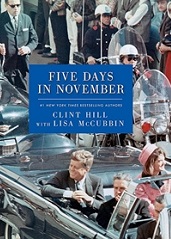 Abraham Zapruder captured a defining and tragic moment in history when his camera recorded the assassination of President John F. Kennedy. The film was originally locked away by Time Life but was finally released to the public years later as a result of the investigation of Jim Garrison into Kennedy’s murder. The film leaves the view speechless and speaks more than a thousand words. Next to the gruesome murder of the President, there’s an iconic sequence that occurs that also remains cemented in the memory of the witnesses in Dealey Plaza that day and the millions others who have repeated watched the film. As the motorcade speeds toward the triple underpass, a Secret Service agent is seen jumping on to the back of the car as it speeds up to transport the mortally wounded Kennedy to Parkland Hospital. The agent is Clint Hill, a veteran of the Secret Service who served several presidents during his multi-decade career. Now 84, he’s become an author over the years, having written a few books, one of which is this account of the fateful trip to Dallas, Texas and the tragedy that ensued.
 In volume I of her three-volume biography of the late Anna Eleanor Roosevelt (1884-1962), Blanche Wiesen Cook explored the early life of the pioneering First Lady of the United States. We learned about her family history, both intriguing and tragic, upbringing by close relatives, her marriage to Franklin and his election of the presidency of the country. The book closes as the family assumes their role as the new occupants of the White House. In this second volume, their story continues with the new President finding himself embattled on several fronts as the depression rages, Adolf Hitler threatens world peace and domestic social tensions threaten to tear the nation apart. The First Lady also finds herself fully immersed in ongoing current events that cause concern for citizens across the country. And it is during this time period, 1933-1938 that she defines herself as she finds her calling as a champion of women’s rights and advocate of equality and well-being for Americans of all ethnic backgrounds.
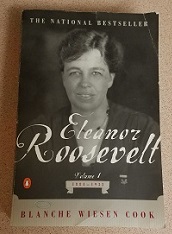 The President of the United States has what many consider to be the toughest job in the nation. Tasked with the impossible feat of making everyone happy at all times while often performing highly unpopular actions, the President often goes through a transformation while in office that results in deep reflection later in life. Standing next to each President in modern times, is the first lady who in her own right, has evolved into a major presence with a voice of her own. This November will mark the end of the Obama administration and as they prepare to leave the White House, I firmly believe the first lady can look back without regret as having served the nation as one of the finest America has seen. She follows a long line of pioneering first women to have occupied the White House, adding a touch of grace and class to what used to be a strictly supplementary role. But many years before Michelle Obama, there was another first lady, who stands out as one of American’s greatest historical figures and whose legacy continues today, Anna Eleanor Roosevelt (1884-1962).
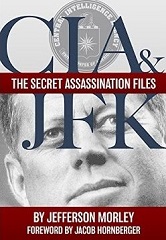 October, 2017, will mark a turning point in American history. Pursuant to the JFK Records Act of 1992, all remaining classified files relating to the assassination of President John Kennedy are slated to be released to the American public. If no opposition is received from the FBI, CIA or any government agency with a vested interest in the files, more than 3,000 pages of once classified documents will be disclosed more than 50 years after Kennedy’s tragic death on the streets of Dallas, Texas.

You must be logged in to post a comment.