
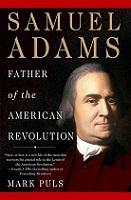
 On March 22, 1765, the British Parliament passed the Stamp Act, assessed a tax on various forms of papers, documents, and playing cards, which was to be paid by the people living within its colonies on North American soil. The legislation provoked outrage and was abolished a year later. However, for the colonists it was a sign that independence from Britain might be the best course of action. One advocate for independence whose voice became dominant was Samuel Adams (1722-1803), a member of the Massachusetts House of Representatives and future Governor. Today he is known was the father of the American Revolution, but his life has become an afterthought. I found this biography by author Mark Puls and decided to learn the life story of a revolutionary who changed history. Having finished the book, I now have a new understanding of American history.
Friends of mine who live abroad have teased about America being a “young” nation in comparison to countries around the world. I cannot argue that point but also note that in its “short” existence, America has accomplished remarkable feats and played crucial roles in world events. And the key to understanding the American spirit lies in its creation in the late 1700s when colonists decided that British rule had to end. However, not all of them were anti-British, and some wanted to remain loyal to the crown. But for Adams, freedom was the only option. His story begins in Boston, where he was born in 1722, a time in which the British Parliament was in full control of its colonies. But that does not prevent the young Adams from coming of age, and we follow him as he matures into a young man blessed with a bright future. Love also enters the story when he meets Elizabeth Checkley (1725-1757). The couple take their vows but later experience unbelievable grief as we see in the story. I found Adam’s ability to continue after so much loss to be a testament to his character which was needed as the movement for independence grew. But not all was lost, and he later weds Elizabeth Wells (1735-1808) who remained with him until his death.
The passing of the Stamp Act is when the story picks up the pace. However, the British Parliament also passed the Declaratory Act which set off alarm bells throughout the colonies. England had started to seal its own fate. For Adams and like-minded individuals, the crown had gone too far and thus, the revolution was born. Before we reach the War of Independence, the movement needed members and this is where the suspense heightens in the book as familiar names enter the story such as future President Thomas Jefferson (1743-1826), and Declaration of Independence signatories John Hancock (1737-1793) and Benjamin Franklin (1706-1790). Britain was not oblivious to the rumblings in the colonies and as explained by the author, it took steps to quash the growing discontent. However, the movement was carefully guarded, with subversion as a useful tactic. In fact, Franklin becomes aware of the colonists’ plans while stationed in London. And his importance cannot be overstated. All were aware that England was watching yet they were determined to see independence. The story becomes a cat and mouse game as the revolutionaries move under the radar while Britain becomes focused on the trouble across the Atlantic. Both sides knew a breaking point was coming. And everyting did come to a head in one event that changed the course of history: the Boston Tea Party.
If you have visited Boston, I am sure you’ve seen the Boston Tea Party Museum. For those who have not, I highly recommend visiting the museum and seeing the preserved ship for yourself. It is step back in time when colonists began to see a country ruled by Americans. On December 16, 1773, Griffin’s Wharf became ground zero as colonists dumped tea chests into the water in protest of the Tea Act. The response from England was expected and severe but did not serve its purpose of deterring future rebellion. The fuse had been lit. And leading the way was Adams whose goal was complete liberation. War eventually comes and forces the colonists to prove their determination. Behind the scenes, Adams, Hancock, and others were hard at work laying the foundation for the United States of America. However, that also proved to be a challenge. In fact, as shown in the story, there were colonists who supported more freedom but also saw value in British rule. But for Adams and Hancock, whose friendship goes through its own roller coaster ride before finding solid footing before the latter’s death, a new nation was worth the bloodshed.
The author provides reports from the war as Adams’ story moves forward, including an appearance by America’s first President George Washington (1732-1799). As a history buff, I could not stop reading as the images of America’s founding were created in my mind. I do caution that the book is not about the war itself. This is Adams’s story and his actions which paved the way for the country I call home. I enjoyed reading about Adams, regrettably turned into a pop culture through a brand of beer. However, there was far more to this man than you might imagine, and to the men who turned a vision into reality. While reading, I could visualize the drafting of the Declaration of Independence and the early version of what became Congress. The founding fathers were brilliant at organization, and this can serve as a case study on how governments were conceptualized. Of course, not all was perfect, and amendments were needed. But the foundation had been laid and it continues to serve us today.
Following the birth of the United States, Adams finds a place in local government, right in his home state of Massachusetts. He came governor following Hancock’s death and remained at the helm until 1797 when he retired from public life for good. On October 2, 1803, he passed away peacefully at home. And when the end was near, I am sure he was able to look back with pride on all that he had one to create the newly independent United States and make his transition from this world to the next.
ASIN: B00Z65S44I

 On October 16, 1946, former Nazi theorist and ideologue
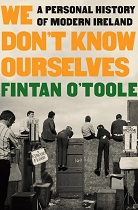 In February 2016, I visited Dublin, Ireland for the first time so that I could see for myself why this small country was so popular. In my hometown of New York City, Irish culture can easily be found. The police and fire departments have long history of Irish men and women who served as first responders in the “city that never sleeps.” And if you are in search of a drink and meal, a good Irish pub is hard to beat. As for my personal experience abroad, I fell in love with Dublin but I regret not having a better understanding of Irish history at that time. In the years that followed, I began to consume books on Ireland and the conflict known as “The Troubles”, being careful to read material from both sides of the matter. Regardless of how much I have read, I can see that there are stories still untold or in some cases, unknown to those on my side of the Atlantic Ocean. Fintan O’Toole is a native son of Ireland and this biography was included in my list of weekly recommendations. The book caught my attention and I knew I had to read it. It suffices to say that I received more than I could have asked for, and this book is a treasure.
 In the fall of 1856, the Willie and Martin Mormon handcart expeditions found themselves caught in devastating blizzards in the mountains of Utah and Wyoming. Of the nine hundred travelers, two hundred fifty of them did not reach their destination. The migration was a disaster and a stain on the legacy of
  Discussions of American history during the 1800s may cause one to wonder how the country survived intact. The Civil War, conflicts with Native Americans, and two presidential assassinations highlighted the violent century in which America changed significantly. As the 1900s approached, America was ready for new challenges but in 1914, the world was plunged into war after the assassination of
 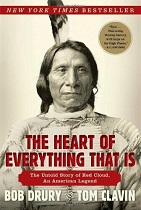 In the 1800s, the United States was a rapidly growing nation that had evolved from thirteen British colonies to a country seeking to expand across North America. The ideology of “manifest destiny” propelled the drive west into the unchartered and unknown. White settlers who dared to venture past America’s borders faced severe dangers with no guarantee of military aid. But all knew that the gravest dangers outside of the United States were the Native American tribes who called the continent home. As explorers and American military personnel moved further west, the native tribes reaffirmed their commitment to preserving their way of life. Washington’s plan for establishing more territory set the two opposing cultures on a collision course that spread violence, mistrust, and cast a dark cloud over American history that exist to this day. The names of
  February 21, 2024, will mark fifty-nine years since the assassination of
  If you were to ask me to find one word to describe the late
  FREETHINKING BIBLIOPHILE
You must be logged in to post a comment.