
 Throughout the years, I have been asked what life was like in New York City during the 1980s. I explain that the city was dangerous, the subway was as bad as it looked in pictures, and the skyline looked vastly different from what we see today. And people were doing their best to survive in the concrete jungle. Despite the rough conditions, there was no time like it and there has not been a time like it since. The 1980s remains a decade like no other. In 1978, a young transplant from Kutztown, Pennsylvania named Keith Haring (1958-1990), made his way east and found a home in the “City That Never Sleeps”. No one knew it at first, but over time, Haring would become a prominent figure in New York City’s artist circles and left a legacy as his creativity came to life. This is his story by author Brad Gooch, who takes us back in time to an era when life moved fast, people partied hard, and a new virus became a ruthless killer.
Prior to reading the book, I did have knowledge of Keith Haring and some parts of his life. Further, he appears in the Netflix docuseries ‘The Andy Warhol Diaries‘ (2022) in archival material. However, that series is about Warhol (1928-1987) himself and a good look into his personal side. There is some debate regarding the diaries which were edited by his close friend Pat Hackett who also appears in the series to give interviews. I noticed that both Haring and Warhol were natives of Pennsylvania. A coincidence for sure, but that might partly explain Haring’s adulation for Warhol as he navigated the art scene. But before we reach Keith’s arrival in New York to study at the School of Visual Arts, we first learn about the family’s life in Kutztown during the late 1950s when Senator Richard Nixon (1913-1994) was gaining popularity as a presidential candidate, and the Republican Harings were all for his election to the presidency. However, Keith shows early signs that he will be the child that is different, and it is not long in the story before he charts his own path, to the consternation of his mother Joan and father Allen. Pennsylvania is a beautiful state, but Keith wanted more in life, and New York City finds itself in the crosshairs. And it is there that his life and New York City history changes.
As Keith settles into his new surroundings in New York City, we follow him as he begins to make friends and explore his artistic side. The pace of the book is steady without feeling rushed at times or slow moving. But as life picks up the pace, so does the story. Haring’s sexuality was no secret to those who knew him or followed him, but the story of how he discovered it and the relationships he had during his lifetime are crucial in understanding his life and the art he created. I once heard someone comment that artists view the world through a different lens. That applies here as Haring struggled with his sexual orientation before embracing his attraction to men. The stories of his partners are also told here, adding a deeply personal side to the story. Juan Dubose (d. 1989) and Juan Rivera (1957-2011) are the love interests who find themselves walking in Haring’s shadow as he travels the globe riding the wave of fame. Both were committed to Haring who comes off at times oblivious to the emotional harm he causes to others. But, at times Haring was at war with himself as he partied into the morning hours and indulged in a steady supply of narcotics. However, it was the 1980s, so no one should be surprised that cocaine was a drug of choice in many circles. By no means was Haring a drug addict, but his creativity sometimes had help.
Following his initial entry into the art scene, his rise moves quickly, and the names we have come to know appear in the book. Besides Warhol, Haring becomes friends with Jean-Michel Basquiat (1960-1988), Tseng Kwong Chi (1950-1990) who captures Keith’s adventures in photos and a young singer going by the stage name of Madonna. Basquiat appears in the story on a handful of occasions, and I did learn something about his apartment that I did not know previously. Warhol’s appearances in the story are in social settings, typically at a night spot and some journal entries he makes about Keith are provided. I have made a mental note to myself to read Warhol’s diaries as I have had the book for several weeks. During the day, the artists created and brainstormed but at night was when the parties began, and as Haring’s life moves forward, we re-live New York City’s after-dark scene as Manhattan’s gritty and unpredictable landscape becomes a playground for the rich, famous and anyone looking for a fun time. In one place, Keith and his crew party regularly to music mixed by legendary NYC D.J. Larry Levan(1954-1992), whose mix of the Nick Straker Band’s ‘A Little Bit of Jazz‘ will make anyone move their feet. Admittedly, I was surprised to see Levan’s name in the story. To be sure, he is known among the older generation of clubgoers and party animals who once turned Manhattan upside down but to today’s generation, he is unknown. Gooch left no stone unturned. Keith was soaring high, but we know there is a dark side to the rush of fame and NYC underworld. Eventually, his friends become sick, with each showing similar symptoms with sudden physical decline. A storm was brewing, and Keith knew life for all of them would never be the same again.
While New York City’s gay nightlife continued to thrive, three thousand miles away in San Francisco, events would soon unfold that shattered any illusions that America could ignore a new silent killer. Originally called the “gay cancer“, HIV and AIDS changed our way of life. Haring, his lovers and friends are all at elevated risk and as the news from California spreads across the country, it becomes apparent that the virus is far more serious than believed at first. In the Golden City, reporter Randy Shilts (1951-1994) was capturing history which he later turned into the best-selling book ‘And The Band Played On. I must warn readers that the story takes an emotional turn as Haring’s friends succumb to the disease. Keith is aware of his own mortality and eventually learns that he too has contracted Kaposi’s Sarcoma, an indicator of HIV infection which is later confirmed. At this point it becomes a race against the clock. But before leaving, Haring makes sure to accomplish as much as possible, resulting in a trove of work, murals that have stood the test of time, and trips abroad to experience all that life has to offer. But even he could not outrun fate and his decline towards the end is heart wrenching. And although we know it is coming, it is a life gone too soon as AIDS continued to tear across America. The author did a good job of telling Keith’s story while also addressing the growing AIDS crises.
In his short life, Keith Haring lived a lifetime and left his mark on New York City through his art which can still be viewed today. He found his place in a city contending with financial peril, an understaffed police department, real life scenes from the ‘Death Wish’ films, subway vigilantes, the Italian American Mafia, crack cocaine, and a murder rate through the roof. But that same city was also a hotbed of creativity and inspiration, and a place where “getting lost” could open doors to social networks once unimaginable. If you lived in New York City during Haring’s time or are curious about that unbelievable decade, you must read this book which brings the past to life in vivid detail.
ASIN : B0C3J5T7VT
© Harper Publishing, 2024
 A couple of weeks ago I was in search of a new book to read, however, an old favorite popped up in my list of recommendations. I had previously read and
 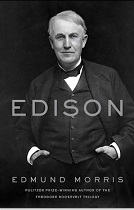 Each morning, men and women make their way to the NJ Transit rail station located at 12 Read Street in Edison, New Jersey. The township consistently ranks among the best in the Garden State and is a desired suburb of the New York City area. Its Menlo Park section was once home to the brilliant inventor
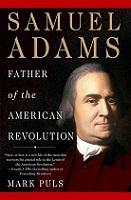 On March 22, 1765, the British Parliament passed the
 On October 16, 1946, former Nazi theorist and ideologue
 In February 2016, I visited Dublin, Ireland for the first time so that I could see for myself why this small country was so popular. In my hometown of New York City, Irish culture can easily be found. The police and fire departments have long history of Irish men and women who served as first responders in the “city that never sleeps.” And if you are in search of a drink and meal, a good Irish pub is hard to beat. As for my personal experience abroad, I fell in love with Dublin but I regret not having a better understanding of Irish history at that time. In the years that followed, I began to consume books on Ireland and the conflict known as “The Troubles”, being careful to read material from both sides of the matter. Regardless of how much I have read, I can see that there are stories still untold or in some cases, unknown to those on my side of the Atlantic Ocean. Fintan O’Toole is a native son of Ireland and this biography was included in my list of weekly recommendations. The book caught my attention and I knew I had to read it. It suffices to say that I received more than I could have asked for, and this book is a treasure.
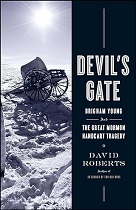 In the fall of 1856, the Willie and Martin Mormon handcart expeditions found themselves caught in devastating blizzards in the mountains of Utah and Wyoming. Of the nine hundred travelers, two hundred fifty of them did not reach their destination. The migration was a disaster and a stain on the legacy of

You must be logged in to post a comment.