
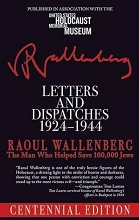
 I am always on the lookout for stories that I have not yet heard and names of people I am not yet familiar with. When I saw the cover of this book, I tried to jog my memory with regards to the name of the author. I finally realized that I did not know of Raoul Wallenberg (1912 -1947?) but I knew instantly that I had to read this book. Admittedly, I am always interested in the personal correspondence of figures from the distant past to see how information was shared in the years before E-mails, SMS and social media. The cover of the book directly describes what is contained within which is a collection of the letters between Raoul, his grandfather Gustaf Wallenberg (1863-1937) and Raoul’s mother Maj von Dardel (1891-1979) whose replies to her son are not included. The bulk of the letters are between grandfather and grandson and what is truly remarkable about them, is the amount of knowledge that is shared between the two. Raoul embarks on a long journey and I found myself glued to the book. But aside from that, there are other things in the book that make it an enjoyable read.
Gustaf is the undoubtedly the domineering force in the family structure. He is Raoul’s guiding light in the absence of Gustaf’s son and Raoul’s father Raoul Oscar Wallenberg (1888-1912) who died of cancer before his son’s birth. Raoul finds himself blessed to have a very supportive family and his grandfather both encourages and finances his studies abroad. America is the destination of choice for young Raoul. Gustaf himself had visited America and explains to Raoul why he feels so strongly about studying in the United States:
“It is because of what both my father and I found in America that makes me so eager for you to get your direction in life there. No one has ever understood as well as I have, because I saw it in my youth, how decisive his time there was for my father…. I use the expression direction in life and not “education” on purpose. ”
The first stop for Raoul is Ann Arbor, Michigan where he enrolls in college to earn an advanced degree. But, it is only the first stop and the young Swede would take advantage of being a young bachelor to travel across the United States meeting people from all walks of life while Gustaf continues to send words of encouragement and enlightenment. I do want to comment on Gustaf’s views on women which might cause consternation in some readers. I think today we would call him misogynistic but in that era, he would most likely have not received any reprimand. His comments to Raoul about romance are both interesting and quite blunt. And while he truly wanted the best for his grandson, I believe that some readers may take some offense to the words he writes. However, Gustaf is incredibly brilliant and refined in regards to world affairs. The knowledge contained in his letters can be of value to both men and women. Further, Gustaf’s command of words gives his letters a more potent affect and I found myself amazed at his sentence structure and grammar which is nothing short of clear and concise.
Raoul comes across as a competent writer himself and relays to his grandfather, plenty of anecdotes from his travels abroad. The journey goes from America, Central America, Africa and back to Europe. Along the way, the young student learns valuable lessons about life and as I read his letters I could see his level of maturity increase with each destination. The insight with which Raoul writes provides food for thought regarding America and other countries seen through the eyes of the traveling student. And throughout his travels, Raoul remains firmly in awe of Gustaf, whom he looks up to with unconditional admiration. Their relationship reminded me of the bond between my myself and my great-grandfather William, who was similar in nature to Gustaf and equally as frank in his choice of words. Putting aside his bluntness, we all loved and respected him deeply because we knew that he loved us in return and never hesitated to show it.
After graduating, Raoul made his way back to Europe and through a series of events, was introduced to Kàlmàn Lauer, a Hungarian Jew who was the director of the Central European Trading Company, Inc, a business that specialized in exports. This encounter changed his life permanently and as a result of it, Wallenberg accepted a post with the War Refugee Board through the invitation of Iver Olsen, a representative with the board. His new destination was Hungary which had become the target of the Germany army and a hotbed of anti-Semitism.
The implementation of the “Final Solution” by Adolf Hitler’s (1889-1945) Third Reich, sent chills across Europe and removed any doubt that there existed a “safe haven” for Jews. During his time in Budapest, Wallenberg committed himself to saving as many Jews as possible. In the final part of the book, we are allowed to see his dispatches regarding efforts to deport Hungarian Jews and his willingness to confront both German officials and the Arrow Cross Party, led by despot Ferenc Szálasi (1897-1946). He was relentless in his efforts and through them, it is estimated that he saved the lives of at least 100,000 Jewish people. When a friend asked about his determination to save everyone he remarked: ““I’d never be able to go back to Stockholm without knowing that I’d done all a man could do to save as many Jews as possible.” The exact number of Jews that he saved may never be known but what is certain, is that Wallenberg did prevent thousands from being deported before he was detained by the Soviet Army. And this is what we learn in the book about his final moments in Budapest:
“[The Soviet Army’s siege of Budapest began on December 8, 1944, the day this letter was written. Soviet authorities took RW into their ‘protective custody” and sent him to Lubyanka Prison in Moscow on January 17, 1945. He was never heard from again. The Soviets denied any knowledge of his whereabouts until 1957, when Andrei Gromyko, then foreign minister, announced that RW had died of a heart attack in 1947, in Lubyanka. There is ample but inconclusive evidence that this was not the case, and efforts to determine his fate continue.]”
The truth regarding Wallenberg’s fate remains a mystery as explained in this article in the Israeli journal Haaretz. The date of his death most likely remains a carefully guarded Russian secret. Officially, it is believed that he disappeared into the Soviet gulag system in January, 1945 and was never heard from again. His disappearance adds even more confusion to his story as he was a liberator and should have been seen as such by the invading Red Army. The reasons for his detainment and subsequent imprisonment are not exactly clear. And this adds a tragic ending to a remarkable story that should be part of any discussion about World War II and the Holocaust.
“Across the United States and throughout the world there are Raoul Wallenberg committees and individuals who work tirelessly to educate the public about this compassionate and nonviolent hero, and to assist in solving the mystery of his fate. By introducing the man behind the cause, Letters and Dispatches will help us all remember.” – Rachel Oestreicher Haspel, President of the Raoul Wallenberg Committee of the United States
ASIN : B006OALKJK
 Every time I board a flight at New York’s John F. Kennedy International Airport, I am amazed at the concept of flight. And while I do understand how an aircraft works from a technical standpoint, the process of taking off, cruising and landing still fascinates us and captivates our attention. Today, we reap enormous benefits from the trials and errors of those before us who sometimes gave their lives in the pursuit of flight. In June, 1939, a German pilot named Erich Warsitz (1906-1983) flew an aircraft named the Heinkel He – 176, equipped with a rocket booster for extra lift and speed. The flight was successful and the result of many years of dangerous tests. The pilot and the engineers around him had just changed history forever and ushered the world into the jet engine era. This book is a look back at that miraculous time and Warsitz’s life as presented by his son Lutz.
 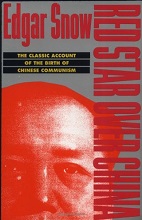 On October 1, 1949, the People’s Republic of China was officially established as the ruling party in the nation. Mao Zedong (Mao Tse Tung) 1893-1976) assumed the position of Chairman, a title he held until his death in 1976. The Chinese Communist Party continues to rule the country and imposes its will on Hong Kong. Taiwan remains independent but is often the source of friction between Beijing and western powers. The story of the Chinese communists is a highly intricate tale that is often left out of discussions regarding the aftermath of World War II (1939-1945). Edgar Snow (1905-1972) spent twelve years in China and was able to observe the emergence of the Communist Red Army determined to liberate China both from Japanese imperialism and the control of the White Army, led by the Kuomintang Government (KMT) headed by the Generalissimo Chiang Kai-Shek (1887-1975). This book is a collection of those memories that take readers back in time to the era when Mao Zedong was beginning to establish himself as a leader and China found itself in the middle of political, economic and social turmoil.
 Seventy-five years have passed since Germany suffered defeat in World War II. Adolf Hitler (1889-1945) escaped justice by shooting himself with a pistol after watching Evan Braun (1912-1945) succumb to the ingestion of a poison laced capsule. Allied forces had hoped to put Hitler on trial for the whole word to see but the Austrian menace had no desire to fall into their hands. While the hunt was on for other high-ranking Nazi officials, a secret operation was underway to bring hundreds of Hitler’s former conspirators to the United States as Washington began to prepare for the Cold War against the Soviet Union. The mission was given the name Operation Paperclip and during its existence, some of the most notorious figures of the Third Reich were given a free pass to America and welcomed with open arms. Author Annie Jacobsen thoroughly examined the secret plan in her best-selling book
 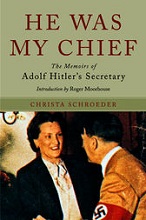 Recently, I reviewed the memoir of Traudl Junge (1920-2002) who served as one of Adolf Hitler’s (1889-1945) secretaries during World War II. Her book,
  On April 30, 1945, the Soviet Union Red Army, had reached within several blocks of the Reich Chancellory. Realizing that their fates were sealed, Reich Chancellery Adolf Hitler (1889-1945) and Eva Braun (1912-1945) took their own lives instead of risking capture by Allied forces. Over the next two days, those who had chosen to remain with them in the underground bunker made their way to surface and attempted to flee Berlin. Among them was one of Hitler’s personal secretaries, Gertraud “Traudl” Junge (1920-2002). As a close assistant to the Führer, she found herself in a unique position to observe the daily routine of one of the most powerful men in world history. This is her memoir of the time she spent with the man who lit the spark for the second world war.
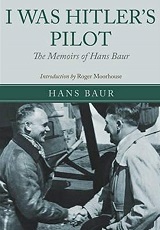 A few days ago I was browsing recommendations on Amazon and came across this book whose title caught my attention. I have not read anything on Nazi Germany in quite some time so I decided to take a closer look. I was unaware of Hans Baur (1897-1995) and his relationship with Adolf Hitler (1889-1945). As the Fuhrer’s pilot, I knew Baur would have very intimate knowledge of Hitler’s life behind the scenes and the book does not disappoint. However, it should be noted that it is really Baur’s story with Hitler filling many of the pages for obvious reasons. The story is interesting but I could not help feel that Baur left many things out. Readers may also feel the same way for reasons that will be discussed below.
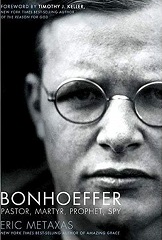 The Second World War remains one of the most studied and brutal conflicts in the history of man. The rise and fall of Adolf Hitler and the Third Reich have become a case studies for history buffs and students learning about a war that nearly resulted in the complete destruction of Germany and the continent of Europe. It is true that Hitler had many supporters but he also had large numbers of detractors, some of whom were serving in his own army. The attack of personal liberties and treasured institutions, caused shock and consternation across Germany. The persecution of the Catholic church by the National Socialists is among Hitler’s darkest deeds. Throughout the war, Hitler would ramp up his attacks on the church and his bloodthirsty purge of religion knew no bounds. The horror with which the clergy watched the rise of the Third Reich spurred many to action and they were determined to rid Germany and the world of the man they saw as the very incarnation of evil. Among them was Dietrich Bonhoeffer (1906-1945), the man who became a pastor, martyr, prophet and spy.
 On April 30, 1945, Adolf Hitler fatally shot his wife Eva Braun and then turned the gun on himself as it became evidently clear that allied forces were closing on the führerbunker. The fear of falling into Russian hands and a subsequent trial for war crimes proved to be too much for the top echelon of the Third Reich that remained in Berlin. Many top-ranking officials had previously fled and others had left Germany after realizing that all hope for a victory in the war had been lost. As allied forces move in and occupied the country, the true horrors of the Nazi reign became clear and soldiers were faced with the grim discoveries of concentration camps, emaciated and dead prisoners. The Final Solution had been revealed for the entire world to see. In the aftermath of the war, several hundred Nazi party members were executed by allied forces. Others were acquitted or had their death sentences commuted to long-term imprisonment. Another group consisting of scientists and doctors, found their way to America with the help of the United States Government in what became known as Operation Paperclip. Their story is the focus of this incredible book by author Annie Jacobsen.
 FREETHINKING BIBLIOPHILE
You must be logged in to post a comment.