

I was browsing recommendations when I saw this book which received a near five-star rating on Amazon. Knowing that obtaining a rating that high was not easy, I decided to take a further look, and in the process, I discovered a gem of a book which I could not stop reading. The location for the story is in Arkansas, in the heart of the American South, or the “Bible Belt”. Ruth Coker Burks starts off the story with a visit to the past where a young man named Jimmy is declining to the effects of acquired immunodeficiency syndrome (“AIDS”) and is treated like a leper by the nursing staff. Coker refuses to sit idling while Jimmy enters the final stage of life and performs actions unheard of at the time. And this begins a long journey into the AIDS epidemic and the struggle to treat and bury the young gay men diagnosed with the killer disease during the height of the crisis.
Readers old enough to remember the emergence of the human immunodeficiency virus (“HIV”) and AIDS, will recall the fear and paranoia which gripped the United States. What was originally seen as a “gay cancer” in San Francisco, became a nationwide threat when doctors learned that the disease did not discriminate based on sexual orientation or ethnic background. AIDS was equally destructive to every section of society it reached. I must warn readers that this book will trigger a range of emotions, including anger, joy, shock, and grief. And if you lost someone close to the virus, it will be like a step back into time to a dark period when answers were short in supply. Coker goes through each, and learns that in the Deep South, religion trumps all else.
In addition to her occupation as a nurse, Coker is also a single mother to daughter Allison who becomes not only a dependable assistant, but also a source of wise words when her mother is feeling conflicted. But the friends they make provided them with a second family who treat them with the love and kindness close relatives fail to deliver. However, her family drama takes a back seat to the lives of the gay men who have been disowned by their families, ostracized by society, and even refused the dignity of a formal sendoff when they die. Coker refused to accept this and morphs into a guardian angel whose devotion and relentless pursuit of assistance for the men is nothing short of incredible. But that does not mean the journey was easy. In fact, there are moments in the book which are beyond infuriating and will leave readers shaking their heads. And of course, there are secrets in Arkansas, some of which reminded me of James Baldwin’s novel ‘Giovanni’s Room‘. However, the bright moments arrive in the men we meet whose larger-than-life personalities are momentary reprieve from the looming grim reaper. And as I read, I found myself becoming acquainted with them as well as they told their stories and accepted their fates which they knew would end in death.
Life for gay men diagnosed with AIDS was incredibly difficult but there are other people in the book who provided help to Coker when needed. They are in the shadows, but the influence is undeniable, and Coker was not afraid to lean on them when needed. Their actions are not the focus of the book, but they helped in ways which were crucial at a time when being seen publicly with an AIDS patient was taboo. The story of Ryan White (1971-1990), included in the narrative, is just one example of long reach of HIV and how a virus reshaped an entire decade and changed world history. And sadly, in Coker’s account, we see health professionals refusing to even set foot in a room with a patient afflicted by the virus. Today it seems unthinkable that a doctor would refuse to treat an AIDS patient, but in the time period when but in the time when current information was scant, this was the reality. I felt Coker’s rage as I read of her encounters with hospital staff who wanted no part of any AIDS patients. But those encounters only fueled her resolve to help even more, and she pulls off successful projects and even earns an invitation to the inaugural ball of fellow Arkansas native and friend, President William J. Clinton.
To say that Coker suffered personal setbacks due to her goal would be an understatement. There is immense personal sacrifice, and another person may have broken under the strain. However, she continues to move forward determined to ensure as many people as possible are protected from HIV and cared for after a positive diagnosis. And in the process, she left a legacy of compassion and humanity which is on display here in one of the best books I have ever read about the AIDS epidemic. Highly recommended.
ASIN : B085MMH732
Publisher : Grove Press, February 22, 2023
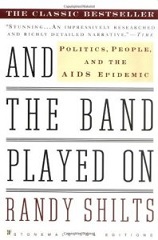 The announcement by former NBA star Magic Johnson that he was HIV+ shocked and devastated my friends and I. Although we knew much about the dreaded disease that had taken the lives of thousands of people, there was still much that did not know. Johnson would be considered one of the lucky few who survived an era in which we saw the deaths of tennis great Arthur Ashe and Real World star Pedro Zamora, among others including the author of this book, Randy Shilts. When he died, I was a freshman in high school still trying to understand how and why society was now faced with an incurable disease. Two years after his death, one of my uncles contracted the disease and died less than a year later.
 FREETHINKING BIBLIOPHILE
You must be logged in to post a comment.