
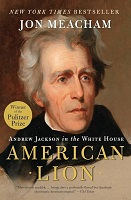
 The office of the American presidency is sought by many but obtained by few. And those who do serve can tell you there is no user’s manual and regardless of what you do, there will be pushback to your policies. However, presidents must make tough decisions and find ways to live with their choices. America’s seventh President Andrew Jackson (1767-1845), stood firmly behind his decisions which changed the course of history across North America. But there is more to his story than the policies that defined a nation. In fact, his life was anything but ordinary. His image can be found on the twenty-dollar bill, currency used daily as millions of people go about their lives. But just who was he and why is he so important to the story of America? Well, the answers to those questions plus other interesting facts are contained within this biography that should be required reading in classrooms across America.
The title of the book is appropriate, Jackson was a lion of a person. Today we cannot imagine a president who engaged in duels to the death or grapples with assassins. But Andrew Jackson was that leader whose fearlessness stands out in history. But before we reach his presidency, the author takes us back in time to his childhood and the American Revolution, a conflict which Jackson and his brother Robert would be directly involved in. And an encounter with a British troop would leave Jackson with a memory that lasted his entire life as America flourished. The Jackson family found itself in unusual times, but it is not long before tragedy strikes at home. The events that transpire are heartbreaking, and his mother’s demise reminded me to cherish my parents for as many years as they are here. Following service in the military, Jackson eventually finds his way to Nashville, Tennessee and it is here that his legal and political careers are born. However, no one could have predicted then that Jackson would become president.
I found the story deeply interesting, and students of politics will love how the author has composed the accounts of the election campaigns. It is a course in political history and highlights the importance faced by every figure to preserve the growing union. In 1829, Jackson was elected to the presidency, but comments in the book from those who knew his character are intriguing. He was not the person who most thought should be commander-in-chief. However, he had won public support, and the electoral college cemented his win. During his time in office, he would oversee controversial policies that altered the American landscape. It is imperative to remember that at this time, there was no Republican Party, and the Whigs do not appear until later in the story. In fact, the Democratic Party had not yet been completed and the electoral votes pale in comparison to the numbers today. But in 1828, this was the America that Jackson was chosen to lead. And as the story moves forward, the author takes us on a wild ride.
There are two events in the book which left me astonished. The first is that Jackson carried in his chest a bullet from a duel in 1806. That insane story is told here and after reading Meachem’s account of what happened, I could only stare in disbelief. Jackson not only talked the talk, but he also walked the walk. The second incident involves the Benton family, and once again gunplay is involved. It is another crazy story from 1813 which caused me to wonder why anyone in their right mind would challenge Jackson to anything. The man was absolutely fearless and not afraid of direct confrontation. Those traits were needed as he navigated Congress and Southern States suspicious of Washington. I should point out that the violent incidents were the result of serious issues, and the story of his late wife Rachel (1767-1828) has to be understood as a primer for the deadly encounters. Her death shattered Jackson and I learned for the first time that he did not have any biological children. But all hope was not lost, and the arrival of Andrew (1799-1871) and Emily Donelson (1807-1836) into his life was profound. The couple played a crucial role in Jackson’s presidency as shown in the story, at times to great personal sacrifice. And their feud with John (1790-1856) and Margaret Eaton (1799-1879), also part of Jackson’s administration, takes center stage in unpleasant ways.
Historically, Jackson’s presidency does have its controversy and rightfully so. There are several elephants in the room, and the author does not shy away from them. The first issue is slavery. This should come as no surprise as it was a normal practice in America during that time period. Jackson was deeply anti-abolitionist and a slave owner himself, so it was no surprise to see him urging the protection of human bondage. Admittedly, it was hard to reconcile this image of him with the president who viewed the union as above any man and believed freedom to be paramount. Andrew and Emily were also pro-slavery and the reliance upon enslaved persons remains a dark stain in America’s past. And while I understood Johnson’s views on keeping the union intact, slavery was an issue which would not go away quietly as America learned in 1861.
In keeping the union intact, Jackson had to confront an extremely serious crisis brewing in South Carolina in the shape of the nullification crisis over tariffs on foreign goods. The matter was deadly serious and talks about secession were common. The saga is fascinating, and we are given a ringside seat into Washington as Jackson is faced with no choice but to assert the Government’s authority over the states. South Carolina was defiant but Jackson would have none of it. Thus, we learn about the Force Bill which became a showdown between the states and the Federal Government. And this is a story I did not learn in school.
Both issues above were grave, but we cannot ignore the plight of the Native Americans. And this is a very dark part of Jackson’s term in office and North America. The Indian Removal Act of 1830 and Trail of Tears are discussed by the author briefly, but to fully examine each would require a completely different book. However, the author makes it clear that the forced removal of Native Americans from the South was inhumane. But in Jackson’s mind, it was the destiny of America, and he did not shed any tears for Indians forcibly removed from their homes. And this adds further complexity to the legacy of Andrew Jackson.
Following his departure from office in 1837, he faded away from public light but continued to assert his influence behind the scenes. We follow him as he supports his candidate for president Martin Van Buren (1782-1862) who succeeds Jackson as America’s eighth president. Physically, his decline is evident, but I also took notice of his constant health issues throughout the book. In fact, a crucial part of the story is Johnson’s struggles with his mortality and the struggles of those around him, in particular Emily Donelson, who served as the “First Lady” due to Rachel’s untimely passing in 1828. In the end, there is no dramatic scene, but a simple end to the life of a political juggernaut who reshaped America. He was complex, a man of good traits and questionable character, but someone who believed that the Republic was beyond any one person, and that no one should ever forget that. Highly recommended.
“Jackson’s vision was elementary yet expansive in the context of the early Republic. He wanted a political culture in which a majority of the voters chose a president, and a president chose his administration, and his administration governed by its lights in full view of the people, and the people decided four years hence whether to reward the president with another term or retire him—and them—from public life.”
ASIN : B001FA0JSM
Publisher : Random House; 1st edition (November 4, 2008)
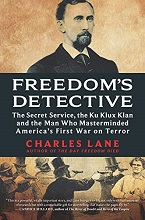 Yesterday America once again celebrated its independence from British Colonialism. Cookouts and fireworks were held all over the country as people sought out even the smallest amount of happiness during what are surreal times. The Coronavirus Pandemic and murder of George Floyd (1973-2020) have placed America at a crossroads. As a nation we are forced with both an invisible enemy that spreads from person to person and a highly visible one which has festered in our nation for far too long. But what is paramount to remember is that America has faced these enemies before but what we do moving forward will truly define what type of country we wish to have. I found this book on Amazon while browsing through a list of daily recommendations and the cover caught my attention instantly. I do confess that did not have the slightest idea who the person on the cover was and why he is important in American history. All that changed as I opened the pages of this book and learned a history lesson that I have never seen in any textbook.
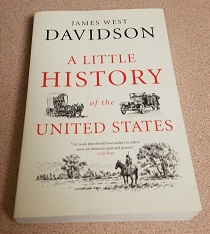 When I think back on the history classes I attended in elementary school, high school and then college, I remember that it seemed as if it took forever to go through any topic. And that says a lot for someone like myself who has always loved the subject and still does. For most people, history is beyond mind-numbing and often revisits events in the past to which most people do not give a second thought. But as we are often reminded through history, we need to know our past in order to reach our future. In comparison to the history of Europe, Asia and other parts of the world, the United States is a very young nation that has been in existence less than three hundred years. Incredibly, in that short amount of time on the world stage, some of the most memorable events in modern history have taken place in North America and had reverberating effects across the planet. If we were to study American in its entirety, that would be a course that would last a couple of years at least. But what happens when you cram that history into a book that is three hundred nine pages long?
 FREETHINKING BIBLIOPHILE
You must be logged in to post a comment.