

On September 3, 1783, representatives of United States, Great Britain, Spain, and France signed the Treaty of Paris which officially concluded the American Revolutionary War and recognized the newly formed nation of former British colonies. The founding fathers of the United States soon realized that a monumental task lay before them, and they wasted no time in creating the country they had envisioned as the movement for independence gained momentum. Among the men whose vision shaped the America we know today was James Monroe (1758-1831) who served as America’s fifth president. Having outlived his contemporaries, he is accurately referred to as the last founding father by author Harlow Giles Unger who returns with another engaging biography of an American leader.
I previously reviewed Unger’s biography of President John Quincy Adams (1767-1848), a book which I could not put down as I read the life story of an American figure who helped change the course of history. Adams makes an appearance in this book as well, when President Monroe entrusts him with tasks crucial to America’s development. However, the focus of this story is on Monroe and his incredible life. I approached the book with limited information on Monroe. In school, his name was remembered for the policy which bears his name, the Monroe Doctrine. The story behind Monroe’s 1823 congressional address in which he laid forth the doctrine’s goals is told within, providing readers with an inside look into the thought process behind the actions of the Monroe Administration.
Monroe’s story begins in Westmoreland County, Virginia in 1758 as American patriots are beginning to question British rule. The growing young man bears witness to British encroachment, and when the war for independence begins, Monroe joins the Continental Army under the leadership of America’s first President George Washington (1732-1799). The two would go on to have a lasting friendship which is discussed by the author. Monroe also found company in mentor and fellow President Thomas Jefferson (1743-1826) who remains a close confidant of Monroe through the rest of the book following their initial acquaintance. Sadly, the same cannot be said of former President James Madison (1751-1836) whose friendship with Monroe took an unexpected turn. The details are contained within, and it is interesting to see the bonds between the men who were responsible for shaping the nation known globally as the United States of America.
While Monroe was making a name for himself in politics, he also believed in family. He and wife Elizabeth (1768-1830) were deeply in love and she was equally effective at foreign policy as her husband. Her actions regarding the pending fate of Adrienne de La Fayette (1759-1807) in France will surprise readers. She is also remembered as an elegant first lady, and the reasons why are explained in the story. As for James Monroe, building America was paramount, and in 1803, he played a prominent role in the Louisiana Purchase which tripled the size the of the United States overnight. Readers interested in the deal will appreciate this section of the book as the back door dealings spearheaded by Monroe result in a land grab that is still shocking to this day. But while America was growing, England had not forgotten its former colonies, nor its conflict with France, and all hell breaks loose during the War of 1812. The buildup to the conflict is important and Unger explains the events thoroughly and at the right pace. The suspense is gripping, and readers will see the conflict looming in the distance as Europe becomes more unsettled. It would not be the last time that a war in Europe brought America into the conflict.
Following the war, Monroe returned to the State Department, and in 1816 he makes a decision that changes his life forever when he decides to run for president. With hindsight we know he was successful, and the focus here is on his presidency and his accomplishments as commander-in-chief. However, there is the elephant in the room in every story of America’s early days and that is the issue of slavery. Surprisingly, there is not much about it in the book and early administrations sought to avoid the issue altogether. However, Monroe would be forced to confront the matter during the Missouri Compromise of 1820. Monroe’s position on the matter was unsurprising because he was a slave owner himself just as several founding fathers were. Monroe did see slavery as a threat to the future of the nation and realized that freedom could not exist with enslaved people, but he also reaped the benefits from being a slave owner and believed in the rights of pro-slavery states. He did endorse one plan to rectify wrongs done to African slaves, and it explains the existence of Monrovia, Liberia. The issue of slavery would be decided forty-five years later when the first Republican president did what no leader before him had dared to do.
After departing the White House, Monroe’s life returned to a sense of normalcy, but he faded away from public light and found himself to be a symbol of a bygone era in American history. His legacy had been cemented but the United States was on a new course, chartered by President Andrew Jackson (1767-1845) who remains one of the most controversial leaders in American history. His story is a roller coaster ride on its own and I strongly recommend Jon Meachem’s ‘American Lion: Andrew Jackson in the White House‘ which is a good source of information about Jackson’s command of the United States. As time passes, Monroe’s life changes and on July 4, 1831, he takes his final breath in New York at the age of seventy-three, leaving behind a legacy which shaped American foreign policy for years to come. If you are searching for an enjoyable book regarding America’s founding fathers, this biography of James Monroe will be a fitting addition to your library.
“The most beloved president after Washington, Monroe was the only president other than Washington to win reelection unopposed.“
ASIN : B002RBWF26
Publisher : Grand Central Publishing, April 8, 2025

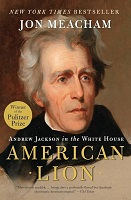 The office of the American presidency is sought by many but obtained by few. And those who do serve can tell you there is no user’s manual and regardless of what you do, there will be pushback to your policies. However, presidents must make tough decisions and find ways to live with their choices. America’s seventh President
 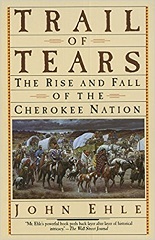 America often has an uncomfortable relationship with its past. The dark moments in the founding of the nation are sometimes left out of history books and never discussed in conversation. Native Americans are either viewed with empathy or disgust, typically depending on the observer’s knowledge of history. Alcoholism, depression and economic instability have continued to plague Native American reservations, given as a token gesture by the United States Government. In Hollywood, they have often been presented as wild savages determined to murder Americans, only to be repelled by heroic soldiers and cowboys seeking to preserve the union. The reality however, is that there is much about the Native Americans of North America that remains largely unknown. In the State of New York where I reside, virtually nothing is taught about the Lenape Indians who owned what is today the Tri-State area, in addition to other vast territories. In the South, the once mighty Cherokee nation owned land, lived under their own rules and were content with life before the arrival of new nation, created following the independence of 13 colonies from British imperialism. Today the Cherokees are an afterthought for most, but at one time, they ruled large parts of what became the future United States of America. This is their story and that of the infamous “Trail of Tears”, that would permanently change the lives the Cherokee Indians.
 FREETHINKING BIBLIOPHILE
You must be logged in to post a comment.