
 On October 1, 1949, Chinese Communist Party leader Mao Zedong (1893-1976) announced the creation of the People’s Republic of China after a brutal struggle against the Kuomintang (“KMT”) forces under the leadership of General Chiang Kai-Shek (1888-1975). Mao and the CCP had watched China grapple with its own internal conflicts for years which led to instability and uncertainty. On the night of May 5, 1923, Chinese bandits commanded by Sun Meiyao (1898-1923) seized a train traveling between Shanghai and Beijing, known as the “Peking Express”. Local citizens and foreigners were taken hostage by the bandits and forced to march towards Paotzuku mountain. This is the story of what became known as the “Lincheng Incident” re-told by author James M. Zimmerman in stunning detail.
One hundred years have now passed since the events in this book occurred, but the effects of the crisis on modern day China should not be overlooked. After introducing us to the well-connected passengers aboard the train, mostly foreigners, the author changes gears and takes us to the night when all hell breaks loose as a crude act of sabotage changes the lives of the train’s passengers and the course of history. Of course, the most important question is why? Well, there is more than one reason for the bandits’ actions, but financial gain is among them. But I could not ignore the savagery displayed towards native Chinese passengers by the bandits. Mental and physical exhaustion soon creeps in, making the hostage situation difficult to say the least. The female passengers which included Lucy Aldrich (1869-1955), daughter of Rhode Island Republican Senator Nelson W. Aldrich (1841-1915), are released over the course of several days following the incident, but the male passengers were remanded for several more weeks as the incident played out. However, as readers will see, the women did not have an “easy” time, and found that in the wilderness, the elements spare no one.
As I read the book, I began to understand that the rebels did not have a long-term plan. Aside from taking hostages, the end game did not make much sense. Further, the arrival of Chinese military personnel combined with pressure from foreign governments made it clear that the kidnappings would have to be resolved. What ensues is a haphazard pace of events in which more passengers are released while others use any means available to make their escape. And I had no illusions that the bandits were in store for anything but grisly fates upon the events’ conclusion.
The story is surreal, and the lawlessness of rural China in the early 1900s comes into sharp focus. This story is mind boggling, but incredibly important in Chinese history, and it served as the basis for the 1932 film ‘Shanghai Express‘ starring the late Marlene Dietrich (1901-1992). Following the release of the passengers, the Chinese government wastes no time in dealing with the rebels, and their fates as told by the author, are not for the faint of heart. Frankly, justice was swift and brutal, but to be expected in China. Zimmerman also provides a few words about the lives of the famous passengers whose experiences continued long after their release from the bandits. But none of them could have imagined than fourteen years later, the Japanese Army would launch a military operation during World War II which brought death and destruction to China and made it clear to both the CCP and KMT, that China could only survive once free from foreign occupation. Mao Zedong, years away from becoming “Chaiman Mao”, shrewdly observed the lasting effect of the incident, and as the author points out:
“One of the people closely following the Lincheng Incident was the young Chinese communist leader Mao Tse-tung. In one of his first public speeches, at the Hunan Peasant Congress in December 1926, Mao specifically cited the event as an example of “starving peasants rioting” against the imperialists, warlords, and feudal classes.”
Zimmerman’s research into the events is incredible and my attention never waned while reading. The story is told at the right pace with the right amount of suspense. Without this book, the Lincheng incident may have been forgotten history. However, this book keeps the unbelievable story alive, and is a valuable account of a moment when the world changed.
ASIN : B0B9BCP7LP
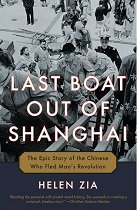 Throughout history, war and destruction have been constant reminders of the fragility of peace. On September 1, 1939, Nazi Germany’s army invaded its neighbor country Poland and ignited the Second World War, the conflict that changed the world in ways one could have imagined. Adolf Hitler’s (1889-1945) quest for world domination inspired other nations to launch their own offensives. National Fascist Party leader Benito Mussolini (1883-1945) plunged Italy into the conflict and in Japan, Hirohito (Emperor Shōwa)(1901-1989) initiated the Japanese campaign to completely control all of Asia. Prior to the conflict, China found itself the target of Japanese invasion and amid internal civil war between the Chinese Communist Party led by Mao Zedong (1893-1976) and Kuomintang under the control of Chiang Kai-Shek (1887-1975). While Hitler’s army was marching across Europe, death and destruction accelerated across Asia and in China, the horror escalated to unthinkable heights. Chinese who were able to leave, fled their homes in search of a new life. This book is the story of that exodus and four individuals who risked it all for freedom. The lives of B
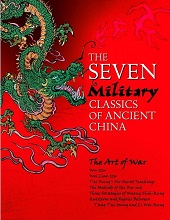 I decided to change gears and take a look at a book that had been on my to-read list for quite some time. The Seven Military Classics of Ancient China are some of the most widely studied writings in regards to conventional and unconventional warfare. Putting their age aside, the texts provide the reader with an inside look into the strategies behind armed conflict in Ancient China. And what is contained within the pages of this collection of brilliant military strategy, are dozens of lessons that military commanders can still use even today.
 In June, 1989, I vividly recall watching the newsroadcasts of the protests in Beijing’s Tiananmen Square. There was much I did know know then about the factors beind the protests but the image of a lone Chinsese man staring down the barrel of a tank was seared into my memory. He became known as “Tank Man” and his act of defiance is still one of the most moving images in history. The picture truly does speak a thousand words. The protests began on April 15, 1989 and ended on June 4, 1989. However, in order to bring the protests to an end, army troops employed a range of tactics including the firing of live ammunition resulting an a still unclear number of deaths. Estimates ranges from several hundred to several thousand. To those of us in the west, the protests were the result of years of oppression by the Chinese Communist Party (“CCP”) and incompetent officials who had closed China off to most of the world. However, there was far more to the story than many realized then. And to understand what was happening and why, we must take a look behind the scenes to see what life in China was really like in the years leading up to the summer of 1989.
 President John F. Kennedy (1917-1963) is known primarily from his time in the White House and untimely death but many forget that he was also an accomplished writer. In the well-received “
 Author Frank previously published his spellbinding investigative account,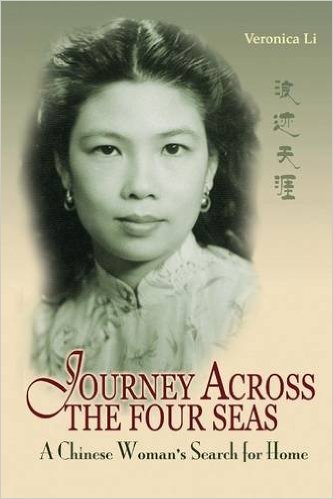
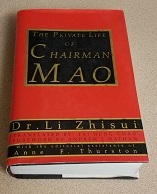 On September 9, 1976, Mao Zedong (1893-1976) died in Beijing, China at the age of eighty-two. The late Chairman served as ruler of the People’s Republic of China following the defeat of Chiang Kai-Shek’s Kuomintang (KMT) party in 1949. The People’s Liberation Army, under the guidance of Mao, pushed the KMT to complete physical exhaustion before claiming victory. To some, Mao represented the face of a new frontier for the people of China. To others, his regime was viewed as an expansion of Soviet influence as Communism became embraced in Europe and Asia. His failed policy of the Great Leap Forward resulted in mass starvation and is viewed as an epic failure in planning at the highest levels. Over time, many became disillusioned with the “Cultural Revolution” as the reality of a Communist government drearily set in. Mao, seemingly impervious to the deadly effects of his actions, continued to live the opulent lifestyle he had created for himself as the new leader of China. And the “Closed Door” policy afforded him with a shield to protect his empire from the prying eyes of the western hemisphere. But Mao’s meeting with President Richard M. Nixon in 1972 offered a glimmer of hope that the two world powers could form a bond that would in turn bring the two countries together through mutual understanding. Today relations between China and the United States remain tense and show no signs of changing in the foreseeable future. China continues to go through social change but the nation remains haunted by the legacy of Mao Zedong.
 FREETHINKING BIBLIOPHILE
You must be logged in to post a comment.