Days of Rage: America’s Radical Underground, the FBI, and the Forgotten Age of Revolutionary Violence – Byran Burrough

The first lesson a revolutionary must learn is that he is a doomed man.” – Huey P. Newton (1942-1989)

On August 22, 1989, former Black Panther Party co-founder Huey P. Newton was shot and killed on a street corner in Oakland, California. His death was sudden and violent, and a reminder that the streets are unforgiving. Newton’s notoriety as a representative of Black voices during the Civil Rights Movement earned him a place on the watchlist of the Federal Bureau of Investigation (“FBI”). To some Newton was a dangerous radical working to destroy America but to others he was an icon who had the courage to stand up to a system in need of an overhaul. Regardless of opinion, Newton was only one of many people who took the streets determined to change America by any means necessary and were not afraid to use violence. Sadly, that meant collateral damage and fear during an era author Bryan Burrough calls days of rage. This is the story of the under radical movement in the United States which produced some of the most dangerous figures this nation has ever seen.

The book is extensive but focuses on several main organizations whose names are well-known. The first is Weatherman a/k/a The Weather Underground  which is credited by the FBI to having set off twenty-five bombs in U.S. Government buildings, police stations and the office of the California Attorney General. And its stand out star was Samuel J. Melville (1934-1971) whom we learn of in the story, along with Bernadine Dohrn who ironically is a retired law professor. I did not know about Melville or Dohrn prior to reading the book nor was I familiar with Weatherman. However, by the time I finished the book I was firmly aware of its existence, its actions, and its dark legacy. Burrough delivers on the goods and takes us inside Weatherman and the anarchy it caused. But this is only the beginning in a long book that is nothing short of a roller coaster ride.

As a primer, the author discusses the Civil Rights Movement which sets the stage for the violence to come. However, what is interesting is that neither Dr. Martin Luther King, Jr. (1929-1968) nor Malcolm X (1925-1965) were “extreme” compared to the others figures the author discusses. Dr. King had always preached non-violence and Malcolm strongly believed in self-defense by any means necessary. Neither led any violent raids or set off bombs but the cause they fought for, believed in and died for, was the proof others needed to escalate resistance to levels which caught the attention of the White House. The Black Panther Party found itself on the radar of the FBI and in due time the bureau would make use of its COINTEL program to destroy all organizations it deemed enemies of America. Newton and his colleagues would fall victim as would others whose lives are exmained in the book. The FBI was focused but the underground radical movement was growing exponentially. And as the story progresses, the suspense heightens, and the tension builds as radicals attempt to turn the United States upside down. Violence, sex, drugs, fame and calls for revolution form a potent mix from which both charasmatic and outlandish figures emerged in their quest to change the nation permanently.

I mentioned earlier that there are several organizations discussed in the book. Aside from Weatherman, there is Donald “Cinque” DeFreeze (1943-1974) and the Symbionese Liberation Army (“SLA”) whose story on its own is surreal. Of course, it cannot be told without addressing the abduction and enlistment of Patty Hearst.  Her story has been told by others, and it is thoroughly presented here as well but I could not help but shake my head in disbelief DeFreeze’s bizarre rhetoric and his ability to attract followers. The downfall of the SLA and its tragic finale left me with chills, but the book was far from over. In fact, while the SLA is conducting its unorthodox fallacies, members of Weatherman are still moving around America. And the chaos they created would be amplified by more extreme radicals whose names are synonymous with bank heists and gun battles with law enforcement.

The name Raymond Luc Levasseur did not stand out at first but older readers may be familiar with his story. However, that changed as the story progressed and the organization to which he belonged, the United Freedom Front, made itself known in a string of bank robberies and getaways straight out of Hollywood fiction. A tour of duty in Vietnam and racial discrimination had help shape Levasseur into the radical the FBI wanted off the streets as soon as possible. But that did not happen and the story of how Levasseur evaded capture is one of the more fascinating parts of the book. He was not alone and had a family to support and had been joined by other adults. Their ability to pack up and leave on a moment’s notice is surreal and their ability to evade capture was almost flawless except for one crucial mistake. To be fair, bombings were occurring with such frequency that law enforcement officials struggled to keep up and keep track. And just when it seemed that one group might be on the verge of extinction, another rose to the occasion.

My father had previously told me the story of William Morales, a member of the Fuerzas Armadas de Liberación Nacional Puertorriqueña (“FALN”) who had severely injured himself while making a bomb in his Queens apartment. The accident is gruesome but there is more to the story than my father had explained. In fact, Morales’ s disfigurement and escape from justice is unbelievable due to the limited use of his hands and impaired vision. His disappearance from Bellevue Hospital left me speechless. Despite a manunt and nationwide attention, Morales remained on the loose and is still alive today,  living in Cuba along with another radical in our story, Joanne Chesimard a/k/a Assata Shakur who remains a wanted fugitive by the FBI. The reasons for her status as a fugitive at large are explained in the book, in particular the shootout on the New Jersey Turnpike on May 2, 1973, in which Trooper Werner Foerster was shot and mortally wounded. The full story of the traffic stop, shootout and her conviction are too extensive for this book but the author weaves into the narrative without breaking the pace or weakening its intensity. Morales and Shakur will likely remain in Cuba for the rest of their lives but there was another Shakur who did not fare as well.

If you are familiar with the late rap star Tupac Shakur (1971-1996) you will be familiar with the story of his step-father Mutulu Shakur (1950-2023), a member of the Black Liberation Army whose actions are some of the darkest parts of the book. Shakur’s descent into radicalism sets him on a dark path destined for destruction. And that point is driven home when Shakur and his co-conspirators rob a Brinks armored car at the Nanuet Mall in Nanuet, New York on October 20, 1981. The full story of the robbery is too intricate for a blog post, but I was glued to the book as the drama unfolded. It is mind blowing and horribly tragic. The robbery left two Nyack police officers and an armed guard dead, and resulted in Shakur serving forty years in prison before being released for health reasons in December 2022. The Brinks robbery remains etched in New York State history and is a chilling chapter to a book that pulls no punches. Burrough gives us an uncut look into America’s haunting past and the years in which armed struggled was a calling card for aspiring young revolutionaries across the country.

Burrough’s book is long but it is beautifully written, well researched, and powerful. The history contained within the book is not pleasant but what the author discusses can serve as reminders of how far America has come and where it should never return to. If you lived through these years and recall the level of danger which existed, this book will bring back profound memories. I intend to discuss it with my father who has always said that the 1960s and 1970s were scary times because of the threat of nuclear war, assassinations, social unrest, revolution, and the rise of serial killers. Many of the figures in this book are now deceased and others well into their senior years are no longer on the streets planning acts of violence. But they have not forgotten theirs nor has America. Their legacies are complex depending on who you ask but the fact remains that hope move side by side with fear as the radical underground grabbed the country’s attention. This book is an invaluable tool in understand how and why the radical underground came to be.

ASIN ‏ : ‎ B00LFZ84PC
Publisher ‏ : ‎ Penguin Books (April 7, 2015)

Power to the People: The World of the Black Panthers – Stephen Shames and Bobby Seale

ShamesIn his renowned book titled ‘Revolutionary Suicide’, Huey P. Newton (1942-1989) began by saying “the first lesson a revolutionary must learn is that he is a doomed man”. The prophetic words are haunting for many members and affiliates of the Black Panther Party met untimely deaths or were forced to flee the United States and live in exile. However, the Black Panther Party for Self Defense became part of history and when Bobby Seale and Newton created the organization in 1966, the created something that changed the way Black Americans viewed themselves. The image that comes to mind when one speaks of the Panthers are young black men with leather jackets and rifles. But behind the imposing public facade, the Panthers were brilliant community organizers and had a vision for Black Americans that could have changed the United States. Photographer Stephen Shames began to cover Panther rallies and eventually followed their progression. This book, co-authored with Seale, gives former members of the party a platform to explain their actions and decisions, in a time when America was amid social upheaval.

Instead of a standard account of the party’s creation, rise and demise, the authors here present a collection of interviews that touch on all aspects of the party’s existence. And to my surprise, I learned a few things I did not previously know. The beauty in the book is that readers can see the passion and hard work behind the scenes that motivated the Panthers to help the community. Party members were surely a mixed bag of characters, but at its core, the group and its affiliated chapters were committed to uplifting Black Americans and helping them to become self-sufficient so that they too could live the American dream. But what stood out to me nearly immediately was the age of the members. In fact, Ericka Huggins explains that: “one thing that people don’t understand about the Black Panther Party is that the median age of a party member in 1969 was nineteen years old“. Today we would say they were just kids but in 1966, those kids became adults and were determined to make their mark.

Readers familiar with the history of the party will know of the free-breakfast program which incredibly was deemed a threat by former Federal Bureau of Investigation (“FBI”) director J. Edgar Hoover (1924-1972). It is no secret that Hoover feared and loathed civil rights organizations whom he felt had “communist” influence. And the introduction of the infamous COINTEL program succeeded in breaking up the Panthers but at an inflated cost to the FBI and Hoover’s image in later years. But as I read the book, I was curious about other programs that Panthers initiated not just in Oakland, California, but across America. What I learned was impressive and surprising. One event that stands out is that shortly before his death, Fred Hampton (1948-1969) had reached an agreement with Jeff Fort, leader of the Black P. Stones gang in Chicago that would have struck fear in Washington, D.C. But due to Hampton’s assassination on December 4, 1969, the agreement died out. These events were recreated in the 2021 film ‘Judas and the Black Messiah‘, starring Daniel Kaluuyah as Hampton and LaKeith Stanfield as William O’Neal (1949-1990), the FBI informant who played a crucial role in Hampton’s demise. As the book progressed, it became even clearer to me why the Panthers were feared. It was not so much due to the presence of firearms but rather the knowledge and pride being instilled in Black Americans which was sorely needed following the murder of Malcolm X (1925-1965). Seale himself has said that had Malcolm not been murdered, the Black Panther Party would have never been created.

Eventually, the party began to disintegrate under the strain of infiltration by FBI informants which instilled paranoia and distrust among party members. The fallout is discussed by the participants, but the book is not an examination of why the party failed. It is chiefly a collection of memories, both good and bad. Among the more tragic parts is the death of George Jackson (1941-1971) on August 21, 1971, while incarcerated at San Quentin State Prison in San Quentin, California. The book ends before Newtown’s own death in 1989 but there is a discussion of the Panthers’ legacy and the situation in America which should be of concern to everyone regardless of their background. The Panthers no longer exist as the group they were once known as, but their presence and importance cannot be overlooked. And contained within this book are voices from the people that were there, risking their lives to give all power to the people.

ASIN: B01IDGS5EK

Solitary: Unbroken by Four Decades in Solitary Confinement. My Story of Transformation and Hope – Albert Woodfox

AlbertThe late rapper Tupac Amaru Shakur (1971-1996) soberly noted that prison kills one’s spirit. Each day becomes a repeat of the day before with instructions from guards and strictly observed times for each day’s events. Shakur served eight months in 1995 being bailed out while his conviction was on appeal. Tragically, he died on September 13, 1996, without the appeal having been decided. His story is unique but there are millions of others who are still in prison, serving extensive sentences in some of the country’s most dangerous facilities. Albert Woodfox (1947-2022) was one of those people, having served forty years in prison with most of the time served at Louisiana State Penitentiary in Angola also known as “the Farm”.  Woodfox’s story stands out because he not only served four decades but spent that time in solitary confinement for crimes he did not commit. This is the story of his life and time behind bars as he put his criminal past behind him and transformed himself into a civil rights activist and advocate for prison reform. 

The story begins in Louisiana where Woodfox was born to a mother who could not read and write, and a father who did not stay around to raise his son. But his mother meets another man who becomes his stepfather and fills the void left by his biological father. However, the happy family did not last, and a series of events fractured the once happy household, changing the lives of everyone for good. And it is not long before Woodfox begins his career on the street with drugs and petty crimes which result in early yet short prison sentences. But ironically, the crime that sends him to Angola was not one he was a participant in. Despite his conviction, he should have only served a few years there before being released. But that all changed on April 17, 1972, when corrections officer Brent Miller was stabbed to death. Woodfox did not know it at the time, but the murder of this guard would be the catalyst for keeping him behind bars for forty years. 

Miller’s murder is terrible, and readers should be aware that his last moments were nothing short of horrific. Woodfox becomes an immediate suspect due to his clashes with prison officials over living conditions. Even before Miller’s death, Woodfox was on the warden’s radar and the reasons for this will shock readers and force them to question whether prison is truly for rehabilitation. The conditions he describes are inhumane, but Angola has always had a reputation for being a place you do not want to go to. Despite knowing this, I still found myself aghast at what I was reading. Admittedly, when I read that Miller had been attacked, I did not think Woodfox was responsible. In fact, he was the last person I suspected. For him to murder Miller would have been completely insane due to his high profile and the fact that he had never met the guard. But there is far more to the story that will leave readers shaking their heads and questioning the criminal justice system. 

The saying a “jury of your peers” is supposed to carry significant weight but as can be seen in the book, for Woodfox and others accused of Miller’s murder, the State of Louisiana had other ideas. And we cannot overlook the issue of race which plays heavily in the events that follow. Woodfox had turned to the teachings of the Black Panther Party during his incarceration and had come to understand how his life was affected by the lack of a stable home. But that did not deter him from helping other inmates change their lives. Further, he speaks on a topic that will be upsetting to some readers and that is the dehumanizing experience of sexual assault. If there are any doubts that incarceration destroys what is left of someone, Woodfox removes it here. Frankly, what he describes is out of control but flourished with the knowledge and cooperation of guards whose goal was to break each man down to a shadow of his former self. But as the author explains, he refused to be broken and along with others committed to their cause, remained strong in the face of unrelenting racial hostility and pressure from prison officials. 

Unbelievably, Woodfox was convicted of Miller’s murder with two co-defendants. As someone who works in the legal field, I could not believe my eyes. To say that the investigation into Miller’s death was “sub-par” would be an understatement. In fact, there was hardly any investigation, and the real murderer never paid for the crime. Officials had who they wanted to be convicted and they succeeded. But, over time the story falls apart and attracts the attention of people outside the Angola becoming aware of the horrors the prison system inflicts on inmates. And even those who initially believed in Woodfox’s guilt, change their opinion after learning the truth about Miller’s murder. The efforts of his supporters were not in vain, and he does get a new trial but is convicted again for Miller’s murder. But the way the trial is conducted and the ways in which the prosecutors present their case is absolutely infuriating. Yet Woodfox remains unbroken. But that is not to say he didn’t suffer emotionally as well. He openly discusses his frustrations and the impact on his mental health from the deaths of loved ones he could not be with in their last moments. 

While Woodfox is focused on maintaining his sanity behind bars, outside of Angola interest in his case increases. He and his two co-defendants, Robert King, and Herman Wallace, become known as the Angola 3. King was released 2001 after accepting a plea deal which is explained in the book and Wallace died in 2013. I must warn readers that Wallace’s story is tough to read and the way the State of Louisiana treated this man even at the end of his time in Angola is surreal. Following his release, King becomes the spokesman for Woodfox’s release and the movement to change Angola. The author receives a guardian angel in the form of former U.S. District Court for the Middle District of Louisiana Judge James J. Brady (1944-2017) whose commitment to the law provides hope for Woodfox to keep his faith. This part of the story is interesting because we are witnesses to the legal battles between Brady and the Fifth Circuit Court of Appeals, each wrestling with the questions of Habeas Corpus, cruel and unusual punishment, and Woodfox’s right to fair trial. But in the background is the book’s antagonist, former Louisiana Attorney General James D. Caldwell, also known as Buddy Caldwell. His actions towards Woodfox are disheartening. Woodfox was eventually released but not in the way he would have preferred. However, it brought an end of over forty years of confinement, and he was able to live out his days free from Angola. Sadly, in August 2022, Woodfox became another victim of the Covid-19 virus and passed away at the age of seventy-five. He is now gone but this story will live forever and remind us of the horrors of solitary confinement, prosecutorial misconduct, racial injustice, and the tolls they take on one’s physical and mental health. 

“My fear was not of death itself, but a death without meaning.” —Huey Newton (1942-1989)

ASIN‏:‎ B07MWJ1NPM

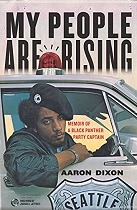
My People are Rising: Memoir of a Black Panther Party Captain – Aaron Dixon

DixonOn August 22, 1989, former Chairman of the Black Panther Party for self-defense Huey P. Newtown (1942-1989) was shot and killed in Oakland, California at the early age of forty-seven. The violent ending to his life is a reminder that the streets are unforgiving, and should one choose to embrace them, death is a constant threat. In prior years, Newton rose to fame with party co-founder Bobby Seale as the organization spread across America and became an unavoidable presence, catching the eye of Washington, D.C. The Panthers became so feared that former Federal Bureau of Investigation (“FBI”) Director J. Edgar Hoover (1895-1972) said “the Black Panther party, without question, represents the greatest threat to the internal security of the country.” Hoover refused to see that the Panthers had become an image solidarity and masculinity to thousands of Black youths who had seen and suffered racial discrimination. In the Pacific Northwest, a young man named Aaron Dixon listened to a speech by Bobby Seale and knew from that point on that he was destined to join the Black Panther Party. This book is his memoir of life on the West Coast and the ten years he spent as a Black Panther Party Captain.

It is not necessary to have extensive knowledge of the Black Panther Party before reading this book, but it will be helpful to know who the party’s leaders were. Bobby Seale enters the story quite early, and Dixon is clear that the speech he watched served as the moment when he knew he had found his calling. As a captain, he was required to make the acquaintance of party leaders such as Eldridge Cleaver (1935-1998), Fred Hampton (1948-1969) and Stokely Carmichael (1941-1998). However, they were assigned to other duties within the party and Dixon was dispatched to his hometown of Seattle. But before we get to the Seattle Chapter of the party, Dixon takes us down memory lane to his childhood. Readers will be surprised to learn that the author did not come from a broken home. And while things were not perfect, his background is not that of a child coming from dysfunction and gravitating to the streets. In high school he became a star athlete but the 1960s proved to be too scary, too unpredictable, and too painful for Dixon to focus solely on sports. But when he made the decision to see Seale speak, he did not know that his life would change forever.

When we think of the 1960s and America’s dark past of racial discrimination, images of the Deep South come to mind. But as Dixon shows, the South was not the only place where discrimination was an issue. And the stories that Dixon tells are crucial in understanding why the Panthers were so alluring and needed. From the start, he is fully committed to the party and emphatically says:

“For us, this was what putting on the Panther uniform was all about—standing up strong, refusing to be brushed aside and marginalized. We were dead serious when it came to the rights of the people. One thing was certain: if we had to die in the process, most of us were ready for that, too.” 

Huey P. Newton once said that the first thing a revolutionary must understand is that he is doomed from the start. Success becomes subjective in the face of imprisonment and death. Dixon experienced both extensively before leaving the party but his memories of the people who changed history are recorded here and serve as an invaluable account of how the party functioned from day to day. The public saw black leather jackets and matching berets but in private, things were not always as glamorous as the author shows. One thing that stood out is that the party members did not always know where they would be from one day to the next. This inevitably made marriage and children difficult and resulted in strained relationships between party members. And the threat of infiltration and arrest kept everyone on high alert. Despite the risks, there are success stories in the book that offset the events that nearly shattered the party’s morale.

To anyone watching, it was only a matter of time before the FBI placed the party in its crosshairs. J. Edgar Hoover’s paranoia about Black unity, spurred him to go after anyone and any group that had the power to alter American society. The bureau relied on deception and coercion cloaked under the guise of the infamous Counterintelligence Program (“COINTEL”). The covert actions utilized by the FBI set into motion a series of events that fractured the party resulting in mass exodus and expulsion of people who had joined at its start. And the influence of illegal narcotics in Black communities cannot be understated. Even party members were not immune to their destructive effects. Newton’s battle with drugs is widely known and discussed here as the party slides further into turmoil. Newtown’s paranoia became fueled by drug use and the party saw one of its darkest moments when Newton and Cleaver had a falling out live on air. Dixon can only watch as the party he joined with hopes of changing America, comes apart at the seams.

Before I mentioned that party members found it difficult to have “normal” lives. Dixon is no exception. He is frank about where he went wrong in life and speaks freely of the challenges that came with fatherhood, marriage, and lack of focus on accountability. I am sure that if Dixon could go back in time, he would change his past actions. Joining the party is not one of them. Following the devastating effects of COINTEL, the party became a shell of its former self. Dixon explains how the party changed its focus while trying to hold true to its roots. The section about Elaine Brown and her effect on Bay Area politics is interesting but even she could not avoid the increasingly paranoid Newton. Dixon had a working relationship with Brown and despite their differences, he gives her the praise she is due. However, as the book moves forward, Newton begins his downward spiral. Dixon did know Newton but not intimately as he explains in the book. And while he was in awe of Newton, he was not oblivious to his escalating drug habit and distrust of anyone he thought to be subversive.

While reading Dixon’s account of the party’s decline, it was clear that the writing was on the wall. When he makes his exit, he has given ten years of his life to the party. But as we learn, his life after the party was anything but normal. In fact, there are unexpected twists and turns in the story including a manhunt by the U.S. Marshall Service. I found myself speechless while reading the book’s conclusion. But there is redemption in the story and Dixon did learn from everything he experienced. Further, he is alive today and continues his political activism. Though his days in the Black Panther Party are long gone he is still a Panther at heart. This book was a surprise, and I am glad that I decided to add it to my library. The Black Panther Party, borne in a turbulent time in American history, stands as an example of the people rising up and saying, “no more”.

“I have no regrets about my ten years as a soldier in the Black Panther Party. In the end it is the memories that make life worth living, particularly the good memories. My memories of Huey P. Newton are of a young, rebellious, brave, captivating, eloquent genius who ignited a flame that will never die. My memories of the Black Panther Party are of men and women rising in unison to carry that flame, taking up a position of defiance, of sacrifice, and of undying love, infused with passion and determination to write a new, bold future for Black America. That eternal beacon will shine on, lighting the way for future generations and illuminating the past, helping us remember a time when the possibilities for humanity were endless.” – Aaron Dixon

ASIN: B009UXSHD0

To Die for the People – Huey P. Newton

HueyRecently, I had been revisiting material regarding pivotal moments in the U.S. Civil Rights Movement.  My focus became trained on the Black Panther Party, led by the late Huey P. Newton (1942-1989) and Bobby Seale.  The Party has been viewed in both positive and negative lights depending on the view of the person assessing its rise and effect on American society.  Newton, who later earned a Ph.D., was a charismatic and gifted orator who in turn used those skills in the form of the written word.  His autobiography, Revolutionary Suicide‘, became a classic and is widely praised by those committed to revolution both in the United States and abroad.   The book was mainly an autobiography that follows Newton from his early life Louisiana to the City of Oakland, California, where he would make his name famous and infamous.   To Die for the People takes a different approach and contains no autobiography by Newton. Instead, what we find, is a collection of selected writings and speeches by Huey, showcasing his intellect as he tackles the issues of race, class, gender and even homosexuality as they relate to the movement to which he committed his life.

The book is shorter than Revolutionary Suicide but packs a punch on its own that is powerful yet dynamic enough to reach readers from all walks of life.  Early in the book,  the Party’s 10 Point Program is included as a reference. The program serves as the basis for what follows in Huey’s words that are frank and accurate.   Most of the writings come from the period of 1968 – 1971, when the Vietnam War was still raging and the Civil Rights Movement was still moving ahead in the midst of deadly political turmoil in the United States.  Hauntingly, we can still apply his words to events that take place even today.

Newton possessed a sharp analytical mind and here he breaks down many topics and assigns terms to the concepts to make them even clearer to the reader.  I thought the discussion regarding Revolutionary Nationalism and Reactionary Nationalism was highly interesting and profound in many ways.  Anyone who’s read Newtown or heard him speak, knows that he sometimes had a flair for dramatics.  However, here he is focused and determined.   There is no room for distractions, Huey is breaking things down one portion at a time.  And the he is done, it is very clear why the book is called To Die for the People.

The Party itself is also a focus of the book. Huey does not shy away from trying to understand where the Party went wrong and what is truly needed for revolution to be successful.   He touches on subjects that have proven to be an issue within the movement such as ego, different goals, religion and even the LGBT movement.  He rightly understood that unity could transcend cultural and class lines.  It could also transcend international borders.   For Huey, the revolution here was in direct relation to revolutions everywhere and this is explained under what he refers to as revolutionary intercommunalism. To Huey, the world had to undergo revolution in order to rid itself of the grip of what he feels is the largest empire on earth: The United States.

Some readers may be apprehensive about Newton’s feelings about the United States.  But I believe that in order to understand what he means, it is necessary to view it through a much different lens.  At no point in the book, does Newton say he harbors ill will towards his own country.  But what he is saying is that the actions of a select group of people have resulted in foreign policy that has helped to destabilize and nearly destroy nations worldwide.  His words were later confirmed when the CIA was forced to admit many dark secrets of covert assassinations programs and plans to move against many governments abroad.

I was curious to see what he had to say about the Party itself and he provides some insight into the falling out with Eldridge Cleaver (1935-1998) and the actions of Stokely Carmichael (1941-1998).  These sections highlight the unfortunate incidents that served to undermine the movement and the message of the Panthers.  Huey is quite frank and his accusation against Carmichael might surprise some readers.   There is no truth to them as far as I know but there are undoubtedly many secrets that are taken to the grave.  And sadly, neither Huey, Eldridge or Stokely are alive to discuss what really did happen.  Regardless, each played a critical role in the movement and Newton recognized this as both became affiliated with the Panthers.

As sort of a bonus, Huey’s review of the Melvin Van Peebles film ‘Sweet Sweetback’s Badass Song’, released in 1971.   The independent film touches on many social issues regarding Black Americans and is not the usual run of the mill production from its era.  Newton was impressed with the film and goes into detail about why he felt it was so important to Black America and his belief in the genius of Melvin Van Peebles.  If you have seen the film, you may agree with Newton or challenge some or all of his observations. Regardless, I think all can agree that the film will certainly never be forgotten by those who were part of the movement in a time where strong Black characters were needed across the country.

It has been over thirty years since Newton was gunned down on an Oakland street corner, but his wisdom, words and persona remain integral to any discussions of the Civil Rights Movement and the events in California during the 1960s.  I can only imagine what Huey would think today with regards to the current political climate and recent events across the globe.  I am sure that he would have much to say and write about where society is going wrong.   I do not know if he envisioned his premature death when he wrote but it does seem as if he knew his words would still be relevant nearly fifty years later.

ISBN-10: 0872865290
ISBN-13: 978-0872865297

Revolutionary Suicide-Huey P. Newton

huey“The first lesson a revolutionary must learn is that he is a doomed man” -Huey P. Newton.

Those prophetic words spoken the late Huey P. Newton serve as a reminder of the fate is to be accepted when one decides to become a revolutionary intent on change through armed struggle.  Successful revolutions throughout history were often violent with climactic endings that forever changed the history of the nation in which they were executed.  Here in the United States, some would argue that the revolution for civil rights has never ended.  The faces may have changed but the age-old problems remain.  While the days of Fidel Castro and Chairman Mao have long passed, their efforts, successes and failures are case studies for the positive and negative effects of armed struggle.  The 1960s proved to be a turning point in both American and world history as young men and women found an ideology they could relate to in the teachings of Marx, Lenin and Engels.  The Black Panther Party emerged during this decade giving African-Americans and other minorities a source of pride and confidence against systemic discrimination.   Created by Huey and Bobby Seale, the party later became a target of the FBI’s illegal COINTEL program which helped contribute to its self-destruction.

Revolutionary Suicide is Huey’s autobiographical masterpiece takes us deep inside his mind and conscience which was always on and moving in several different directions at once.  Functionally illiterate by the time he graduated high school, he would eventually learn to read and write and became a voracious reader resulting in one of the sharpest analytical and political minds the civil rights movement ever  produced. Earning a Ph.D from the University of California in Santa Cruz, he evolved into a gifted writer full of energy and raw emotion and his words and thoughts are conveyed in an engaging matter bound to keep the reader engaged.  His life was anything but ordinary and he was charged and tried for murder more than once. Known to have a hair-trigger, he admits his past mistakes and his disdain for authoritative figures.   It was a trend that would continue his entire life. Defiant and stoic, this is Huey in his own words.   And if you like this you might also like David Hilliard’s Huey: Spirit of the Panther.

ISBN-10: 0143105329
ISBN-13: 978-0143105329