Hellhound on his Trail: The Electrifying Account of the Largest Manhunt in American History – Hampton Sides

At 6:05 p.m., on April 4, 1968, Dr. Martin Luther King, Jr. (1929-1968) was standing on a second-floor balcony of the Lorraine Hotel in Memphis, Tennessee when witnesses say they heard a sound like a car backfire. To the members of his entourage, the reality was far more terrifying and instantly grim. The civil rights icon had been shot by a high-powered rifle and was clinging to life as he was rushed to a local hospital. He later succumbed to his wounds, leaving behind his grieving widow Coretta Scott King (1927-2006) and four children. In Washington, D.C., President Lyndon B. Johnson (1908-1973) was briefed on the situation and at the Justice Department, Attorney General Ramsey Clark (1927-2021) made it clear to Federal Bureau of Investigation (“FBI”) director J. Edgar Hoover (1896-1972) that the bureau must take control over the investigation into the murder. Fears of nationwide unrest gripped officials, and law enforcement realized that the killer must be apprehended as soon as possible. The roads leading to that fateful evening in Memphis, and the worldwide manhunt for James Earl Ray (1928-1998) form the crux of this national bestseller that will have you at the edge of your seat.

The first half of the book is composed of two timelines. We are introduced to Eric S. Galt, Ray’s persona as he crosses from Mexico back into the United States. Instantly we can see that Galt is an unlikeable figure who drifts from one place to the next. The author does a masterful job at retracing his steps and presenting them in the smooth narrative format found in the book. As I read, I could see that Galt is strange and nothing good follows him. The second timeline revisits the final months in Dr. King’s life. The tremendous strain his work had on his personal life and health is evident. Further, scrutiny by the FBI was persistent, and J. Edgar Hoover was determined to expose the man he called a “fraud”. The reasons for Hoover’s animosity towards King are examined in the book and left up to the reader to decide. I can say that Dr. King had his flaws like everyone else. But he did not know that a drifter using the stolen identity of Eric Galt was also making his way to Memphis, Tennessee and that they both had a date with destiny.

As Sides moves between the two timelines, you can see that they are bound to intersect. And like dominoes falling, one event after another sets the stage for April 4. I must warn readers that the shooting and aftermath are graphic and will be unsettling. In fact, what Sides explains will send chills down your spine. The murder of Dr. King was nothing short of brutal and cold-blooded. However, that is far from the end of the story. In the wake of the gunfire, Dr. King’s aides scramble to make sense of what happened, and emergency personnel do their best to aid the fallen leader. But his wounds proved to be too severe and after reading the book, death was likely the better option for him. The author’s description of the bullet’s impact will clarify the severity of the wounds. As Dr. King lay dying in the emergency room, the FBI was gearing up for the largest manhunt in American history. And the author takes us on the journey from Memphis to the United Kingdom.

In the middle of all that is happening, there is still the story of America at that time. Sides revisits our nation’s history during a turbulent time when change was both needed and scary. Sides discusses the political climate including Johnson’s decision in March 1968 not to seek or accept his party’s nomination for president of the United States as the Vietnam War becomes an anchor around his neck. The entry of Senator Robert F. Kennedy (1925-1968) into the presidential race became Johnson’s worst nightmare and gave millions of Americans a new found hope for the future. But the push for civil rights and an end to the war in Vietnam had America on edge, and what becomes clear is that the 1960s was a dangerous time in the United States. Eric Galt, whom authorities would learn was James Earl Ray, nearly sent an entire country over the edge with one rifle shot. Within hours, the FBI was on the case.

After the FBI assumes the lead role in the investigation, the book shifts gears as the bureau engages in an all-out effort to find the killer. It is one of the FBI’s shining moments. I was speechless at the savvy skills of special agents and the speed at which they accumulated evidence and added information in an era before modern-day technology. Readers who love crime investigations will find this section of the book irresistible. I was rooting for the agents as they turned over new leads and pieced together the life of James Earl Ray. The information they uncover regarding his family history is crucial and should not be overlooked. I previously was unaware of these details and learning the new facts provided a better sense of how and why James Earl Ray grew into the person that he was. That in no way excuses his actions, and Ray was his own worst enemy. And though he had a head start on the bureau, he engineered his own downfall across the Atlantic Ocean.

In America, mourners focused on paying their respects to Dr. King, whose funeral was a monumental event in the nation’s history. But it was not without its detractors, and no story about Dr. King or the movement would be complete without a word on former Alabama Governor George C. Wallace (1919-1998). He appears in the story, but this is not a biography of him, but rather a discussion of how Wallace’s rhetoric helped create people like James Earl Ray. In later years, Wallace changed his tune and disavowed his former segregationist stance. But others did not, and some of them appear in the story but only briefly. The focus remains on capturing Ray who first fled to Canada before landing in Portugal. But it was the United Kingdom where his train to freedom was derailed.

I could only shake my head as I read of Ray’s time in the United Kingdom under a fake name and passport. Lack of money and a concrete exit plan take their toll, and a series of actions by him on the streets of London are insane. I honestly could not believe anyone could be either that bold or careless, but such is the case here. His sloppiness and eagle-eyed British investigators help bring the international saga to an end but even while in custody, Ray proves to be more moronic. In fact, investigators are surprised at his off-the-cuff statements and cannot believe the cognitive dissonance. The book concludes as he returns to America after losing the fight against extradition. His trial and conviction are not discussed here, the author’s focus was on the events leading up to the crime, the crime itself and the manhunt. But as an added bonus, the epilogue contains a story from 1977 where Ray is serving time in prison and finds a way to escape from the facility. The unbelievable story will have readers shaking their heads. Thankfully, he was found and returned to prison to serve out the life sentence he received. On April 23, 1998, James Earl Ray died at Nashville Memorial Hospital in Madison, Tennessee at the age of seventy from complications due to Hepatitis C.

If you need an enjoyable book about the murder of Martin Luther King and the manhunt for James Earl Ray, you will love this.

ASIN ‏ : ‎ B0036S4BX0
Publisher ‏ : ‎ Vintage, April 20, 2010

The Lynching: The Epic Courtroom Battle That Brought Down the Klan – Laurence Leamer

Warning: This writing contains discussions of sensitive topics which include descriptions of violence and racial discrimination.

On March 21, 1981, police in Mobile, Alabama responded to a call that a body had been placed on Herndon Avenue in the downtown section of the city. First responders arrived to find the severely mutilated body of Michael Donald (1961-1981) which had been tied to a tree. The crime was horrific and left residents of the city stunned. But as police investigated the crime and more information surfaced, Mobile’s dark past would also come into focus, with a spotlight on racial terror under Jim Crow in the South. I placed a disclaimer at the top of the page because this book will affect you. Although the author does not focus extensively on acts of violence, incidents are discussed to emphasize the level of danger black people found themselves living with. Black Alabamans had come to accept that justice was not blind, and if you were not white, your life did not matter as much. However, that would change with Donald’s death. 

Prior to reading the book, I did not know about Donald’s murder, so this was my first time learning about the case. However, the book is more than a discussion of a tragic homicide. In fact, it is a valuable tool for insight into the long struggle for equality in America and the sacrifices made by the people on the front lines who gave their lives so that others could live in peace. After the initial shock of the crime subsides, the focus shifts to the culprits. And we are introduced to Bennie Jack Hays (1915-1993), his son Henry F. Hays (1954-1997), and James “Tiger” Knowles. Of all the books I have read, these men by far are among the darkest figures I have come across. In fact, Bennie was beyond dark, completely unrepentant and the personification of evil. And to remove all doubt, this quote by his own attorney sums it up:

“Bennie was one of the most truly evil people that I’ve ever come across,” says Mays. “Even in my criminal law practice, I’ve had few people I’ve represented who you could say basically were born without a conscience. Bennie Hays had no conscience. None.”

It should be noted that the men were not lone soldiers but members of the United Klans of America (“UKA”), and subordinates to its leader Robert Shelton (1929-2003) who reappears later in the story during civil ligation. Initially the case was cold, but a surprise break by federal agents leads to the arrests of the murderers. And more surprisingly, there is a confession by Henry. But that is far from the end of the story. And though Henry would be convicted of capital murder, the Donald family’s journey had more ground to cover, and this is where we learn about the family’s lawyer Morris Dees. I was familiar with Dees’s name but personal story I did not know. Having finished the book, I can now say that he is one of the most important people in civil rights litigation and the Southern Poverty Law Center (“SPLC”), an organization he co-founded, remains an icon in the never-ending battle for equality. But as readers will see in the book, Dees was not always the crusader for racial justice. In fact, his own odyssey from a “good old boy” to game changing litigator as told in the story is as surreal as the criminal case itself. However, people can and do change. 

In the wake of the criminal case, Dees approaches Beulah Mae Donald (1920-1988) and asks if he can represent her in a civil suit against the UKA. She is initially hesitant, not believing a jury would ever find the UKA responsible for her son’s death. But Dees was determined, and she agrees, and the book takes another turn but one back into time to examine the history of Alabama and Dees’s life. Readers from Alabama do not need a history lesson I am sure, but for those of us who have not lived in the state or are unfamiliar with the contents of the book, you are in for a difficult yet redeeming journey in which we are provided a front row seat to the dark side of human nature and the influence of former Alabama Governor George C. Wallace (1919-1998).  Readers should be aware that the incidents discussed are difficult to accept and seem unbelievable today. However, they happened, and in many cases, the perpetrators of violence escaped punishment. Interestingly, I did notice one source of paranoia for supporters of segregation and discrimination which left me shaking my head in disbelief. I do not want to issue any spoilers, but readers will notice it too as the book progresses. 

The section of the book which focuses on the civil rights era and events in Alabama is haunting. It is hard to put into words how deadly the 1960s was in America and the climate of death which followed civil rights leaders and activists. The violence became so intense that it warranted the involvement of the Federal Bureau of Investigation (“FBI”) and J. Edgar Hoover (1895-1972) himself. And at the top of the chain of command in Alabama there was Wallace leading the fight against integration. Frankly, the story is horrifying but it will also make you realize that there are rights we have today which should be protected at all costs. Wallace was a chameleon in many ways but undeniably responsible for violence which engulfed Alabama. His personal story is equally as dark, but the concluding chapter of his life is a complete 180 degree turn from when he proudly declared “segregation now, segregation tomorrow and segregation forever!”. An irony I noticed in the book is that the most unsavory characters were also the most tragic and their lives did not end well. Karma never forgets. 

Eventually, the civil trial arrives in which Shelton must take the stand and defend the UKA. He is confident of victory and his arrogance seeps through the pages. However, times had changed, Alabamans had seen too much violence and racial terror, and being a Klan member no longer afforded the level of protection that it once did. As someone who works in litigation now, the discussion of the proceedings hit close to home, and I felt overwhelming satisfaction when the jury announced the verdict. The UKA was financially finished, but its members did not disavow their beliefs overnight, and some never did.  But Mobile’s black residents finally had faith that justice was indeed blind. Of course, nothing is perfect, and the case did not eliminate discrimination, but it did show that hate comes with a hefty price tag. In 2006, the City of Mobile renamed Herndon Avenue to Michael Donald Way and made it clear that his name would never be forgotten. And this book by Laurence Leamer ensures that his murder and its impact on Alabama can be studied in the present and by future generations. 

ASIN‏ :‎ B0151VIAKO
Publisher‏ : ‎William Morrow; Reprint edition (June 7, 2016)

Donovan: America’s Master Spy – Richard Dunlop

DonovanIn December 1963, one month after the assassination of U.S. President John F. Kennedy (1917-1963), former President Harry S. Truman (1884-1972) authored an op-ed piece in the December 22, 1963, edition of the Washington Post about the Central Intelligence Agency (CIA) and its role in America. While reflecting on what the CIA had become, he stated “there is something about the way the CIA has been functioning that is casting a shadow over our historic position and I feel that we need to correct it.” The agency had been established through the National Security Act of 1947 which was intended to both centralize and simplify national defense and the intelligence apparatus. Five years before the National Security Act was signed into law, President Franklin D. Roosevelt (1882-1945) had also addressed the need for foreign intelligence and through Executive Order 9128 on July 13, 1942, he formally established the Office of Strategic Services (OSS). And to lead the new agency, he turned to former director of the Coordination of Information (COI), the legendary William Joseph “Wild Bill” Donovan (1883-1959). Though he was never director of the CIA, Donovan is credited as being the father of intelligence. Author Richard Dunlop examines Donovan’s life in this intriguing biography and historical account of how the intelligence community came to exist.

Dunlop provides a thorough discussion of Donovan’s early life in Buffalo, New York, and it soon becomes clear that Donovan is a person of action and determination. His life changes with the start of World War I, a conflict in which Donovan would play a direct role as soldier in the U.S. Army. His exploits on the battlefield and recognition by others give credence to the name Wild Bill as readers will learn. Following his service in the military, Donovan returned home to resume his law practice. But as he would see, fate had other ideas for his life. After being appointed U.S. Attorney for the Western District of New York, Donovan became a rising star in Washington circles as a prosecutor with an impeccable record. But unbeknownst to American citizens, a dark cloud was forming over Europe in the form of a young Austrian name Adolf Hitler (1889-1945) and his political party, the National Socialist German Workers’ Party (N.S.D.A.P.). As the Nazi threat became real, Washington realized that it needed information about Europe and the truth about its future. Donovan had foreseen things to come and as Dunlop explains:

“Donovan was convinced in the late 1920s that Poland would be the first European nation to be torn apart by the next war in Europe.”

As part of his duties as a traveling businessman, Donovan came face to face with individuals who later played crucial roles in World War II. One meeting in Berchtesgaden will catch the attention of readers. America did not formally enter the war until December 1941 but prior to that the White House was deeply concerned with the events unfolding. Roosevelt knew that America could not ignore the conflict. And this action he took as explained by Dunlop set the stage for the future of intelligence:

“On July 11, 1941, President Roosevelt established the Office of the Coordinator of Information (COI), making Donovan its chief. When the COI was transformed into the Office of Strategic Services (OSS) in 1942, Donovan continued as America’s wartime intelligence master.” 

On the surface it was just what America needed but as the author shows, not everyone was on board with a central agency. Readers with an affection for U.S. history will know that no one escaped the wrath of former Federal Bureau of Investigation (FBI) Director J. Edgar Hoover (1895-1972). The tension between the two is on full display and exemplifies Hoover’s thirst for power and obsession with controlling every aspect of gathering intelligence both domestically and abroad. To say that Hoover was displeased with the new intelligence agencies would be an understatement. And his threats to the Republican party that he would release damaging information is a move all too familiar. I found this passage by the author regarding events after the attack at Pearl Harbor to be a perfect example of the disdain held by Hoover towards any type of intelligence apparatus:

“On Tuesday, December 9, Roosevelt ordered Donovan to coordinate all North American intelligence agencies, including the recalcitrant FBI. The lesson of Pearl Harbor was fresh in his mind: The welter of conflicting intelligence agencies had contributed to the tragic unpreparedness in the Pacific. But when J. Edgar Hoover refused to cooperate with Donovan, Roosevelt backed off and on December 23 lamely reaffirmed the authority of the FBI.” 

Hoover could not control the war and regardless of his personal ambitions, the war mandated a different approach to intelligence and Donovan was the man Roosevelt and Truman turned to. Dunlop discusses the triumphs of the OSS but does not fall into the trap of going into too much detail. There is sufficient information to provide readers with an understanding of its importance without taking the story away from Donovan who is the central figure. And while leading the OSS, he provided the blueprint for the CIA. His agents came from all social classes and the OSS conducted missions that were unbelievable. Donovan was far ahead of his time and realized that intelligence was a vital component if America were to remain secure and powerful.

Following the defeat of Germany, Italy and Japan, the days of the OSS were numbered. However, Donovan knew that his work and that of others following his path was far from over. Truman knew that intelligence was vital and that there was no turning back. Another war was possible, and America could not afford to be caught off guard. Donovan’s importance cannot be overstated, and his legacy is captured with the author’s remark that:

“When on September 18, 1947, almost two years to the day after his OSS had been abolished, the Congress authorized the Central Intelligence Agency, Donovan was delighted. The new CIA in most important respects followed the blueprint that he had submitted to Franklin Roosevelt three years before.” 

In the wake of the dissolution of the OSS, Donovan returned to his private life but remained connected to the intelligence community, issuing warnings and advice. His statement about Vietnamese icon Ho Chih Minh (1890-1969) and his communist organization sent chills down my spine. When Donovan died on February 8, 1959, America lost one of its greatest intelligence assets. The former intelligence chief was far from perfect and the information about his personal life stands in contrast to his professional life. Tragedy, marital issues, and time away from home, took their toll on Donovan at times. But he never wavered in his service to America. This book by Dunlop is an important story that needed to be told about a man who helped change American history.

ASIN: B00I2G6RJM

My People are Rising: Memoir of a Black Panther Party Captain – Aaron Dixon

DixonOn August 22, 1989, former Chairman of the Black Panther Party for self-defense Huey P. Newtown (1942-1989) was shot and killed in Oakland, California at the early age of forty-seven. The violent ending to his life is a reminder that the streets are unforgiving, and should one choose to embrace them, death is a constant threat. In prior years, Newton rose to fame with party co-founder Bobby Seale as the organization spread across America and became an unavoidable presence, catching the eye of Washington, D.C. The Panthers became so feared that former Federal Bureau of Investigation (“FBI”) Director J. Edgar Hoover (1895-1972) said “the Black Panther party, without question, represents the greatest threat to the internal security of the country.” Hoover refused to see that the Panthers had become an image solidarity and masculinity to thousands of Black youths who had seen and suffered racial discrimination. In the Pacific Northwest, a young man named Aaron Dixon listened to a speech by Bobby Seale and knew from that point on that he was destined to join the Black Panther Party. This book is his memoir of life on the West Coast and the ten years he spent as a Black Panther Party Captain.
It is not necessary to have extensive knowledge of the Black Panther Party before reading this book, but it will be helpful to know who the party’s leaders were. Bobby Seale enters the story quite early, and Dixon is clear that the speech he watched served as the moment when he knew he had found his calling. As a captain, he was required to make the acquaintance of party leaders such as Eldridge Cleaver (1935-1998), Fred Hampton (1948-1969) and Stokely Carmichael (1941-1998). However, they were assigned to other duties within the party and Dixon was dispatched to his hometown of Seattle. But before we get to the Seattle Chapter of the party, Dixon takes us down memory lane to his childhood. Readers will be surprised to learn that the author did not come from a broken home. And while things were not perfect, his background is not that of a child coming from dysfunction and gravitating to the streets. In high school he became a star athlete but the 1960s proved to be too scary, too unpredictable, and too painful for Dixon to focus solely on sports. But when he made the decision to see Seale speak, he did not know that his life would change forever.

When we think of the 1960s and America’s dark past of racial discrimination, images of the Deep South come to mind. But as Dixon shows, the South was not the only place where discrimination was an issue. And the stories that Dixon tells are crucial in understanding why the Panthers were so alluring and needed. From the start, he is fully committed to the party and emphatically says:

“For us, this was what putting on the Panther uniform was all about—standing up strong, refusing to be brushed aside and marginalized. We were dead serious when it came to the rights of the people. One thing was certain: if we had to die in the process, most of us were ready for that, too.” 

Huey P. Newton once said that the first thing a revolutionary must understand is that he is doomed from the start. Success becomes subjective in the face of imprisonment and death. Dixon experienced both extensively before leaving the party but his memories of the people who changed history are recorded here and serve as an invaluable account of how the party functioned from day to day. The public saw black leather jackets and matching berets but in private, things were not always as glamorous as the author shows. One thing that stood out is that the party members did not always know where they would be from one day to the next. This inevitably made marriage and children difficult and resulted in strained relationships between party members. And the threat of infiltration and arrest kept everyone on high alert. Despite the risks, there are success stories in the book that offset the events that nearly shattered the party’s morale.

To anyone watching, it was only a matter of time before the FBI placed the party in its crosshairs. J. Edgar Hoover’s paranoia about Black unity, spurred him to go after anyone and any group that had the power to alter American society. The bureau relied on deception and coercion cloaked under the guise of the infamous Counterintelligence Program (“COINTEL”). The covert actions utilized by the FBI set into motion a series of events that fractured the party resulting in mass exodus and expulsion of people who had joined at its start. And the influence of illegal narcotics in Black communities cannot be understated. Even party members were not immune to their destructive effects. Newton’s battle with drugs is widely known and discussed here as the party slides further into turmoil. Newtown’s paranoia became fueled by drug use and the party saw one of its darkest moments when Newton and Cleaver had a falling out live on air. Dixon can only watch as the party he joined with hopes of changing America, comes apart at the seams.

Before I mentioned that party members found it difficult to have “normal” lives. Dixon is no exception. He is frank about where he went wrong in life and speaks freely of the challenges that came with fatherhood, marriage, and lack of focus on accountability. I am sure that if Dixon could go back in time, he would change his past actions. Joining the party is not one of them. Following the devastating effects of COINTEL, the party became a shell of its former self. Dixon explains how the party changed its focus while trying to hold true to its roots. The section about Elaine Brown and her effect on Bay Area politics is interesting but even she could not avoid the increasingly paranoid Newton. Dixon had a working relationship with Brown and despite their differences, he gives her the praise she is due. However, as the book moves forward, Newton begins his downward spiral. Dixon did know Newton but not intimately as he explains in the book. And while he was in awe of Newton, he was not oblivious to his escalating drug habit and distrust of anyone he thought to be subversive.

While reading Dixon’s account of the party’s decline, it was clear that the writing was on the wall. When he makes his exit, he has given ten years of his life to the party. But as we learn, his life after the party was anything but normal. In fact, there are unexpected twists and turns in the story including a manhunt by the U.S. Marshall Service. I found myself speechless while reading the book’s conclusion. But there is redemption in the story and Dixon did learn from everything he experienced. Further, he is alive today and continues his political activism. Though his days in the Black Panther Party are long gone he is still a Panther at heart. This book was a surprise, and I am glad that I decided to add it to my library. The Black Panther Party, borne in a turbulent time in American history, stands as an example of the people rising up and saying, “no more”.

“I have no regrets about my ten years as a soldier in the Black Panther Party. In the end it is the memories that make life worth living, particularly the good memories. My memories of Huey P. Newton are of a young, rebellious, brave, captivating, eloquent genius who ignited a flame that will never die. My memories of the Black Panther Party are of men and women rising in unison to carry that flame, taking up a position of defiance, of sacrifice, and of undying love, infused with passion and determination to write a new, bold future for Black America. That eternal beacon will shine on, lighting the way for future generations and illuminating the past, helping us remember a time when the possibilities for humanity were endless.” – Aaron Dixon

ASIN: B009UXSHD0

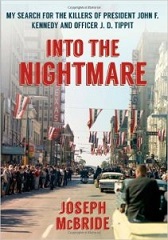
Into The Nightmare: My Search For The Killers Of President John F. Kennedy and Officer J.D. Tippitt-Joseph McBride

Mcbridge

On occasion, I find myself coming back to the murder of President John F. Kennedy (1917-1963). His assassination remains one of the America’s darkest moments and officially, the crime is still an open case for the Dallas Police Department. Some may express surprise at that statement but it should be remembered that no one was ever convicted for Kennedy’s murder. A twenty-four year-old former Marine named Lee Harvey Oswald (1939-1963) was convicted in the court of public opinion as the assassin but was himself murdered before he could stand trial in a Dallas courtroom. Roughly forty-five minutes after Kennedy’s murder, Dallas Police Officer J.D. Tippit (1924-1963) was shot to death after stopping a pedestrian walking in the Oak Cliff section of Dallas. Oswald was arrested at the Texas Theater and charged with Tippit’s murder. But due to his death at the hands of nightclub owner Jack Ruby (1911-1967), he was never officially tried and convicted of Tippit’s murder, which is still an open homicide case. The Warren Commission established that Oswald committed both murders before hiding in the Texas theater and for years many have accepted the “lone gunman” theory. But if we look closer, there are many things about both murders and Oswald himself that just do not add up. Author Joseph McBride has spent thirty years researching and writing this book that takes us into the nightmare that occurred on November 22, 196,3 in Dallas, Texas. And what he has to say might make the hair on the back of your neck stand up.

The book opens with a recap of McBride’s childhood in Wisconsin during 1960 when Kennedy was ramping up his campaign for the presidency. McBride’s parents were both reporters and his mother was part of the local Democrat committee. Her position in the committee provided McBride to meet Kennedy on several occasions and during one of those occasions, McBride took a photo which is included in the book, of Kennedy in what could be described as an unguarded moment. On the day of Kennedy’s murder, McBride relates that information presented during news broadcasts raised his suspicions about the crime Those seeds of doubt grew into a life-long quest to find the truth about Kennedy’s murder. I should point out that McBride’s focus here is primarily on the murders of Oswald and Tippit. The book is not a broad discussion of the crimes such as Jim Marrs’ best-selling classic Crossfire: The Plot That Killed Kennedy, but a more streamlined approach to examine what former commission member David W. Belin (1928-1999) called the “Rosetta Stone” of the case.

Seasoned researchers into the Kennedy assassination will know that there has been a lack of focus on the life of J.D. Tippit. He has typically been portrayed as the simple yet heroic officer who tried to stop Lee Harvey Oswald and died in the line of duty. On the surface it fits the narrative of the good cop/bad suspect line that we are taught from a young age. However, if Tippit was attempting to arrest the man who allegedly had just shot the president, then why did he not have his gun drawn as he got out of his squad car? And how would he have known to stop Oswald when Dallas Police had yet to learn Oswald’s name according to the official timeline? There are seemingly endless mysteries surrounding both Tippit and Oswald regarding their alleged encounter. McBride journeyed down the rabbit hole and provides what I have found to be the most in-depth analysis of what may have taken place in the Oak Cliff section of Dallas on that fateful day.

I believe that by putting his focus on the Tippit murder, it allows readers to digest critical information without being overwhelmed by other events that took place in and around Dallas that day. Tippit’s murder undoubtedly is the Rosetta Stone of the case but not for the reasons that Belin believed as McBride makes clear. To be clear, McBride is not a conspiracy theorist. In fact, what I found is that he remains unbiased and does not shy away from presenting contradictory evidence when addressing a topic. I believe that makes the book even more fascinating. McBride presents an honest and thorough discussion of the Tippit murder. And at no point, did I feel he has moving too far in one direction but rather he moves through the book like a veteran detective with an eagle’s eye for clues. And frankly, the amount of information he provides about Tippit’s personal life is just staggering and has caused me to see the murder in a very different light. And although secrets remain about Tippit’s murder, the version presented in the Warren Commission’s report should be taken with a grain of salt. If you want to learn about the real J.D. Tippit, this is without question a book that you need to read.

Although Tippit’s murder is the nexus of the book, McBride does focus on other strange events that day after shots rang out in Dealey Plaza. The most telling are FBI reports from field agents in Dallas that reveal some very surprisingly decisions taken by Dallas officials. And the discussions between J. Edgar Hoover (1895-1972) and former President Lyndon B. Johnson (1908-1973) underscore the problems Dallas detectives faced in making their case. Further, a particularly deeply distburbing fact comes to light about the attitude of Dallas police towards Kennedy’s murder. I found myself staring in disbelief and what former detective Jim Leavelle (1920-2019) reveals about the effort to solve Kennedy’s murder. Before leaving Washington, Kennedy had been briefed on the right-wing climate of hate in Dallas and was advised not to travel there. But he insisted on doing so to show that the President of the United States cannot be afraid to travel within his own country. It was his fate to go to Dallas but the local police owed him far more of an effort than what is shown in the book.

The revelations of the numerous problems of proving Oswald’s guilt, provide the context for a discussion on the many problems with regards to the lone gunman theory. Capt. William Fritz of the Dallas Police Department was certainly aware of this and as McBride shows, most officials knew that making a case against Oswald would be a monumental task. Of particular interes are McBride’s notes of his discussion with former Dallas District Attorney Henry Wade (1914-2001). The statements by Wade in response to McBride’s questions are nothing short of mind-boggling and a sharp defense attorney would have made a name for himself picking apart the indictment against Oswald. However, that is only a small piece of the puzzle that McBride puts together to show the lack of evidence, planted evidence, hidden information and various other anomalies that make the lone gunman theory even more ludicrous.

There has always been confusion as to what Tippit was doing before he was killed. According to the Warren Commission report, there exist at least forty-five minutes between the shooting in Dealey Plaza and his murder in Oak Cliff. But much of what Tippit and Oswald were doing during that time remains shrouded in mystery. To piece the story together, McBride draws on several sources that include Tippit’s widow Marie, witnesses near Oak Cliff who spotted Tippit prior to his death, Dallas Police Department radio transmissions and witnesses to the murder, some of whom were never called to testify by the Warren Commission. As I read through the statements and series of events, I felt a chill run down my spine as I realized that there was a lot more to the events in Oak Cliff that we have been led to believe. Not only was Tippit out of his assigned area but his murder took place near the home of Jack Ruby who shot Oswald live on national television on November 24. Questions have persisted if Oswald, Tippit and Ruby knew each other. While I would stop short of saying that there is a smoking gun, what we do learn raises suspicion that many figures in Oak Cliff were more connected than the Warren Commission wanted to acknloweledge.

McBride’s analysis of the murders that day is spellbinding and anyone that has doubts about the official story should absolutely read this book. There are no outlandish theories or witness bashing. It is simply an honest and open discussion built on facts discovered by the author through meticulous and exhaustive research. I guarantee that after you have finished this book, you will find yourself looking at the murder of John F. Kennedy in a completely different light.

ASIN: B00EP6B0J0

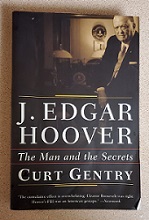
J. Edgar Hoover: The Man and The Secrets – Curt Gentry

20200510_190852The mere mention of his name was enough to cause fear and apprehension.  Politicans, film stars and celebrities of all sorts had learned that he knew all of their secrets.  Exactly how many secrets he knew is still a mystery as his most sensitive files were destroyed when he died.  But what is certain is that John Edgar Hoover (1895-1972) stands out as one of the most feared figures from his time as director of the Federal Bureau of Investigation (“FBI”).  During his time in office, he witnessed six presidential administrations and three wars, the latter of which would continue after his death. His reign was supreme and no one deared to challenge it out of fear that they would wall fall victim to the wrath of one of America’s most powerful investigators.  The public facade carefully crafted by Hoover, served him well in masking the many dark secrets he kept closely guarded. Curt Gentry peels back the layers in this look at the life of the legendary FBI director.

The book is exhaustively researched and is quite extensive, topping out at 760 pages including the epilogue.  But contained within, is an incredible account of Hoover’s life that will leave readers spellbound.   Some may be familiar with the FBI’s actions in the past, many of which came to light after Hoover’s death.  In fact, today we are still learning of the seemingly endless number of informants and secret investigations carried out under Hoover’s directions. The Freedom of Information Act has proven to be invaluable in the research that has been conducted in order to fully understand the nefarious actions of an agency under the control of a power hungry tyrant.

The book starts off on the morning of Hoover’s death, as driver James Crawford notices that something is not quite right at the director’s home.  Although he was seventy-seven, Hoover had refused to retire but age and time had caught up with him.  The news of his death spreads quickly, sending shockwaves throughout Washington, D.C., and across the nation.  Gentry provides the dramatic opening scene to the suspensful drama that developes as the book progresses.  We are provided background information on Hoover’s early life in the nation’s capital.  But the story picks up pace as he joins the Bureau of Information which is later renamed the Federal Bureau of Investigation.  Although he could not have known it at the time, he had found the organization that he would call home the rest of his life.

What I found to stand out is that the book is not just a story about Hoover, but a good look at American history.  Figures of the past come into the story such as former presidents, attorney generals and intelligence figures.  Some would be allies and others would become bitter enemies such as the legendary William J. Donovan (1893-1959), the former director of the Office of Strategic Services.  The bitter feud between Donovan and Hoover is one of the most bitter fights I have ever read of.  Hoover was never short on enemies, and Donovan is only one of many who appear in the story.  The battles are fierce and filled with backstabbing and petty jealousy.  Gentry revisits many of them  showing the lengths to which Hoover went to make his authority absolute.   Also discussed is Hoover’s obsession with communists and the morality of those who did not live up to his rigid standards.

Clyde Anderson Tolson (1900-1975) is well-known as not just the former associate director of the FBI, but as Hoover’s closest friend.  Some have even proffered that Tolson and Hoover were even “closer” than many suspected.  And although homosexual rumors have persisted about the two, to date there has not been any semblance of irrefutable evidence that the two were lovers. Gentry addresses the topic but does not stray off track nor does he give into simply gossiping about the matter. It is discussed and quickly put to rest.  The author leaves it up to the readers to decided what may or may not be the full story regarding the pair’s relationship.   It is a shot in the dark, but their wills, discussed in the epilogue, may give some clues about their relationship.

As the story develops, Hoover’s importance in some of the key events in American history become apparent, some in disturbing ways.  In particular, his actions during World War II might send some readers over the edge.  I found myself staring the author’s words in disbelief and the shock that had settled in which also  took some time to wear off.  And if that were not enough, Hoover’s actions towards those who dared to challenge him, leave no doubt about his abuse of power. Further, his actions towards his own agents in particular famed outlaw pursuer Melvin Purvis (1903-1960), is just simply absurd. The stories are shocking and will undoubtedly leave readers shaking their heads.

Hoover ruled the FBI for over forty years and during that time six presidents came and went.  All had their opinions of the director and their true feelings about Hoover are also discussed revealing some very interesting facts about what really did happen behind the scenes between the FBI director and the commanders in chief.  Hoover proved to be even more devious than any of them could have ever suspected. However, his thirst for power and tendency to savor gossip about the sexual lives of those he surveilled, reveal a much darker and perverse side of Hoover that the public never saw.  But as those who worked for him would later admit, Hoover was bigoted, homophobic and a bully among many other things.  And that is just the tip of the iceberg.

Gentry pulled out all of the stops here and no stone is left unturned. The battles between Hoover and those he despised take center stage.  Some of the people on his “hit list” such as Anna Eleanor Roosevelt (1884-1962) and Dr. Martin Luther King, Jr. (1925-1968) fully recognized the man they were dealing with. When Roosevelt made it clear that she did not approve of the director’s methods, she became a constant target of Hoover’s rage as detailed by the author.  These two iconic figures are a small sample of a long list of figures featured in the book who became enemies of Hoover and in the process had their lives placed under constant surveillance by the FBI in direct violation of United States law.  These methods used by the FBI is perhaps one of the darkest stains on the records of J. Edgar Hoover.

There is one part of the story that I found to be highly interesting even though it is more a sub-story than anything else.  For all of the information that the author does provide on Hoover and the FBI, what emerges is that the director does not have very much of a personal life.  What I realized and what the author makes clear, is that the FBI was his life and when looking at things in that context, his dictator like methods are eaiser to understand.  Without the FBI, there was no J. Edgar Hoover and he himself realized that and did whatever he felt necessary to retain that power.  However, like all dictators he would fall from grace and had he not died, he eventually would have been removed from his post.  And it might have happened during the administration of the last president he served, Richard M. Nixon (1913-1994).  This part of the book is when we finally see that Hoover is on borrowed time.  But the seasoned directly pulls a few tricks from up his sleeve first.  The drama that unfolds is captured with the right amount of suspense by Gentry and readers will be on edge waiting for the climax to arrive. And in a suprising revelation, Hoover’s relation to the Watergate scandal is explained putting Nixon’s actions into a whole new light.

The fallout from decades of Hoover’s rule over the FBI is stunning and for all involved, the gloves were off.  William Sullivan (1912-1977) emerges as the new arch-enemy and pulls no punches whene he goes after the FBI after resigning.  His statements and the later investigations by the Justice Department after Hoover’s death, will leave some readers speechless.  Corruption might just be an understatement.  The story is almost surreal and if you had any doubts about Hoover’s character before reading the book, then they will surely be confirmed.  The conclusion of this epic story highlights the biggest irony of Hoover’s life and readers will not fail to notice.

So far I have discussed many of the dark aspects of the book which are abundant.  If I had to choose a bright spot in the book, it would be that Hoover did in fact make the FBI the respected organization that it came to be and no one can take that away from him. However, the backstabbing, vindictiveness and illegal actions at his command, make it difficult to show him in a highly positive light.  Quite frankly, after finishing the book, I found myself repulsed at what I had learned.  If you are looking for a story of power in the wrong hands, look no further, this is it.  Highly recommended.

ASIN: B00630Z8GM
ISBN-10: 0393321282
ISBN-13: 978-0393321289

JFK: An American Coup D’etat: The Truth Behind the Kennedy Assassination – Colonel John Hughes-Wilson

Wilson -JFKLast week I was debating what book to read next and realized that I had not covered anything on the assassination of President John F. Kennedy (1917-1963) in quite some time.  To many Americans, his death is in America’s past, and a crime never to be solved.  With that being said, his murder is a reminder of how easy it once was to remove a sitting president from the highest office in the land.  Kennedy’s death endures as one of America’s darkest moments and the unanswered questions surrounding the events in Dealey Plaza still send chills down the spines of even the most seasoned researchers.  Colonel John Hughes-Wilson has taken another look at the crime and lays out his case for what he believes was a coup d’état on November 22, 1963.  In the fifty-years since JFK’s death, researchers have been able to compile a staggering amount of revealing evidence throughout independent research and the release of government files under the Freedom of Information Act and the President John F. Kennedy Assassination Records Collection Act of 1992.  Incredibly, Hughes-Wilson has managed to compress thousands of pages of information into a book that is less than 400 pages.  But contained within the pages of this book is an excellent summary of what happened before, during and after Kennedy’s murder.

Some readers may be independent researchers in the crime or simply someone that has never believed the official story put forth by the government.  I warn the reader to be prepared for many shocking revelations and the introduction of facts that are simply unbelievable.   If you believe that Lee Harvey Oswald (1939-1963) was the lone killer,  you may find this book hard to accept.  But I do think that the author provides an incredibly strong position to support his believe that Kennedy’s murder was in effect a change in government by powerful sources hidden behind the scenes.  One of the book’s most interest parts is how the author sets the stage for Kennedy’s murder.  So much focus is often placed on November 22 but it is critical to understand the forces that raged against his administration and their culmination into a deadly web of enemies determined to have the president removed at all costs.  Author James Douglass does a great job of covering topic in his book on the murder “JFK and the Unspeakable: Why He Died and Why it Matters“.   The information provided therein if plentiful and highly enlightening.  Hughes-Wilson takes a similar approach but streamlines the information to keep the pace moving at a sufficient pace.

Any book on Kennedy’s murder is sure to contain a long list of characters relevant to the story at hand.  This book is no different and as one would expect, figures such as Lyndon B. Johnson (1908-1973) and J. Edgar Hoover (1895-1972) are discussed throughout the book.  We also learn about the various groups that came to loathe the president such as Cuban exiles, Texas oil barons, Wall Street bankers, the government of Israel and the Italian American Mafia.   The connections between the various groups will raise eyebrows and cause mouths to drop open in surprise.   But what may truly shock many readers, is their connection to the White House, in particularly Kennedy himself.  I warn some that what is also revealed about Kennedy’s private life may change the way they see the former president.   But if you have read Seymour Hersh’s “The Dark Side of Camelot“,  some of the information may be repetitive.   Kennedy is long gone so we will never known what made him do some of the things that he did.   The author here does provide clues to his sometimes strange behavior but to a point, even his views are somewhat speculative.  Regardless, his assessment of the late president, puts the murder into clear context and also reveals that many great political figures also had a very dark side that the public was not privy to in the age before cell phones and social media.

Hughes-Wilson did an incredible job of staying focused and not straying too far from the main goal of the book.  One can easily spend hours on just one part of the murder.  Whether it is Oswald’s life or the murder of Dallas Police Officer J.D. Tippitt (1924-1963),  the amount of information to cover is exhausting.  The author here never lets the reader become overwhelmed with information but wisely keeps things moving along and provides enough information for the reader to continue to piece together the entire puzzle.  In short, I found the book to a collection of information covered separately in other books but told in a way that keeps the reader deeply intrigued.  And even for myself, the book was thoroughly enjoyable even though I have read at least a dozen books and several articles on the crime.

Someone asked me one day if Kennedy’s murder would ever be solved.  Well Jim Marrs once said that we already know who did it, but we just need to look closely at the evidence.  I think that we have many of the answers that have long been sought through the hard work of researchers and the deathbed confessions of individuals long suspected of being part of the plot.  The real question is whether Americans are ready to accept information that will change the way the see the United States Government and politicians many of them have long admired.   It is said that no one who was alive when Kennedy’s murder took place will forget where they were that day.  My father has told me the same thing many times and can easily recall that day from start to finish even at the age of 66.   For my generation, none of us will forget where we were on September 11th.  The future generation will have their own moment in history but what that is remains to be seen.  No matter how many generations pass, the murder of John F. Kenney will remain the biggest unsolved mystery in American history.  But with books such as this by Col. John Hughes-Wilson, we already have many of the answers needed to eventually find the truth.

For readers that are discovering new territory,  I strongly recommend reading the late Jim Marrs’ (1943-2017) “Crossfire: The Plot That Killed Kennedy“.  It remains one of the best sources for information on the assassination.  Having discovered this gem, I also strongly recommend this compendium as well for those who truly want to know what really happened.

ISBN-10: 1782198547
ISBN-13: 978-1782198543
ASIN: B00GF3MVUS

Hoosier Public Enemy: A Life of John Dillinger-John Beineke

Dillinger1At the height of 1930s era crime and depression, criminals that under normal circumstances would be looked upon with scorn, became larger than life iconic figures whose daring bank robberies and shootouts with policy became stuff of legend.  The brazen thefts in the middle of broad daylight accomplished with the use of the Thompson Sub-machine Gun (Tommy Gun) and the Browning Automatic Rifle (BAR) catapulted America into a new and deadlier form of crime. In response, the Federal Bureau of Investigation under the direction of J. Edgar Hoover (1895-1972) stepped into the foray and within a one-year stretch, arrested or executed America’s most wanted.  At the top of this list was the late John Herbert Dillinger (1903-1934).

John Beineke has captured the outlaw’s life in this straight to the point biography of his life of crime and sudden death.   It is neither praise or vindication of Dillinger but a look at the life of the legendary figure.  The story begins in Indiana, Dillinger’s home state.  After the death of his mother, the young boy slowly makes his way into a life in crime resulting in  stint at Indiana State Prison after a conviction for robbery and assault.  Paroled nine years later,  it would be the last time that Dillinger served time in prison.   In fact, he vowed never to return to a prison cell, a vow he kept until his final moments.  But what is it about Dillinger that captivates people even today?  In 2009, director Michael Mann brought Dillinger’s life to the big screen again, enlisting Johnny Depp in the starring role. The film was released under the title Public Enemies, and also portrayed the FBI’s pursuit of Lester Gillis, a.k.a George “Babyface” Nelson (1908-1934) and Charles Arthur “Pretty Boy” Floyd (1904-1934).  Christian Bale stars as FBI Agent Melvin Purvis (1903-1960), tasked with capturing the outlaws at all costs.  The film was solid and with an all-star cast, Mann recreates the feel of depression era America.

Here, Dillinger is the star and he has his own supporting cast of criminals, each of whom would meet their own violent ends.  To say that Dillinger’s life was extraordinary would be an understatement.  As we learn in the book, not only did he excel in knocking over banks, but no jail could seemingly contain him and incredibly, he often hid from authorities in plain sight.  It is literally a story that no filmmaker could write.  The pace of the book picks up early and it never slows down.  And with each heist, Dillinger becomes more infamous to authorities and more a folk hero to thousands of Americans who believed the banks were the real enemies, profiting off the misery of the average citizen. In comparison to some biographies, mundane information is excluded leaving the reader with the facts peppered with occasional sub-stories between the major characters.  Politics inevitably enters the story as America grapples with a rising crime wave and Washington reconsiders the tenure of the FBI’s longest-serving director whose job might have ended if not for the apprehension of Dillinger and others.

Less than one hundred years ago, John Dillinger used Midwestern banks as his own personal ATM.  His escapades filled newspapers, filled with tales of crimes by fellow outlaws such as Bonnie Parker and Clyde Barrow, Pretty Boy Flood and part-time accomplice, Baby Face Nelson, who enters and leaves this story on multiple occasions before parting ways with Dillinger for good not long before both would be gunned down. Today such a crime spree is unthinkable but in Dillinger’s era, a time before two-way radios, cellphones and social media,  bank robberies and shootouts with cops were common occurrences. Beinecke has taken us back in time to relive the decade that Dillinger made a name for himself.  Curiously, although the end of his story is widely known, the story still pulls the reader in with its engaging descriptions of the Dillinger gang’s exploits and graphic descriptions of the deaths that occurred as a result. The outlaws will always be romanticized in American culture.  In fact, they are as American as apple pie.  Dillinger has been dead for more than eighty years but if you research depression era gangsters, his name will appear on every single list.  He lives on in infamy and is idolized by some as a rebel who fought against the corrupt banking establishment as a modern-day Robin Hood.   To the FBI, he was a public enemy whose capture was more important than anything else.  In the end, they would get their man but not before Dillinger left his mark and became part of history.

ASIN: B00NQGP47O
ISBN-10: 0871953536
ISBN-13: 978-0871953537