
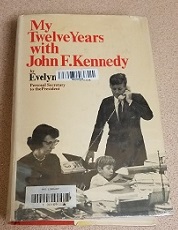
 November 22, 1963 remains a day seared into the minds of millions of people around the world. Known informally in the United States as the day Kennedy died, each year it reminds of the tragic events of that day in Dallas, Texas. The spirit of John F. Kennedy has remained with America and today, decades after his death, his legacy continues to gain in strength. The debate regarding his accomplishments while in office has raged continuously. But what cannot be denied is his impact of the conscience of the United States and his status as a symbol of hope for an entire generation. When he died, he left behind not only a widow and two children, but millions of fans, friends and his personal secretary of twelve years, Evelyn Lincoln.
Kennedy’s administration, named “Camelot” by the press, has been the source of inquisitive researchers and those enamored with his charm and intellectually sharp personality. In this book, Lincoln has recorded her memories of what it was like for the mythical and tragic young president. Some readers may be familiar with her other book Kennedy and Johnson, her memoir regarding the relationship between Kennedy and Vice President Lyndon Johnson. In comparison, Johnson is not seen frequently in this book. In fact, he is hardly mentioned but only a handful of times. This book is strictly about the relationship between Kennedy and his secretary who devoted twelve long years of her life in service to him.
The book begins as she reflects on the aftermath of the trip to Dallas. But it should be noted that this book is not about his murder and there is no smoking gun in the book. Researchers and assassination buffs will not find anything of value in here. Where the book does shine however, is showing Kennedy’s personal side. In stark contrast to the clean-cut and smooth image presented in public, behind the scenes, the senator and later president is revealed to be as forgetful as the next person, unorganized as most businessmen and as kind as some of the greatest people I have ever met in life. Lincoln’s book does an excellent job of showing how and why so many people were inspired to work with and for him. Furthermore, it adds to his prestige as one of the most different individuals to ever occupy the oval office.
I am sure that some readers will find it interesting that she makes no mention of any of Kennedy’s major shortcomings, particularly his extramarital affairs. For some it will be hard to accept that his secretary who surely would have been privy to such knowledge makes no mention of it at all. I firmly believe it was not needed and was not the point of her book. Similar to Arthur Schlesinger, she makes note of her working relationship with Kennedy which was the goal of the book. And on this level, she succeeds without question. The book was published in 1965, roughly two years after his murder. I can only imagine the amount of grief she endured at the time and the challenge she faced in writing this memoir. Its publication and existence are a testament to her will and are a fitting tribute to the slain leader.
Anyone who has ever worked as a secretary will appreciate this book. I personally have worked as a secretarial assistant and found myself nodding my head at times during the book when she relates one of Kennedy’s quirks. All bosses have them and in all different forms. But their quirks are also what helps to make the unique and unforgettable. Kennedy and Lincoln are both deceased but they shared a time together that stands out in American history both for great reasons and unfortunately for tragic reasons. Her tribute to her former boss is heartfelt and will be warmly received in any library about the life and political career of John Fitzgerald Kennedy.
ASIN: B000UCF0V2
 The murder of John F. Kennedy remains one of America’s darkest moments. His assassination in Dealey Plaza and the murder of his alleged assassin two days later shocked the world and marked a turning point in American history. The Warren Commission’s report is still the government’s official position on the murder. It concluded that there was no conspiracy to murder John F. Kennedy and that Lee Harvey Oswald acted alone. In 1966, Mark Lane’s Rush to Judgment was released and became the first major book to challenge the Commission’s conclusions. Lane became a pioneer in the process with his book being followed by more than 200 hundred others regarding the events of that day. Each has its strengths and weaknesses but all provide a window into what some have called the crime of the century. There are literally dozens of theories as to how and why Kennedy was killed. It is up to the reader to cross-reference the facts and reach a conclusion. However, in the majority of the books regarding the murder, all tend to focus on the complicity of the U.S. Government and organized crime. The Italian-American mafia has long been suspected in the assassination. But like everything else regarding the murder, things are not always as they may seem.
 For twelve years Evelyn Lincoln served as John F. Kennedy’s devoted secretary. Following Kennedy’s murder she penned a memoir of her time as his assistant under the title “My Twelve Years with John F. Kennedy”. As his secretary she was a first hand witness to his daily routine and the decision making process behind some of the biggest moments in American history. The relationship between Kennedy and Vice-President Lyndon Johnson has been documented in scores of books. But Lincoln’s account is a welcomed look into the unusual relationship between two polar opposite individuals.
 On January 7, 1971 law enforcement personnel responded to the scene of a single car accident on U.S. Route 271 near Pittsburg, Texas. The deceased is identified as Malcolm “Mac” Wallace. His death marks the end of a life replete murder, sex, alcohol and suspicion. Wallace was a known associate of several powerful figures in the State of Texas, most notably, Billie Sol Estes and Lyndon Baines Johnson. His association with Johnson earned him the title of a conspirator in the murder of President John F. Kennedy. An unidentified finger print at the Texas School Depository discovered in the wake of Kennedy’s murder, puzzled investigators and researchers for years. In 1998, Nathan Darby, a career fingerprint analyst, identified the print as belonging to Wallace giving rise to the belief of many conspiracy theorists that Wallace had been on the sixth floor either right before or during the assassination. Wallace’s death was cloaked in conspiracy theories about how and why he died. But just who was Mac Wallace? Was it really his print at the book depository? And was he LBJ’s hitman for hire as has been alleged? Joan Mellen, a noted scholar and author of several books related to JFK’s murder explores the relationship between Wallace and Johnson in this phenomenal account of the lives of both of these Texas natives.
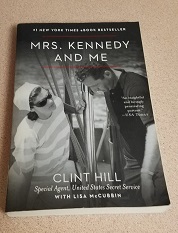 The workplace in a sense becomes a second home to the majority of us, and for some of us, they become even closer to us than those with whom we have a biological link. But what happens when you’re an agent in the Secret Service? There is no set eight-hour workday for agents assigned to the first family. Instead, their hours are often unpredictable, long and extremely fatiguing. Nevertheless, the agents do their jobs to the best of their abilities and in the process create bonds with the members of the first family that sometimes remain in place many years after their service has ended. Clint Hill, long retired from the Secret Service, is best remembered by many people from the Zapruder film, in which he is the sole agent that attempts to come to the aid of the president as jumps on the back of the motorcade as the Secret Service transports a mortally wounded John F. Kennedy to Parkland Memorial Hospital. He has written several books on his time as a Secret Service agent with several presidents and the events that took place during that fateful trip to Dallas, Texas. This is his memoir of his time with the former first lady and the relationship that developed.
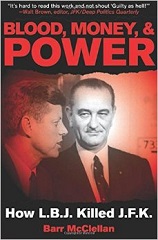 Prior to his death from cancer, Jack Ruby, the convicted murdered of Lee Harvey Oswald who executed his prey live on national television, once remarked that to get answers in the murder of John F. Kennedy, it would wise to ask the man currently in office. That man as we all know was Lyndon B. Johnson. In most history classes, Lyndon Johnson or LBJ for short, is seen as a pioneering president, responsible for the passage of the monumental Civil Rights Act of 1964. However, what is often looked over is his role in the escalation of the U.S. military in southeast Asia resulting in the Vietnam War. As the body count of American soldiers climbed, his approval rate dropped to absurdly low levels, possibly the worst in recent history. And the announcement of Robert Kennedy for candidacy for president served as a final nail in the coffin forcing Johnson to withdraw his name in the 1968 presidential race. Many years after his death, the true story of the life of Lyndon Johnson has come to light in dozens of books. And what we learn through each of these books is that there was a very dark side to the 36th President of the United States.
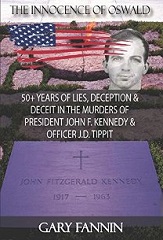 As November slowly approaches this year, the anniversary of one of America’s darkest moments will be upon us once again as we remember the tragic death of the late John F. Kennedy. His murder continues to stay with us and to this day it is technically an unsolved murder in that his alleged assassin, Lee Harvey Oswald, was never convicted in a court of law. He had been accused of murdering both President Kennedy and Dallas Police Officer J.D. Tippit, and convicted in the court of public opinion through misstatements and so-called evidence that wouldn’t hold up in a court of law. And as author Gary Fannin points out, for over 50 years, lies, deception and deceit continue to be propagated making the truth of the matter seemingly harder and harder to unravel.
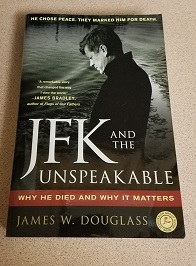 Recently, I re-watched President Kennedy’s peace speech at American University on June 10, 1963. The speech is considered to be one of Kennedy’s shining moments. In the speech, he called for a new vision of peace in the face of the escalating conflict in Vietnam and continuing aggression with the Soviet Union and its Cuban ally, Fidel Castro. Researchers into Kennedy’s administration and his murder have often said that this is the speech that served as the final straw for those surrounding him wishing to have him removed from office. Tragically, several months later, after this speech, that’s exactly what happened as he was murdered in broad daylight on the streets of Dallas, Texas. Two days later, his alleged assassin, Lee Harvey Oswald was also murdered raising more questions that have yet to be answered to this very day.
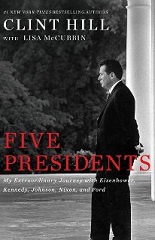 The 20th Century was filled with some of the most earth-shattering events the world has ever seen. The home video shot by Abraham Zapruder that recorded the assassination of John F. Kennedy stands as one of the most important pieces of motion picture ever captured. During that film, as former Firs Lady Jacqueline Bouvier Kennedy reaches to the trunk of the car to retrieve a portion of JFK’s skull, a secret service agent can be seen leaping on the trunk of the car as the motorcade sped down the Stemmons Freeway en route to Parkland Hospital. The agent, Clint Hill stands out in the film as only one of two agents to make any major movement to help the fatally wounded Kennedy and Gov. John Connally. Hill would go on to serve three more presidents and today is a best-selling author with several books published about his time working in the United States Secret Service.
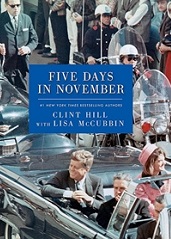 Abraham Zapruder captured a defining and tragic moment in history when his camera recorded the assassination of President John F. Kennedy. The film was originally locked away by Time Life but was finally released to the public years later as a result of the investigation of Jim Garrison into Kennedy’s murder. The film leaves the view speechless and speaks more than a thousand words. Next to the gruesome murder of the President, there’s an iconic sequence that occurs that also remains cemented in the memory of the witnesses in Dealey Plaza that day and the millions others who have repeated watched the film. As the motorcade speeds toward the triple underpass, a Secret Service agent is seen jumping on to the back of the car as it speeds up to transport the mortally wounded Kennedy to Parkland Hospital. The agent is Clint Hill, a veteran of the Secret Service who served several presidents during his multi-decade career. Now 84, he’s become an author over the years, having written a few books, one of which is this account of the fateful trip to Dallas, Texas and the tragedy that ensued.
 FREETHINKING BIBLIOPHILE
You must be logged in to post a comment.