
 On January 15, 1953, President Harry S. Truman (1884-1972) gave his farewell address after serving as the Thirty-Third President of the United States. He had taken office on April 12, 1945, after the death of President Franklin D. Roosevelt (1882-1945). At the time of Roosevelt’s death, allied forces were pushing further into German territory to bring the Third Reich to its knees. In the Pacific, the war against Japan continued to rage but in less than six months, it too surrendered after the devastation left by two atomic bombs. In the first four months that Truman was in office, the entire world changed in ways no one could have imagined. Had Roosevelt lived, the war might have ended differently, and domestically, America might have moved forward at a different pace. He did not live to see his post-war plans come to light and for Truman, the title of president was thrust into his lap. He had never wanted the presidency but due to circumstance, he had become what author A.J. Baime calls the accidental president.
In contrast to a standard biography, the focus of the book is on the four months between Truman taking office and the surrender of Japan. The story begins with Roosevelt’s last day alive. Following his death, all eyes become fixed on Truman who is largely unknown to the American people. Washington insiders knew of his background but even within those circles, he was somewhat of a mystery. His unassuming look and plain-spoken Midwest nature made him appear as just another person in the room. But little did anyone know that the next president would usher in a new era in warfare and set the course for future domestic programs and U.S. foreign policy.
Before entering the lengthy discussion of the war and Truman’s role in it, Baime provides a short biography about his early life in Independence, Missouri, and his entry into politics that culminates with his arrival in Washington. One aspect that stood out is Truman’s military service in World War I which is often not discussed. I believe his experiences in combat surely helped his ability to make decisions during World War II. After we learn of Truman’s unusual entry into politics and nomination for vice-president, the author shifts gears and takes us right into the war with a heavy focus on Japan where the U.S. Air Force is conducting firebombing raids under the legendary and controversial General Curtis E. LeMay (1906-1990). Despite the fierce allied attacks, Japan would not surrender but in Europe, the Third Reich was on life support. Adolf Hitler’s (1889-1945) dream of a master Aryan nation spread across continents had collapsed and the tyrant himself was hiding in his bunker. The Red Army was closing in and the German people knew that retribution from the Soviets was not something any of them wanted to experience. On April 30, 1945, Hitler met his demise and escaped punishment at Nuremberg. Washington breathed a sigh of relief at the German defeat but knew that Soviet leader Joseph Stalin (1878-1953) could not be fully trusted. The seeds of the Cold War had been firmly planted as World War II reached its shocking and brutal conclusion. With Germany no longer a threat, the story moves to the war in the Pacific where allied forces are determined to crush the Japanese military.
As the book progresses, it really splits into two stories; the race to finish the bomb and the negotiations at the Potsdam, Cecilienhof conference between Truman, Stalin, and British leader Winston Churchill (1874-1965). The debate over whether Truman should have used the bomb will continue but the author does a good job of showing what was being discussed behind the scenes. Truman knew the decision he had to make was unlike anything a president had faced before. He also knew that he would be judged throughout history for it. Baime summarizes Truman’s historical recognition with this accurate statement:
“Truman is remembered first and foremost for his decision to employ atomic weapons—Little Boy and Fat Man, the only two nuclear bombs ever used against human targets. More than seventy years later, this decision remains almost certainly the most controversial that any president has ever made.”
However, the war with Japan needed a conclusion, and allied forces had already begun to plan the full-scale invasion of the island on November 1, 1945. The bomb was the ace up Truman’s sleeve, but until a test was conducted, questions surrounding its efficacy remained. All of that changed on July 16, 1945, in Los Alamos, New Mexico when the first successful test was conducted and the outcome of World War II began to take shape.
Remarkably, throughout the reports of carnage, the tension surrounding the bomb program, and interactions with the Soviets, Truman always comes across as incredibly calm. And what we see is that for a man who was the accidental president, he rose to the occasion and showed no hesitation when action was required. The power of the bomb was not lost on Truman or others with knowledge of its existence. Lead scientist J. Robert Oppenheimer (1904-1967) also makes an appearance in the story as the full gravity of the bomb’s creation comes down on all of them. No one knows for certain exactly when Truman decided to use the bomb and as Baime explains, there is no written record of it. Eventually, the moment in the book we know is coming arrives on August 6 when the city of Hiroshima receives the first atomic bomb. Three days later, Nagasaki suffered similar devastation which finally convinced the Japanese Emperor Shōwa (Hirohito) (1901-1989) that to continue the war would mean Japan’s ultimate destruction.
Finally, the war was over but the destruction and death that ensued were permanently seared into the memories of all who witnesses man’s savagery. Truman personally observed Berlin for himself and the experience is revisited in the book. Survivors of the nuclear bombs provide additional feedback regarding the immediate impact of the detonation. Their words provided a chilling effect to the introduction of atomic weapons. Back in America, Truman’s popularity soared and the little-known senator from Missouri became an American hero. This stands in stark contrast to his wife Bess (1885-1982) whose disdain and avoidance of the public spotlight are also part of the story. The book concludes after the formal surrender of Japan but Baime provides an epilogue that takes a closer look at Truman’s time in office following the war. He never again reached the level of popularity that he enjoyed during the war era but he remains one of the most important leaders in world history. Few knew who he was when took control of Washington on April 12, 1945, but in just fourth months, he cemented his legacy and showed that even an accident president can be just what the country needs.
“No President could ever hope to lead our country, or to sustain the burdens of this office, save as the people helped with their support. I have had that help–you have given me that support–on all our great essential undertakings to build the free world’s strength and keep the peace. Those are the big things. Those are the things we have done together. For that I shall be grateful, always.” – Harry S. Truman, January 15, 1953
ASIN: B01MQVT9TG
 On October 1, 1949, the People’s Republic of China was officially established as the ruling party in the nation. Mao Zedong (Mao Tse Tung) 1893-1976) assumed the position of Chairman, a title he held until his death in 1976. The Chinese Communist Party continues to rule the country and imposes its will on Hong Kong. Taiwan remains independent but is often the source of friction between Beijing and western powers. The story of the Chinese communists is a highly intricate tale that is often left out of discussions regarding the aftermath of World War II (1939-1945). Edgar Snow (1905-1972) spent twelve years in China and was able to observe the emergence of the Communist Red Army determined to liberate China both from Japanese imperialism and the control of the White Army, led by the Kuomintang Government (KMT) headed by the Generalissimo Chiang Kai-Shek (1887-1975). This book is a collection of those memories that take readers back in time to the era when Mao Zedong was beginning to establish himself as a leader and China found itself in the middle of political, economic and social turmoil.
 The life of Joseph Stalin (1878-1953), former dictator of the Union of Soviet Socialist Republic (“USSR”), has been the focus of endless books, articles and documentaries. His tyrannical reign over the Soviet Union resulted in the deaths of millions of Soviet citizens, persecuted for the slightest of offenses. The Gulag known in English as a forced labor camp, was the place most were exiled to in particular the Siberian region known for its desolate geography and brutally cold winters. The very word itself caused fear and stroked paranoia across the USSR. No one was safe, not even members of Stalin’s family, some of whom would find themselves banished to Siberia. This climate of distrust, violence and vengeance would cause a ripple effect that culminated with his daughter Svetlana Alliluyeva’s (1926-2011) defection to the United States in 1967. Undoubtedly, the news was explosive and if her father had been alive at the time, he surely would have issued an order for her death no matter where on earth she would have attempted to find refuge. When I saw the title of this book, I had to take a second look. I knew of Stalin’s family but I did not know the life story of his daughter Svetlana. In fact, in the books I had read that discuss him, his sons are mentioned but rarely his daughter. Rosemary Sullivan has changed all of that with this biography that is simply outstanding.
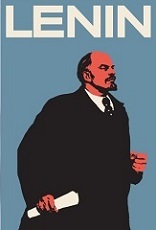 The dissolution of the United Soviet Social Republics (USSR) remains one of the most important and world changing moments in history. The lowering of the hammer and sickle on December 26, 1991, was the end of seventy-four years of Soviet dominance over Eastern Europe. But the remnants of the Soviet Union can still be found today and the ghost of its founder, Vladimir Ilyich Ulyanov (1870-1924), continues to haunt Russia. In Red Square, Moscow, Lenin’s corpse remains on permanent display and is maintained by a full-time staff of technicians. To believers in the old-guard and Marxism, Lenin is the eternal leader of the Bolshevik revolution. To his detractors, he was madman who unleashed a wave of terror and was outdone only by his successor Joseph Stalin (1878-1953). Undoubtedly, Stalin ruled the Soviet Union with an iron grip built upon fear, intimidation and murder. But those tactics were not new methods of operation, having been in use long before he took power. During the reign of the Soviet Union, information regarding Lenin’s private life was kept secret and only the most privileged of researchers were able to see any official records. The passage of time and change in attitudes had resulted in the disclosure of Soviet records that many thought would never be revealed. The thaw which began with Nikita Khrushchev (1894-1971) has allowed the world to learn the truth behind the Iron Curtain. Author Victor Sebestyen has taken another look at Lenin’s life in this well-researched and revealing biography of the iconic and infamous Soviet leader.
 On December 26, 1991, the world watched in shock as the Union of Soviet Socialists Republics (USSR) dissolved, splitting the once mighty Soviet Union into fifteen separate nations. I vividly remember watching the news broadcasts and seeing the flag of the Soviet Union lowered for the last time. It was the end of an era highlighted by the Cold War in which Washington and Moscow viewed each other as a threat to world peace. Paranoia, suspicion and espionage propelled the two to the brink of nuclear war on several occasions. In October, 1962, the world watched in gut-wrenching suspense as the Cuban Missile Crisis heated up and threatened to be the spark that ignited the next world war. President John F. Kennedy (1917-1963) and Soviet Premier Nikita Khrushchev (1894-1971) found their selves in a situation that could have resulted in the physical destruction of half the planet within a matter of minutes. Diplomacy eventually prevailed through the use of back door channels encouraged by the realization of figures in both governments that the looming showdown would produce no winners. Tensions between the two super powers cooled but never full subsided and as the dissolution of the USSR played out on television, Washington closely monitored the events while re-examining its global position as Russia emerged from the post-Soviet empire as the country to watch. Twenty-eight years later, the USSR is still recalled as one of the greatest powers in history. Its fall was earth shattering and left so many wondering, how and why did it happen?
 In December, 1991, the unthinkable happened as the Union of Soviet Socialist Republics (USSR) dissolved into fifteen separate countries. Known informally as the Soviet Union, the USSR seemed at times indestructible to those viewing the union from abroad. But within dissension had been brewing for many years in the wake of the tyrannical reign of Joseph Stalin (1878-1953). His successors embarked on a period of de-Stalinization that thrived under the administration of Nikita Sergeyevich Khrushchev (1894-1971). The Soviet Union remained a superpower and in direct competition with arch-rival the United States. It dissolution shocked the world and left the future of the former Soviet republics in limbo. In the aftermath of the monumental and historic collapse, the individual republics established their own rights to self-governance and in some cases, completely rejected Russian rule. Tensions between many of the nations continues to this day. Currently, Vladimir Vladimirovich Putin serves as the President of Russia, and is as much of a controversial figure as many of his predecessors. His appointment by late President Boris Nikolayevich Yeltsin (1931-2007) gave many Russians hope that a new direction was in store for the beloved country. Today, as we look back at the time that has passed since he was chosen to lead Russia, we can see a tortured nation still suffering from systematic oppression and what is rightly described in this book as totalitarianism.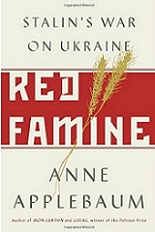
 Today, sixty-four years after his death in, Joseph Stalin (1878-1953) remains one of the most polarizing and studied figures of the 20th century. As the leader of the Soviet Union during the Second World War, he enforced the legendary Red Army as it fought off a German onslaught and helped the Allies put an end to Germany’s Third Reich. Following the war, tensions between the United States and the USSR escalated giving birth to the Cold War. In 1991, the USSR collapsed and today Russia is under the control of Vladimir Putin, undoubtedly one of the world’s most controversial figures. Stalin’s reign may seem to be in Russia’s distant past but it was less than one hundred years ago that Stalin ruled with an iron fist, striking fear into the hearts of not only his enemies but those closest to him. Rumors have surfaced over the years regarding everything including his love life, health, mental state and bungled policies. But who was the real Joseph Stalin? Born Ioseb Jughashvili in Gori, Georgia on December 18, 1878 to Besarion “Beso” Jughashvili (1850-1909) and Ketevan “Keke” Geladze (1858-1937), few could have imagined that the young child would grow up to rule an entire nation. His life in later years became mysterious to those inside and outside of Russia. Misconceptions and falsehoods have spread, causing even more confusion about the truth. Stephen Kotkin has takes on the late leader’s life in a multi-part definitive biography that is simply outstanding.
 FREETHINKING BIBLIOPHILE
You must be logged in to post a comment.