Hellhound on his Trail: The Electrifying Account of the Largest Manhunt in American History – Hampton Sides

At 6:05 p.m., on April 4, 1968, Dr. Martin Luther King, Jr. (1929-1968) was standing on a second-floor balcony of the Lorraine Hotel in Memphis, Tennessee when witnesses say they heard a sound like a car backfire. To the members of his entourage, the reality was far more terrifying and instantly grim. The civil rights icon had been shot by a high-powered rifle and was clinging to life as he was rushed to a local hospital. He later succumbed to his wounds, leaving behind his grieving widow Coretta Scott King (1927-2006) and four children. In Washington, D.C., President Lyndon B. Johnson (1908-1973) was briefed on the situation and at the Justice Department, Attorney General Ramsey Clark (1927-2021) made it clear to Federal Bureau of Investigation (“FBI”) director J. Edgar Hoover (1896-1972) that the bureau must take control over the investigation into the murder. Fears of nationwide unrest gripped officials, and law enforcement realized that the killer must be apprehended as soon as possible. The roads leading to that fateful evening in Memphis, and the worldwide manhunt for James Earl Ray (1928-1998) form the crux of this national bestseller that will have you at the edge of your seat.

The first half of the book is composed of two timelines. We are introduced to Eric S. Galt, Ray’s persona as he crosses from Mexico back into the United States. Instantly we can see that Galt is an unlikeable figure who drifts from one place to the next. The author does a masterful job at retracing his steps and presenting them in the smooth narrative format found in the book. As I read, I could see that Galt is strange and nothing good follows him. The second timeline revisits the final months in Dr. King’s life. The tremendous strain his work had on his personal life and health is evident. Further, scrutiny by the FBI was persistent, and J. Edgar Hoover was determined to expose the man he called a “fraud”. The reasons for Hoover’s animosity towards King are examined in the book and left up to the reader to decide. I can say that Dr. King had his flaws like everyone else. But he did not know that a drifter using the stolen identity of Eric Galt was also making his way to Memphis, Tennessee and that they both had a date with destiny.

As Sides moves between the two timelines, you can see that they are bound to intersect. And like dominoes falling, one event after another sets the stage for April 4. I must warn readers that the shooting and aftermath are graphic and will be unsettling. In fact, what Sides explains will send chills down your spine. The murder of Dr. King was nothing short of brutal and cold-blooded. However, that is far from the end of the story. In the wake of the gunfire, Dr. King’s aides scramble to make sense of what happened, and emergency personnel do their best to aid the fallen leader. But his wounds proved to be too severe and after reading the book, death was likely the better option for him. The author’s description of the bullet’s impact will clarify the severity of the wounds. As Dr. King lay dying in the emergency room, the FBI was gearing up for the largest manhunt in American history. And the author takes us on the journey from Memphis to the United Kingdom.

In the middle of all that is happening, there is still the story of America at that time. Sides revisits our nation’s history during a turbulent time when change was both needed and scary. Sides discusses the political climate including Johnson’s decision in March 1968 not to seek or accept his party’s nomination for president of the United States as the Vietnam War becomes an anchor around his neck. The entry of Senator Robert F. Kennedy (1925-1968) into the presidential race became Johnson’s worst nightmare and gave millions of Americans a new found hope for the future. But the push for civil rights and an end to the war in Vietnam had America on edge, and what becomes clear is that the 1960s was a dangerous time in the United States. Eric Galt, whom authorities would learn was James Earl Ray, nearly sent an entire country over the edge with one rifle shot. Within hours, the FBI was on the case.

After the FBI assumes the lead role in the investigation, the book shifts gears as the bureau engages in an all-out effort to find the killer. It is one of the FBI’s shining moments. I was speechless at the savvy skills of special agents and the speed at which they accumulated evidence and added information in an era before modern-day technology. Readers who love crime investigations will find this section of the book irresistible. I was rooting for the agents as they turned over new leads and pieced together the life of James Earl Ray. The information they uncover regarding his family history is crucial and should not be overlooked. I previously was unaware of these details and learning the new facts provided a better sense of how and why James Earl Ray grew into the person that he was. That in no way excuses his actions, and Ray was his own worst enemy. And though he had a head start on the bureau, he engineered his own downfall across the Atlantic Ocean.

In America, mourners focused on paying their respects to Dr. King, whose funeral was a monumental event in the nation’s history. But it was not without its detractors, and no story about Dr. King or the movement would be complete without a word on former Alabama Governor George C. Wallace (1919-1998). He appears in the story, but this is not a biography of him, but rather a discussion of how Wallace’s rhetoric helped create people like James Earl Ray. In later years, Wallace changed his tune and disavowed his former segregationist stance. But others did not, and some of them appear in the story but only briefly. The focus remains on capturing Ray who first fled to Canada before landing in Portugal. But it was the United Kingdom where his train to freedom was derailed.

I could only shake my head as I read of Ray’s time in the United Kingdom under a fake name and passport. Lack of money and a concrete exit plan take their toll, and a series of actions by him on the streets of London are insane. I honestly could not believe anyone could be either that bold or careless, but such is the case here. His sloppiness and eagle-eyed British investigators help bring the international saga to an end but even while in custody, Ray proves to be more moronic. In fact, investigators are surprised at his off-the-cuff statements and cannot believe the cognitive dissonance. The book concludes as he returns to America after losing the fight against extradition. His trial and conviction are not discussed here, the author’s focus was on the events leading up to the crime, the crime itself and the manhunt. But as an added bonus, the epilogue contains a story from 1977 where Ray is serving time in prison and finds a way to escape from the facility. The unbelievable story will have readers shaking their heads. Thankfully, he was found and returned to prison to serve out the life sentence he received. On April 23, 1998, James Earl Ray died at Nashville Memorial Hospital in Madison, Tennessee at the age of seventy from complications due to Hepatitis C.

If you need an enjoyable book about the murder of Martin Luther King and the manhunt for James Earl Ray, you will love this.

ASIN ‏ : ‎ B0036S4BX0
Publisher ‏ : ‎ Vintage, April 20, 2010

Fire in the Lake: The Vietnamese and the Americans in Vietnam -Frances Fitzgerald

Last summer at a family cookout, I noticed my uncle who had served in the Vietnam War, wearing a baseball cap which indicated that he was a veteran of the conflict. It was the first time I had seen him wear anything connected to Vietnam or the military. As I watched him, I asked myself why it took so long for Vietnam veterans to find acceptance and peace. He is from a generation which fought in a deeply unpopular war that saw America fall short of its stated goal. The official policy was to help South Vietnam withstand communism and survive as its own democratic republic but the reality on the ground was far more complicated. The truth about South Vietnam is a bitter pill to swallow but necessary in understanding the failures which took place. Author and Pulitzer Prize winner Frances Fitzgerald originally wrote this book in 1971 and it was published in 1972, three years before the conflict’s end. But contained in its pages is an insightful discussion about Vietnamese history, French colonialism, and America’s entry into Indochina. And having finished the book, I can say with certainty that it is one the best books I have ever read about the war in Vietnam. 

Fitzgerald did not serve in the military and the book is not written from a soldier’s point of view. Her focus is on South Vietnam, particularly the instability of its government and the complex social structure in Vietnam which western minds struggled to understand. The book excels is explaining how and why the Vietnamese lived as they did. These lessons seemed to have been lost to officials as the conflict heated up. Readers do not need prior knowledge of the war to find value in this book. In fact, no prior knowledge is needed. Fitzgerald covers the country’s history, the French occupation, and the buildup to American intervention. Her narrative is smooth and flows  beautifully, which makes the book easy to read and engaging from start to finish. 

I have read and reviewed several books on Vietnam, each with its own approach to the war. But the book I found to be the closest in comparison to this discussion by Fitzgerald is Fredrik Logevall’s ‘Embers of War: The Fall of an Empire and the Making of America’s Vietnam‘, which I strongly recommend for anyone interested in the war’s history. However, I believe Fitzgerald’s account in regard to South Vietnam is absolute gold. And the nexus of President Ngo Dinh Diem (1901-1963), brother Ngo Dinh Nhu (1910-1963) and sister-in-law Madame Nhu (Trần Lệ Xuân)(1924-2011) is explored thoroughly in one of the most thorough explanations I have read.  This trifecta of power would affect Vietnam in many ways and haunt the American effort in the years that followed their removal from power in 1963. But this was no secret in Washington as we see in the book. Readers may also want to take a look at the book by former Secretary of Defense Robert S. McNamara (1916-2009) ‘In Retrospect: The Tragedy and Lessons of Vietnam‘, which is a fair analysis of the failures by officials in handling the conflict. McNamara is seen as a villain by some, and the war’s chief architect by others. His role and errors are discussions for another time, but his book is still a valuable source of information. 

Prior to American troops landing in Vietnam, warnings had been issued by both foreign governments and the United States intelligence apparatus. A young and well-traveled senator from Massachusetts named John F. Kennedy (1917-1963) was convinced that a war in Indochina was a disaster, but he would be forced to confront the matter himself when he was elected to the presidency in 1960. But despite numerous warnings, the stage was set in the wake of the Gulf of Tonkin incident in August 1964. President Lyndon B. Johnson (1908-1973) asked for and received congressional authority to use military force in Vietnam.  In four years, the war became an “albatross” around his neck and played a significant role in his decision not to seek or accept the Democratic nomination for the 1968 presidential election. In Vietnam, American military commanders continued to face an enemy encouraged by deception and a mindset that seemed inexplicable to the west. And added to the mix is the National Liberation Front (“NLF”) whose goal was to remove the Diem regime from power and seek reunification with North Vietnam. As I read, I found my view of the conflict changing as I understood more about the NLF and the dislike of the Diem regime. Further, the author highlights the degradation of Vietnamese society due to its American occupiers. This part of the book may be difficult for some to accept, but what the author discusses is crucial in understanding why South Vietnam could never stand on its own. 

As the war rages on, American officials and military commanders are forced to accept uncomfortable truths. Publicly, the belief in American victory remained strong, but behind closed doors, Washington knew that the war was not going as planned and victory not as certain as one would believe. And the Tet Offensive in January 1968, was a sobering wake up call for anyone who assumed the war would be over soon. Fitzgerald discusses the offensive and its impact here as well, and she also pulls no punches regarding American atrocities in Vietnam. The war had turned Indochina into hell, and she drives home the point that instead of liberating South Vietnam, America flipped it upside down in ways which officials had not anticipated. The Vietnamese people had their lives upended for a cause which many of them had no strong feeling in support of.

Following Johnson’s decision not to see re-election in 1968, a new president arrives and inherits the war in Vietnam. The administration of Richard M. Nixon (1913-1994) would have its own difficulties with the raging infernor which he pledged to bring to an end. But he would soon find out that doing so was far more difficult than that implied. The war’s expansion into neighboring Cambodia set off alarm bells and revealed the uncomfortable truth that the nightmare in Vietnam was far from over. The heartbreaking saga plays out in the book but ends in 1971 when Fitzgerald finishes her analysis. Hauntingly, her words proved to be prophetic and the departure of American forces in 1975 was confirmation that without permanent U.S. involvement, reunification was bound to happen. 

After I finished the book, I sat silently for a few minutes thinking about the war and its many casualties. I thought of my uncle who carries scars from the war, both physically and mentally. In a rare moment of admission, he once told me that people asked him why he had answered his draft call. He never wanted to go to Vietnam but did not have the money or connections to avoid being called to serve. So, he took his draft card and arrived at his assigned location. And several months later, he found himself three thousand miles away in a country he had never seen to fight in a war he wanted no part of. And that is the story of many Vietnam veterans who are still with us today. I can only hope that they receive the acknowledgment and acceptance they have not always been given. If you are a student of the Vietnam War, you will appreciate this book. 

ASIN ‏ : ‎ B0028MM2MM
Publisher ‏ : ‎ Little, Brown and Company (May 5, 2009)


King: A Life – Jonathan Eig

Version 1.0.0

The late Huey P. Newton (1942-1989) once stated that “the first lesson a revolutionary must learn is that he is a doomed man“. These words by Newton have proven to be accurate when examining the lives of those who sought to enact radical change throughout the world. At 6:00 p.m., on the evening of April 4, 1968, Dr. Martin Luther King, Jr. (1929-1968) was standing on the second-floor balcony of the Lorraine Motel in Memphis, Tennessee embracing the fresh air when the sound of a gunshot was heard. The members of his entourage looked up to the balcony to see him lying on his back and mortally wounded. He was rushed to St. Joseph’s Hospital where he was declared dead at 7:05 p.m. An icon of the Civil Rights Movement had been silenced but his impact and words were not. Dr. King did not live to see the fruits of his labor, and he had come to accept that reality before his tragic death. His story has been told numerous times over the years, but when I saw this Pulitzer Prize winning book by Jonathan Eig, I decided to add it to my reading list. And what I found is a well-written, well-researched and balanced account of Dr. King’s short but extraordinary life.

As I began to read the book, I noticed that the footnotes are placed at the end of the book as opposed to the end of each chapter. This approach made the narrative flow much smoother, and I hardly noticed the page count while reading. The book does move chronologically as one would expect from a biography, but it feels more like a discussion than a timeline of King’s life. Further, the author pulls no punches when it comes to King’s faults but also gives credit to his successes, and this gives the book a well-rounded feeling to it. I do caution readers that it is necessary to approach the biography as unbiased as possible because there are parts of the story that do not show King is the most favorable light. But he was a human being and had his flaws like everyone else and there is more to the story than you will find in history textbooks.

The crucial historical moments in America’s past are discussed as they should be, but the private side of his life is where the book excels. His personal emotional struggles with fame and purpose, and infidelity are intense sections of the book but also revealing. Personally, I was aware of his romances outside of his marriage but the scale of it was larger than I had previously known. In fact, Eig’s book shows that the real number of women may be higher than anyone suspected. King was aware of his weakness but his statements regarding his father Martin Luther King, Sr. (1899-1984) are revealing. Women had always been a soft spot for the Kings, and Martin Jr., would find one of his most challenging experiences in his romance with a white woman named Amelia “Betty” Moitz. This is a part of Dr. King’s life I never learned about through any school textbook. In hindsight we know that the relationship did not last but the story is interesting and will have you asking yourself questions about the couple and how their lives would be in the year 2025. Of course, this was during the reign of Jim Crow and interracial dating and marriages were extremely taboo and, in some states, illegal. This section of the book alone should be a reminder of the many freedoms we sometimes take for granted.

Following his courtship of Coretta Scott (1927-2006), the couple elopes and begins to expand their family. However, we soon begin to see that Martin’s calling to the growing movement meant extensive time away from home. Although he did have strong bonds with his children, his rigorous travel schedule, and the amount of territory he covers in the book are surreal. Coretta authored her own book titled ‘My Life, My Love, My Legacy‘ which is a valuable resource regarding the couple’s home life.  Thankfully, help in the movement comes in the form of other activists whose own lives would be deeply affected by their determination for equality. King’s friend and close colleague Rev. Ralph D. Abernathy (1926-1990), and mentors Bayard Rustin (1912-1987) and Stanley Levison (1912-1979) prove to be anchors to keep him grounded as the intensity of the movement increased. The relationship between King and Levison is a focal point in the story due to the latter’s affiliation with communist parties and the interest taken towards both men by the Federal Bureau of Investigation (“FBI”) led by J. Edgar Hoover (1924-1972), whose obsession with King was nothing short of paranoia. The FBI weighs heavily on the story not only due to its surveillance of King, but also due to the bureau’s actions towards other figures in the story such as Malcolm X (1925-1965) who is part of the story on a handful of occasions but represented a far more frightening alternative to Dr. King.

Throughout the book, King fights battles on every front, and his relationship with President Lyndon B. Johnson (1908-1973) produced some of the highest achievements in the lives of both men. However, it also marked the initial descent of their influence and popularity due to circumstances each struggled to control. The buildup and fallout are riveting and tragic but a critical part in the final four years of Martin’s life. Readers who lived through the events discussed in the book may feel a surge of memories coming flooding back to a time in America my father has described as the “scariest years of his life” due to the civil unrest, assassinations, and the war in Vietnam. While Martin was traveling, speaking, and laying his life on the line, Coretta was at home, but that does not mean she was immobile or insignificant. In fact, she was a source of strength and sanity for Martin when he arrived home. And had he retired from the movement as friends had suggested, this book would have a different ending. However, King had found his purpose and the last speech he gave in the days leading up to his assassination continues to give me chills.

Slowly but surely, the moment we know is coming arrives and the darkness surrounding it is no less pronounced today than it surely was then. An epilogue follows the narrative and provides a short follow-up to the post-assassination events. After finishing the book, I found a deeper appreciation for Dr. King’s work and legacy while at the same time accepting his flaws. J. Edgar Hoover was convinced that Dr. King was a “fraud”, but the truth is far more complex. While he may not have measured up to Hoover’s standards, he did place his life on the line for what he believed in, and in doing so he became an icon around the world.  We can disagree on his approach and character, but his impact and achievements stand on their own merits. If you like this book, I also recommend Ralph Abernathy’s ‘And the Walls Came Tumbling Down‘ in which he discusses his friendship with Martin and the mission to break down Jim Crow.

ASIN ‏ : ‎ B0BBD5GXTF
Publisher ‏ : ‎ Farrar, Straus and Giroux (May 16, 2023)

Courage Under Fire: The 101st Airborne’s Hidden Battle at Tam Ky – Ed Sherwood, LTC, U.S. Army (Ret.)

SherwoodIn August 1987, RKO Studio Pictures released ‘Hamburger Hill‘, a Vietnam War era film that recreated “Operation Apache Snow” (May 10, 1969 – June 7, 1969) and focused on the battle on Hill 937 in the A Shau valley known by infantrymen as the “Valley of Death”. The film is gritty, the deaths are gory and by the movie’s conclusion, the concept that war is hell on earth is firmly implanted in the viewer’s mind. However, viewers may not know that there was a second battle being waged at the same time on Hill 367 near Tam Ky. But this mission was called “Operation Lamar Plain” (May 15, 1969 – August 14, 1969) and remained hidden from the public for over fifty years. Lt. Ed Sherwood (Ret.) served in the 101st Airborne Division known as the “Screaming Eagles”, and experienced combat firsthand. And though he was evacuated before the battle’s conclusion due to a significant wound, he made it a goal to set the record straight regarding the battle no one back in America discussed.

As I began the story, I could not help but feel surprised that this battle is absent from books and films on the Vietnam War. In fact, I have watched Ken Burns’ docuseries ‘The Vietnam War‘ and do not recall anything focusing on Operation Lamar Plain or the troops who fought on Hill 367. I found it hard to believe that no one had heard of this battle. I soon learned that was not the case at all, and Sherwood explains towards the end of the book exactly why the public did not learn of the second operation taking place in the Valley of Death. The events on Hamburger Hill are discussed early in the book and Sherwood clears up any confusion that his book is about that battle. But more importantly, he also explains why the A Shau valley was so critical to both sides. It was an essential part of the Ho Chih Minh trail, an extensive network of pathways, routes and tunnels used by the NVA to move supplies. American military commanders know that the trail is critical to NVA operations and any effort to defeat North Vietnam must include destruction or seizure of the supply network. But the Vietnamese were not going away without a fight. And both sides know that a deadly battle lurks in the distance. But before we reach that point, there are other things taking place on the American side, explained by Sherwood as to why the rotation of personnel could be dangerous.

Eventually, Operation Lamar Plain arrives and two men stand out as the soldiers whose actions will help decide the fate of the battle. Captain Leland Roy and Lt. Paul Wharton. Their stories are surreal and a testament to the courage and commitment both men had to their unit and their mission. Sadly, there were significantly casualties suffered the 101st as the battle raged. Sherwood takes us through each day in chronological order with a listing of those killed or missing in action, and those awarded for their actions on the battlefield. I could not help but notice that the average ages of troops were between 19 and 22 years of age. I was disturbed at knowing some of those young men were not old enough to buy a drink in bar but were commander soldiers in life and death situations. And even darker, some of those same men, went to Vietnam and did come back alive. The subject of death and how it is managed is also discussed and there are no words to describe it. Rather, Sherwood sums it up perfectly as a former infantryman. As we learn in the book, the troops did not see themselves as heroes, they simply wanted to do their job and come home alive and in one piece.

Before I continue, I want to pay homage to a woman whose name I did not know before reading this book. She was Lt. Sharon Ann Lane (1943-1969) who was the only female servicewoman killed during combat in the Vietnam War. The circumstances surrounding her death are contained in the book and I also found myself in shock that I had never heard of her death in Vietnam related material.

As the time moves by, Sherwood also includes a list of things taking place back in America or “the world” as troops call it. It is nostalgic and older readers will have vivid memories of that era. But that nostalgia fades quickly as a new day begins and more blood is spilled. But I also noticed the discipline in which troops operated highlighting the necessity for teamwork and precision planning to be an effective combat unit. The men are tired, hungry, and scared but they continue to fight and eventually, the NVA breaks formation on Hill 367. The tide of the battle changes but the physical and mental scars will remain for the troops in the 101st on Hill 367. But if the battle was a success, why was it hidden? Well, Sherwood explains that:

“Once Operation Lamar Plain was successfully kept from the media, war protestors, and political adversaries, there was no benefit to the Military Assistance Command Vietnam, the Joint Chiefs of Staff, or the Nixon administration to disclose that a major battle with high casualties had been hidden from the American people.”

There are countless books, articles, and podcasts on why the American war effort in Vietnam failed in forcing Hanoi’s surrender. That is a discussion is for another time. Here, the focus is on the Hill 367 and the men who gave their lives in service of their country. Sherwood has captured their story for infinity in a book that should be included in all libraries containing material related to the Vietnam War. After finishing this book, I have an even higher level of respect and understanding for what soldiers experienced in Vietnam and why my uncle has rarely discussed that part of his life. Their memories are haunted by death, destruction, Post-Traumatic Stress Disorder (“PTSD”), exposure to Agent Orange and other dark aspects of armed conflict the public pays little attention to.  As Sherwood says, the next time you see a combat veteran, say “remember our fallen”.

“My greatest satisfaction in researching and writing Courage Under Fire was reconnecting over four decades later with veterans from my former 101st unit. Many have become close friends. Also important was finally letting the veterans of Tam Ky (and their families) learn of the battle they valiantly fought so long ago. ” – Lt. Ed Sherwood (Ret.) 

ASIN‏: B0916J8PHV

The War State: The Cold War Origins of the Military Industrial Complex and the Power Elite – Michael Swanson

SwansonOn January 17, 1961, United States President Dwight D. Eisenhower (1890-1969) gave his farewell address to the nation as it prepared to inaugurate the incoming president, John F. Kennedy (1917-1963). During his address, Eisenhower warned of the “military industrial complex” and its influence over foreign policy. Four years later, America was on the path to war in Vietnam. Following World War II, the world felt relieved as the fighting ended and the planet began the lengthy process of rebuilding what had been lost. But what was not seen at the time publicly, were the growing hostilities between Washington and Moscow which began to form the nexus of the Cold War. But an important question is why did the Cold War take place? While it is true that it was not a traditional war in that troops were on the ground fighting, the world came close to the brink of nuclear war and had those weapons been used, I might not be sitting here today writing this blog post. Today, the United States military is both feared and admired, and the national defense budget for the year 2023 stands at eight hundred eight-six billion dollars. The figure is shocking, but it was not always this way. In fact, the national defense budget was far smaller as presidents sought to reduce military spending and focus on other domestic programs. But at some point, that changed and the money going towards America’s defense took on a life of its own. Author Michael Swanson explains the reasons why in this book that explores the Cold War’s origins, the military industrial complex and the powerful figures behind the scenes that influenced Capitol Hill and the White House as America locked it sights on the Soviet Union and exerting the United States’ influence around the world.
The author provides a primer early in the book to set the stage for the coming discussion, focusing on the financial costs of both World War I and World War II. While reading this section, I made note of a fact he provides about the collection of income tax that will surprise readers. As the second world war raged, American officials were eager to bring the war to a conclusion and prevent more casualties. Their wishes were granted in the form of two bombs that mankind had never seen before. But there were also other effects of the bomb that did not relate directly to its ability to cause destruction. In Moscow, all eyes focused on Japan as Hiroshima and Nagasaki were destroyed, and Soviet Premier Joseph Stalin (1878-1953) knew that things between the two nations had changed forever. As Swanson puts it:

“The detonation of the atomic bomb on Japan marked the beginning of the Cold War, because it posed an existential threat to the Soviet Union.”

In America, the Soviet Union was also seen as an existential threat to the nation’s safety. However, the country lacked an effective method of gathering intelligence. That all changed during the administration of Harry S. Truman (1884-1972), informally known as the “accidental president”. Truman held concerns about a Soviet arms buildup and knew that it would increase its weapons arsenal. He had to act and approved two key events that changed American foreign policy permanently. On September 18, 1947, Truman signed into law the National Security Act which paved the way for the creation of the Central Intelligence Agency (“CIA”). But he was not done there and as relayed by the author:

“Harry Truman ordered a reappraisal of national security policy. Completed on April 14, 1950, this report, titled National Security Council Report 68 (NSC-68), became one of the most important documents of the Cold War. It set the stage for a massive arms race and advocated intervention throughout the entire world.”

Frankly, the arms race was on, and every president after Truman would have to fight elements within their own government as fears of a “Red invasion” and “nuclear holocaust” spread across America. Radicals in the American government were convinced that there was a “missile gap” and that more weapons were needed. As Eisenhower enters the story, the pace of the book picks up due to the Cold War becoming a reality. In fact, the conflict forms the bulk of the book which finishes before the debacle in Vietnam. Eisenhower was a famed Allied commander during World War II and seen behind the scenes as an effective leader who preferred to move in silence when possible. But he was not naive to the growing influence of the military and powerful figures in Washington who wanted America to flex its military muscle. Today it seems surreal, but it is important to remember that during this time, there were people who deeply believed a pre-emptive strike against the Soviet Union was warranted and that war would eventually come no matter what. Eerily, they accepted the fact that millions of people in both countries would perish in less than an hour during a nuclear exchange. The unbelievable story is told here again, and readers will shake their heads in disbelief. But the story reaches an even higher level of insanity when America elected its first Irish-Catholic president.

John F. Kennedy remains highly popular to this day although he only served one thousand days in office before his murder in Dallas, Texas on November 22, 1963. But during his time in office, multiple crisis brought the United States and Soviet Union close to all-out war. He had inherited the Cold War and a Russian adversary named Nikita Khrushchev (1894-1971). And the pawn in the chess match between America and the Soviet Union was the small island of Cuba which came close to being the starting point for the next world war. Swanson revisits the two events that placed everyone on high alert:  The Bay of Pigs Invasion and the Cuban Missile Crisis. Readers familiar with both will read this section slightly faster but as someone who had read multiple books on the subject, Swanson version is also good. In fact, I found it to be a very condensed version that is easy to follow without reducing the suspense needed to convey the seriousness surrounding both historical events. As for Kennedy and Khruschev, both men found themselves in a similar position within their governments and shared the same vision for peace. However, both also had to contend with the fact that hardliners in their governments were eager for conflict and might go to any lengths to make it a reality. The author’s discussion of the final weekend in October 1962 will show the concern on both sides about a coup to remove people from positions of power. Thankfully, cooler heads prevailed, and nuclear war did not happen. But in Washington, that was not enough for the military industrial complex, and Southeast Asia was placed on its radar. Kennedy died before finalizing his plans for Indochina but his successor, Lyndon B. Johnson (1908-1973) made it clear that he would not reduce America’s presence and by the time the war ended in 1975, fifty-eight thousand American troops died in Vietnam. But that is a story for another time and another book.

Readers may be tempted to wonder why this story is important today if the Cold War is over. Well, the reason is that defense spending has never been reduced and continues to increase. But we must ask why? Which nation is an existential threat to America today? This section by Swanson towards the end of the book sums up the thinking that almost caused a third world war with nuclear weapons perfectly:

“In the 1950s, air force General Curtis LeMay said he had the ability to order SAC bombers to attack the Soviet Union and destroy all of its war-making capabilities “without losing a man to their defenses.” Americans were completely safe, but they lived in constant fear.”

The past is always prologue, and though the Soviet Union no longer exist, the ideological differences between Russia and America remain. But peace should be the goal and there is enough room on the planet for us all if we place value on our lives which are not guaranteed. This is a good discussion about American history and the dark directions the nation took under misguided fanatical warriors who warmly embraced what could have been Armageddon.

“Cold War? Hell, it was a hot war!” – Robert S. McNamara (1916-2009) (The Fog of War, Sony Pictures 2003)

ASIN:‎ B00EWLGXHW

The Promise & The Dream: The Untold Story of Martin Luther King, Jr. and Robert F. Kennedy – David Margolick

dreamOn January 6, 2021, I and millions of people in America and abroad watched the events at the U.S. Capitol in which thousands of individuals breached security and entered the historic building in the belief that the 2020 Presidential Election had been stolen from Donald J. Trump.  As I watched the video footage, a sense of gloom came over me due to the realization that the pillars of our vision of democracy were under siege. Personally, I have no political affiliation and regardless of which party we belong to, none of them are above reproach when our government is threatened from within or abroad.  By evening, the dust had settled over Washington and officials began to piece together the chain of events that left several dead, dozens injured, and hundreds detained or the target of criminal investigation.  Messages from family members and friends started to arrive on my phone with nearly if I had seen the events in Washington, D.C.   The insurrection forced many of us to confront unsettling realities and acknowledge that threats exist all around us.  Further, the day also showed how far America has strayed from the principles it professes to believe in. 
When I find myself attempting to understand the present or the future, I instinctively turn to the past for the answers.  History is an invaluable tool if applied correctly.  Amazon must have sensed that I was in need for another lesson when this book by author David Margolick showed up in my list of recommendations.  I have previously written about both men on the cover, former U.S. Attorney General and Senator Robert F. Kennedy (19125-1968)(D-NY) and civil rights leader Dr. Martin Luther King, Jr.  (1929-1968).  Their deaths occurred roughly two months apart in 1968 and some have said more than once that America never recovered.  The nation was forced to live with the endless questions of what if they both had lived.  Each man had a sense of duty to change America for present and future generations.  And though they had met in person on few occasions, they were connected in the civils right movement and in death.  The violent decade of the 1960s claimed many victims and their murders brought an end to what the author calls the promise and the dream.  But there is far more to their story than some may realize.  Publicly they did not present an image of harmony but behind closed doors they were critically important to each other.  The private side of their relationship is explored here in this remarkable account of two human beings who had achieved nearly deity status as America grappled with social and political change. 

I would like to point out that there are no smoking guns in the book regarding the assassinations of each.  The crimes are discussed but briefly and constrained to small sections in the much larger story.   Readers who are interested in the assassination will find William Pepper’s “Orders to Kill: The Truth Behind the Murder of Martin Luther King” and “The Assassination of Robert F. Kennedy: Crime, Conspiracy and Cover-Up” by Tim Tate and Brad Johnson to be very good. The author’s focus here is on the relationship beween Kennedy and King which went through several phases due in part to the administrations of John F. Kennedy (1917-1963) and his successor, Lyndon B. Johnson (1908-1973).  The Kennedys had been criticize for not taking a stronger stance in defense of civil rights.  Margolick re-examines the issue and in the process, we see Bobby’s role in a much clearer lense.  The story is well-known, but I believe that Margolick presents the narrative in a thorough format which reveals that the Kennedys did act and had John Kennedy survived Dallas,  U.S. forces most likely wiould have withdrawn from Vietnam and civil rights legislation would have been the focus in 1964.  Johnson did turn Kennedy’s dream into a reality in July 1964, but America still had a long way to go.  In fact, Bobby wisely observed that:  

“You could pass a law to permit a Negro to eat at Howard Johnson’s restaurant or stay at the Hilton Hotel,” Kennedy said. “But you can’t pass a law that gives him enough money to permit him to eat at that restaurant or stay at that hotel.”

This quote is important for several reasons. The first is that many had been focused on the civil rights act and rightfully so but having the legal right to something and access to it are two different things.  The second is that it showed Kennedy realized that more than legislation would be required to change the plight of Black Americans in the United States.   In all fairness, Kennedy had undergone his own transformation as the gritty reality of life in America’s ghettos hit home.  His personal journey is one of the highlights in the book and it is not hard to see why he attained such a large following.  To many Black Americans, he was a candidate who understood or “got it”.   Curiously, Martin Luther King, Jr. never gave official statements endorsing Robert Kennedy or his brother and stayed largely out of politics and elections. But he did seek an audience with politicians whom he knew were crucial to changing America.  Both presidents and Bobby have their encounters with King in the book and the differences in the interactions King has with all three are interesting.   But each encounter is overshadowed by the wiretaps placed on King by the Federal Bureau of Investigation (“FBI”) under the grip of J. Edgar Hoover (1895-1972).  As an official of the Justice Department, Hoover’s boss was Kennedy himself who knew of and gave consent to the taps on some occasions.  The saga is revisited and reveals the dirty tricks the bureau was willing to employ to bring down King whom Hoover considered to be a “communist”.  The former director’s paranoia knew no bounds and his massive accumulation of secrets on those in powers safeguarded his thirst for power and intention to remain the head of the FBI which he did until his death in 1972.  The FBI never did prove that King was a “communist” but surely did try. 

As John Kennedy moves through his presidency, he is confronted not just with the threat of nuclear war but of unrest at home. But it was not until things exploded in the deep South that his administration began to realize the powder keg they needed to diffuse.  Civil rights activists were determined to integrate the South and eradicate Jim Crow. But first, blood would have to be spilled even if it made the Kennedy Administration uneasy.  Those tragic events are revisited and may be upsetting to some readers.   The visual recording of violent scenes by the media had thrust the reality of racial discrimination into the homes of millions of Americans.  In Washington, the president and his administration knew it had to act because if it did not, things would soon go from bad to deadly.   The attorney general was not about to let that happen.   And when action was needed, Kennedy stepped to the plate and his role in several key events are cemented in American history.  Of course, activists were still leery of the new administration but on person had this to say:

“You can fault the Kennedys in many ways on civil rights, but there are three things for which you must give them credit: their talk, their appointments, and Bobby Kennedy,” the head of the Americans for Democratic Action and one of the liberal stalwarts of mid-twentieth-century politics, Joseph Rauh, was to say.

Eventually, the story progresses to the trip to Dallas where John Kennedy met his tragic fate.  Bobby’s life is turned upside down and he exist in a sort of limbo for a significant period of time.  In the wake of his brother’s death, Kennedy realized that he had gone from one of the most powerful figures in Washington to someone who would soon be an outsider as the Johnson Administration took over.  However, he soon found himself again and eventually becomes a senator representing my beloved State of New York.   Watching the events play out is King who is the observer of all things and on occasion makes himself heard in Washington.  John Kennedy’s death had opened both King and Bobby’s eyes to the fact that they too would meet an early demise.  Their fatalism is conveyed in the book and I felt a chill as I read how each had essentially predicted his own violent death.  It was not lost on either that America had become engulfed in a climate of hate and that threat that still exist today.  But when asked about their premonitions of early deaths and the threats to their lives, each accepts both as conditions that apply.  Kennedy gives an even more blunt assessment of it with this statement: 

“I’ve got to present myself to the people as intimately as possible and get rid of some of these old bugaboos about me — let them know that I’m a human being.” But what would it do to the country, he asked, to lose another person of his stature? “That wouldn’t be good, but I can’t help that,” Kennedy replied. “If they want to get me, they’re going to get me — whether it’s in a crowd or whether I’m alone. I play Russian roulette every morning when I get up.”

And as for King, he was even more bleak: 

Befitting someone under constant threat, King talked about death incessantly and matter-of-factly. (The producer Abby Mann, who was to do his life story, asked him in 1966 how the film would end. “It ends with me getting killed,” King replied. “He was smiling, but he wasn’t joking,” Mann recalled.)

Despite the constant threat of death, each moved forward in their determination to bring true change to American society.  Kennedy continues to evolve and moves closer to where King is already at.  It is almost as if Martin was waiting for him.  Throughout the book we are witnesses to the transformation of the future candidate who eventually becomes the visionary that many had hoped for and wanted several years earlier. But as it is sometimes said, we do not choose the time, the time chooses us.  As I read through the book, I appreciated the author’s telling of the story in which we see the dance the two do around each other although they know their fates are intertwined. Further, Margolick does offer clues that the two spoke at great length privately but gave the impression publicly that they were cordial at best.  And in a tragic irony, following Bobby’s death, the widows of all three slain figures (JFK, RFK and MLK) have a meeting that their husbands may have wanted to have on a regular basis.  In death, many were united in ways they did not wish for. 

After finishing the book, I developed even more respect for Robert F. Kennedy and have deeper affection and grief for the loss of him and Martin Luther King, Jr.  The promise and the dream they were, and their deaths are some of the darkest moments in American history.  But on a positive note, the change that each desired continues to happen although there is still more work to be done.  As we look to the future we can return to the past and revisit the words and actions of these two legendary figures.   The key test will be for each of us to ask ourselves what type of country we want to live in.  In the book, we revisit a night when Kennedy had returned home from a trip to a poverty stricken location. He entered the house in a somber mood and as his daughter explained: 

“He said, ‘I’ve just come in and seen a family live in a room smaller than our dining room, with their tummies distended and sores all over them because they don’t have enough to eat and they don’t have healthcare,’” Kennedy’s eldest daughter, Kathleen Kennedy Townsend, later recalled. “‘Do you know how lucky you are? Do you know how lucky you are? Do something for this country.’” 

Kennedy had seen the face of poverty; a face Dr. King knew all too well having made his own journey across America.   What stood out to me in the book is although the two had infrequent contact, they were remarkably similar in many ways.   Quite frankly, they would have made a great team at whatever they did.   Sadly, any discussions they did have off the record are now lost to history.  But it is clear from their statements and writings that there did in fact exist affection and respect between the two. And I will always feel that one of Kennedy’s greatest speeches was his unscripted remarks in Indianapolis after Dr. King was shot and killed on April 4, 1968.  For Martin, his speech at the Washington Monument is part of the American Experience and remains one of the best oratorical deliveries in history. 

The amount of history contained in this book is both staggering and beautifully re-told by Margolick.  I absolutely loved how the narrative flowed without any lag or drifting into any particular direction. The story is streamlined, and as we move through time in the 1960s we can see its brutality and sources of hope.  I understand even more why my dad has always said that the 1960s “scared the hell out of him”.   Many figures met their ends during the 1960s but the list of names is too long to include here.  Heroes and icons were cut down before their time due to fears of unity, revolution and progress.  America will need to look at itself in the mirror as we move forward and combat the threats of unfounded radical ideology and misinformation.   Threats to our democracy must be challenged and eliminated.  The pillars upon which we place our faith in the system of government that has been adopted around the world must be protected not only for our time but future generations.  And maybe we can once again have a dream and a promise.  Highly recommended. 

ASIN ‏ : ‎ B07R6VMYHP

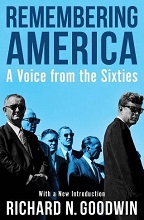
Remembering America: A Voice from the Sixties – Richard N. Goodwin

GoodwinOn more than one occasion my father has commented that the 1960s was the scariest decade of his life.  The threat of Nuclear War, increasing tensions in Southeast Asia and the growing Civil Rights Movement captivated American society and the world.  During one conversation he turned and said to me “at the time of the Cuban Missile Crisis, we didn’t know if we would live to see tomorrow or die in a nuclear exchange with the Soviet Union”.  The assassinations of several activists and politicians spread fear across the nation and to many, it seemed as if America was on the verge of total anarchy.  Richard N. Goodwin (1931-2018) worked in the administrations of Presidents John F. Kennedy (1917-1963) and Lyndon B. Johnson (1908-1973) and helped draft some of the most memorable speeches given by the iconic figures.  In 1988 he completed this memoir which was re-published in 2014, of the decade he spent in politics with two presidents and two presidential candidates.  And the result is a spellbinding account of a critical time in American history during which the country underwent profound heartache and change.
Goodwin’s account is in part an autobiography in which he revisits his upbringing as part of a Jewish family in the City of Boston and State of Maryland.   His exposure to racism came early as anti-Semitism reared its ugly head in the Old-Line State.  In stark contrast to his comfortable existence in Boston, Maryland would help shape Goodwin’s views that would remain with him throughout his life.  Age and opportunity is on his side and he is blessed with the fortune of working for former Associate Justice of the Supreme Court of the United States, Felix Frankfurter (1882-1965).  The experience further sharpened Goodwin’s legal and writing skills which later became highly valued and sought after.   As 1960 approached, President Dwight Eisenhower (1890-1969) focused on the remainder of his term and the upcoming election that would determine his successor.  All eyes were on the two candidates engaged in battle for the White House: John F. Kennedy (1917-1963) and Richard M. Nixon (1913-1994).   The Vice-President at the time, Nixon,  represented all that Goodwin opposed and he had come to like and admire Kennedy who won the election with one of the slimmest margins in history.  The young Irish-Catholic president soon embarked on a mission to change America and usher in “the New Frontier”.   Goodwin became a clutch player and Kennedy’s point man on Latin American affairs.  Some readers will recall that it was Goodwin who met and conversed with famed revolutionary Ernesto “Che” Guevara de la Serna (1928-1967).  Excerpts of their discussion are transcribed, and the dialogue is interesting for it shows the missed opportunity by Washington to understand the Cuban point of view.   As the story progresses, the two develop a mutual respect and upon learning of Guevara’s death years later, the author laments:

“And I like to think that I would have done what little I could to prevent Guevara’s execution. We were both trapped in the contending forces of a world we had not made; passionate adversaries in the struggle to control the future. Yet I liked the man. He had humor and courage, intellectual gifts and an unmistakable tenderness of spirit. I understood that he also contained ruthlessness, self-defeating stubbornness, and a hatred strong enough to cripple the possibilities of practical action. It is the paradox of the revolutionary that such divergent feelings must coexist in the same man.” 

Cuba proved to be the biggest test of Kennedy’s career in 1961 and again in 1962.  Goodwin takes us behind the scenes to witness the key events from another angle and observe the inner workings of the administration as it grappled with one crisis after another.  His proximity to Kennedy allowed him to make some keen observations about the president and behind the cool public image was was another side to John F. Kennedy.  I can only say that Bobby was not the only Kennedy with a temper.  The actions and reactions by Kennedy shed light on the frustrations of running an administration that struggled to stay in cohesion.  After each debacle Kennedy did shuffle around his cabinet and had become wise to game being played by figures loyal to the establishment.  And Goodwin does not hold back regarding his issues with speechwriter Ted Sorenson (1928-2010).   However, there is no gossip here but only what Goodwin witnessed and knew for certain.  And it is because of this streamlined focus that the story moves forward as fluidly as it does.  Over time, the Kennedy Administration began to fire on all cylinders and the seasoned president began to tighten his grip over Washington.  But with every story about Kennedy’s time in office, there is always the elephant in the room and his trip to Dallas soon approaches.  Goodwin was not with Kennedy that day and can only revisit how he learned of the assassination and the events that took place later that day in Washington.  There is no smoking gun about the crime or conspiracy theories about what happened that day.  Kennedy’s death affected Goodwin deeply and he grieved with millions of Americans.  John F. Kennedy was dead but far from forgotten.  Although his time in office was short he had set into motion a chain of events.  Goodwin is far more eloquent than I and this statement explain’s Kennedy’s importance:

“John Kennedy was not the sixties. But he fueled the smoldering embers, and, for a brief while, was the exemplar who led others to discover their own strength and resurgent energy; their own passion, love, and capacity for hate.”

America had begun the process to give John Kennedy a proper send-off while adjusting to a new leader in the White House. In just a few years, Lyndon B. Johnson would change America in ways no one thought possible. Goodwin had left Washington but soon receives a call from Johnson himself who uses his trademark influence to coerce Goodwin into joining the team.  He accepts and begins to draft statements that Johnson would use to increase his popularity and push legislation through the Senate. The passage of the Civil Rights Bill was a monumental feat but like a master puppeteer, Johnson knew which strings to pull to accomplish the unthinkable.  On July 2, 1964, the bill became reality as Johnson signed it into law and a year later he signed the Voting Rights Act.  Further, he also begun to initiate programs that were part of his vision for American that he famously labeled the “Great Society”.  But a little country in Southeast Asia would change all of that and seal his fate in 1968.  Goodwin was a firsthand witness to the rise and fall of Johnson and sums up the tragic figure he becomes as follows:

“For in the single year of 1965 — exactly one hundred years after Appomattox — Lyndon Johnson reached the height of his leadership and set in motion the process of decline.” 

In 1954, the French military suffered a humiliating defeat at Dien Bien Phu in Vietnam and soon withdrew their forces from Indochina.  The staggering amount of U.S. financial aid was not enough to turn the tide against the North Vietnamese Army and the movement spearheaded by Ho Chi Minh (1890-1969) known affectionately as “Uncle Ho”. Followin the Geneva Accords, the country was divided into a Communist North Vietnam and Democratic South Vietnam.  Washington continued to eye Hanoi with suspicion and tensions regrettably began to simmer.  Things came to a head in August 1964 as U.S. patrol ships traveling through the Gulf of Tonkin encountered North Vietnamese patrol boats. The events of August 2 and August 4 are still subject to examination, but Johnson used them as a pretext for Congressional approval to escalate the growing war in Vietnam.  Initially, public support is behind Johnson and the fear of the “Domino Theory” combined with misleading intelligence reports resulted in increasing numbers of U.S. troops arriving in Vietnam.  But as we see in the book, the truth about Vietnam could not be hidden forever and became increasingly clear and more disturbing as the war dragged on.  On an interesting note, there were many figures who strongly opposed the war, including Kennedy himself who was highly aware of the dangers of a war.  Goodwin revisits this earlier statement by Kennedy who was still senator at the time and several years away from the throne in Washington:

“No amount of American military assistance in Indochina,” said Senator John Kennedy in April of 1954, “can conquer an enemy which is everywhere and at the same time nowhere, ‘an enemy of the people’ which has the sympathy and covert support of the people.”

As 1965 progresses, Lyndon Johnson’s fall from grace begins to accelerate.  Goodwin recalls the series of events that transpire as Vietnam becomes a dark cloud over Washington and the Civil Rights Movement gains momentum.  Although the book is not a biography of Johnson, Goodwin captures the multiple sides of of him perfectly.  And what we see is man self-destructing one step at at time due to a war he cannot end and a country turning against him.  Paranoia soon takes hold and his final descent into madness begins.  Everyone becomes a suspect and unworthy of his confidence and trust. Goodwin would also become the target of his wrath and be accused of being one of those “Kennedy people”.  A sad reality is that throughout his presidency, Johnson struggled with Kennedy’s legacy and never ceased to believe that “they” were out to get him along with the “liberals”.  The revelations by Goodwin are simply mind-boggling and as I read the story, I believe that had Johnson not stepped down, it is possible that a commission might have been formed to study his behavior.  He was clearly losing touch with reality and perhaps the entrance of Robert F. “Bobby” Kennedy (1925-1968) into the 1968 election saved Johnson from himself.

After departing from Johnson’s administration and publicly voicing opposition to the war, Goodwin became public enemy number in Johnson’s eyes.  The continuing war and domestic turmoil became too much for Goodwin to accept and he begins to work for presidential candidate and Senator Eugene McCarthy (1916-2005) who sought to capture the Democratic nomination for president.  Upon his arrival at the McCarthy campaign headquarters, he soon finds that there is much work to be done. But Goodwin is a seasoned professional and soon helps to transform the campaign into a well-oiled machine. However, the looming threat of a Kennedy campaign is never far away and after the New Hampshire primary, Bobby formally announces his candidacy.  Goodwin is now placed in a difficult position and must make a decision between McCarthy and Kennedy, with whom he had become remarkably close friends. The saga and its aftermath are thoroughly explained by the author whose observations about politics are some of the sharpest I have ever seen.  And Goodwin was correct in his belief that McCarthy was a great candidate, but Bobby was presidential.  As Kenedy’s campaign kicks off, the author witnesses a transformation of the Senator from New York.  Bobby was reinventing himself and challenging any notion that he was not fit for president. In one gripping scene, Goodwin recalls this experience that shows the passion for America that served as the basis for Kennedy’s actions:

“Kennedy asked, “How many of you left school or good jobs to work in the McCarthy campaign?” Almost every hand went up. “How many of you are going to stick with it to the end, even if it goes all the way to November?” Again, nearly all the hands were raised. “I know some of you might not like me,” Kennedy continued, “think I just jumped in to take your victory away. Well, that’s not quite the way I see it. But it doesn’t matter what you think of me. I want you to know that you make me proud to be an American. You’ve done a wonderful thing. I’m only sorry we couldn’t have done it together.” With that Kennedy got up to leave, and, as we began to start down the street, he turned and waved. Every person on the steps waved back.” 

Readers who are interested in Kenney’s campaign will thoroughly enjoy David Halberstam’s (1937-2007) The Unfinished Odyssey of Robert F. Kennedy which shows the incredible change in the candidate as the race for Washington heated up.  Like Jack Kennedy, we know that Bobby’s tragic destiny awaits, and I steeled myself as it approached.  Kennedy is riding the wave of popularity and arrives in Los Angeles determined to win California.  He won the state but was shot and mortally wounded after his acceptance speech. Doctors performed emergency surgery but the wounds to Kennedy had proved to be too devastating and ruled out any chance of survival. Goodwin goes in to see his friend for the last time and his description of Kennedy’s final moments in the hospital bring the story to a melancholy conclusion.

When I finally put the book down, I felt as if I had just taken a ride for the ages.  This is an incredible story about pivotal moments in America’s story that continue to play themselves out.  Many years have passed since Robert and John Kennedy were murdered but their messages and the issues they fought for and against are still with us. However, the past is always prologue and I do believe America can and will make great strides.  Goodwin was also a believer in America and in looking back at that decade of the 1960s, he provides the following quote that confirms his optimism:

“We cannot, of course, go back to the sixties. Nor should we try. The world is different now. Yet, two decades have passed since that infinitely horrifying day in Los Angeles which closes this book. And a new generation is emerging. They can pick up the discarded instruments and resume the great experiment which is America. There is no question of capacity, only of will.”  – Richard N. Goodwin 

ASIN : B00L8FBEWO

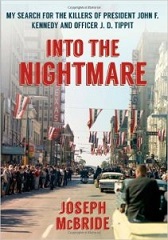
Into The Nightmare: My Search For The Killers Of President John F. Kennedy and Officer J.D. Tippitt-Joseph McBride

Mcbridge

On occasion, I find myself coming back to the murder of President John F. Kennedy (1917-1963). His assassination remains one of the America’s darkest moments and officially, the crime is still an open case for the Dallas Police Department. Some may express surprise at that statement but it should be remembered that no one was ever convicted for Kennedy’s murder. A twenty-four year-old former Marine named Lee Harvey Oswald (1939-1963) was convicted in the court of public opinion as the assassin but was himself murdered before he could stand trial in a Dallas courtroom. Roughly forty-five minutes after Kennedy’s murder, Dallas Police Officer J.D. Tippit (1924-1963) was shot to death after stopping a pedestrian walking in the Oak Cliff section of Dallas. Oswald was arrested at the Texas Theater and charged with Tippit’s murder. But due to his death at the hands of nightclub owner Jack Ruby (1911-1967), he was never officially tried and convicted of Tippit’s murder, which is still an open homicide case. The Warren Commission established that Oswald committed both murders before hiding in the Texas theater and for years many have accepted the “lone gunman” theory. But if we look closer, there are many things about both murders and Oswald himself that just do not add up. Author Joseph McBride has spent thirty years researching and writing this book that takes us into the nightmare that occurred on November 22, 196,3 in Dallas, Texas. And what he has to say might make the hair on the back of your neck stand up.

The book opens with a recap of McBride’s childhood in Wisconsin during 1960 when Kennedy was ramping up his campaign for the presidency. McBride’s parents were both reporters and his mother was part of the local Democrat committee. Her position in the committee provided McBride to meet Kennedy on several occasions and during one of those occasions, McBride took a photo which is included in the book, of Kennedy in what could be described as an unguarded moment. On the day of Kennedy’s murder, McBride relates that information presented during news broadcasts raised his suspicions about the crime Those seeds of doubt grew into a life-long quest to find the truth about Kennedy’s murder. I should point out that McBride’s focus here is primarily on the murders of Oswald and Tippit. The book is not a broad discussion of the crimes such as Jim Marrs’ best-selling classic Crossfire: The Plot That Killed Kennedy, but a more streamlined approach to examine what former commission member David W. Belin (1928-1999) called the “Rosetta Stone” of the case.

Seasoned researchers into the Kennedy assassination will know that there has been a lack of focus on the life of J.D. Tippit. He has typically been portrayed as the simple yet heroic officer who tried to stop Lee Harvey Oswald and died in the line of duty. On the surface it fits the narrative of the good cop/bad suspect line that we are taught from a young age. However, if Tippit was attempting to arrest the man who allegedly had just shot the president, then why did he not have his gun drawn as he got out of his squad car? And how would he have known to stop Oswald when Dallas Police had yet to learn Oswald’s name according to the official timeline? There are seemingly endless mysteries surrounding both Tippit and Oswald regarding their alleged encounter. McBride journeyed down the rabbit hole and provides what I have found to be the most in-depth analysis of what may have taken place in the Oak Cliff section of Dallas on that fateful day.

I believe that by putting his focus on the Tippit murder, it allows readers to digest critical information without being overwhelmed by other events that took place in and around Dallas that day. Tippit’s murder undoubtedly is the Rosetta Stone of the case but not for the reasons that Belin believed as McBride makes clear. To be clear, McBride is not a conspiracy theorist. In fact, what I found is that he remains unbiased and does not shy away from presenting contradictory evidence when addressing a topic. I believe that makes the book even more fascinating. McBride presents an honest and thorough discussion of the Tippit murder. And at no point, did I feel he has moving too far in one direction but rather he moves through the book like a veteran detective with an eagle’s eye for clues. And frankly, the amount of information he provides about Tippit’s personal life is just staggering and has caused me to see the murder in a very different light. And although secrets remain about Tippit’s murder, the version presented in the Warren Commission’s report should be taken with a grain of salt. If you want to learn about the real J.D. Tippit, this is without question a book that you need to read.

Although Tippit’s murder is the nexus of the book, McBride does focus on other strange events that day after shots rang out in Dealey Plaza. The most telling are FBI reports from field agents in Dallas that reveal some very surprisingly decisions taken by Dallas officials. And the discussions between J. Edgar Hoover (1895-1972) and former President Lyndon B. Johnson (1908-1973) underscore the problems Dallas detectives faced in making their case. Further, a particularly deeply distburbing fact comes to light about the attitude of Dallas police towards Kennedy’s murder. I found myself staring in disbelief and what former detective Jim Leavelle (1920-2019) reveals about the effort to solve Kennedy’s murder. Before leaving Washington, Kennedy had been briefed on the right-wing climate of hate in Dallas and was advised not to travel there. But he insisted on doing so to show that the President of the United States cannot be afraid to travel within his own country. It was his fate to go to Dallas but the local police owed him far more of an effort than what is shown in the book.

The revelations of the numerous problems of proving Oswald’s guilt, provide the context for a discussion on the many problems with regards to the lone gunman theory. Capt. William Fritz of the Dallas Police Department was certainly aware of this and as McBride shows, most officials knew that making a case against Oswald would be a monumental task. Of particular interes are McBride’s notes of his discussion with former Dallas District Attorney Henry Wade (1914-2001). The statements by Wade in response to McBride’s questions are nothing short of mind-boggling and a sharp defense attorney would have made a name for himself picking apart the indictment against Oswald. However, that is only a small piece of the puzzle that McBride puts together to show the lack of evidence, planted evidence, hidden information and various other anomalies that make the lone gunman theory even more ludicrous.

There has always been confusion as to what Tippit was doing before he was killed. According to the Warren Commission report, there exist at least forty-five minutes between the shooting in Dealey Plaza and his murder in Oak Cliff. But much of what Tippit and Oswald were doing during that time remains shrouded in mystery. To piece the story together, McBride draws on several sources that include Tippit’s widow Marie, witnesses near Oak Cliff who spotted Tippit prior to his death, Dallas Police Department radio transmissions and witnesses to the murder, some of whom were never called to testify by the Warren Commission. As I read through the statements and series of events, I felt a chill run down my spine as I realized that there was a lot more to the events in Oak Cliff that we have been led to believe. Not only was Tippit out of his assigned area but his murder took place near the home of Jack Ruby who shot Oswald live on national television on November 24. Questions have persisted if Oswald, Tippit and Ruby knew each other. While I would stop short of saying that there is a smoking gun, what we do learn raises suspicion that many figures in Oak Cliff were more connected than the Warren Commission wanted to acknloweledge.

McBride’s analysis of the murders that day is spellbinding and anyone that has doubts about the official story should absolutely read this book. There are no outlandish theories or witness bashing. It is simply an honest and open discussion built on facts discovered by the author through meticulous and exhaustive research. I guarantee that after you have finished this book, you will find yourself looking at the murder of John F. Kennedy in a completely different light.

ASIN: B00EP6B0J0

Eye on the Struggle: Ethel Payne, the First Lady of the Black Press – James McGrath Morris

ethelI am constantly amazed that in spite of all of the things I learned in school and through my own studies, that there are endless stories from the Civil Rights Movement that are continuing to be told.  Amazon recommended this biography of Ethel Lois Payne (1911-1991) and as I looked at the cover, I recalled the name but the face did not ring a bell.  My curiousity continued to pull me in and I knew that I had to learn more about this intriguing woman.  Author James McGrath Morris has called her the first lady of the Black press.  It is quite the title but as I learned while reading the book, the title was not only earned but it may in fact may be an an understatement.

Payne’s story begins in Chicago, in the year 1911 when she enters the world becoming the fifth child of William and Bessie Payne.  Jim Crow and segregation were alive and well making life for Blacks unbearable at times.  And although racism does exist today, the America in which we live stands in stark contrast to the America in which Payne navigated as she made a name for herself as a respected journalist.  Chicago is a rough city but those of us familiar with it already know that.  And putting aside the modern day shootings that place, violence has been a part of Chicago’s history for well over 100 years. Morris recounts some dark moments in the city’s history which show the tense racial climate the pervaded throughout the city and America.  But Payne is unfazed and determined to blaze her own path.  After the conclusion of World War II breaks, the military comes calling and Payne finds herself as foreign correspondent in Japan. This first major assignment would kickstart the career that lasted until her final days in 1991.

Upon returning to the United States, she accepted a post with the Chicago Defender and eventually earned her White House press credentials.  The act in itself was almost unheard and Payne wasted no time in stirring the pot.  A tense question and answer session with President Dwight D. Eisenhower (1890-1969) brings her more press than she could have bargained for but at the same time, earned her the wrath of supervisors.  Nonetheless it was the point of no return and Ethel Payne kept moving forward.  And what followed is a journey across several continents that included meetings with U.S. Presidents, foreign leaders and activists such as Dr. Martin Luther King, Jr. (1929-1968). It was an incredible journey, beautfilly told here by Morris.

I also found that the book provided interesting tidbits about American history.   And while the author does not present the book as a reference book for American history, he does bring the events of the past back to life which highlight the progression in civil rights made by America in the past several decades.  Surely, there are dark moments in the book where progressive minds come face to face with hardened racists.  Birmingham and Little Rock are just two cities whose names will be burned in the memories of readers.  The acts that are committed are horrific and will make some readers pause.  Personally, I find it difficult to fathom why people were filled with so much hate towards each other solely based on differences in physical characteristics.  But that was how things were and sadly, the events detailed in the book did happen and many lives were lost in the struggle for equality.  Payne’s voice through the Chicago Defender, was a bastion of hope that America was listening to what its black citizens were trying to say.

Throughout the story, there are big name figures who helped changed the course of American history.  Some are former presdients John F. Kennedy (1917-1963), Lyndon B. Johnson (1908-1973) and Richard M. Nixon (1913-1994).  Further, the passage of the almost powerless Civil Rights Bill of 1957 is addressed as American continues to struggle with equality.   The back stories to the public facades are interesting and Payne’s obversations are spot on.  She possessed incredible acumen about the Washington and future of American’s black citizens.  In fact, as we see in the book, there were times where she was correct in her analysis without even knowing the underlying facts that proved her to be correct.

In later years after she moved away from Washington, her work was not done and Morris shows her continuing efforts at promoting civil rights not just at home but wherever possible.  And although her physical descent becomes apparent towards the later part of the book, she never slows down but instead keeps going as she always has.  Admittedly, the end of the book is without question the saddest as Morris chronicles here life that increasingly fades away from the spotlight.  And in her final moments, the reality of where she ended up is strikinigly real.  And I found myself scratching my head and the direction her life had taken as she continued to age.  However, that is only small part of a life that was nothing short of incredible.

What I did notice in the book is that Payne never married nor did she have children. She did however, care of a nephew for a short time but he was not totally reliant upon her.  The lack of a love interest becomes apparent in the story but the topic is only lightly discussed.  That might be due to Payne keeping her persona life highly guarded or in the alternative, her busy life made romance impossible.  I did feel a bit down regarding this part of the story and wished that she could have found someome to share her life with.  But she is long gone and the reasons she had for her single life have gone with her to the grave.  Notwithstanding this side-story, the book is still a very uplifting account of Payne’s accomplished life.

James McGrath Morris has certainly provided us with a fitting biography of Payne’s life that was a mixture of success, tragedy and defining moments in history.  Today her name is never mentioned and younger generations will most likely have the faintest idea about who she was and why she was important.  But I encourage anyone interested in American history and in particular the American Civil Rights Movement to read this book.  Highly recommended.

ASIN: B00KFFROFE

Walking with the Wind: A Memoir of the Movement – John Lewis with Michael D’Orso

john lewis

The Declaration of Independence of the then Thirteen States of America, is often looked upon as inspiration for what liberty truly means. The second paragraph drives home the point with the following words: “We hold these truths to be self-evident, that all men are created equal, that they are endowed by their Creator with certain unalienable Rights, that among these are Life, Liberty and the pursuit of Happiness.” The words, when taken at face value, give off the impression of a country in which one can truly be free. But we very well know through history, that the opposite has been true, millions of people, in particular Black Americans have had to endure a long and hard struggle to achieve equality in the United States. Two weeks from today, America remembers the legacy of Dr. Martin Luther King, Jr. (1929-1968) and his view for a United States in which its citizens were truly united. Great strides have been made since Dr. King’s death, but by no means should his legacy be forgotten. Congressman John Lewis (D-Atlanta) was a close associate of Dr. King’s and today he is one of the remaining figures from the Civil Rights Movement. Many of his peers are deceased but today at seventy-eight years of age, he is still serving in the U.S. House of Representatives continuing to fight for what he believes is the direction to the move the United States forward. At first glance he is unassuming but if you study his life and words closer, you will soon learn that this remarkable figure has an extraordinary story to tell about his participation in the movement for racial equality.

When we think of the Civil Rights Movement, John Lewis is typically not the first figure many would have in mind. With his short stature and plain image, he appears to be the loving grandfather on the neighborhood block rather than the activist he was and still is. But just how did a young kid from the country in Georgia go on to be a pivotal figure in the movement that changed America? The answer to that question and many others about Lewis’ life are contained within the pages of this autobiography that is sure to leave the reading asking for more. In fact, I found it increasing difficult to stop reading the book once I had started. With Lewis’ easy-flowing narrative and endless anecdotes about himself and some of the most legendary figures America has ever seen, the book transplants the reader back in time to witness how a cause became a national and world-wide struggle against discrimination.

One of the things that I found likeable about the book is Lewis’ openness about his own shortcomings. He never portrays himself to be above anyone or all-knowing. In fact, he easily recalls the times in which he was lacking in knowledge, overcome with fear of his opponents and reluctance to partake in the cut-throat world of politics. Quite frankly, he has walked the walk and talked the talk, risking his life in sit-ins, marches and voter registration drivers in the deep American south, culminating with the showdown with the virulent racist Sheriff of Dallas County, Alabama, Jim Clark. (1922-2007). In fact, the events Lewis recalls, are also discussed in the book by another of his close associates, Ralph David Abernathy (1926-1990). His autobiography and memoir of the movement was appropriately titled And the Walls Came Tumbling Down . Both authors played an important part in those events and do not fail to explain in full detail how they developed and why they were important. I highly recommend that book as a complement to Lewis’ story.

Similar to Abernathy’s book, King is a critical character in the story and both authors show how important King was to the movement at hand. What is also revealed, particularly here is the complicated power struggles within the Southern Christian Leadership Conference (SCLC). Infighting, jealously and egos all play their parts in the story revealing the sometimes fragile relationships at the base of the movement. Misogyny, homophobia and even racism against White Americans became the tools that turned the SCLC into a shell of its former self. The assassinations of the 1960s convinced many that nothing could ever be the same again. Lewis addresses all of them and his relationship to several of the late figures. Students of the movement will recall that Lewis eventually became part of the campaign by Robert F. Kennedy (1925-1968) for President of the United States. His memories of Kennedy are touching and is yet another example of the extreme sense of loss that following in the wakes of the assassinations that became all to common in the turbulent 1960s.

Today it is nearly impossible for youths to imagine what life was like for Black Americans during Jim Crow and later, even as President Lyndon B. Johnson (1908-1973) pushed forward an earth-shattering civil rights bill. As Lewis puts it, raw fear was a daily reality in a time where social justice warriors sometimes died early deaths and authorities used every trick in the book to maintain a strict social structure of power. His ability to fair in the book and examine every situation from all sides has earned him followers and detractors but here, Lewis explains himself, leaving it up to the reader to digest his words and perhaps use them in a positive way. What I found equally important as the story at hand is his messages to Black Americans as well. Change in society must come from all places, and only then can a nation truly move forward. John Lewis has spent the majority of his life fighting for equality on behalf of those who sometimes have no other voice. His eyes have seen some of the most important events in history and he is a living testament to the strong character common to his peers who became world-respected figures in their own right.

If you are looking for a good read about the Civil Rights Movement, this is a fine place to start where you can follow John Lewis as he is walking with the wind.

ISBN-10: 9781476797717
ISBN-13: 978-1476797717